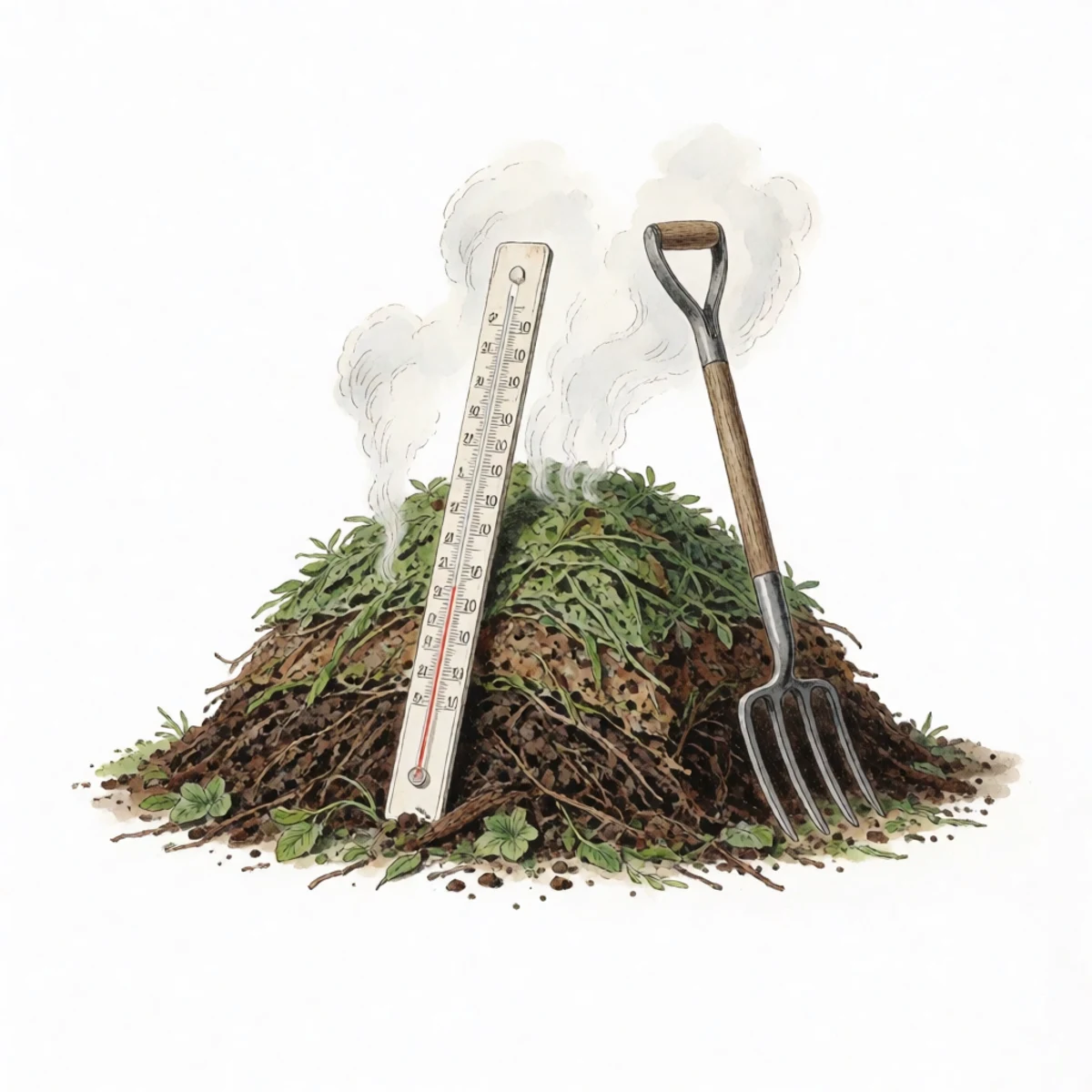
Build one cubic yard with the right mix and turn it on schedule. The pile reaches 140 °F by day four and is finished in a month.
Written on the farm by Nathan Story · Story Thyme Farms, Missouri · Updated
Story Thyme Farms · Bench cardAny frost-free month
Hot compost in 30 days
The fast batch method, sometimes called the Berkeley method
DifficultyA workout
Minimum size1 cubic yard
Target heat131–150°F
TurnEvery 2–3 days
1Getting the mix rightTwo to three buckets of brown for every bucket of green
2Building itOne cubic yard, layered and watered
3Watching the temperature131 to 150 °F by the third or fourth day
4Turning itMove the outside to the inside every two to three days
5Knowing it is doneCool, dark, and smelling like earth
Materials needed · Compost thermometer · Pitchfork · Pallet bin hardware · Tarp
Written on the farm · Missouristorythymefarms.com/guides/hot-compost-in-30-days
Prints on one page. The long version below stays on the screen.
The long version
The fast batch method, sometimes called the Berkeley method · field plate
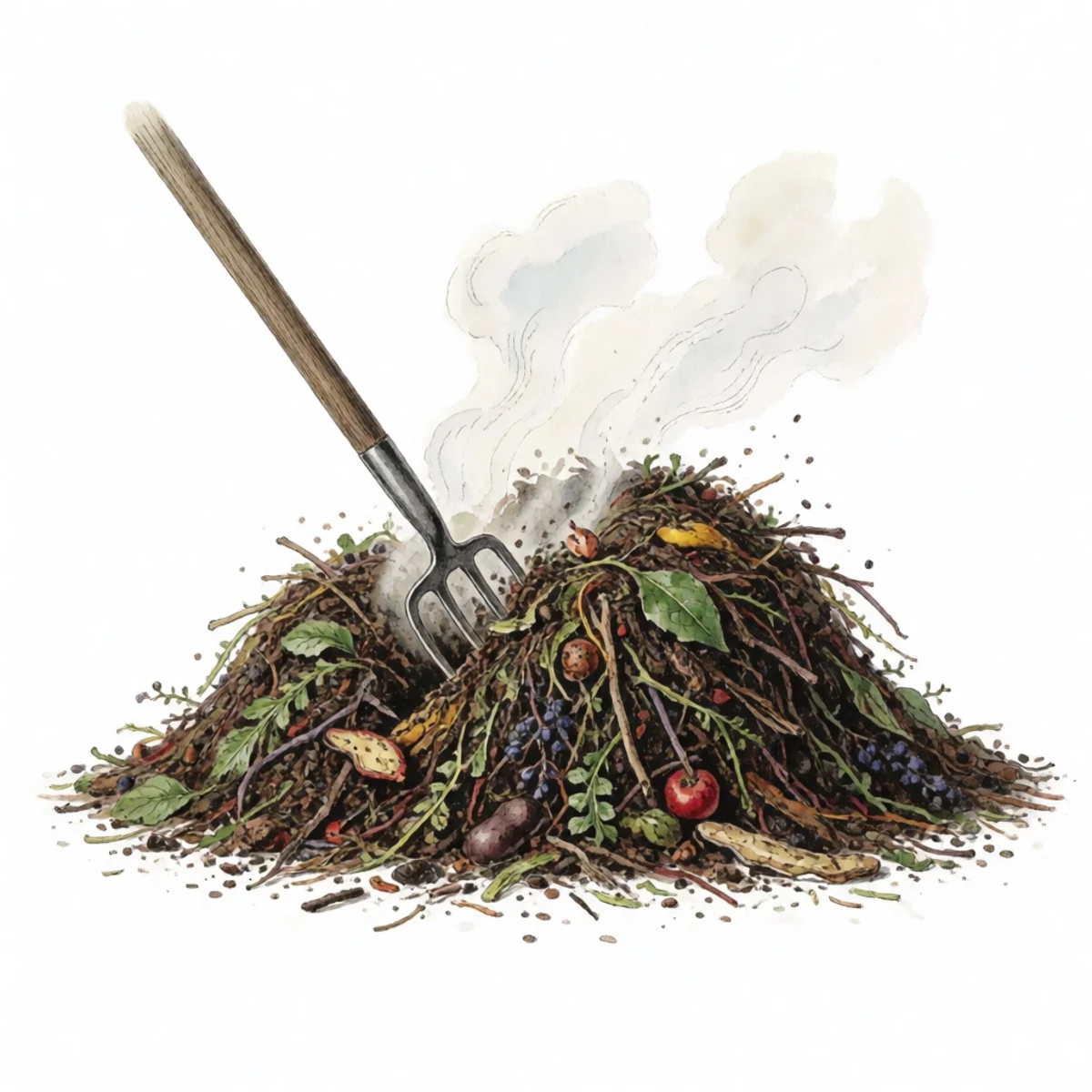
Slow compost is something that happens to a pile on its own. Hot compost is something you actively do. You build a full cubic yard in a single day, at roughly thirty parts carbon to one part nitrogen, keep it damp, and turn it on a schedule. In return for the work with a pitchfork you get finished compost in about a month, with the weed seeds and diseases killed by the heat.
01Step 1 · Getting the mix right
Two to three buckets of brown for every bucket of green
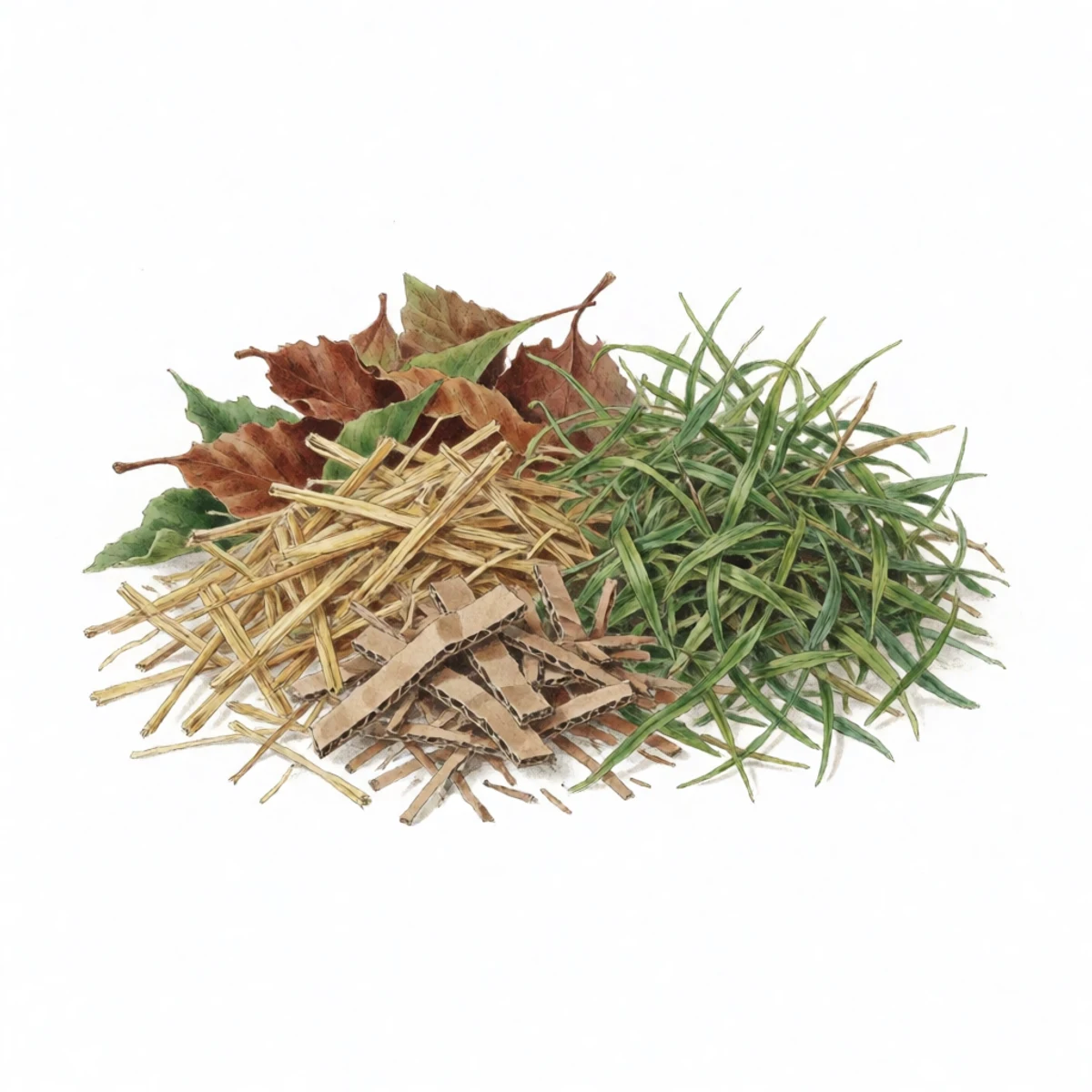
Browns are dry carbon material: leaves, straw, shredded cardboard and old wood chips. Greens are fresh nitrogen material: grass clippings, garden waste, kitchen scraps and coop manure, which is what drives the heat. Measured by the bucket, two to three browns for every green gets you close to the right ratio. Stockpile material until you can build the whole cubic yard at once, because a half-built hot pile is just a slow pile.
02Step 2 · Building it
One cubic yard, layered and watered
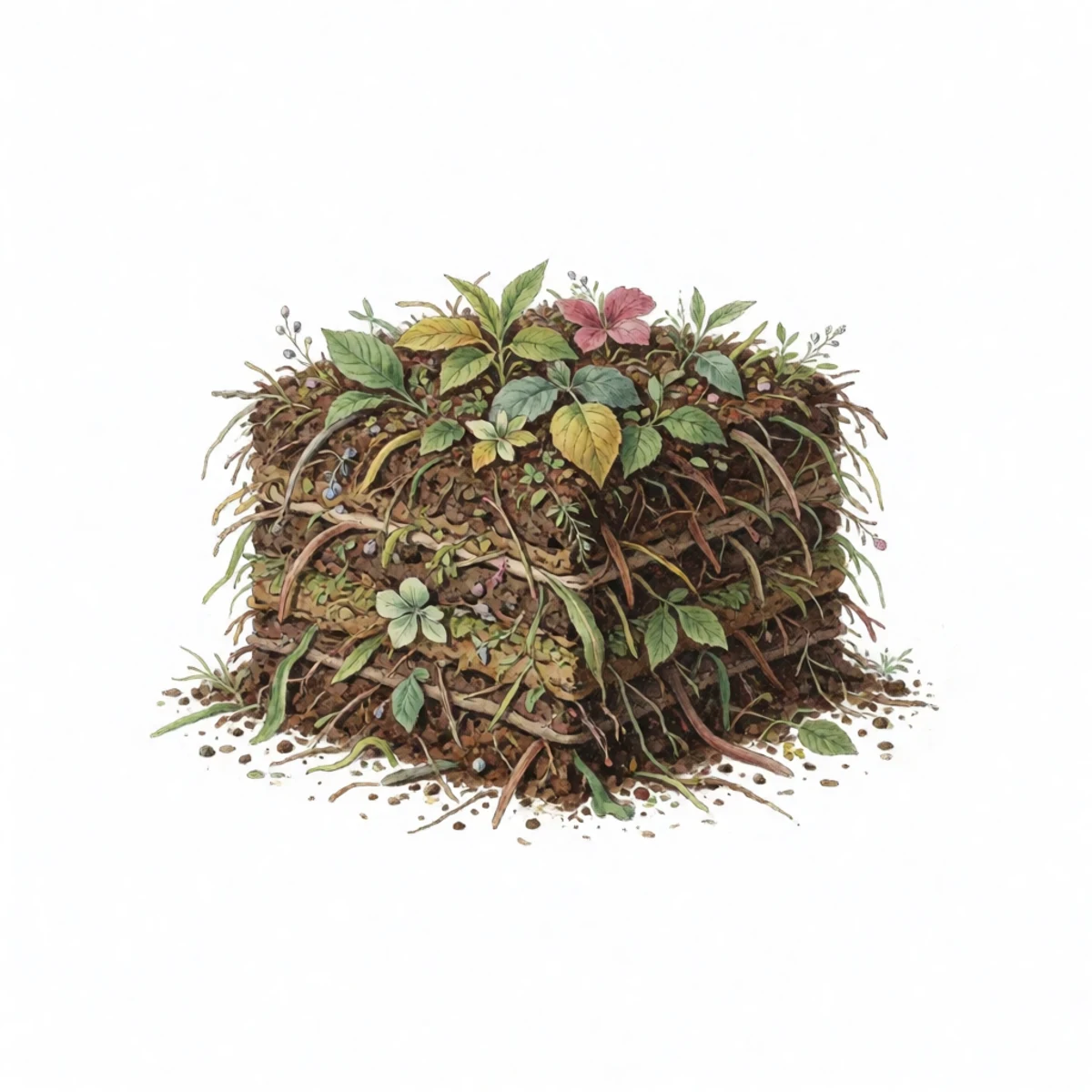
One cubic yard, a cube three feet on each side, is the minimum size, because anything smaller cannot hold its heat through a cool night. Alternate thin layers of brown and green material, chop up anything coarse, and water every few layers until it is as damp as a wrung-out sponge. A squeezed handful should produce a drop or two of water, never a stream.
03Step 3 · Watching the temperature
131 to 150 °F by the third or fourth day
A long-stemmed compost thermometer is worth having. The center of the pile should reach 131 °F, which is the temperature that kills pathogens and weed seeds, within a few days, and then hold between 130 and 150 °F. Above 160 °F the beneficial microbes start dying too, so turn it and add water. If it never heats up at all, it needs more green material, more water, or more volume.
04Step 4 · Turning it
Move the outside to the inside every two to three days
From day four or five, turn the pile every two to three days, always moving the cooler material from the outside into the middle, so every part of the pile spends time in the hot center. Check the moisture each time you turn it. Expect six to eight turns over the month. This is the work that makes 30 days possible.
05Step 5 · Knowing it is done
Cool, dark, and smelling like earth
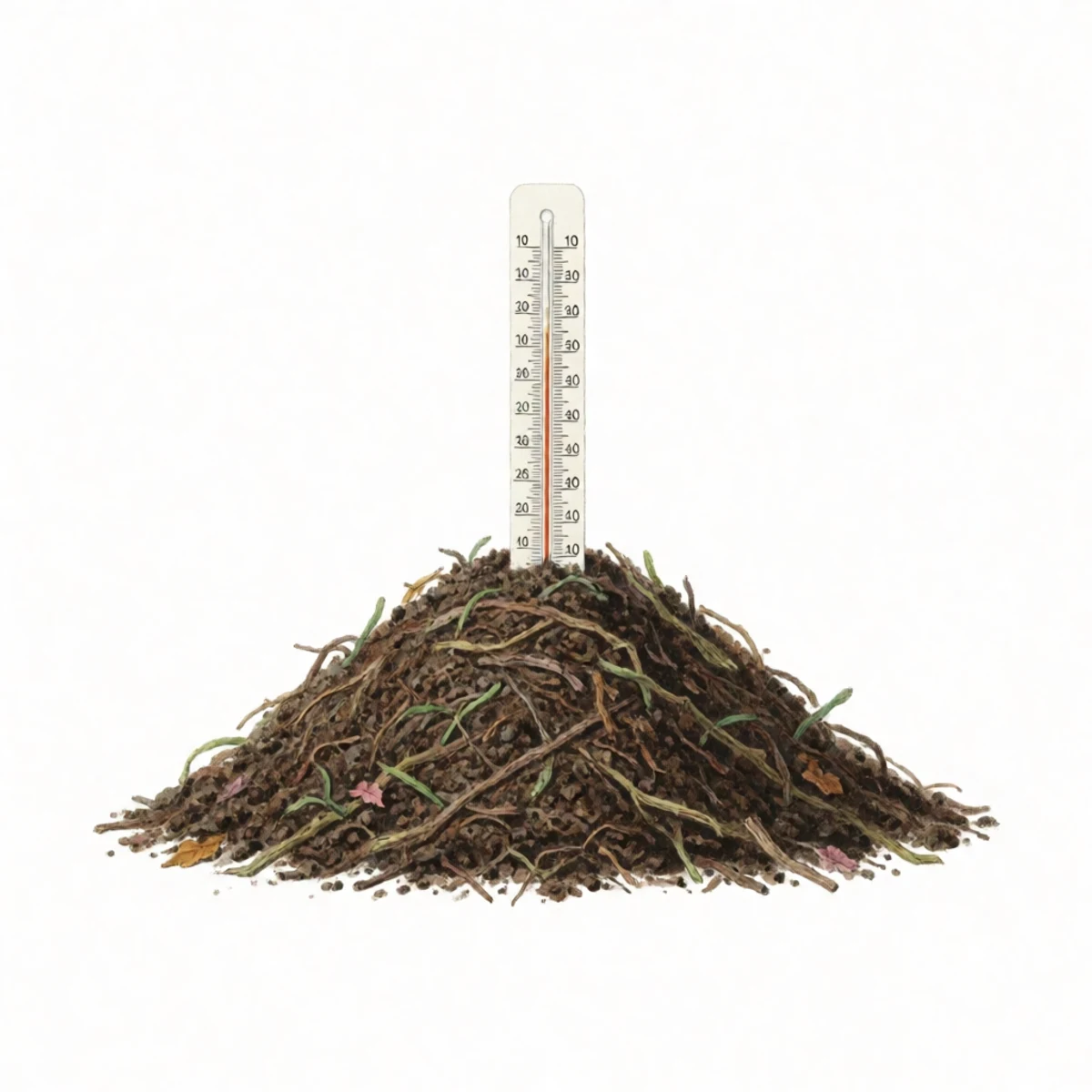
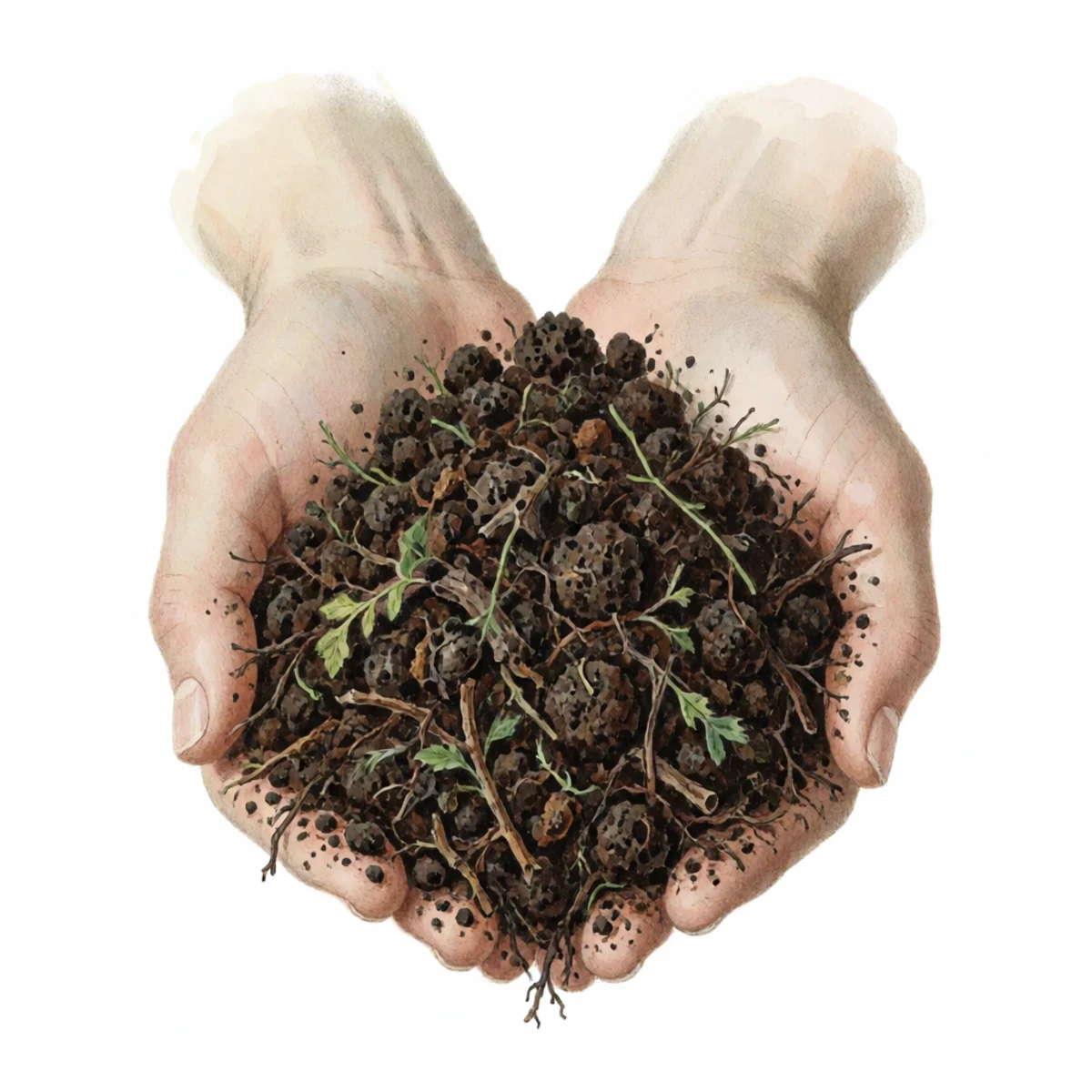
At around four weeks the pile will not reheat after turning, will have shrunk to about half its original size, and will smell like a forest floor. Let it sit another week or two, then screen out any twigs and put those into the next batch. You can use it anywhere, because the heat has already killed the weed seeds that survive in a cold pile.
As an Amazon Associate, Story Thyme Farms earns from qualifying purchases, at no cost to you. It never changes what we recommend.
Questions we actually get
Can I add to the pile once it's cooking?
No, that resets the clock, hot composting is a batch process. Keep a second cold pile for daily scraps and use it as ingredient storage for the next hot build.
My pile smells like ammonia. What went wrong?
Too much green or too wet, the pile is burping off nitrogen you wanted to keep. Turn it and fork in a few armloads of dry browns. A rotten-egg smell means it went airless, same fix, plus fluffing for air.
Is 30 days realistic in winter?
Below-freezing weather steals heat faster than a yard-size pile makes it. In a Missouri winter, expect the fast method to run slow, or build a double-size pile, insulate with straw bales, and accept 45 to 60 days. The genuine 18 to 30 day runs happen April through October.