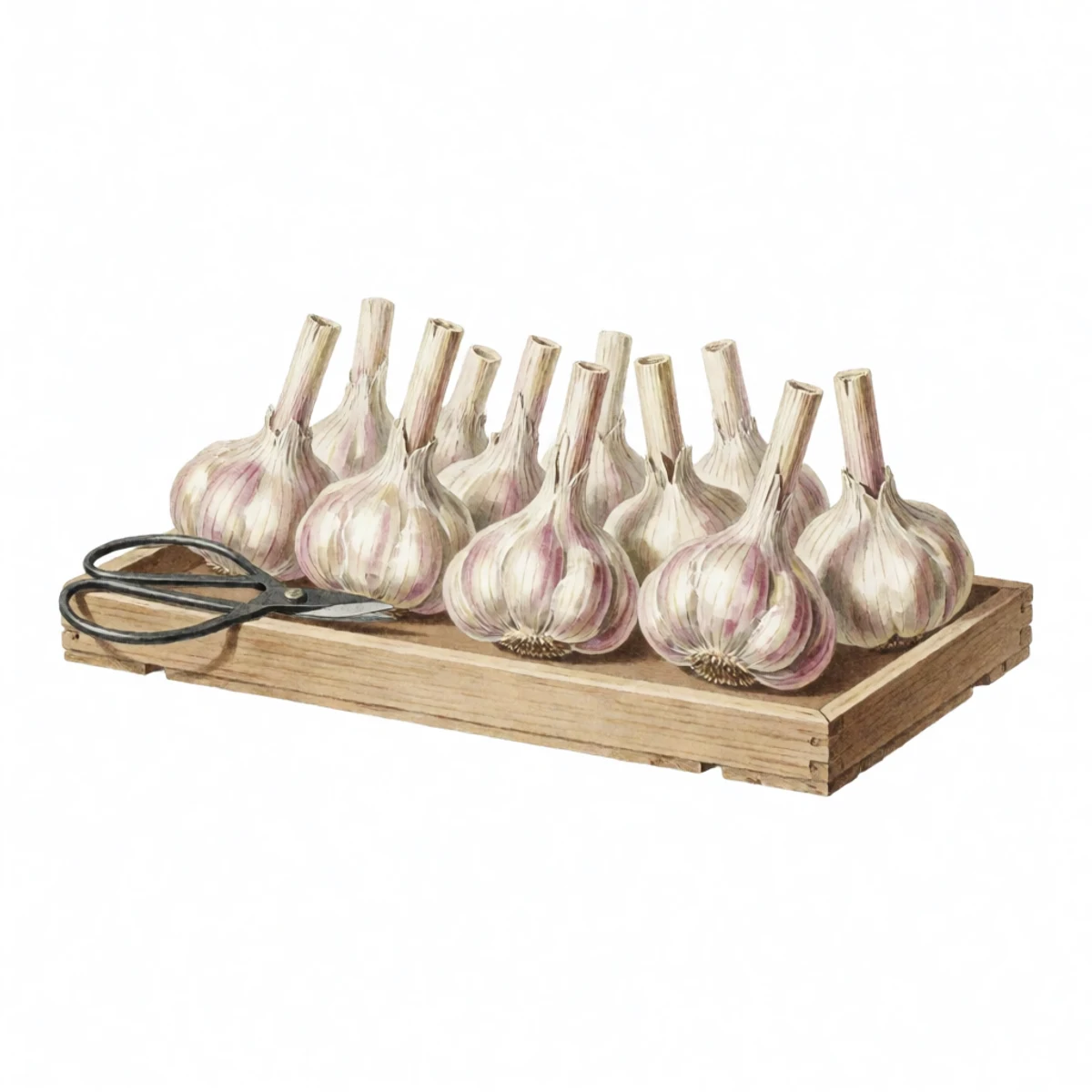
How to cure garlic for storage
Allium sativum. Curing hardneck and softneck
Two weeks of drying in the right conditions turns a July harvest into garlic that keeps until spring.
Allium sativum. Curing hardneck and softneck
Prints on one page. The long version below stays on the screen.
The long version

Garlic comes out of the ground alive and full of moisture. Curing is simply controlled drying. The necks seal, the outer wrappers turn papery, and the bulb becomes able to store for months. Rush it and you will have sprouting and mold by October.

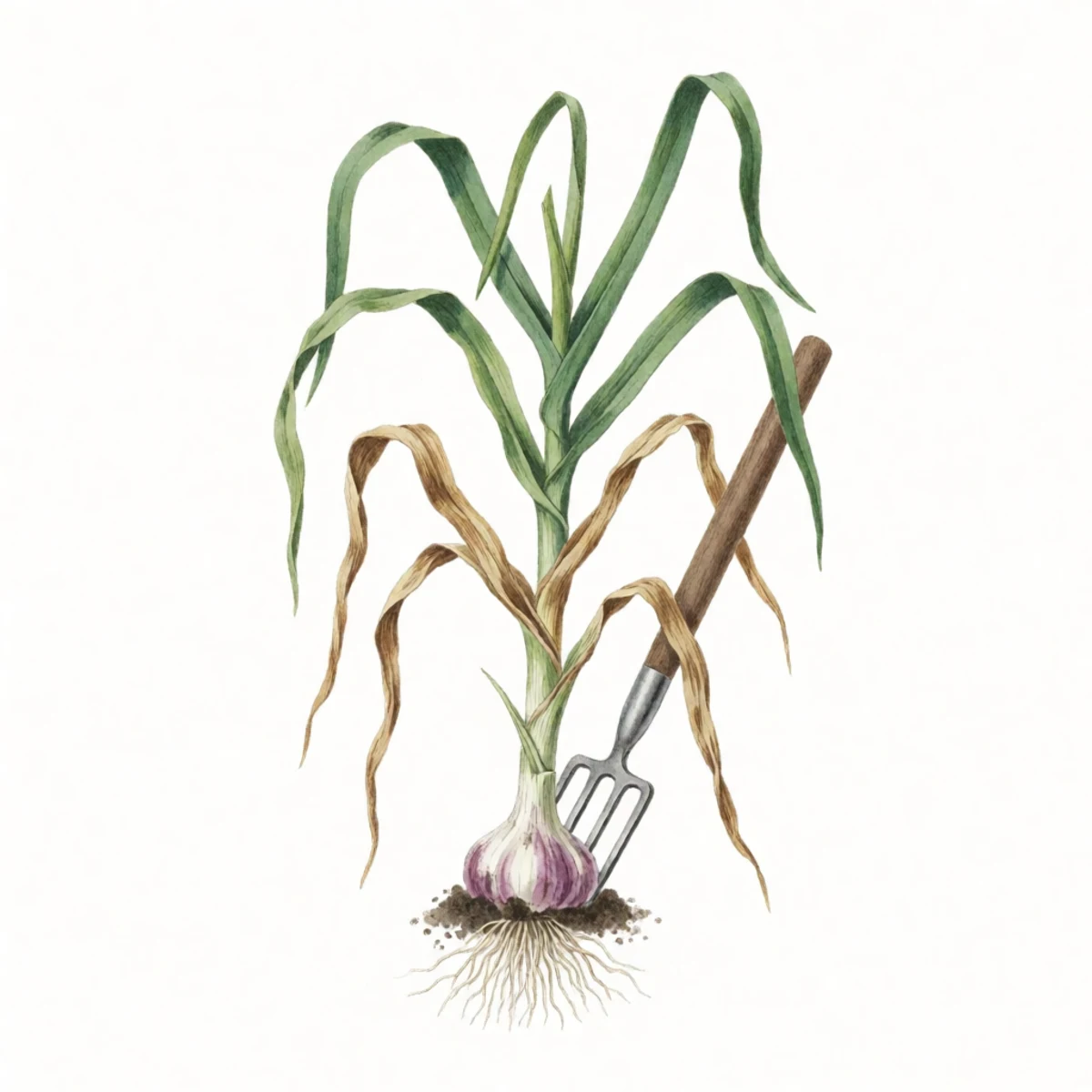
When the bottom three or four leaves are brown but the top five or six are still green, loosen the soil with a fork and lift the plants. Do not pull them up by the neck. Brush off the loose dirt and leave it at that. Do not wash or scrub them, because water is exactly what you are trying to get rid of.

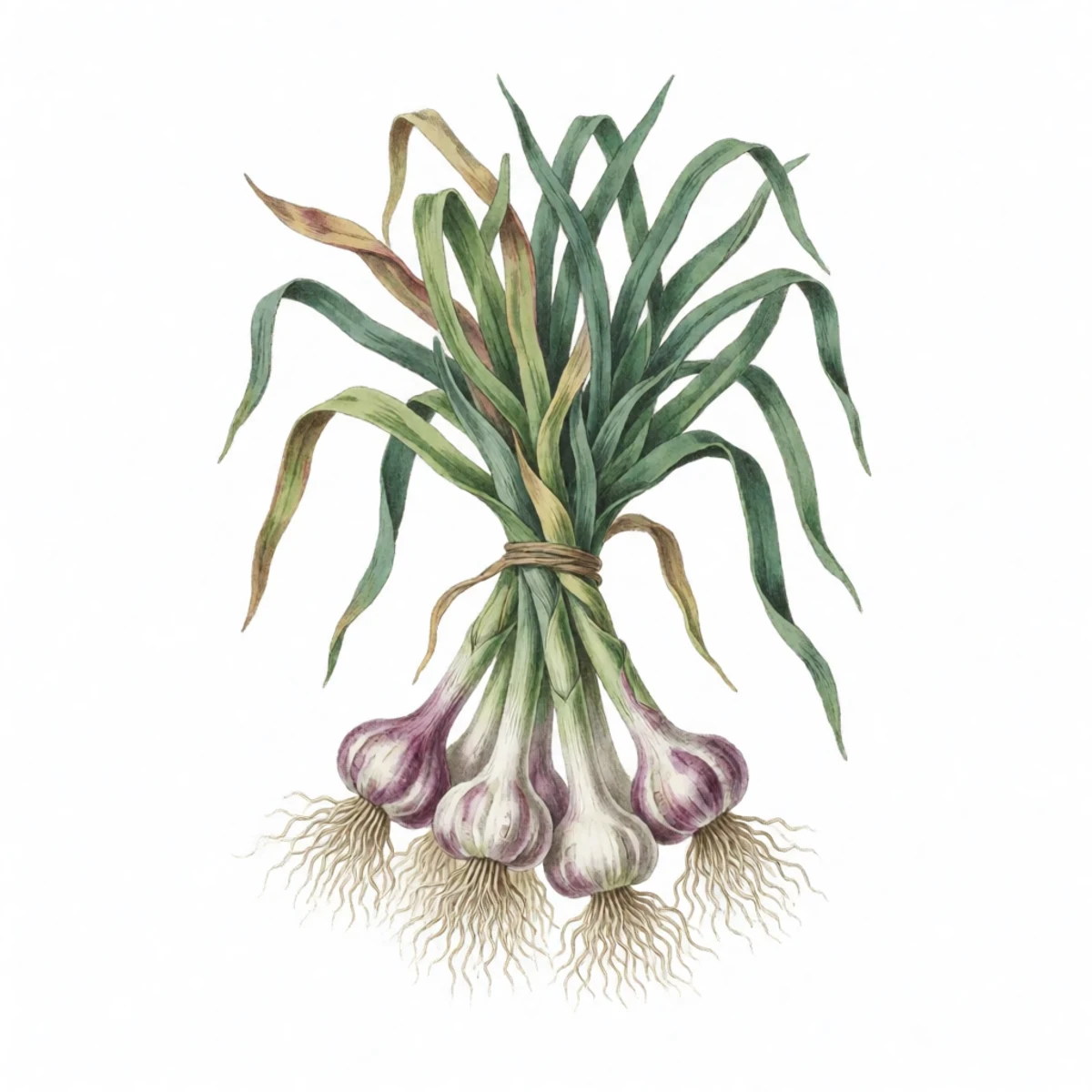
Cure the whole plant with the leaves and roots still attached, because the bulb keeps drawing energy from the leaves as they die back. Hang them in bundles of five to ten, or lay them one layer deep on racks, somewhere shaded with moving air: a porch, a barn, or a garage with a fan. Direct sunlight ruins the flavor, so shade is essential.

In warm dry weather two weeks is enough. In a humid Missouri August, expect three or four. Garlic is done when the neck is tight and dry and does not slip when you roll it between your fingers, the wrappers are papery, and the roots feel stiff like a wire brush.

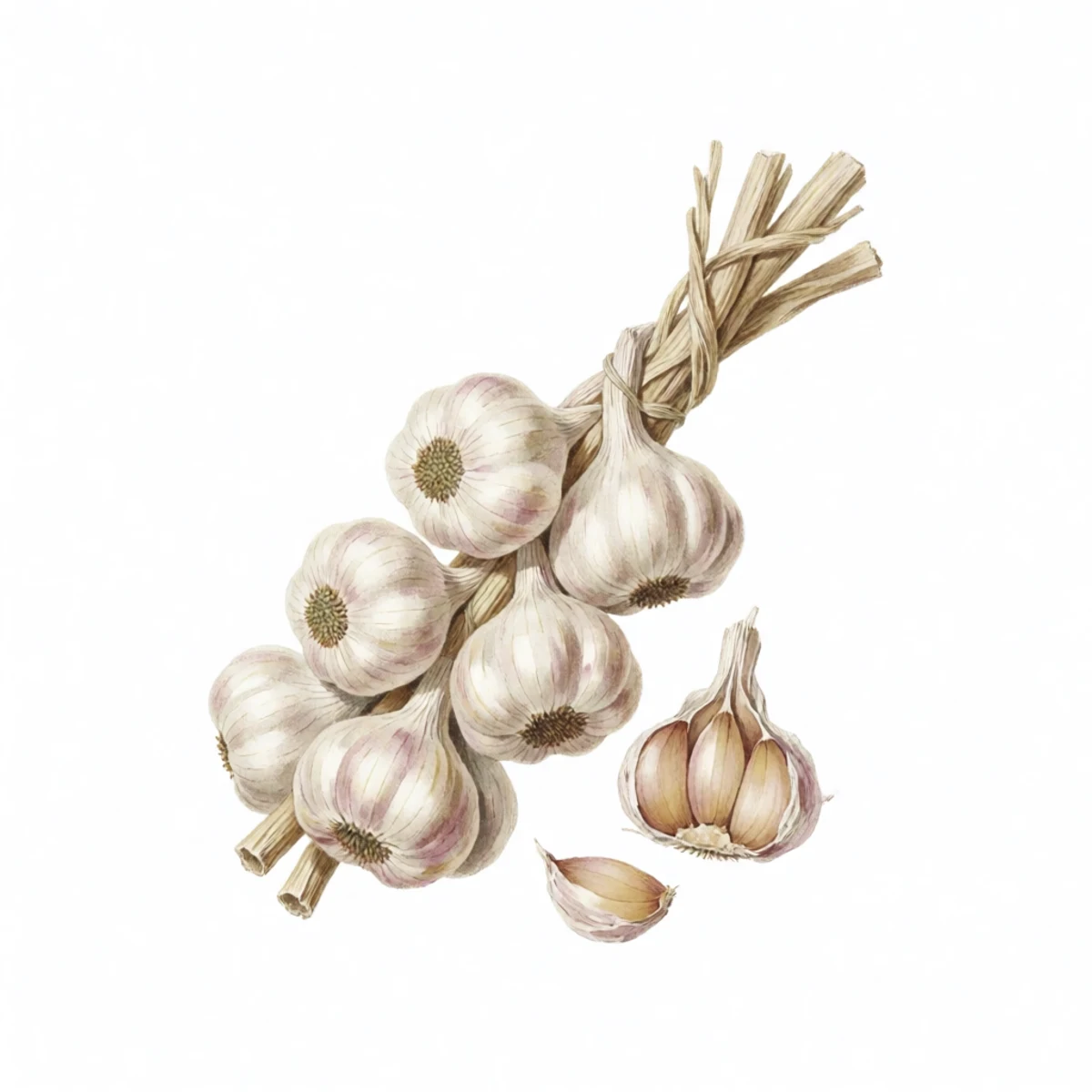
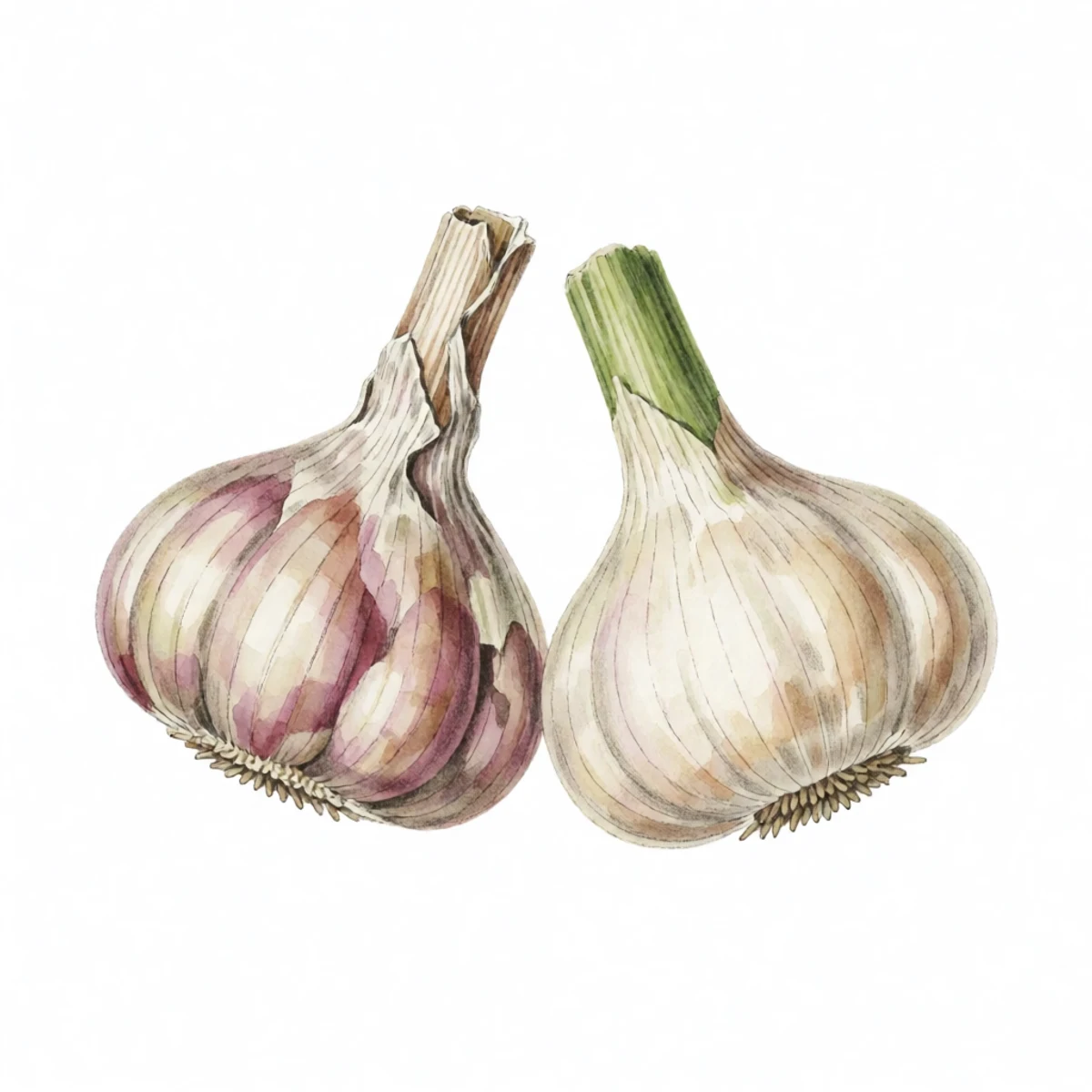
Trim the roots down to a stubble and cut the stalks an inch above the bulb, or braid the softneck varieties. Peel off one dirty wrapper layer at most. Any bulb that is nicked, soft, or has lost its wrappers should be used in the kitchen first. The rest store in mesh bags somewhere dark with good airflow, at cool room temperature, and will keep six to eight months. Set the biggest bulbs aside now for planting in October.
As an Amazon Associate, Story Thyme Farms earns from qualifying purchases, at no cost to you. It never changes what we recommend.
Zones, cold-hardy cultivars, spacing, feeding, and where to buy one already rooted.
Open the garlic guide →