Field Guide · Propagation · 9 min read

How to Take Hardwood Cuttings

One winter method that works for figs, grapes, elderberries, currants, mulberries and willows.

Story Thyme Farms · Bench cardLeaf drop to bud swell

How to take hardwood cuttings

The dormant-season method, plant by plant

DifficultyEasy
Length6–12", 2–4 nodes
Free plants fromWinter pruning
EasiestFig, elder, willow
1Choosing the woodUse dormant wood from last season's growth
2Cutting the sticksCut them six to twelve inches long
3Letting the cuts healStore them somewhere cool while the cuts heal
4Planting themBury two thirds of each cutting and firm the soil
5The first yearLeaves do not mean it has rooted
Materials needed · Bypass pruners · Rooting hormone · 1-gallon nursery pots · Perlite · Plant labels
Written on the farm · Missouristorythymefarms.com/guides/how-to-take-hardwood-cuttings
Prints on one page. The long version below stays on the screen.

The long version

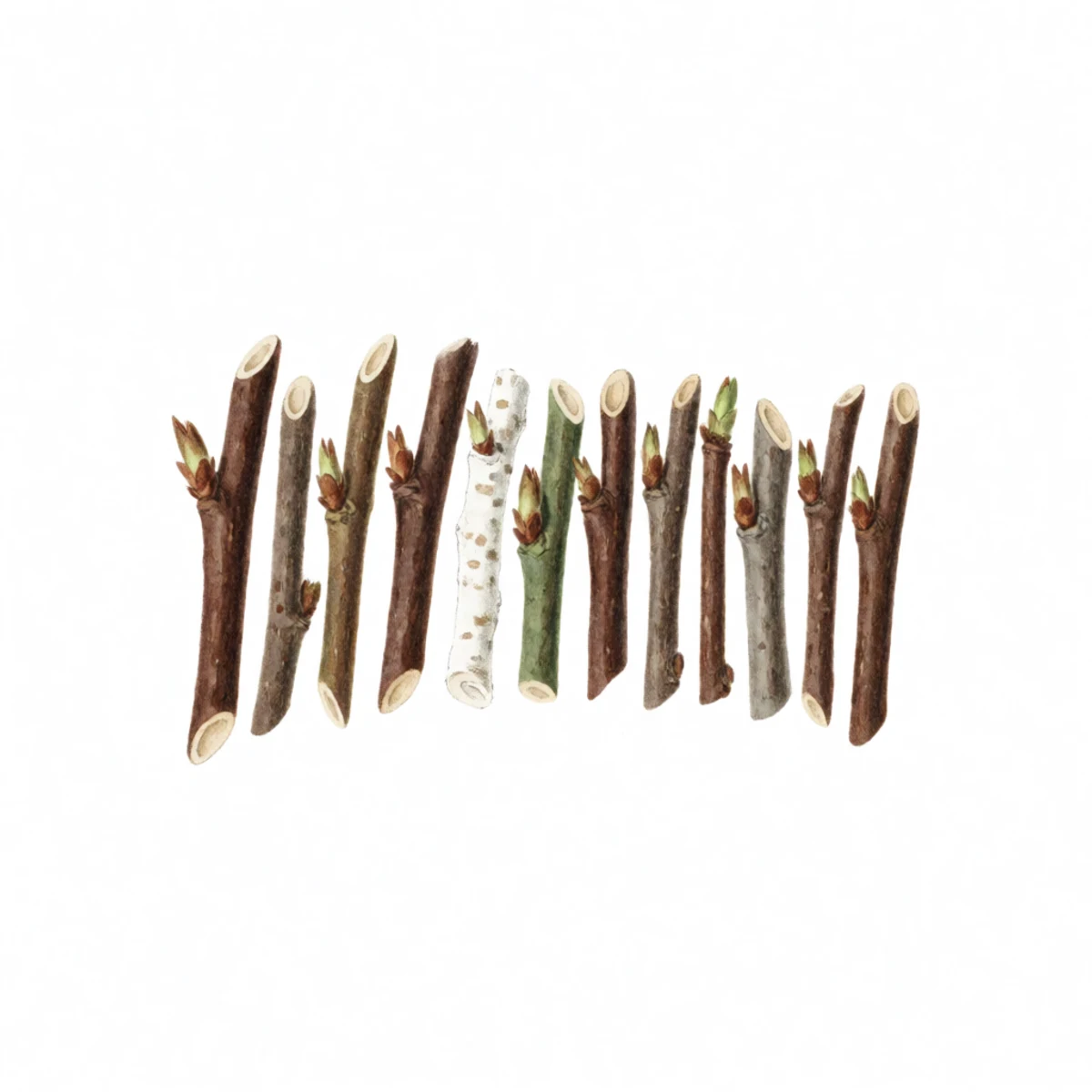
Watercolor plate of a row of dormant hardwood cuttings, one callused and rooting
The dormant-season method, plant by plant · field plate

Hardwood cuttings are how you get free plants in winter. They are sticks of dormant wood that contain everything needed to grow into a new shrub or vine. The method is nearly the same for every species. What changes is how many of them take. This page covers the general method, with notes for individual plants at the end.

  1. Step 1 · Choosing the wood

    Use dormant wood from last season's growth

    Watercolour plate of a dormant leafless shrub stem of last season's growth being cut, smooth bark, pencil thick, a pruning cut clean at the node

    Take the wood after the leaves have dropped and before the buds swell in spring. You want last season's growth: smooth bark, pencil to finger thick, from a healthy, well-fed plant. Do not use spindly twigs from inside the plant, or old gray wood.

  2. Step 2 · Cutting the sticks

    Cut them six to twelve inches long

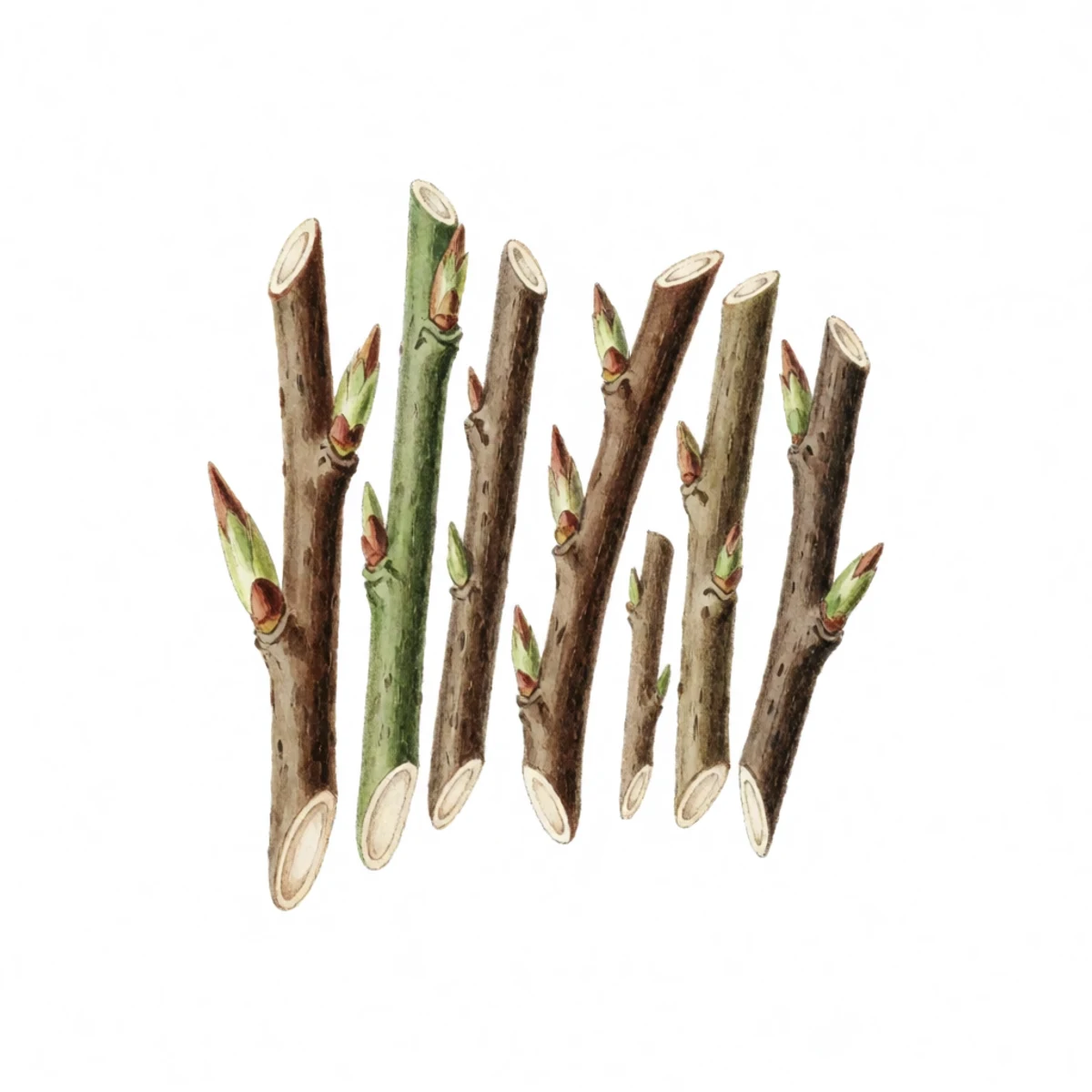
    Watercolour plate of several hardwood cuttings laid in a row showing the convention of a flat cut above the top bud and a sloping cut below the bottom bud

    Each cutting should have two to four nodes. Cut flat just above the top node and at an angle just below the bottom one. The two different cuts have a purpose: they let you tell which end is up when you have a bucket of forty identical sticks.

  3. Step 3 · Letting the cuts heal

    Store them somewhere cool while the cuts heal

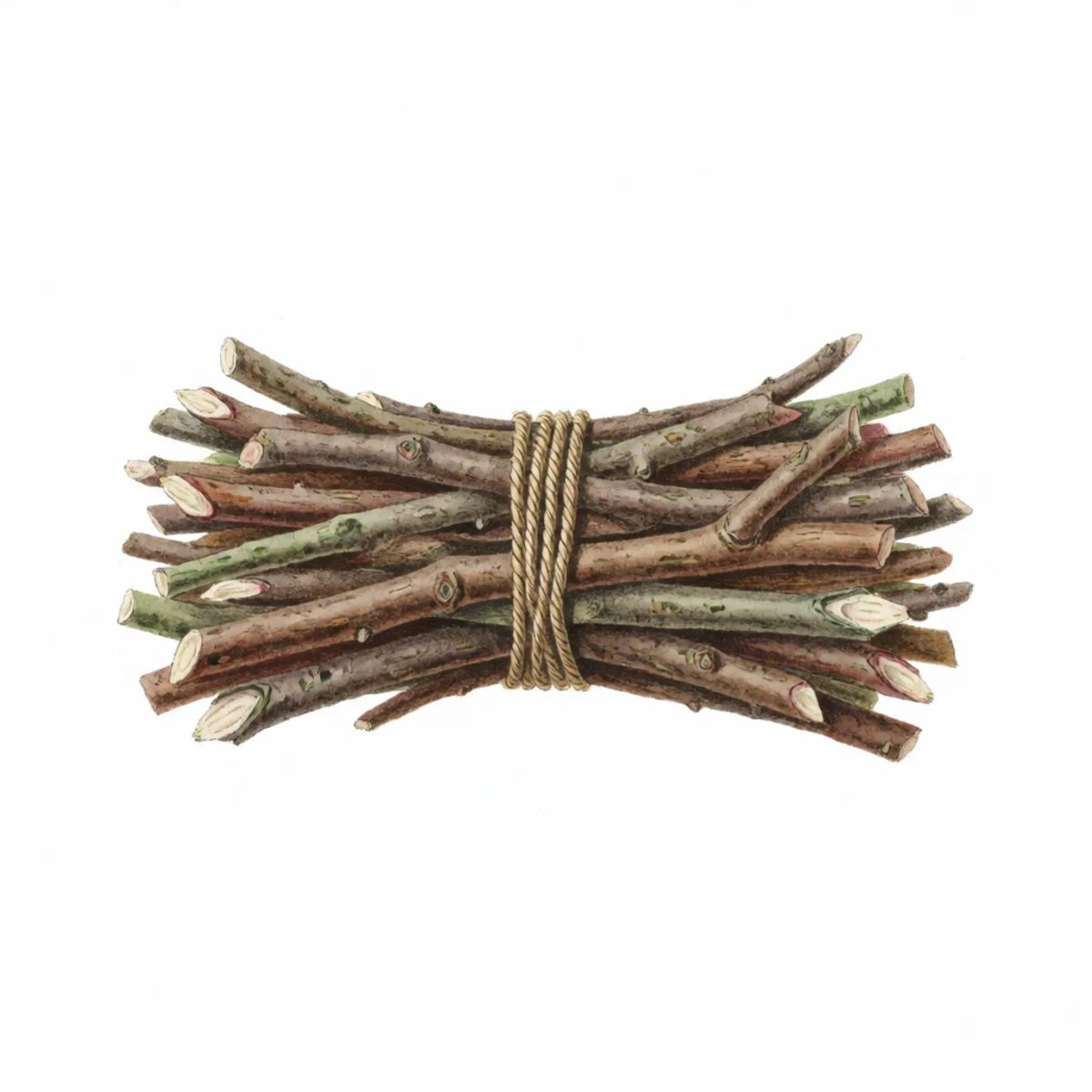
    Watercolour plate of a bundle of hardwood cuttings tied with twine, wrapped in damp cloth, resting in a cool dim place with a pale callus forming at the cut ends

    Bundle the cuttings by variety, wrap them in something damp, and keep them cool in a refrigerator or unheated garage for a few weeks if the ground is still frozen. The cut ends form pale callus tissue, which is where roots begin. Cuttings planted fresh will also work, but callused wood succeeds more often.

  4. Step 4 · Planting them

    Bury two thirds of each cutting and firm the soil

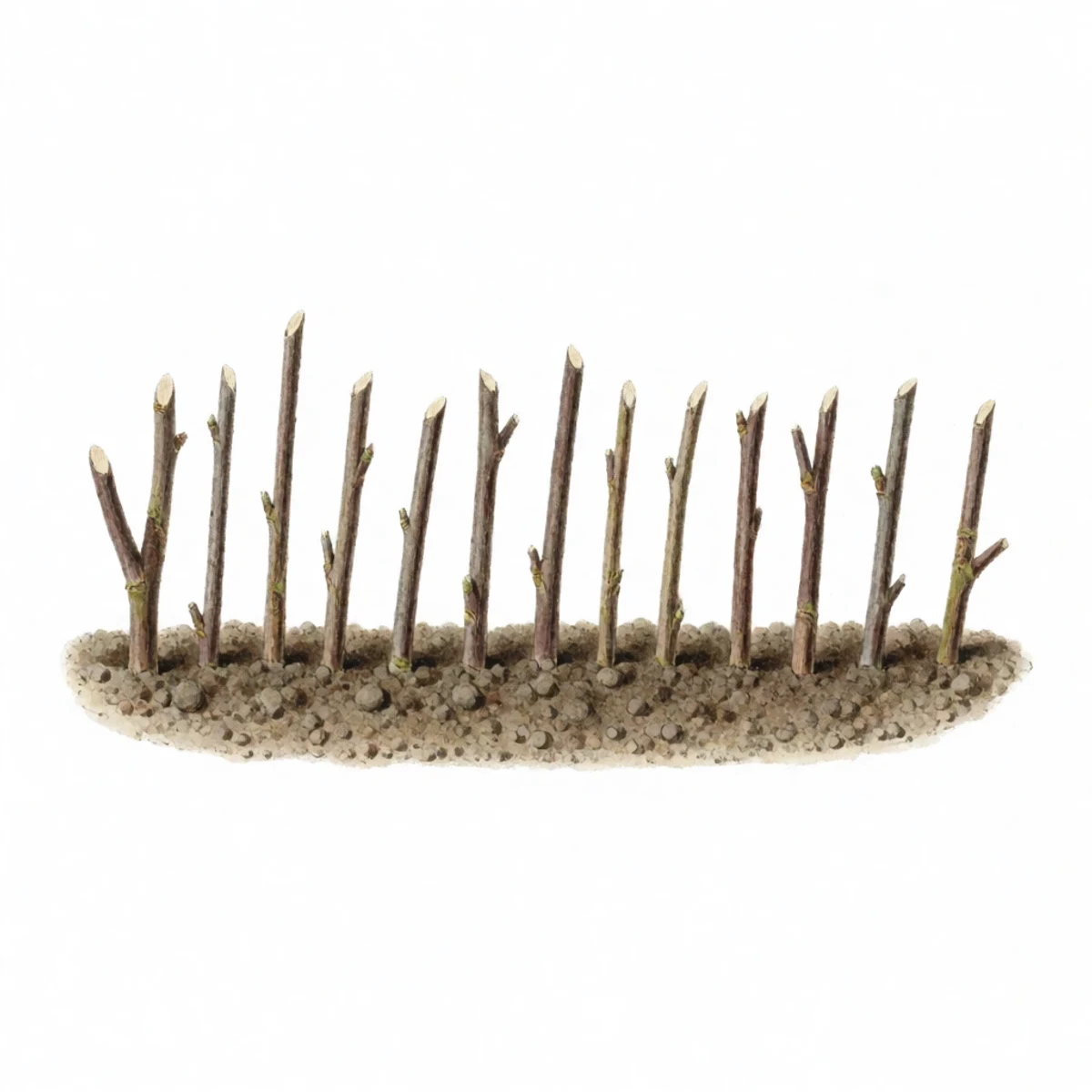
    Watercolour plate of a row of bare dormant hardwood cuttings standing upright in a shallow garden trench of gritty soil, evenly spaced, each stick sunk deep so only its short tip shows above the soil surface, seen from the side at ground level

    Plant them in pots of gritty mix or in a trench of worked garden soil, with the bottom two thirds of the cutting buried and at least one node above ground and one below. Press the soil down tight. Air pockets, not cold, are what usually kills them.

  5. Step 5 · The first year

    Leaves do not mean it has rooted

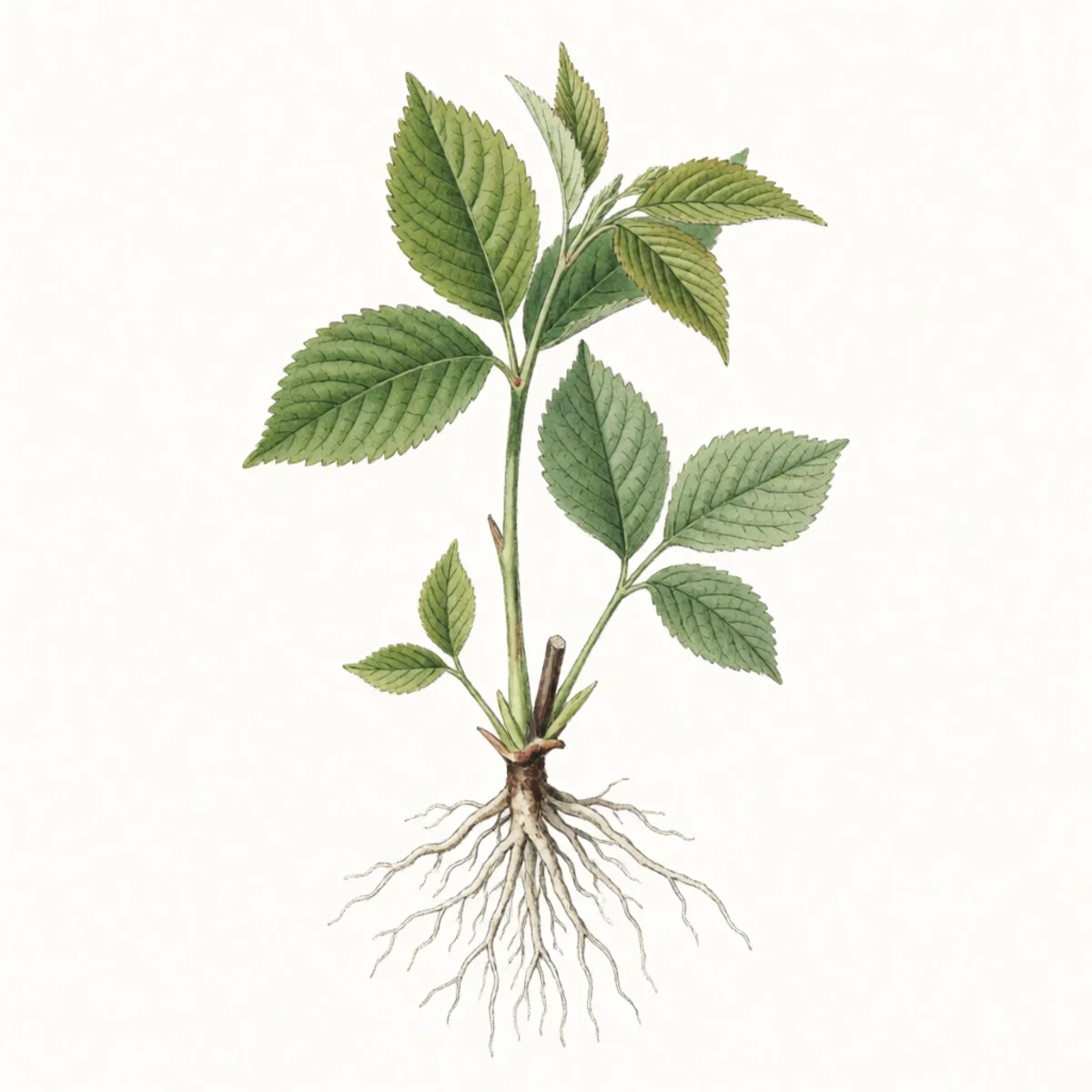
    Watercolour plate of a hand tugging gently at a rooted hardwood cutting in early summer, white roots holding it firm in the soil while a leafy shoot stands above

    A cutting can leaf out on its stored energy and then die in June without ever growing roots. Check progress by tugging gently in early summer. Water weekly through the first season, then transplant that fall or the following spring. Plant twice as many as you need, because some will fail.

Materials needed

As an Amazon Associate, Story Thyme Farms earns from qualifying purchases, at no cost to you. It never changes what we recommend.

Questions we actually get

Which plants root easiest from hardwood cuttings?
Willow and elderberry practically root themselves, figs and grapes are nearly as easy, currants and gooseberries are reliable, and mulberries take with a little more failure. Apples, pears, and stone fruit mostly refuse, they get grafted or air layered instead.
Do I need rooting hormone?
Not for the easy list above. It measurably helps the middle tier, mulberry, quince, some ornamentals. Dip the angled end just before sticking.
Why did my cuttings leaf out and then collapse?
They spent their savings. A dormant cutting holds enough stored sugar to push leaves once, and if roots have not formed by the time it is spent, the cutting dies looking suddenly. More buried nodes, firmer soil, and steadier moisture move the odds.