Your Border Fills With Butterflies When You Plant These
Nectar flowers bring visitors; host plants and puddling spots make residents. The difference between a garden butterflies pass through and one they live in is five deliberate things.
One click drops all five into your Amazon cart at today's prices. Delete what you already own before you check out — nothing is bought until you do.
Common milkweed seed
No milkweed, no monarchs - it is that literal
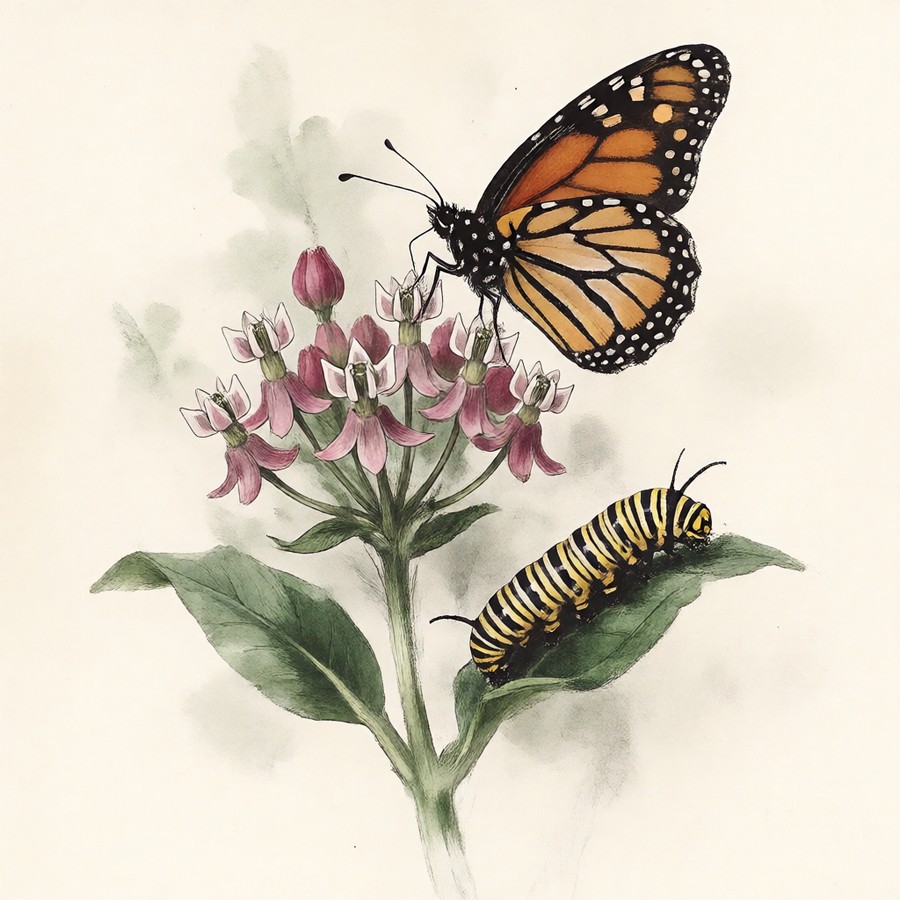
Monarch caterpillars eat milkweed and nothing else, so every monarch you have ever seen grew up on one. A patch from seed takes a season to establish and then runs itself, feeding generations each summer. Common milkweed is the workhorse; let it have a corner rather than a formal border, and it will earn it.
Seed needs winter cold to sprout - sow in fall or fake it in the fridge.
A native nectar mix
Continuous bloom is the contract
A butterfly garden fails in the gaps - two empty weeks in July and the residents move on. A regional native mix staggers bloom from spring through frost, and native species carry measurably more nectar than the showy hybrids bred for petal count over food value. One sowing, years of season-long table service.
Skip 'butterfly bush' - nectar for adults, useless to every caterpillar.
A puddling stone
Butterflies drink minerals, not just nectar
The flittering crowd needs salts and minerals nectar lacks, which is why butterflies mob wet gravel and mud after rain. A shallow puddling dish - sand, a splash of water, topped up like a birdbath - keeps that resource in the garden, and on hot afternoons it is the busiest spot in the border.
A pinch of coarse salt in the sand once a season is the secret ingredient.
A rearing cage
Watch the whole magic trick
A monarch caterpillar in the open has a rough two-percent survival rate; in a mesh cage on the porch with fresh milkweed daily it is near certain. Raising a few from egg to release is two weeks of the best science lesson a household gets, and every release is one the wasps did not win.
Fresh host leaves daily and a clean cage floor - that is the whole husbandry.
A field guide to know them
Naming them is how you start counting them
Once you can tell a viceroy from a monarch and a fritillary from a skipper, the border becomes a checklist that fills itself every afternoon - and knowing which butterfly means which host plant tells you what to plant next. The guide turns a pretty hobby into a naturalist's one.
The caterpillar plates matter as much as the butterfly ones - you will meet them first.
All five in your Amazon cart in one click — today's prices, nothing to remember.
As an Amazon Associate, Story Thyme Farms earns from qualifying purchases, at no cost to you. It never changes what we recommend.