Alfalfa
Medicago sativa
Family Fabaceae
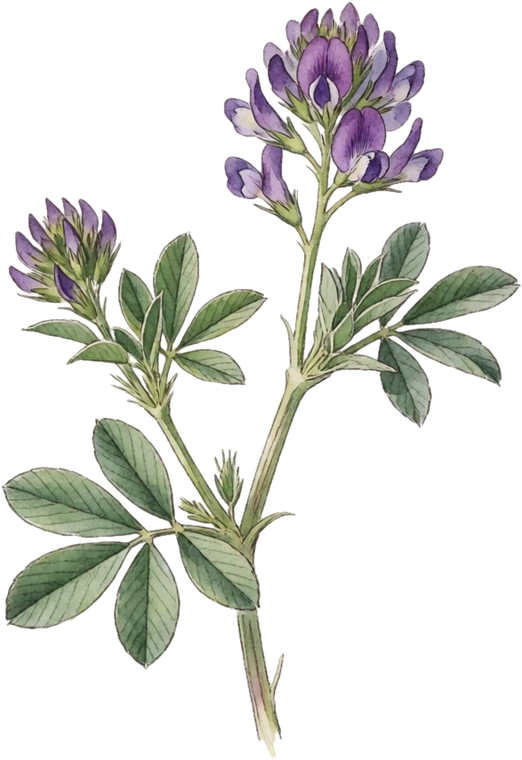
Alfalfa farms the subsoil you can't reach — a taproot driving deep to mine minerals and haul them up into its leaves, while the roots fix nitrogen along the way. That's why the same plant is premier livestock forage, a tonic tea, salad sprouts, and a legendary soil-builder.
Once settled into deep, sweet, well-drained ground it becomes a perennial workhorse — drought means little to a root that deep — flowering purple for the bees and yielding cut-and-drop mulch for years on end. One patch quietly upgrades everything around it. Worth a corner of any homestead.
 Full Sun
 Low water
 Fast growth
 Attracts bees
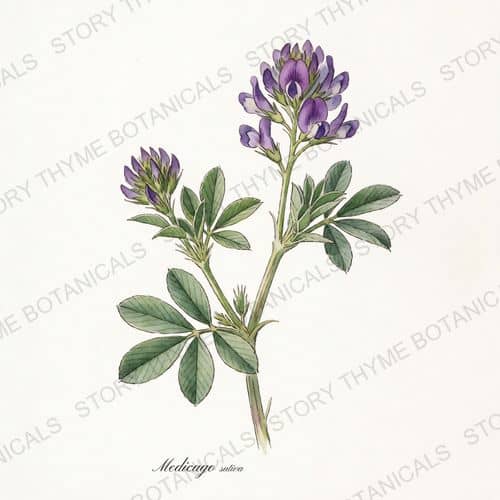
From the print shop
Growing alfalfa? Hang it.
Our Plant Library collection carries alfalfa — Medicago sativa, print Nº 6, “Alfalfa.”
526 designsfrom $12.99white or black backgroundmatte poster, unframed
Will it fruit where you are?
Enter your ZIP — we look up your USDA hardiness zone (2023 map) and check it against what alfalfa actually needs.
 Hardy inZones 3-10
Alfalfa · Common problems
Common alfalfa problems

Pests
6 problems on file

Diseases
1 problem on file
- Almost none in a garden setting
Alfalfa · Growing & propagation
Growing alfalfa
- Light
- Full Sun
- Water
- Low
Deep taproot, very drought-tough
 Soil
Soil- Deep, well-drained, neutral-alkaline
Nitrogen-fixer · pH 6.5 - 7.5
 Fertilizer
- None
Fixes nitrogen; a dynamic accumulator with a deep taproot
 Pruning
- Cut back several times a season
The deep-rooted king of forage and green manure — its taproot mines minerals from far below (a dynamic accumulator), it fixes nitrogen, and it feeds bees and livestock alike. As a cover crop or chop-and-drop it builds soil for years. The leaves brew a mineral-rich tonic tea and sprout for salads. Needs sweet (neutral-alkaline), well-drained soil to thrive.
 Spacing
- Broadcast
How to plant & propagate alfalfa
- Propagate
- Division or seed
Alfalfa · Calculators & field guides
A little help in the garden.
Alfalfa · Yearly calendar
The alfalfa year, month by month
Jan
No calendar activity is listed for this month.
 Bloom
BloomBloomJune to August
What each band means
- Bloom — flowers open — pollinators working, frost on blossoms is the danger.
These are the species' typical months — expect them a few weeks earlier in warm zones and later in cold ones. Watch the plant, not just the calendar.
Alfalfa · Ecology & uses
Ecology & uses
Medicago sativa
Alfalfa in the garden system
- Herbaceous layer perennial
- N-fixer
- Dynamic accumulator
- Nectary/insectary
 Attracts
- Bees
 Moisture
- Upland / dry
 Deer
Deer- Browsed
Protect young plants
 Origin
- Introduced
What alfalfa is grown for
✓ Commonly eatenleaves/sprouts a traditional tonic; seeds sprout for salads
 Use
Use- Deep N-fixer
- Use
- Dynamic accumulator
- Traditional use
- Tonic tea
- Use
- Bee forage
- Edible value
- 3/5
 Traditional use rating
- 3/5 in herbal tradition
Harvesting & storing alfalfa
Cover crop / dynamic accumulator; leaves for tea and sprouts; premier livestock forage.
Edibility, identification, and traditional-use notes here are general reference — not medical or veterinary advice, and not a claim that any plant treats or prevents anything. Medicinal ratings record how strongly a plant features in herbal tradition, nothing more. Never eat or dose a plant you have not positively identified. More on how to use this library.
Alfalfa · Varieties & cultivars
Choosing a alfalfa variety
'Vernal' (hardy); low-growing cover-crop types
Sources & plant identity
Know what you’re growing.
See where the knowledge comes from.
Alfalfa
Medicago sativa
The plant, at a glance.
- Botanical name
- Medicago sativa
- Plant family
- Fabaceae
- Growth habit
- Perennial
- Origin
- Introduced
- USDA plant symbol
- MESA
- Invasive risk
- Low
Hardiness, size and timing vary with your cultivar, soil and climate.
Rooted in research.
University extension research, brought together with hands-on growing experience at Story Thyme Farms.
Questions
Alfalfa questions, answered straight.
Is alfalfa safe for kids and pets?
Alfalfa is commonly eaten and isn't considered toxic, but "commonly eaten" isn't a guarantee for any particular person or animal — allergies, quantity, and which part you eat all matter. One caveat on this one: leaves/sprouts a traditional tonic; seeds sprout for salads. Never eat a plant you haven't positively identified, and check with a vet before letting pets or livestock graze anything new.
When do you harvest alfalfa?
Cover crop / dynamic accumulator; leaves for tea and sprouts; premier livestock forage.
How do you propagate alfalfa?
Division or seed.
Elsewhere
Where alfalfa sits in the library.
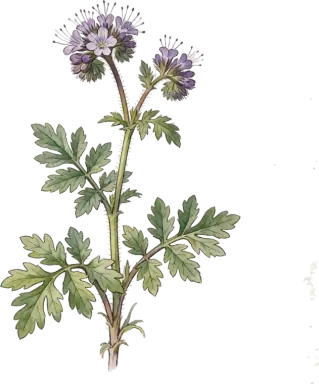 Phacelia (Lacy Phacelia)
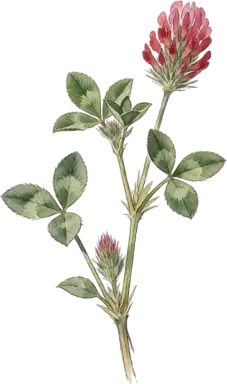 Crimson Clover
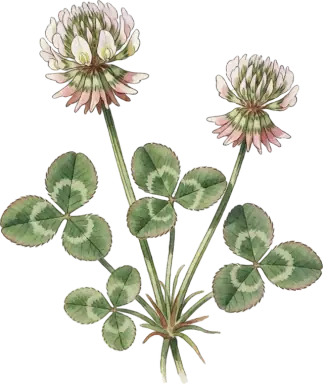 White Clover
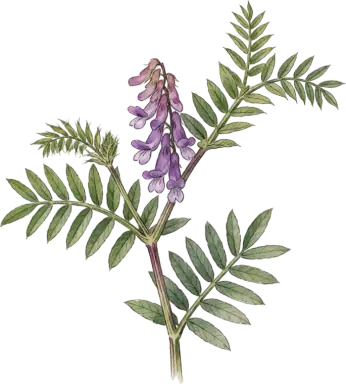 Hairy Vetch