Bleeding Heart
Lamprocapnos spectabilis
Family Papaveraceae
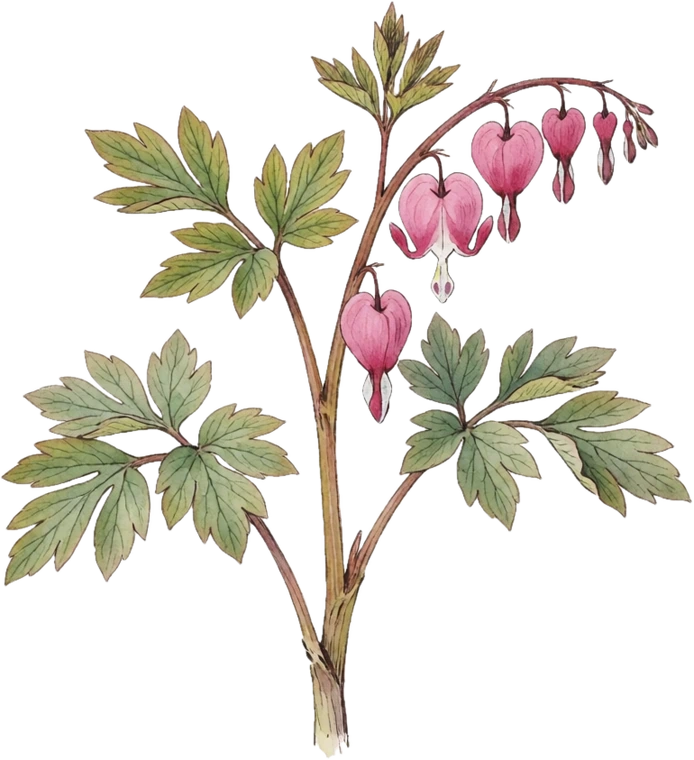
Bleeding heart earns its name honestly: rows of perfect pink or white lockets dangle from arching stems in spring, each one shaped like a heart with a drop falling from it. In a shaded bed it is pure romance — the flower children point at and gardeners never outgrow.
It plays a graceful spring act, then bows out — the whole plant goes dormant when summer heat arrives and returns faithfully every year, so it partners beautifully with ferns and hostas that fill the stage behind it. Deer pass it by; admire it, don't nibble it. Give shade its romance.
 Part Shade to Shade
 Moderate water
 Moderate growth
 Deer-resistant
 Attracts bees
From the print shop
Growing bleeding heart? Hang it.
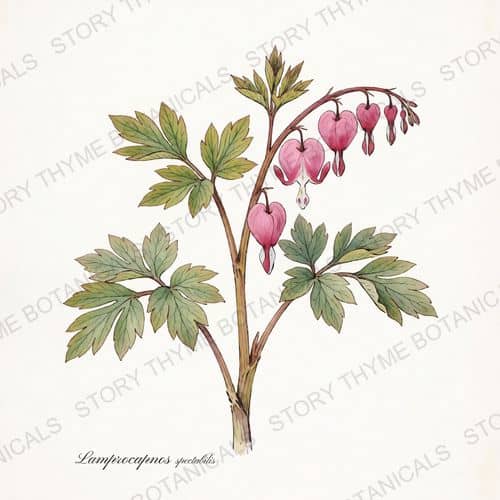
Our Plant Library collection carries bleeding heart — Lamprocapnos spectabilis, print Nº 62, “Bleeding Heart.”
526 designsfrom $12.99white or black backgroundmatte poster, unframed
Will it thrive where you are?
Enter your ZIP — we look up your USDA hardiness zone (2023 map) and check it against what bleeding heart actually needs.
 Hardy inZones 3-9
Bleeding Heart · Common problems
Common bleeding heart problems

Pests
1 problem on file
- Aphids (minor)

Diseases
1 problem on file
- Almost none
Bleeding Heart · Growing & propagation
Growing bleeding heart
- Light
- Part Shade to Shade
- Water
- Moderate, even in spring
 Soil
Soil- Rich, moist, humusy · pH 6.0 - 7.0
 Fertilizer
- Light spring compost
 Pruning
- After it yellows
GOES DORMANT and vanishes by midsummer (heat + dry) — that's normal, not death; mark the spot so you don't dig it up.
 Spacing
- 18-24 in
How to plant & propagate bleeding heart
- Propagate
- Division or seed
Bleeding Heart · Calculators & field guides
A little help in the garden.
Bleeding Heart · Yearly calendar
The bleeding heart year, month by month
Jan
No calendar activity is listed for this month.
 Bloom
BloomBloomMay
What each band means
- Bloom — flowers open — pollinators working, frost on blossoms is the danger.
These are the species' typical months — expect them a few weeks earlier in warm zones and later in cold ones. Watch the plant, not just the calendar.
Bleeding Heart · Ecology & uses
Ecology & uses
Lamprocapnos spectabilis
Bleeding Heart in the garden system
- Herbaceous layer perennial
 Attracts
- Bees
 Habitat
- Woodland
- Moisture
- Facultative / average
- Deer
- Resistant
A safer unfenced choice
 Origin
- Introduced
What bleeding heart is grown for
⚠ Toxic if eatenToxic to pets and people if eaten; sap irritates skin
 Use
Use- Spring shade drama
- Use
- Woodland gardens
- Use
- Cottage beds
Edibility, identification, and traditional-use notes here are general reference — not medical or veterinary advice, and not a claim that any plant treats or prevents anything. Medicinal ratings record how strongly a plant features in herbal tradition, nothing more. Never eat or dose a plant you have not positively identified. More on how to use this library.
Bleeding Heart · Varieties & cultivars
Choosing a bleeding heart variety
'Spectabilis' (classic pink); 'Alba' (white); 'Gold Heart' (gold foliage); 'Valentine' (red)
Sources & plant identity
Know what you’re growing.
See where the knowledge comes from.
Bleeding Heart
Lamprocapnos spectabilis
The plant, at a glance.
- Botanical name
- Lamprocapnos spectabilis
- Plant family
- Papaveraceae
- Growth habit
- Perennial
- Origin
- Introduced
- USDA plant symbol
- LASP8
- Invasive risk
- Low
- Other names
- Dicentra spectabilis
Hardiness, size and timing vary with your cultivar, soil and climate.
Rooted in research.
University extension research, brought together with hands-on growing experience at Story Thyme Farms.
Questions
Bleeding Heart questions, answered straight.
Do deer eat bleeding heart?
Rarely — bleeding heart is considered deer-resistant, which makes it one of the safer unfenced choices in deer country. Hungry deer in a hard winter test every rule, but it's a low-risk pick.
Is bleeding heart safe for kids and pets?
No — treat it as toxic if eaten. Toxic to pets and people if eaten; sap irritates skin Site it accordingly if children or pets roam the garden. This is general reference, not medical or veterinary advice — call a vet or poison control if something has actually been eaten.
How do you propagate bleeding heart?
Division or seed.
Elsewhere
Where bleeding heart sits in the library.
 Sunflower
 Zinnia
 Peony
Peony Daylily