Eastern Redcedar
Juniperus virginiana
Family Cupressaceae
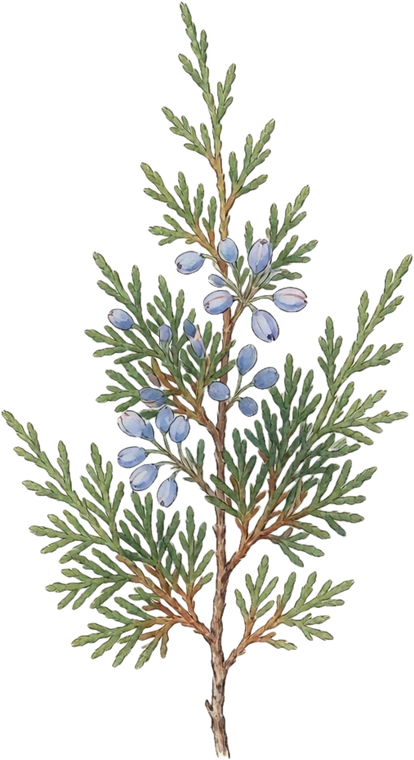
Cedar waxwings are literally named for this tree. Eastern redcedar hangs female branches with frosted-blue berry cones that carry flocks of birds through winter — the same berries that flavor gin — on an evergreen that thrives on the driest, poorest, most abused ground in North America.
Dense year-round cover, famously aromatic rot-proof wood, and zero coddling make it the backbone native for windbreaks and wild corners — just station it far from apples and hawthorns, since it hosts cedar-apple rust. Berries need a male nearby. Plant a pair and the birds handle the rest.
 Full Sun
 Low water
 Moderate growth
 Native to North America
 Needs a pollination partner
From the print shop
Growing eastern redcedar? Hang it.
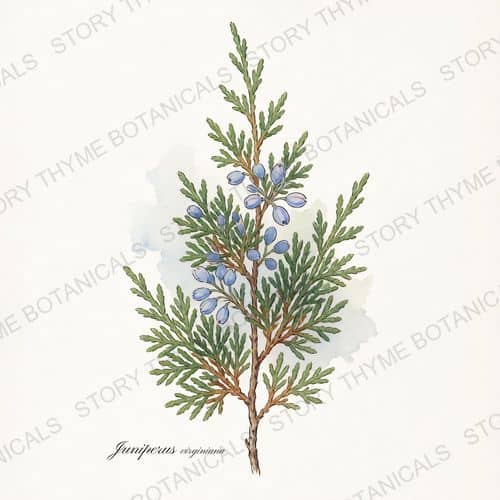
Our Plant Library collection carries eastern redcedar — Juniperus virginiana, print Nº 162, “Eastern Redcedar.”
526 designsfrom $12.99white or black backgroundmatte poster, unframed
Will it fruit where you are?
Enter your ZIP — we look up your USDA hardiness zone (2023 map) and check it against what eastern redcedar actually needs.
 Hardy inZones 2-9PollinationPartner needed
Eastern Redcedar · Common problems
Common eastern redcedar problems

Pests
1 problem on file

Diseases
4 problems on file
- CEDAR-APPLE RUST (alternate host — orange galls; keep from apples/hawthorns)
- Phomopsis Blight
- Cedar-Apple Rust
- Winter Burn
Pollination
Poor pollination → low fruit set (plant a partner)
Eastern Redcedar · Growing & propagation
Growing eastern redcedar
- Light
- Full Sun
- Water
- Very low
Drought-, heat-, salt-, and poor-soil-proof
 Soil
Soil- Any, even the worst
A pioneer of old fields · pH 4.5 - 7.5
 Fertilizer
- None
 Pruning
- Little needed
The toughest native evergreen — a pioneer that colonizes the poorest, driest, most abused ground across most of the country, providing dense year-round wildlife cover and, on female trees, blue 'berries' that feed cedar waxwings and dozens of bird species through winter (and flavor gin). Aromatic rot-resistant wood (cedar chests). One caveat: it's the alternate host for cedar-apple rust, so keep it away from apples and hawthorns, or plant resistant apples.
 Spacing
- 10-20 ft
How to plant & propagate eastern redcedar
- Propagate
- Seed (stratify), cuttings, or layering
Eastern Redcedar · Seasonal care & spray guidance
The eastern redcedar growing playbook
When to spray eastern redcedar
Growing season. Site 500+ ft from apples/hawthorns, or grow rust-resistant apples.
Eastern Redcedar · Calculators & field guides
A little help in the garden.
Eastern Redcedar · Yearly calendar
The eastern redcedar year, month by month
Jan
HarvestDecember to February
 Bloom
Bloom Harvest
BloomMarch to May
HarvestDecember to February
What each band means
- Bloom — flowers open — pollinators working, frost on blossoms is the danger.
- Harvest — picking time — check ripeness every few days.
These are the species' typical months — expect them a few weeks earlier in warm zones and later in cold ones. Watch the plant, not just the calendar.
Eastern Redcedar · Ecology & uses
Ecology & uses
Juniperus virginiana
Eastern Redcedar in the garden system
- Canopy layer tree
 Attracts
- Birds
 Moisture
- Upland / dry
 Deer
Deer- Browsed
Protect young plants
- Origin
- Native to North America
What eastern redcedar is grown for
! Some parts toxic — see notesBerry-cones edible in small amounts (gin flavoring); foliage mildly toxic to livestock
- Use
- Tough native evergreen
- Use
- Bird food
- Use
- Windbreak
- Use
- Gin/cedar wood
Harvesting & storing eastern redcedar
Blue berry-like cones on females — gin flavoring and a major winter BIRD food.
Edibility, identification, and traditional-use notes here are general reference — not medical or veterinary advice, and not a claim that any plant treats or prevents anything. Medicinal ratings record how strongly a plant features in herbal tradition, nothing more. Never eat or dose a plant you have not positively identified. More on how to use this library.
Eastern Redcedar · Varieties & cultivars
Choosing a eastern redcedar variety
'Canaertii' (upright, heavy berries); 'Grey Owl' (spreading); 'Taylor' (narrow column)
Sources & plant identity
Know what you’re growing.
See where the knowledge comes from.
Eastern Redcedar
Juniperus virginiana
The plant, at a glance.
- Botanical name
- Juniperus virginiana
- Plant family
- Cupressaceae
- Growth habit
- Tree · Perennial
- Origin
- Native to North America
- USDA plant symbol
- JUVI
- Invasive risk
- Low
Hardiness, size and timing vary with your cultivar, soil and climate.
Rooted in research.
University extension research, brought together with hands-on growing experience at Story Thyme Farms.
Questions
Eastern Redcedar questions, answered straight.
Why isn't my eastern redcedar fruiting?
Most often: it has no genetically distinct partner nearby. Eastern Redcedar can't pollinate itself — dioecious; wind-pollinated; female 'berries' (cones) feed cedar waxwings and many birds. Plant a second, unrelated one nearby; two different cultivars, or a cultivar plus a seedling, is the classic pairing.
Is eastern redcedar safe for kids and pets?
With care. Berry-cones edible in small amounts (gin flavoring); foliage mildly toxic to livestock Site it accordingly if children or pets roam the garden. This is general reference, not medical or veterinary advice — call a vet or poison control if something has actually been eaten.
When do you harvest eastern redcedar?
Blue berry-like cones on females — gin flavoring and a major winter BIRD food.
How do you propagate eastern redcedar?
Seed (stratify), cuttings, or layering.
Elsewhere
Where eastern redcedar sits in the library.
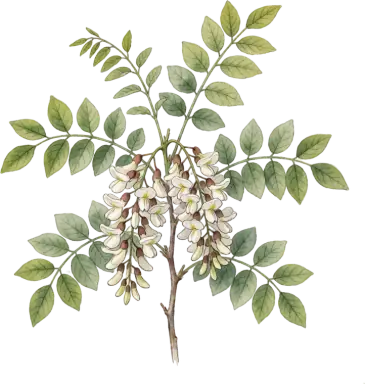 Black Locust
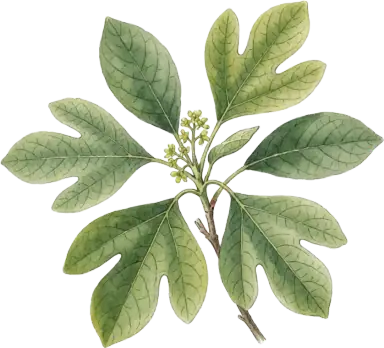 Sassafras
 Eastern Hemlock
 Northern Catalpa