The illustrated growing guide

Elephant Ear

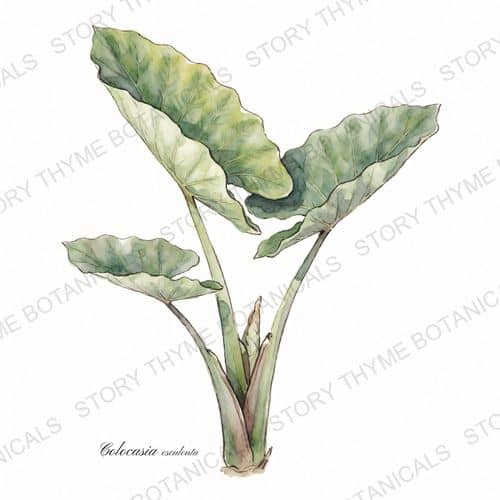
Colocasia esculenta

Family Araceae

Est. zones 8-11

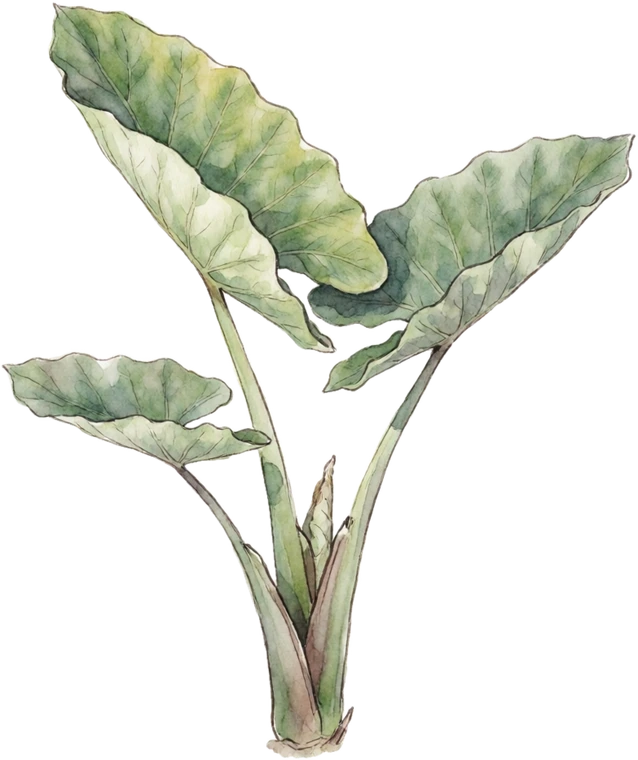
Botanical illustration of Elephant Ear
Bulb · Colocasia esculenta

Instant jungle — leaves the size of a card table on a plant that grows a foot a week in July heat and water. The black-leaved types are stunning. Corms are edible taro if you cook them fully; raw, every part burns.

BulbFull Sun to Part ShadeHigh waterVery Fast in heat growthExcellent edible

Where to buy the plant — 1 nursery

Elephant Ear — a print from the Tropical Plants collection

From the print shop

Growing elephant ear? Hang it.

Our Tropical Plants collection carries elephant earColocasia esculenta, print Nº 12, “Elephant Ear.”

16 designsfrom $21.99white or black groundmatte poster, unframed

Shop Tropical Plants botanical prints →

I

Overview

Will elephant ear suit your garden, and what goes wrong.

Will it fruit where you are?

Enter your ZIP — we look up your USDA hardiness zone (2023 map) and check it against what elephant ear actually needs.

Life cyclePerennial zones 8–11, annual elsewhere

Elephant Ear at a glance

Life cyclePerennial zones 8–11, annual elsewhere
Mature size3-8 ft giant leaves
PollinationN/A
Chill requirementNot yet established
Bloom seasonRare
Harvest seasonCorms (taro/dasheen) edible — MUST be cooked thoroughly (raw = calcium oxalate burn)
Growth rateVery Fast in heat

Common elephant ear problems

II

Growing

Light, water, soil, propagation and the season’s jobs.

How to grow elephant ear: light, water & soil

LightFull Sun to Part Shade
WaterHIGH — a bog plant; can sit in a water saucer
SoilRich, wet, heavy feeder · pH 5.5 - 7.0
FertilizerHeavy monthly feed
PruningFrost → lift corms, store at 50°F+ — Remove tattered leaves.
Spacing2-4 ft

How to plant & propagate elephant ear

PropagateOffsets, division, or bulbils

The elephant ear growing playbook

Field-tested instructions for every job elephant ear asks of you, compiled from university extension guidance — in the order the season brings them.

Sowing

Start corms in pots indoors before your last frost

Six to eight weeks before your last frost, pot each corm in a large container of rich, moist media with the top of the corm just under the soil surface, and hold it somewhere warm and bright until the weather settles. Do not set corms straight into cold spring ground. Corms need eight to ten months of warm growing to size up, and the plant sulks and stalls when temperatures sit below 50F for long stretches, so a head start indoors buys the season length a corm crop needs.

Planting out

Plant out corms once frost danger has passed and the soil is warm

Set corms, cormels, or huli sets at least 6 inches deep, spaced 18 to 24 inches apart in rows 18 to 24 inches apart, in deep friable loam at pH 5.5 to 6.5 with compost worked in. Avoid rocky or stony ground, which deforms the corms and makes digging them a fight. The harvested corm is the plant's own swelling stem, so it takes the shape of whatever the soil lets it take, and crowded or shallow plantings give you many small corms instead of a few good ones.

Colocasia esculenta is invasive in wetlands along the American Gulf Coast, where it displaces native wetland plants, and Florida lists it as a Category I invasive. Keep it out of ponds, ditches, and stream margins where it can escape, and check your own state's list before planting near water.

Watering

Hold the soil at field capacity all season, never dry

Keep the soil moist but drained, at or near field capacity, for the whole growing period, by furrow, sprinkler, or drip. Taro tolerates prolonged waterlogging and can be grown standing in shallow water, but dasheen types should not sit waterlogged for any extended length of time. Water availability drastically affects corm yield, and this is a plant built for warm, moist ground rather than a crop that shrugs off drought.

Feeding

Side-dress three times across the long season

Work 2.75 to 3 lb of 7-30-20 or 10-20-20 per 100 square feet into the bed before planting, then side-dress 1 lb of 16-16-16 per 100 square feet at two, four, and six months after planting. Have your soil tested if you want rates matched to your own ground rather than these poor-soil figures. This is a hungry crop on a very long clock, and the corm is bulking right through the back half of the season, so a single spring feeding runs out long before harvest.

What to watch for

Scout petioles and young leaves for leafhoppers and aphids

Check the petioles for scattered brown to black spots, which are stains from sap oozing out of leafhopper puncture holes, and look over the young leaves for aphid colonies. Treat only if the numbers are genuinely large, not on sight of a few insects. Taro leafhopper and aphids feed by sucking sap from petioles and leaf blades, but they rarely do real damage unless they build to high numbers, so most sightings need watching rather than spraying.

If you do treat, read the label and confirm the product is registered for taro or dasheen before using it; the taro root aphid lives below ground and is not well controlled by spraying at all.

Watch for Phytophthora leaf blight in wet weather

After wet spells, look for purplish to brownish circular water-soaked spots on the leaves that exude a clear yellow liquid, and pull off and remove badly blighted leaves. Also watch the crown for dry rot from Sclerotium rolfsii and for phyllosticta leaf spot, which mostly show up in poorly managed plantings. Leaf blight is driven almost entirely by climate rather than the calendar, flaring in wet seasons and fading through dry months, so rain is the trigger to inspect, not a date.

Extension recommends fungicides for leaf blight but does not name an active ingredient for home gardens; check the label lists taro or dasheen before using any product, and add a wetting agent only if the label allows it.

Protection

Lift and store corms anywhere colder than zone 8

Outside its hardy range, dig the corms once frost has knocked the foliage back, lift them gently with a fork so the skin is not pierced, dry them a few days out of the sun, and bury them in peat, sand, or vermiculite somewhere above 45F. Check them monthly, cut away any soft spots, and let the cut dry before re-storing. This is a tender tropical perennial hardy only to about zone 8a, and a corm that freezes or that rots around an unnoticed wound is simply gone by spring.

Do not store these near food. Handling cut corms can irritate skin because of the oxalate crystals, so gloves are worth wearing.

Harvesting

Dig corms when the leaves yellow and the petioles shorten

Expect harvest 8 to 10 months after planting. The plant tells you: leaves turn yellowish, petioles shorten to under 2 feet, and the corms start to protrude from the ground. Dasheen is ready once most cormels have gone dormant and the leaves have dried. Young leaves can be picked at any point during growth without lifting the plant. Maturity shifts with your location, variety, soil fertility, and water, so the plant's own decline is a far better signal than any month on a calendar.

Every part of this plant is toxic raw because of needle-like calcium oxalate crystals, which burn and swell the lips, mouth, tongue, and throat. Corms and leaves must be cooked thoroughly before anyone eats them, and raw material should be kept away from children and pets.

III

The year

What elephant ear asks for, month by month.

The elephant ear year, month by month

No fixed season calendar for elephant ear — its care follows conditions, not the calendar.

IV

Ecology & uses

What it does for the garden, and what it is grown for.

Elephant Ear in the garden system

  • Herbaceous layer bulb
HabitatWetland
MoistureWetland / wet-tolerant
DeerBrowsed — protect young plants
OriginIntroduced

What elephant ear is grown for

! Some parts toxic — see notesRaw = toxic (oxalates); cooked corms = the edible taro of the tropics

UseTropical drama
UsePond edges
UseTaro (cooked)
Edible value4/5

Harvesting & storing elephant ear

Corms (taro/dasheen) edible — MUST be cooked thoroughly (raw = calcium oxalate burn).

Edibility, identification, and traditional-use notes here are general reference — not medical or veterinary advice, and not a claim that any plant treats or prevents anything. Medicinal ratings record how strongly a plant features in herbal tradition, nothing more. Never eat or dose a plant you have not positively identified. More on how to use this library.

V

Cultivars

Named varieties of elephant ear, ruled as a catalogue.

Best elephant ear varieties & cultivars

11 on file

Named varieties of elephant ear differ in winter-chill needs, ripening time, hardiness, and whether they set fruit on their own — pick one that fits your climate.

Bun Long · Chinese taro

Ripens8-10 months after plantingZones8-11

firm table taro; the classic taro chip variety — One of the two most accessible upland taro varieties in Hawaii and the standard choice when you want corms to slice and fry rather than pound.

Where to buy ‘Bun Long

Story Thyme Farms may earn a small commission from these links, at no cost to you — it never changes what we recommend.

Lehua Maoli

Ripens8-10 months after plantingZones8-11

excellent poi taro — The other widely available upland variety in Hawaii. Poi taro does not store well after digging, so plan to use the corms soon after harvest.

Where to buy ‘Lehua Maoli

Story Thyme Farms may earn a small commission from these links, at no cost to you — it never changes what we recommend.

Tsurunoko

Ripenswhen cormels go dormant and leaves dryZones8-11

dasheen type; corms store well — A dasheen (Colocasia esculenta var. globulifera) grown from its small cormels rather than huli sets. Dasheen corms keep a long time if cleaned, washed, and drained before storage, and longer still refrigerated.

Where to buy ‘Tsurunoko

Story Thyme Farms may earn a small commission from these links, at no cost to you — it never changes what we recommend.

Miyako

Ripenswhen cormels go dormant and leaves dryZones8-11

dasheen type — A named dasheen variety grown in Hawaii. Unlike true taro, dasheen soils should never be left waterlogged for long stretches.

Where to buy ‘Miyako

Story Thyme Farms may earn a small commission from these links, at no cost to you — it never changes what we recommend.

Akado

Ripenswhen cormels go dormant and leaves dryZones8-11

dasheen type — A named dasheen variety grown in Hawaii, planted from cormels after their dormancy breaks and shoots appear at the growing tips.

Where to buy ‘Akado

Story Thyme Farms may earn a small commission from these links, at no cost to you — it never changes what we recommend.

Pink China

Zones6-10

By far the hardiest elephant ear. Where most types die at zone 8a, this one has reports of survival in zone 6b and further north in protected sites, which means northern growers may skip the annual lift-and-store entirely.

Where to buy ‘Pink China

Story Thyme Farms may earn a small commission from these links, at no cost to you — it never changes what we recommend.

Black Magic

Zones8-11

A dark-leaved ornamental selection with unusual purplish-black leaves. Hardy to about zone 8a like the species, so lift and store the corms anywhere colder.

Where to buy ‘Black Magic

Story Thyme Farms may earn a small commission from these links, at no cost to you — it never changes what we recommend.

Illustris

Zones8-11

A patterned ornamental Colocasia grown for the leaves rather than the corm, though the raw-toxicity rules apply to it exactly as they do to any taro. Hardy to about zone 8a like the species.

Where to buy ‘Illustris

Story Thyme Farms may earn a small commission from these links, at no cost to you — it never changes what we recommend.

Black Coral

Zones8-11

Deep black-purple foliage; an ornamental selection of the same edible species.

Where to buy ‘Black Coral

Story Thyme Farms may earn a small commission from these links, at no cost to you — it never changes what we recommend.

Hilo Bay

Zones8-11

Green leaves carried on dark purple stalks, giving contrast without the heavy darkness of the black-leaved types.

Where to buy ‘Hilo Bay

Story Thyme Farms may earn a small commission from these links, at no cost to you — it never changes what we recommend.

Rhubarb

Zones8-11

Green foliage on red-pink stems. Ornamental selection of Colocasia esculenta.

Where to buy ‘Rhubarb

Story Thyme Farms may earn a small commission from these links, at no cost to you — it never changes what we recommend.

VI

Sources & plant ID

Where the care distinctions come from, and how the plant is filed.

Research basis

Sources behind this profile

No extension citations are attached to elephant earyet. The care figures below come from the library's own catalogue rather than a traced primary source.

Plant ID

BinomialColocasia esculenta
FamilyAraceae
TypeBulb · Tender Perennial
USDA symbolCOES
OriginIntroduced
Invasive riskLow

VII

Where to buy

Third-party nurseries — not Story Thyme Farms.

Third-party nurseries, not Story Thyme Farms. Prices are theirs.

Story Thyme Farms may earn a small commission from these links, at no cost to you — it never changes what we recommend.

VIII

Questions

Elephant Ear questions, answered straight.

Is elephant ear safe for kids and pets?

With care. Raw = toxic (oxalates); cooked corms = the edible taro of the tropics Site it accordingly if children or pets roam the garden. This is general reference, not medical or veterinary advice — call a vet or poison control if something has actually been eaten.

When do you harvest elephant ear?

Corms (taro/dasheen) edible — MUST be cooked thoroughly (raw = calcium oxalate burn).

How do you propagate elephant ear?

Offsets, division, or bulbils.

IX

Elsewhere

Where elephant ear sits in the library.

Where elephant ear sits in the library

Grows in the same world