The illustrated growing guide

Ground Cherry

Physalis pruinosa

Family Solanaceae

Grown as an annual

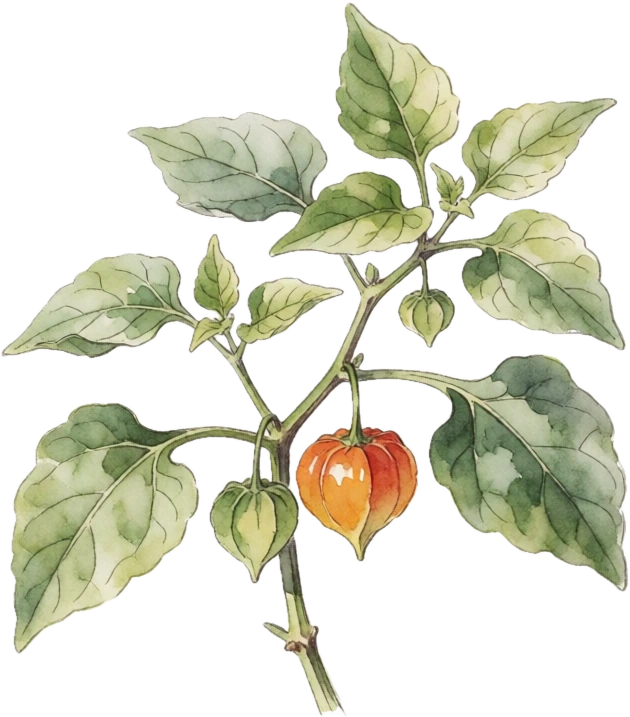
Botanical illustration of Ground Cherry
Annual · Physalis pruinosa

Pineapple-vanilla candy in a paper lantern that picks ITSELF — you just gather the drops. Kids strip-mine the patch daily; the surplus makes a jam people beg for. One packet self-sows a lifetime supply.

Annual · NativeFull SunModerate waterFast growthNative to North AmericaExcellent edibleAttracts beesNone winter chill

Where to buy the plant — 1 nursery

Chinese Lantern — a print from the Seed Heads & Pods collection

From the print shop

The closest print we make

We don’t print Physalis pruinosa. The closest we have is Physalis alkekengi (“Chinese Lantern”) in the Seed Heads & Pods collection — the same genus, Physalis, not the same species.

16 designsfrom $21.99white or black groundmatte poster, unframed

Shop Seed Heads & Pods botanical prints →

I

Overview

Will ground cherry suit your garden, and what goes wrong.

Will it fruit where you are?

Enter your ZIP — we look up your USDA hardiness zone (2023 map) and check it against what ground cherry actually needs.

Life cycleAnnual
Winter chillNone
PollinationSelf-fertile

Ground Cherry at a glance

Life cycleAnnual
Mature size18 in tall × 3 ft sprawl
PollinationSelf-fertile (unlike tomatillo)
Chill requirementNone (not chill-dependent)
Bloom seasonSummer
Harvest seasonJuly - Frost: fruits DROP when ripe — gather husked treasures off the mulch every evening
Growth rateFast

Common ground cherry problems

II

Growing

Light, water, soil, propagation and the season’s jobs.

How to grow ground cherry: light, water & soil

LightFull Sun
WaterModerate
SoilAverage · pH 6.0 - 6.8
FertilizerLight — overfed plants sulk on fruiting
PruningNone — Let it sprawl on straw mulch (clean drops); nothing else.
Spacing2-3 ft

How to plant & propagate ground cherry

Maturity70-75 days
From seedStart indoors 6-8 wks early; self-sows
PropagateFrom seed

When to spray ground cherry

Growing season. Cover seedlings.

The ground cherry growing playbook

Field-tested instructions for every job ground cherry asks of you, compiled from university extension guidance — in the order the season brings them.

Sowing

Start seed indoors six to seven weeks before your outdoor planting date

Sow a quarter inch deep in sterile mix and set the flat on a heat mat held at 75 to 85F until seedlings emerge, then grow them on at about 70F soil. Once true leaves appear, thin or prick out so seedlings stand two inches apart, and harden off before they go outside. Ground cherry germinates on warmth, not on calendar date, and a cool flat gives slow, ragged emergence. Counting back from your own last-frost date is what makes this portable from Zone 3 to Zone 9.

Planting out

Set plants out two to four weeks after your last frost, 18 to 24 inches apart

Wait until all danger of frost has passed and the soil has genuinely warmed, then plant into rich, light, well-drained ground in full sun at pH 6.0 to 6.5, allowing 18 to 24 inches in every direction. Plants run 1.5 to 3 feet tall and spread laterally, so a cage or short stake helps keep sprawling fruit off wet soil. This crop is a warm-season nightshade that sulks in cold soil, and the extra wait past your last frost costs nothing while a chilled transplant stalls for weeks. The lateral spread is why spacing matters more than the modest height suggests.

Watering

Water steadily through the season, at the soil not the leaves

Keep moisture regular and sufficient once plants are established, and deliver it by drip or soaker rather than overhead sprinkling. The plants will survive drought and heat on their root systems alone, but fruit quality is what suffers first when they are made to tough it out. Wet foliage is how the fungal problems of the nightshade family get started, so keeping leaves dry is free disease control.

Mulching

Lay straw mulch before the plants sprawl over the bed

Spread two to four inches of straw or other organic mulch around the young plants while you can still reach the soil, keeping it just off the stems. Beyond holding moisture and smothering weeds, mulch is what makes this crop harvestable at all. Ripe ground cherries drop, and they land on straw instead of mud, so you can see them and pick them clean.

Feeding

Feed lightly at planting, then leave it alone

Work in a modest general application at planting the way you would for other garden crops, and skip the side-dressings. In decent garden soil ground cherry plants may need no more fertilizer at all. These plants carry strong root systems and pull what they need from ordinary soil. Push nitrogen and you buy lush foliage at the direct expense of fruit, which is the whole point of the crop.

What to watch for

Hunt three-lined potato beetle larvae on the leaf undersides

Check plants at least weekly, and daily during an outbreak. Look for adults a little larger than a quarter inch with cream to reddish-yellow wing covers bearing three black stripes, then turn leaves over and crush the elongated orange egg clusters on the undersides. Drop adults and the green, shiny-black-headed larvae into a pail of soapy water. UNH Extension reports a second generation appearing in August, though UMN notes it is unclear whether the insect has one or two generations per year, so keep checking after the first wave. This beetle is usually found in low numbers and is not considered a pest except on tomatillo and ground cherry, where it can be abundant and cause significant defoliation. It is the larvae, not the adults, that strip a plant. They cement their own excrement onto their backs as a shield, which is why they get overlooked until the foliage is gone.

Do not reach for an insecticide here. Ground cherry flowers in waves from roughly four to six weeks after transplant until frost, so the plant is almost always in bloom and there is no non-bloom window to spray into; any insecticide applied now goes onto open flowers that bees are working. UMN notes this beetle isn't on many pesticide labels in any case. Handpick instead, and if you ever do consider a product, read the label for pollinator restrictions and the pre-harvest interval before anything is applied.

Protection

Row cover at transplant, on ground that grew no nightshade last year

Lay spunbonded row cover or netting over the bed the day you transplant, before three-lined potato beetles find the planting, and site the bed away from where tomatoes, tomatillos, peppers, potatoes or eggplant grew last season. Pull the cover once plants begin flowering so bees can work them. The beetles overwinter in or near last year's nightshade ground and walk to the nearest host in spring, so a cover only works if it goes on before they arrive and the bed is not sitting on their emergence site. Ground cherry is self-pollinating, so an early cover costs you no fruit set.

Harvesting

Gather the dropped fruit off the mulch every few days

The crop tells you when it is ready: the husk goes dry and papery, the berry turns from green to golden, and the fruit falls on its own. Walk the bed every few days and collect the fallen fruit with husks left on. Left in the husk they keep a week or two at room temperature; refrigerate only if you must, as cold storage figures for this crop are not well established. Nothing you pick off the plant by hand is ripe. Ground cherry sheds its fruit at maturity, so the ground under the plant is the harvest, and fruit left lying there rots or reseeds itself into next year's weed problem.

Eat only fully ripe golden fruit. The leaves and unripe fruit carry solanine and solanidine, with immature berries holding the highest levels, and should not be eaten. Anyone with a known tomato allergy should avoid ground cherry.

III

The year

What ground cherry asks for, month by month.

The ground cherry year, month by month

MonthJanFebMarAprMayJunJulAugSepOctNovDec
Bloom
Harvest

What each band means

  • Bloomflowers open — pollinators working, frost on blossoms is the danger.
  • Harvestpicking time — check ripeness every few days.

The ground cherry year as text

  • Jan quiet month
  • Feb quiet month
  • Mar quiet month
  • Apr quiet month
  • May quiet month
  • Jun bloom
  • Jul bloom, harvest
  • Aug bloom
  • Sep quiet month
  • Oct quiet month
  • Nov quiet month
  • Dec quiet month

These are the species' typical months — expect them a few weeks earlier in warm zones and later in cold ones. Watch the plant, not just the calendar.

IV

Ecology & uses

What it does for the garden, and what it is grown for.

Ground Cherry in the garden system

  • Groundcover layer annual
AttractsBees
MoistureFacultative / average
DeerBrowsed — protect young plants
OriginNative to North America

What ground cherry is grown for

! Some parts toxic — see notesRipe golden fruit safe + delicious; unripe/green = no

UseKid candy
UseJam
UseFarmers-market darling
Edible value4/5

Harvesting & storing ground cherry

July - Frost: fruits DROP when ripe — gather husked treasures off the mulch every evening. About 70-75 days from planting.

Edibility, identification, and traditional-use notes here are general reference — not medical or veterinary advice, and not a claim that any plant treats or prevents anything. Medicinal ratings record how strongly a plant features in herbal tradition, nothing more. Never eat or dose a plant you have not positively identified. More on how to use this library.

V

Cultivars

Named varieties of ground cherry, ruled as a catalogue.

Best ground cherry varieties & cultivars

5 on file

Named varieties of ground cherry differ in days to maturity, disease resistance, flavor, and habit — pick one that fits your season and space.

Aunt Molly's

Self-fertile
RipensMidsummer to frostZones2-11SizeBushy tomatillo-like plant, roughly 18 to 24 inch spread

Sweet and tart together, with vanilla and pineapple notes — Physalis pruinosa. An 1850s American heirloom associated with Pennsylvania and listed by Slow Food as an endangered heritage variety. High in pectin, which is why it is the standard pick for jam and pie. Self-pollinating.

Where to buy ‘Aunt Molly's

Story Thyme Farms may earn a small commission from these links, at no cost to you — it never changes what we recommend.

Goldie · Huberschmidt

Self-fertile
RipensMidsummer to frostZones2-11SizeShort but sprawling, profusely branching

Quite sweet and a bit wild — Physalis pruinosa. Berries run half to three-quarters of an inch, golden inside a straw-colored papery husk. Prolific and drops its fruit when ripe, so mulch under it. Available as certified organic seed.

Where to buy ‘Goldie

Story Thyme Farms may earn a small commission from these links, at no cost to you — it never changes what we recommend.

Cossack Pineapple · Cossack's Pineapple; Pineapple

Self-fertile
RipensMidsummer to frostZones2-11SizeReported 3 to 4 feet; wants support like a determinate tomato and about 2.5 foot spacing

Intensely sweet and tropical, the pineapple flavor the name promises — Physalis pruinosa. Marble-sized golden fruits that drop when fully ripe; shake the branches to bring down the ready ones. Bears until frost. Plant height is reported inconsistently across seed houses, from 12 to 18 inches up to 3 to 4 feet, so treat the figure as approximate.

Where to buy ‘Cossack Pineapple

Story Thyme Farms may earn a small commission from these links, at no cost to you — it never changes what we recommend.

Mary's Niagara

Self-fertile
RipensMidsummer to frostZones2-11SizeGrows low to the ground and sprawls rather than standing up; space 24 to 36 inches

Refreshingly sweet and tangy with hints of pineapple — Physalis pruinosa. Introduced by the Experimental Farm Network, who obtained it from its namesake Mary, a fruit-stand grower in her native Ontario. Bears until frost, and reported to grow more rambunctiously in climates warmer than its Ontario home. At 75 days it is not an especially early variety despite its northern origin.

Where to buy ‘Mary's Niagara

Story Thyme Farms may earn a small commission from these links, at no cost to you — it never changes what we recommend.

Loewen Family Heirloom · Loewen Family

Self-fertile
RipensLate summer to frostZones2-11SizeFruit about two-thirds of an inch across

Tangy sweet — Brought to Canada from Russia in 1925 and passed down through the generations of one family. The latest-maturing variety here at 80 days from transplant, which makes it a poor bet in the shortest-season zones. Sold as both Physalis pruinosa and Physalis grisea depending on the seed house.

Where to buy ‘Loewen Family Heirloom

Story Thyme Farms may earn a small commission from these links, at no cost to you — it never changes what we recommend.

VI

Sources & plant ID

Where the care distinctions come from, and how the plant is filed.

Research basis

Sources behind this profile

No extension citations are attached to ground cherryyet. The care figures below come from the library's own catalogue rather than a traced primary source.

Plant ID

BinomialPhysalis pruinosa
FamilySolanaceae
TypeAnnual
USDA symbolPHPR7
OriginNative to North America
Invasive riskLow

VII

Where to buy

Third-party nurseries — not Story Thyme Farms.

Third-party nurseries, not Story Thyme Farms. Prices are theirs.

Story Thyme Farms may earn a small commission from these links, at no cost to you — it never changes what we recommend.

VIII

Questions

Ground Cherry questions, answered straight.

Do I need two ground cherry plants to get fruit?

No — ground cherry is self-fertile, so a single plant will set a crop. A second one usually improves yields, but it isn't required.

Is ground cherry safe for kids and pets?

With care. Ripe golden fruit safe + delicious; unripe/green = no Site it accordingly if children or pets roam the garden. This is general reference, not medical or veterinary advice — call a vet or poison control if something has actually been eaten.

When do you harvest ground cherry?

July - Frost: fruits DROP when ripe — gather husked treasures off the mulch every evening. From planting, expect about 70-75 days to maturity.

How do you propagate ground cherry?

From seed.

IX

Elsewhere

Where ground cherry sits in the library.

Where ground cherry sits in the library

Grows in the same world