Juniper
Juniperus spp.
Family Cupressaceae
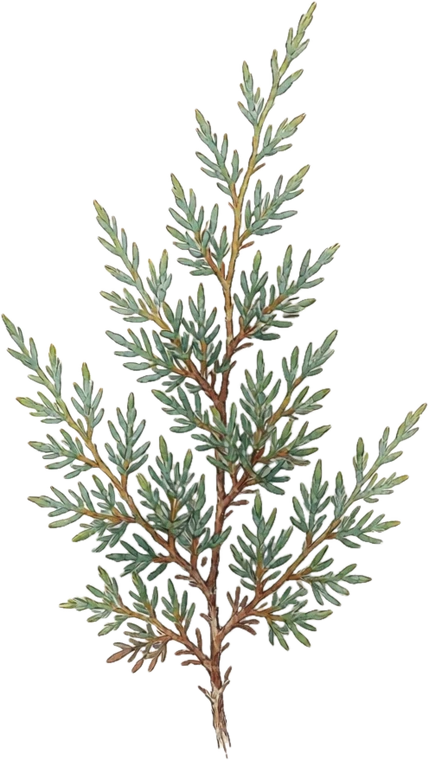
Slopes, sand, salt, drought, thirty below — ask juniper and the answer is always yes. It comes in every shape a landscape needs, six-inch groundcovers to twenty-foot uprights, in greens, blues, and golds, and the silvery berries on common juniper are the very ones that flavor gin.
Birds shelter in it year-round and take the berries through winter; erosion-prone banks hold still under it; and it never asks for a hose. Sun and drainage are its only demands. If you garden on the site everyone else calls hopeless, juniper is the yes you needed.
 FULL SUN — no exceptions
 Low water
 Slow-Moderate growth
From the print shop
Growing juniper? Hang it.
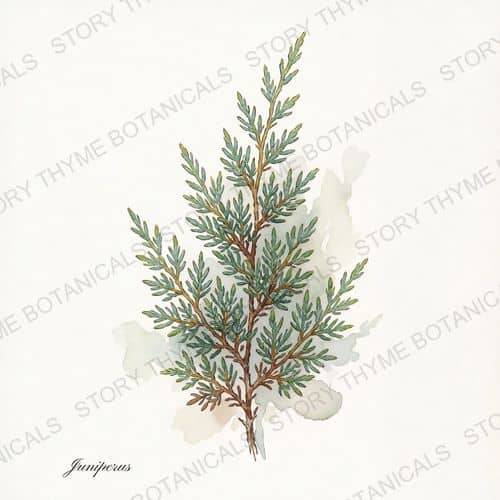
Our Plant Library collection carries juniper — Juniperus, print Nº 257, “Juniper.”
526 designsfrom $12.99white or black backgroundmatte poster, unframed
Will it fruit where you are?
Enter your ZIP — we look up your USDA hardiness zone (2023 map) and check it against what juniper actually needs.
 Hardy inZones 3-9
Juniper · Common problems
Common juniper problems

Pests
2 problems on file
- Bagworms (hand-pick the ornaments)
- Spider Mites

Diseases
5 problems on file
- CEDAR-APPLE RUST (orange gel aliens — keep 500 ft from orchard apples or plant resistant apples)
- Phomopsis Tip Blight
- Phomopsis Blight
- Cedar-Apple Rust
- Winter Burn
Juniper · Growing & propagation
Growing juniper
- Light
- FULL SUN
No exceptions, no shade juniper
- Water
- Very low
The anti-irrigation plant
 Soil
Soil- Any DRAINED soil incl. sand and rock · pH 6.0 - 7.5
 Fertilizer
- None
 Pruning
- Early spring if needed
Prune to green wood ONLY — cut past the green and that branch is bald forever; never shear into old wood.
 Spacing
- Per habit (2-6 ft)
How to plant & propagate juniper
- Propagate
- Seed (stratify), cuttings, or layering
Juniper · Seasonal care & spray guidance
The juniper growing playbook
When to spray juniper
Growing season. Bagworm patrol in June; site away from apples/serviceberry or accept rust rings.
Juniper · Calculators & field guides
A little help in the garden.
Juniper · Yearly calendar
The juniper year, month by month
Jan
No calendar activity is listed for this month.
PrunePruneMarch to April
What each band means
- Prune — shape it now — cuts heal cleanly and structure is visible.
These are the species' typical months — expect them a few weeks earlier in warm zones and later in cold ones. Watch the plant, not just the calendar.
Juniper · Ecology & uses
Ecology & uses
Juniperus spp.
Juniper in the garden system
- Groundcover layer shrub
- Living mulch
 Attracts
- Birds
 Moisture
- Upland / dry
 Deer
Deer- Browsed
Protect young plants
What juniper is grown for
! Some parts toxic — see notesMildly toxic to pets
 Use
Use- Slopes/erosion
- Use
- Xeriscape
- Use
- Winter structure
- Use
- Gin
Harvesting & storing juniper
Juniper 'berries' for game cooking + gin (J. communis).
Edibility, identification, and traditional-use notes here are general reference — not medical or veterinary advice, and not a claim that any plant treats or prevents anything. Medicinal ratings record how strongly a plant features in herbal tradition, nothing more. Never eat or dose a plant you have not positively identified. More on how to use this library.
Juniper · Varieties & cultivars
Choosing a juniper variety
'Blue Rug' (flat carpet); 'Blue Star' (rockery gem); 'Taylor' (Italian-cypress look, z4!); 'Grey Owl'
Sources & plant identity
Know what you’re growing.
See where the knowledge comes from.
Juniper
Juniperus spp.
The plant, at a glance.
- Botanical name
- Juniperus spp.
- Plant family
- Cupressaceae
- Growth habit
- Shrub · Perennial
- USDA plant symbol
- JUNIP
- Invasive risk
- Low
Hardiness, size and timing vary with your cultivar, soil and climate.
Rooted in research.
University extension research, brought together with hands-on growing experience at Story Thyme Farms.
Questions
Juniper questions, answered straight.
Is juniper safe for kids and pets?
With care. Mildly toxic to pets Site it accordingly if children or pets roam the garden. This is general reference, not medical or veterinary advice — call a vet or poison control if something has actually been eaten.
When do you harvest juniper?
Juniper 'berries' for game cooking + gin (J. communis).
How do you propagate juniper?
Seed (stratify), cuttings, or layering.
Elsewhere
Where juniper sits in the library.
 Nasturtium
 Blue Fescue
 Hens and Chicks
 Hardy Ice Plant