The illustrated growing guide

Sacred Lotus

Nelumbo nucifera

Family Nelumbonaceae

Est. zones 4-11

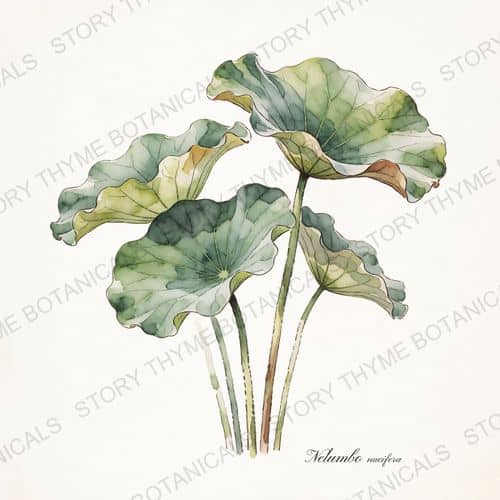
Botanical illustration of Sacred Lotus
Perennial · Nelumbo nucifera

The sacred lotus — huge fragrant flowers and round parasol leaves held HIGH above the water (unlike flat lily pads), followed by the iconic showerhead seed pods. It's edible top to bottom (seeds, young leaves, and the crunchy rhizome of Asian cooking) and surprisingly hardy if the tuber never freezes. It demands heat and full sun to bloom; dwarf types like 'Momo Botan' thrive in a half-barrel on a hot patio.

PerennialFull SunHigh waterFast in heat growthExcellent edibleAttracts bees

Where to buy the plant — 1 nursery

Sacred Lotus — a print from the Pond & Water Garden collection

From the print shop

Growing sacred lotus? Hang it.

Our Pond & Water Garden collection carries sacred lotusNelumbo nucifera, print Nº 2, “Sacred Lotus.”

16 designsfrom $21.99white or black groundmatte poster, unframed

Shop Pond & Water Garden botanical prints →

I

Overview

Will sacred lotus suit your garden, and what goes wrong.

Will it fruit where you are?

Enter your ZIP — we look up your USDA hardiness zone (2023 map) and check it against what sacred lotus actually needs.

Hardy inZones 4-11

Sacred Lotus at a glance

HardinessUSDA 4–11
Mature sizeLeaves and flowers held 2-6 ft ABOVE the water
PollinationBees and beetles crawl inside the huge blooms
Chill requirementNot yet established
Bloom seasonSummer — enormous fragrant flowers held high above round parasol leaves, followed by iconic shower-head seed pods
Harvest seasonSeeds, young leaves, and rhizomes are all edible (Asian cuisine)
Growth rateFast in heat

Common sacred lotus problems

II

Growing

Light, water, soil, propagation and the season’s jobs.

How to grow sacred lotus: light, water & soil

LightFull Sun (the more the better)
WaterAquatic — submerged pots in a pond or large container
SoilHeavy aquatic loam · pH 6.0 - 7.5
FertilizerAquatic tabs monthly in season
PruningCut spent leaves/pods — Needs HEAT to bloom. Plant the fragile tuber horizontally in a wide submerged pot (don't break the growing tip); keep the tuber from freezing over winter (deep pond or store cool/wet). Leaves rise above the water, unlike lily pads.
SpacingOne tuber per large (5+ gal) pot

How to plant & propagate sacred lotus

PropagateDivision or seed

The sacred lotus growing playbook

Field-tested instructions for every job sacred lotus asks of you, compiled from university extension guidance — in the order the season brings them.

Sowing

Scarify lotus seed before sowing, or it will never come up

Nick or scratch through the hard seed coat with a file until the pale interior shows, then drop the seeds into warm water. Discard any that float, they are not viable. Hold the water above 80 degrees F and the sinkers can sprout in as little as 4 or 5 days. Grow the seedlings on in loam under a few inches of water before potting up. The lotus seed coat is famously waterproof, which is why intact lotus seed stays viable for centuries. Water cannot reach the embryo until you physically breach that coat, so unscarified seed simply sits there.

Planting out

Plant the rhizome in spring, before it wakes up

Get the rhizome in before it breaks dormancy. Use a wide, round, shallow container of 15 to 25 gallons with at least 8 to 12 inches of heavy soil, lay the rhizome at a 15 degree angle with the growing tip buried about 2 inches under the substrate, and keep it in full sun. Use only a rhizome with at least two segments closed at both ends by an intact node. Start shallow and let the water deepen as growth takes off; see the overwintering rule for the depth the crown needs by fall. The rhizome is a chain of sealed, air-filled internodes, and the growing tip is fragile, so a piece cut through an internode or planted too deep fails to establish. Planting before dormancy breaks lets the shoot make its own way to the surface rather than spending stored starch fighting the mud.

Keep lotus in a container, never loose in a pond bottom. UF/IFAS reports six plants can cover an acre in a single growing season, and NC State notes planting is prohibited in Wisconsin and it is listed as a noxious weed in several Midwestern states - check your state list before you buy.

Feeding

Feed hard through the growing season

Once standing leaves are up, feed a mature plant in a 15 to 25 gallon container 1 to 2 teaspoons (4 to 8 grams) of a complete water-soluble 20-10-20 every 20 days through the growing season. Everything you eat from a lotus is stored starch, and the plant builds it in a single season from an enormous leaf canopy. A container holds a fixed, small volume of soil, so the crop is limited by what you put back into it.

If the container sits in a shared pond, remember that anything you add to the water is added to the whole pond - follow the label and your state's nutrient rules for aquatic sites.

Dividing

Divide a crowded pot in spring, before growth starts

Tip the container out in spring, before the plant is growing away. Cut the rhizome chain into pieces carrying at least two segments, each sealed at both ends by an intact node, and replant each piece at a 15 degree angle with the tip 2 inches under the substrate. Barely submerge the pot until growth starts. Lotus rhizomes are fragile and resent disturbance, so the forgiving moment is spring, before the plant has committed its stored starch to a canopy. A node at each end keeps the cut segment sealed.

Divisions are viable propagules - never let a cut segment reach a waterway. Lotus planting is prohibited in Wisconsin and it is a listed noxious weed in several Midwestern states.

What to watch for

Watch the pads for aphids and mites, and the pods for lotus borer

Check the undersides of the pads for waterlily aphid colonies and for the fine stippling and webbing of two-spotted or red spider mite, and knock them off with a jet of water. As seed pods fill, look for entry holes and frass from the American lotus borer, and cut out and destroy infested pods. Lotus has no serious insect or disease problems, so these are nuisance pests on an otherwise clean plant - the exception is the borer, which UF/IFAS records decimating an Alabama population's seeds at the peak of seed production, because it eats the crop itself rather than the leaves.

Do not reach for an insecticide here. The plant stands in open water, so anything sprayed on it lands in the pond - read the label for aquatic-site restrictions before any product goes near it, and never spray while the flowers are open and bees are working them.

Protection

Get the rhizome below the freeze line before winter

Hardy lotus overwinters outdoors as long as the water never freezes down to the roots. Move containers sitting in less than about 6 inches of water into deeper water, up to about 24 inches over the crown, or lift the pot and store it somewhere frost-free like a basement or root cellar. If you store it dry-ish, keep some water in the container so the rhizomes never dry out. Lotus is hardy to zone 4, but that hardiness is entirely a function of water depth - the rhizome itself is not frost-tolerant, and it survives only because liquid water above it cannot drop below freezing. A shallow pot is the one that kills the plant.

Harvesting

Take young leaves and immature seeds while the pods are green

Cut young, still-unfurling leaves and cook them like spinach. Take seeds from pods while the pod is still green and the seeds are soft - they can be eaten raw at that stage. Leave some pods to go woody if you want them for dried arrangements or for seed. The seed is only tender for a short window. Once the pod turns brown and woody the seed coat hardens into the waterproof shell that makes lotus seed famous for longevity, and it is no longer worth eating fresh.

Dig the rhizomes once the leaves have yellowed and died back

Wait for the canopy to yellow and die back, then tip the container out or drain the shallows and lift the rhizome chain by hand, working along it so the segments stay whole. Keep the swollen, banded segments for the kitchen and replant two-segment pieces with intact nodes for next year. The rhizome is where the plant banks the season's nutrients, and it does not finish filling those segments until the canopy shuts down. Digging while the leaves are still working means lifting a thin, unfilled rhizome. Timing is keyed to dieback rather than a month because dormancy arrives on very different dates across the species' zone 4 to 11 range.

Never dump lifted rhizomes or trimmings into a waterway or wetland - a single sealed segment is a viable propagule, and NC State notes this species is prohibited in Wisconsin and listed as a noxious weed in several Midwestern states.

III

The year

What sacred lotus asks for, month by month.

The sacred lotus year, month by month

MonthJanFebMarAprMayJunJulAugSepOctNovDec
Bloom

What each band means

  • Bloomflowers open — pollinators working, frost on blossoms is the danger.

The sacred lotus year as text

  • Jan quiet month
  • Feb quiet month
  • Mar quiet month
  • Apr quiet month
  • May quiet month
  • Jun bloom
  • Jul bloom
  • Aug bloom
  • Sep quiet month
  • Oct quiet month
  • Nov quiet month
  • Dec quiet month

These are the species' typical months — expect them a few weeks earlier in warm zones and later in cold ones. Watch the plant, not just the calendar.

IV

Ecology & uses

What it does for the garden, and what it is grown for.

Sacred Lotus in the garden system

  • Herbaceous layer perennial
AttractsBees
MoistureWetland / wet-tolerant
DeerBrowsed — protect young plants
OriginIntroduced

What sacred lotus is grown for

! Some parts toxic — see notesEdible (seeds, rhizome, leaves)

UsePonds
UseEdible rhizome/seeds
UseDramatic bloom
Edible value4/5

Harvesting & storing sacred lotus

Seeds, young leaves, and rhizomes are all edible (Asian cuisine).

Edibility, identification, and traditional-use notes here are general reference — not medical or veterinary advice, and not a claim that any plant treats or prevents anything. Medicinal ratings record how strongly a plant features in herbal tradition, nothing more. Never eat or dose a plant you have not positively identified. More on how to use this library.

V

Cultivars

Named varieties of sacred lotus, ruled as a catalogue.

Best sacred lotus varieties & cultivars

5 on file

Named varieties of sacred lotus differ in winter-chill needs, ripening time, hardiness, and whether they set fruit on their own — pick one that fits your climate.

Momo Botan

Zones4-10DiseaseNo serious insect or disease problems; occasional aphids and red spider mitesSize1-2 ft tall, 1-3 ft spread

Dwarf cultivar. Large, cupped, very fragrant double rose-pink flowers to 5 inches, blooming July to August, each lasting about three days. Plant rhizomes 4-6 inches below the surface. Small enough for a tub or half-barrel water garden.

Where to buy ‘Momo Botan

Story Thyme Farms may earn a small commission from these links, at no cost to you — it never changes what we recommend.

Chawan Basu · Shewan Batsu

Zones4-10Size2-3 ft tall

Small cultivar whose name refers to a rice bowl. Cup-shaped single flowers 5-8 inches across, crystal-white petals tipped and veined in pink, over a lime-green seed head. Blooms mid to late summer. Sold for a 16-inch pot at 5-7 inches of water. Nursery listings give zone 4 and up; the upper bound follows the species range.

Where to buy ‘Chawan Basu

Story Thyme Farms may earn a small commission from these links, at no cost to you — it never changes what we recommend.

Carolina Queen

Zones4-10Size48 inches and taller

Large Perry Slocum hybrid. Single, few-petaled sunset-pink blooms with a golden yellow center, mid to late summer, sold for a 20-inch pot. Needs a pond or a very large container, not a tub. Nursery listings give zone 4 and up; the upper bound follows the species range.

Where to buy ‘Carolina Queen

Story Thyme Farms may earn a small commission from these links, at no cost to you — it never changes what we recommend.

Perry's Giant Sunburst

Zones4-10DiseaseNo serious insect or disease problems; occasional aphids and red spider mitesSize4-6 ft tall, 3-4 ft spread

Large, cupped, very fragrant double yellow flowers 10-12 inches across on stiff stems held above the foliage, July through September. Grow in a large container or basket with up to 24 inches of water over the crown. Watch for blights.

Where to buy ‘Perry's Giant Sunburst

Story Thyme Farms may earn a small commission from these links, at no cost to you — it never changes what we recommend.

Pekinensis Rubra · Pekinense Rubra

Zones4-10DiseaseNo serious insect or disease problems; occasional aphids and red spider mites. Watch for blights.Size3-7 ft tall, 6-8 ft spread

Large, cupped, very fragrant rose-carmine flowers 6-10 inches across, July through September, with rounded parasol-like leaves to 2 feet. Spread of 6-8 feet makes this a pond plant rather than a tub plant. Woody dried seed receptacles are prized for arrangements.

Where to buy ‘Pekinensis Rubra

Story Thyme Farms may earn a small commission from these links, at no cost to you — it never changes what we recommend.

VI

Sources & plant ID

Where the care distinctions come from, and how the plant is filed.

Research basis

Sources behind this profile

No extension citations are attached to sacred lotusyet. The care figures below come from the library's own catalogue rather than a traced primary source.

Plant ID

BinomialNelumbo nucifera
FamilyNelumbonaceae
TypePerennial
USDA symbolNENU2
OriginIntroduced
Invasive riskLow

VII

Where to buy

Third-party nurseries — not Story Thyme Farms.

Third-party nurseries, not Story Thyme Farms. Prices are theirs.

Story Thyme Farms may earn a small commission from these links, at no cost to you — it never changes what we recommend.

VIII

Questions

Sacred Lotus questions, answered straight.

Is sacred lotus safe for kids and pets?

With care. Edible (seeds, rhizome, leaves) Site it accordingly if children or pets roam the garden. This is general reference, not medical or veterinary advice — call a vet or poison control if something has actually been eaten.

When do you harvest sacred lotus?

Seeds, young leaves, and rhizomes are all edible (Asian cuisine).

How do you propagate sacred lotus?

Division or seed.

IX

Elsewhere

Where sacred lotus sits in the library.

Where sacred lotus sits in the library

Grows in the same world