Field Guide · Harvest · 5 min read

How to Cure Onions for Storage

The difference between onions that last until January and onions that rot in October is two weeks of proper drying.

Story Thyme Farms · Bench cardMid–late summer

How to cure onions for storage

Allium cepa. Field drying to winter storage

DifficultyEasy
Cure2–3 weeks
Store at32–40°F, dry
Keeps3–6 months
1When to harvestHarvest when most of the tops have fallen over
2Drying them in the fieldLeave them in the bed a few days if it is dry
3Curing themTwo to three weeks in a single layer with good airflow
4Sorting and storingTrim, sort strictly, and store cold and dry
Materials needed · Garden fork · Mesh bags · Slatted crates · Box fan
Written on the farm · Missouristorythymefarms.com/guides/how-to-cure-onions-for-storage
Prints on one page. The long version below stays on the screen.

The long version

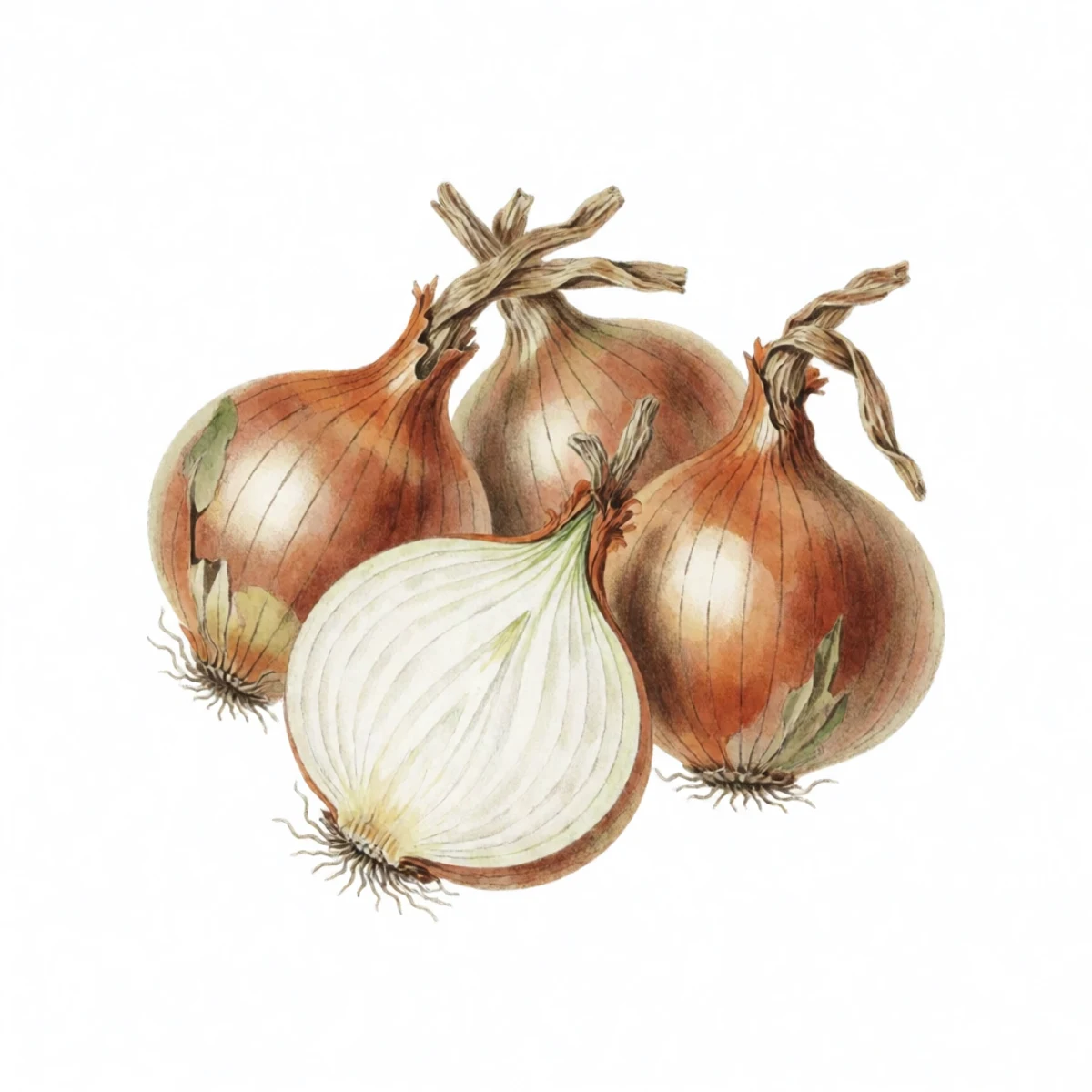
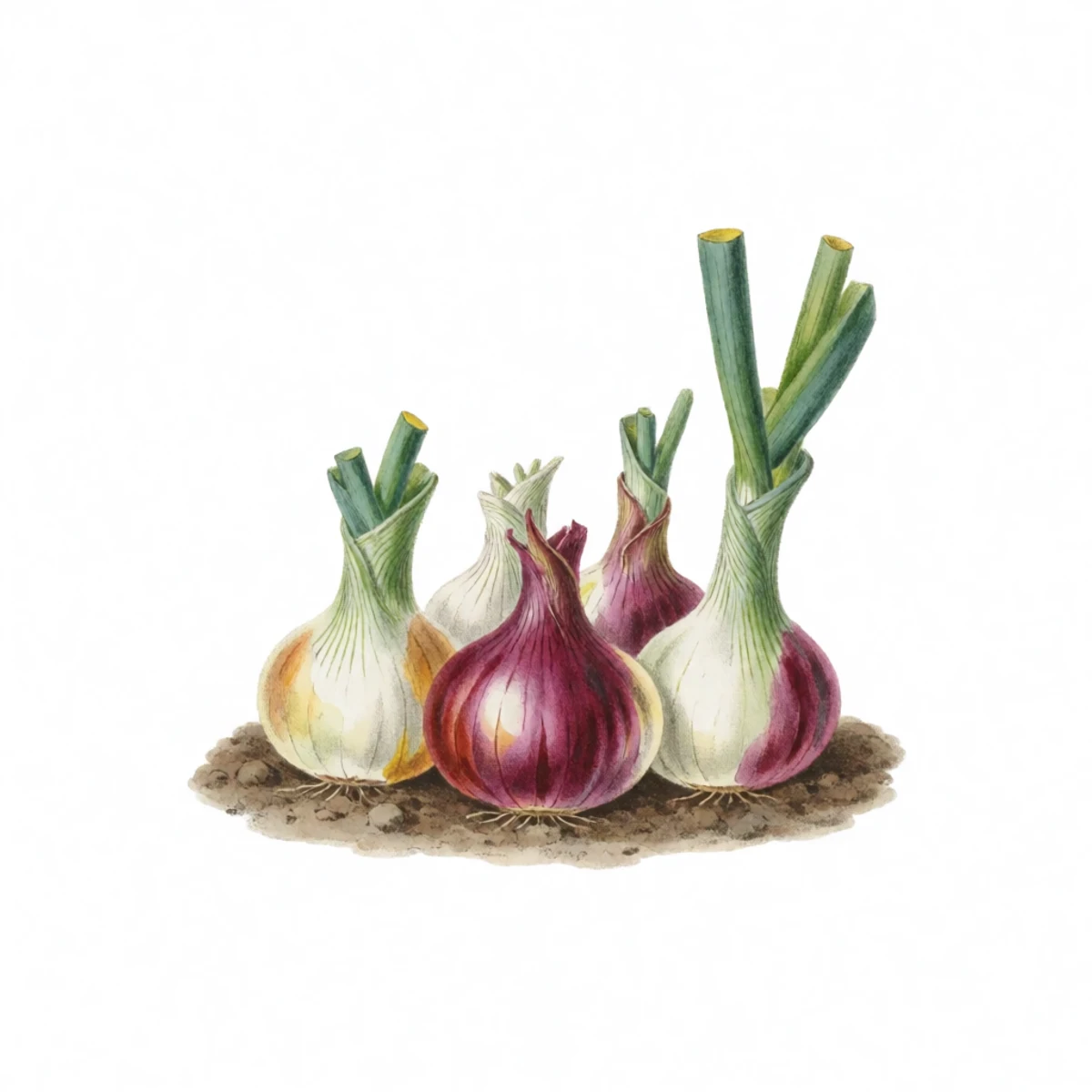
Watercolor plate of storage onions with dried folded tops and bronze skins
Allium cepa · field plate

An onion tells you when it is ready: the neck goes soft and the tops fall over in the row. Getting from that point to a bin of onions that lasts past New Year's is mostly about airflow and not rushing.

  1. Step 1 · When to harvest

    Harvest when most of the tops have fallen over

    Watercolour plate of an onion bed with most tops folded over at the neck, bulbs shouldering out of the soil, a few tops still standing

    When half to three quarters of the tops have folded over at the neck on their own, stop watering, wait a few dry days, and lift the bulbs with a fork. Pulling them up by the tops tears the necks, and a torn neck lets rot in.

  2. Step 2 · Drying them in the field

    Leave them in the bed a few days if it is dry

    Watercolour plate of harvested onions lying on the bed in the sun with their own tops laid across the bulbs to shade them

    In dry weather, leave the onions lying on the bed for two or three days, with the tops shading the bulbs so they do not sunburn. If rain is coming, bring them straight inside instead. Onions will not cure while they are wet.

  3. Step 3 · Curing them

    Two to three weeks in a single layer with good airflow

    Watercolour plate of onions spread one layer deep on a slatted wooden crate in a covered airy place, tops still attached

    Move them somewhere covered with plenty of air movement, on screens, slatted crates, or hung in bundles, one layer deep with the tops still on. Warm and breezy is what you want. They are done when the necks are tight and papery with no green left, the skins rustle, and the roots have dried to stiff whiskers.

  4. Step 4 · Sorting and storing

    Trim, sort strictly, and store cold and dry

    Watercolour plate of cured onions with tops trimmed to an inch and roots cut close, one thick-necked bulb set aside from the sound ones

    Trim the tops to an inch and cut the roots close. Then sort strictly: any bulb with a thick neck, a nick, or a soft spot goes on the kitchen shelf rather than into storage. The keepers want cold, dry conditions, 32 to 40 °F with low humidity, in mesh bags or shallow crates. A cold garage or a corner of a cellar is better than a refrigerator, which is too humid. Storage varieties keep three to six months, and sweet onions a month or two at best.

Materials needed

As an Amazon Associate, Story Thyme Farms earns from qualifying purchases, at no cost to you. It never changes what we recommend.

Questions we actually get

Should I bend the tops over to make onions finish?
No. Breaking tops early was old advice, and it opens the neck while it is still juicy, inviting rot. Let each plant fall on its own schedule and harvest by the majority.
Why are my onions sprouting in the pantry?
Too warm. The pantry sits in the sprouting zone. Storage onions want real cold, near freezing, and bone dry air. The crisper drawer is cold but damp, so onions rot there instead.
Which onions actually store into spring?
Pungent long-day storage varieties: Copra, Patterson, Stuttgarter, red Zeppelin types. The tear-jerker compounds are the preservatives. Sweet Spanish and Vidalia types are eat-first onions.
From the plant library

Onion — the full profile

Zones, cold-hardy cultivars, spacing, feeding, and where to buy one already rooted.

Open the onion guide →