Field Guide · Propagation · 6 min read

How to Divide Rhubarb Crowns

One tired old crown will give you four fresh plants, and the parent plant grows better afterwards.

Story Thyme Farms · Bench cardEarliest spring

How to divide rhubarb

Rheum × hybridum. Early spring crown division

DifficultyEasy, heavy
Divide every5–6 years
Buds per piece2–3
First harvestSkip year one
1When to do itDig while the buds are still dormant
2Lifting the crownDig wide and pry the whole crown out
3Splitting it upCut it into pieces with 2 to 3 buds each
4ReplantingSet the buds an inch or two below the surface
Materials needed · Digging spade · Garden fork · Compost · Straw mulch
Written on the farm · Missouristorythymefarms.com/guides/how-to-divide-rhubarb
Prints on one page. The long version below stays on the screen.

The long version

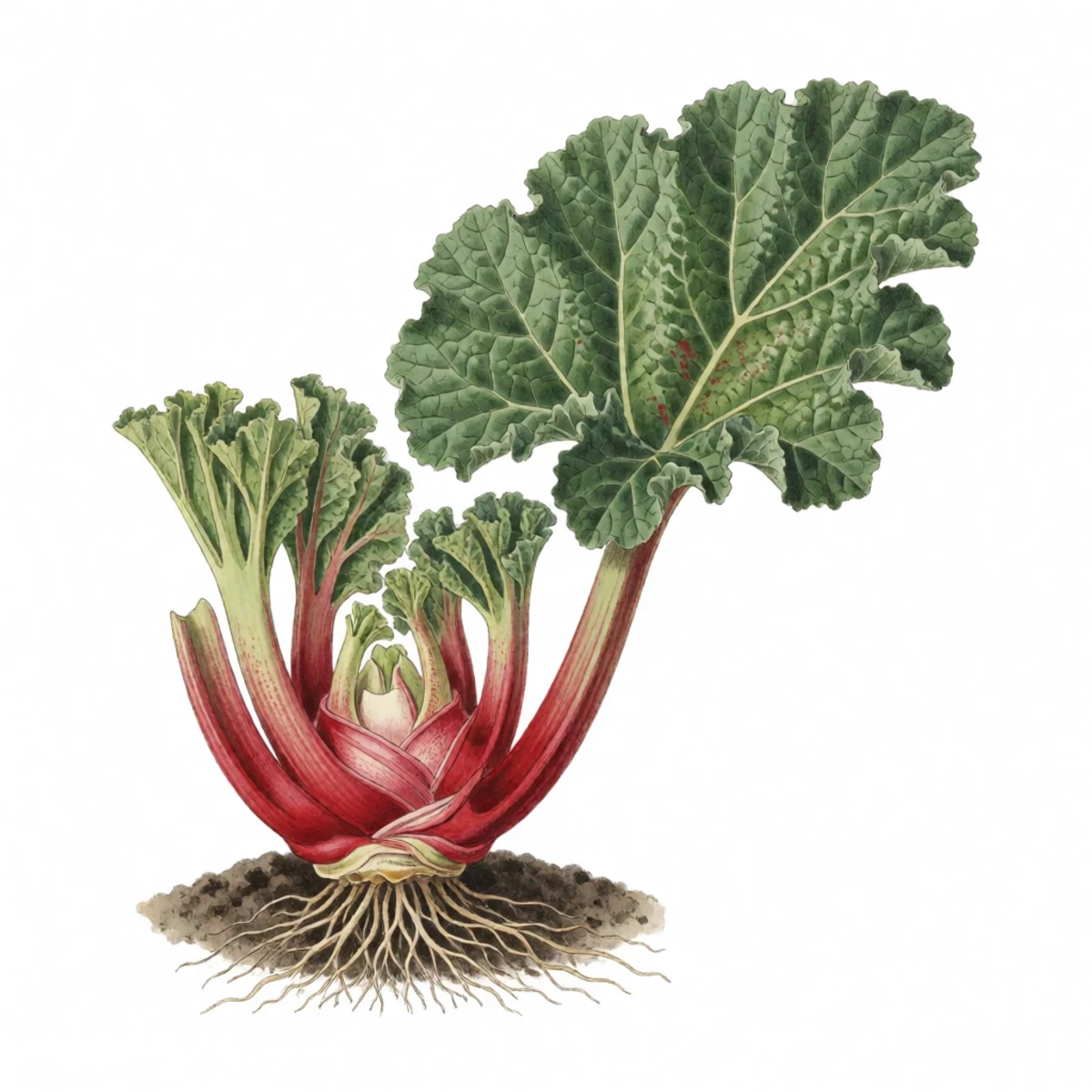
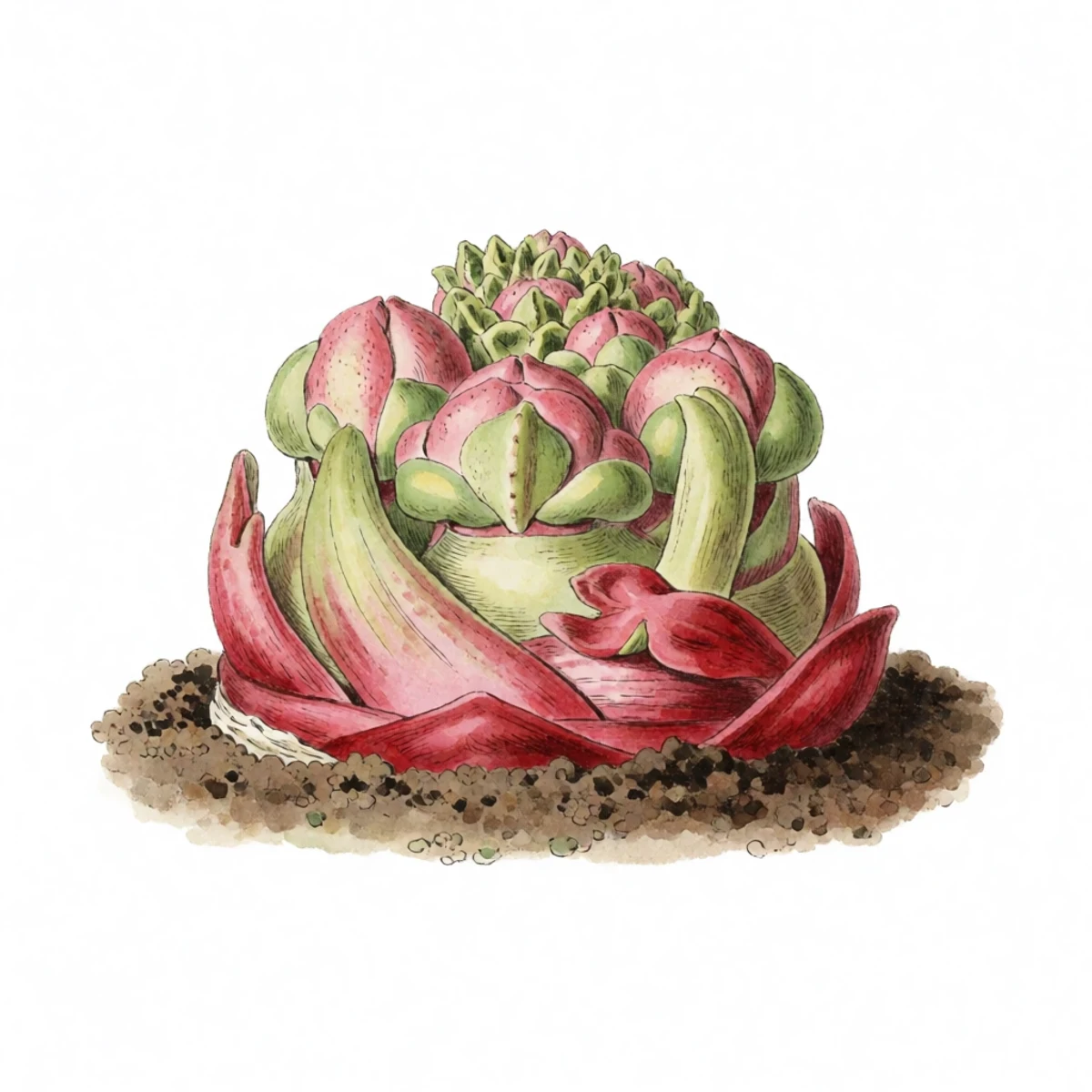
Watercolor plate of a rhubarb crown split into divisions
Rheum × hybridum · field plate

Rhubarb tells you when it needs dividing: thin stalks, a dead-looking center, and a crowd of seed stalks. Every five or six years we lift a crown in earliest spring and split it into fist-sized pieces. Any piece with a couple of buds on it becomes a new plant.

  1. Step 1 · When to do it

    Dig while the buds are still dormant

    Watercolour plate of a dormant rhubarb crown at ground level in early spring with fat pink buds sitting on top and no leaves yet unfurled

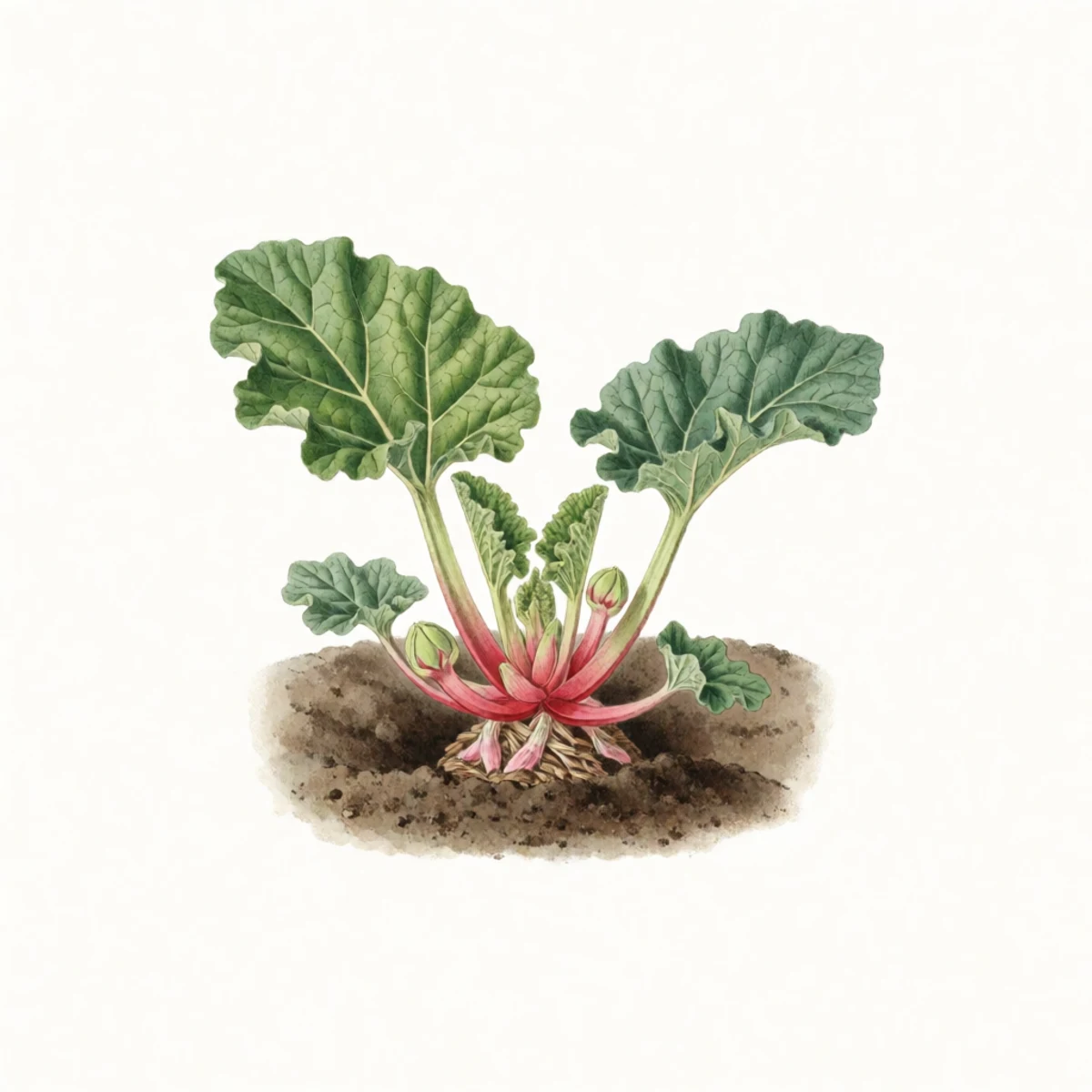
    Do this as soon as the ground can be worked, before the new shoots unfurl. The pink buds sitting on top of the crown show you where to cut. Dividing early gives each new piece the whole season to establish.

  2. Step 2 · Lifting the crown

    Dig wide and pry the whole crown out

    Watercolour plate of a whole rhubarb crown levered out of the soil with a spade, thick pale roots trailing dark earth, the spade blade beneath it

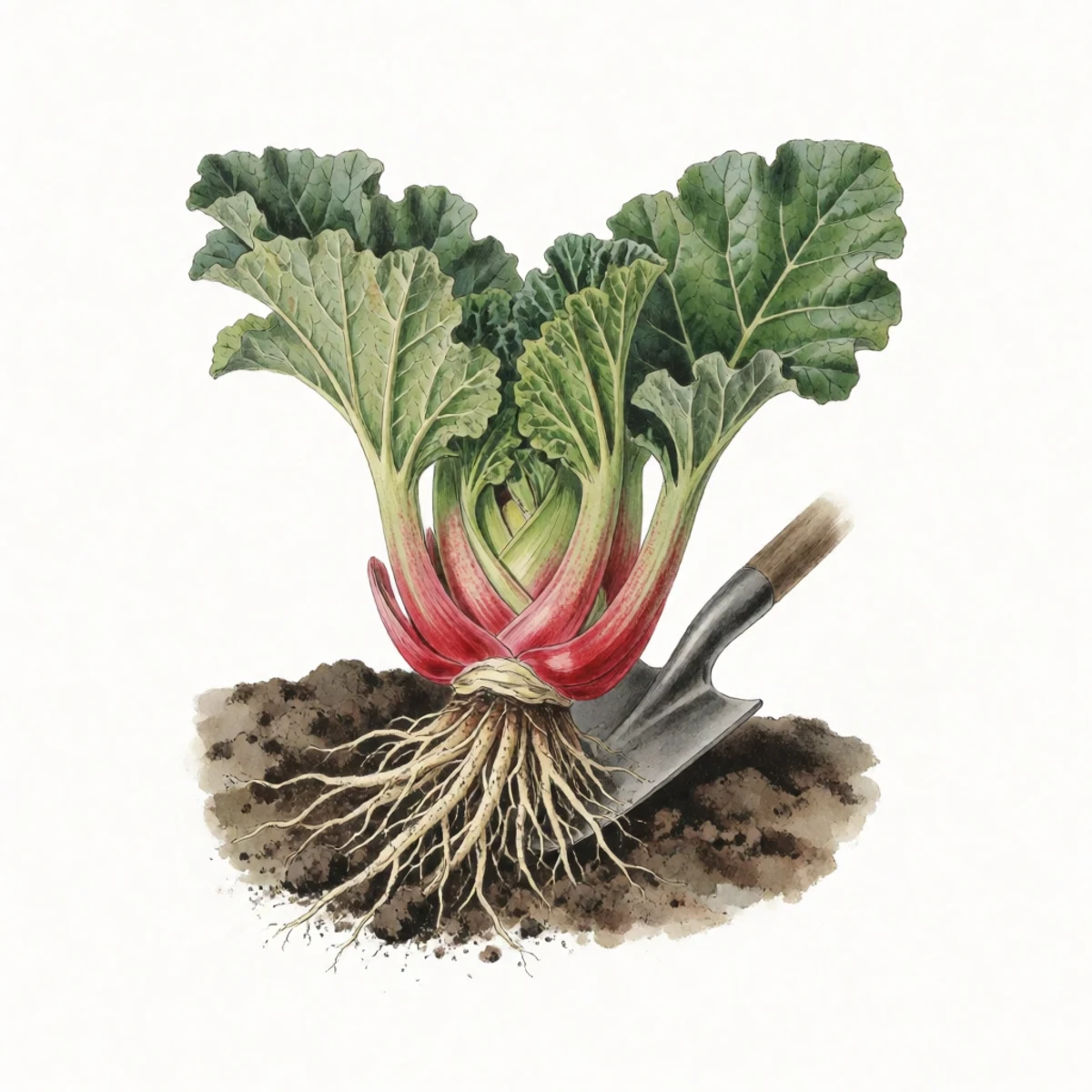
    Push the spade in about a foot out from the crown, all the way around, then lever the crown up. A big crown can weigh as much as a spare tire, and you will not get every root out. That is fine, because rhubarb recovers well.

  3. Step 3 · Splitting it up

    Cut it into pieces with 2 to 3 buds each

    Watercolour plate of a lifted rhubarb crown cut into three fist-sized divisions with a spade, each piece carrying two or three pink buds and a chunk of root

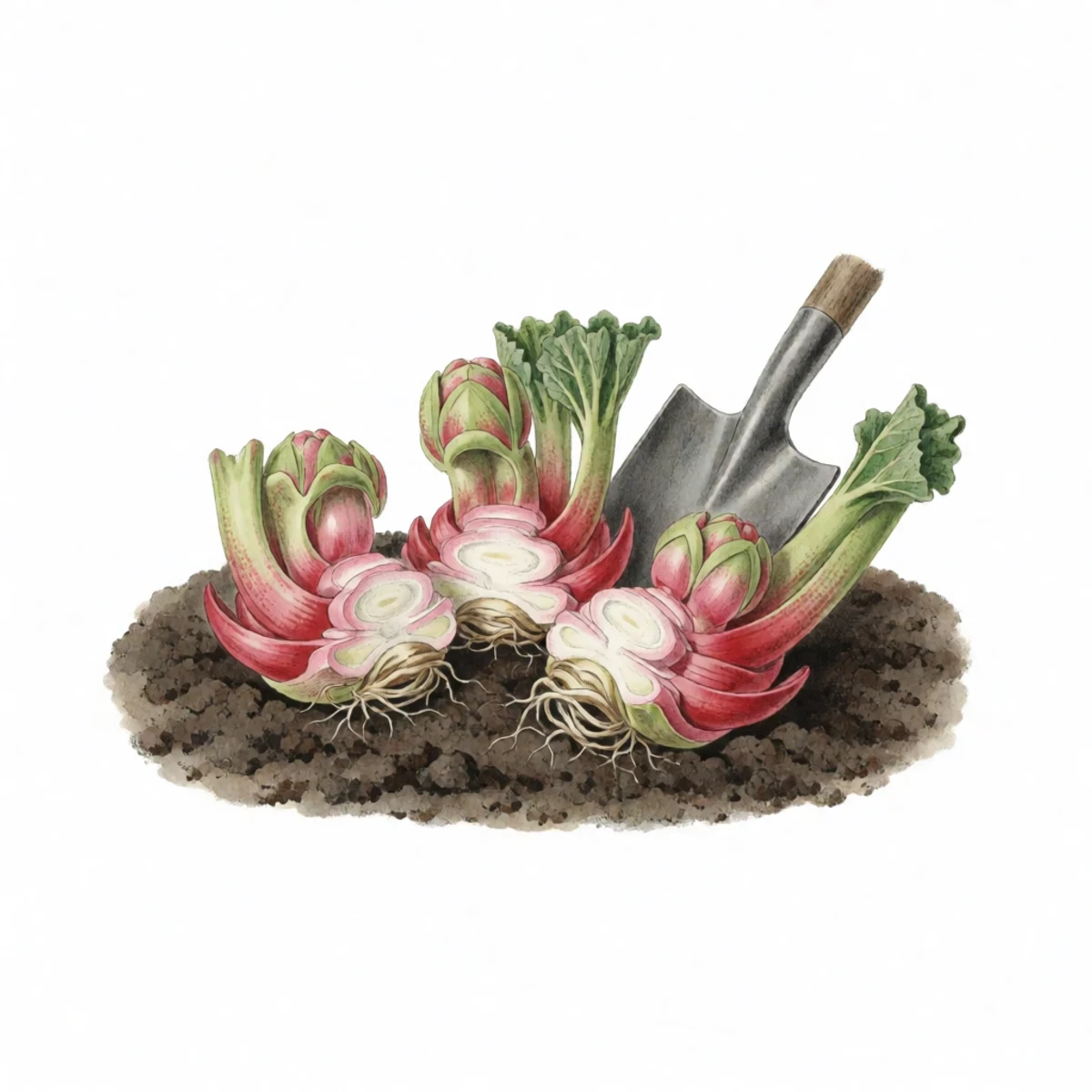
    Drive the spade straight down through the crown, between the buds. Each piece should have two or three buds and a solid chunk of root, and should be at least fist-sized. Throw the woody dead center on the compost. A big crown will give you four to eight pieces worth keeping.

  4. Step 4 · Replanting

    Set the buds an inch or two below the surface

    Watercolour plate of a rhubarb division set in a planting hole with its pink buds just an inch below the soil surface, mulch drawn back from the crown

    Plant the divisions three to four feet apart in full sun and rich soil, buds facing up, covered with only an inch or two of soil. Water them in well and mulch around the buds rather than over them. Do not harvest at all the first year, harvest lightly the second, and harvest fully from year three onward.

Materials needed

As an Amazon Associate, Story Thyme Farms earns from qualifying purchases, at no cost to you. It never changes what we recommend.

Questions we actually get

Can I divide rhubarb in fall?
Yes, after the leaves die back. Fall divisions work in mild-winter areas, but in a Missouri winter we prefer spring so the new pieces are not sitting cold and wet for months with no roots.
Why is my rhubarb sending up flower stalks?
Crowding, age, heat, or stress. Cut seed stalks off at the base the moment you see them, they burn energy the stalks should get. Frequent bolting is the classic sign the crown wants dividing.
The leaves are poisonous, right?
The leaf blades are, to people and to livestock, from oxalic acid. The stalks are the food. Compost the leaves without worry, the acid breaks down in the pile.
From the plant library

Rhubarb — the full profile

Zones, cold-hardy cultivars, spacing, feeding, and where to buy one already rooted.

Open the rhubarb guide →