The illustrated growing guide

Rhubarb

Rheum rhabarbarum

Family Polygonaceae

Est. zones 3-8

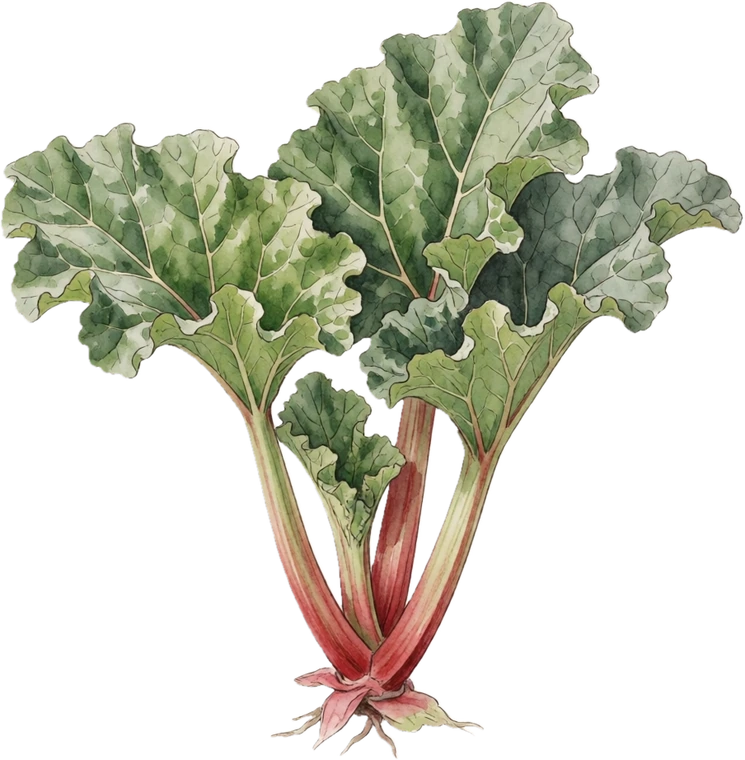
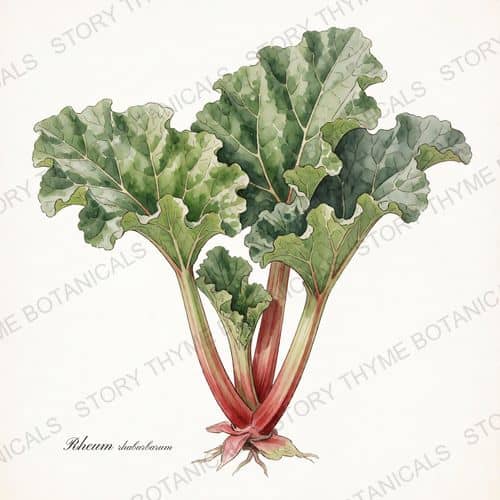
Botanical illustration of Rhubarb
Perennial · Rheum rhabarbarum

LEAVES ARE TOXIC (oxalic acid) — compost them fine. Pull stalks (twist at base), never cut. Stop harvest at July 4 to let the crown rebuild. Divide every 8-10 years.

PerennialFull SunModerate waterFast once established growthExcellent edible

☤ Juglone-sensitiveRhubarb is sensitive to juglone — the toxin exuded by black walnut, butternut, and their relatives. Keep it 50+ ft from any walnut or hickory, or its leaves will yellow, wilt, and die back for no obvious reason.

Where to buy the plant — 2 nurseries

I

Overview

Will rhubarb suit your garden, and what goes wrong.

Will it fruit where you are?

Enter your ZIP — we look up your USDA hardiness zone (2023 map) and check it against what rhubarb actually needs.

Hardy inZones 3-8

Rhubarb at a glance

HardinessUSDA 3–8
Mature size3 ft × 4 ft
PollinationNone (division propagated)
Chill requirementNot yet established
Bloom seasonEarly Summer (remove stalks)
Harvest seasonApril - June, stop by July 4
Growth rateFast once established

Common rhubarb problems

II

Growing

Light, water, soil, propagation and the season’s jobs.

How to grow rhubarb: light, water & soil

LightFull Sun (part shade in hot summers)
WaterModerate; wilts dramatically but recovers
SoilRich, Deep, Well-drained · pH 6.0 - 6.8
FertilizerHeavy compost topdress each spring + fall.
PruningNone — Remove flower stalks immediately — seed steals stalk vigor.
Spacing3-4 ft

How to plant & propagate rhubarb

PropagateDivision or seed

The rhubarb growing playbook

Field-tested instructions for every job rhubarb asks of you, compiled from university extension guidance — in the order the season brings them.

Watering

Water deep and infrequently once established

For the first three years, irrigate once or twice a week so water penetrates 6 to 12 inches. From the third year on, cut back to once every one to two weeks but water deeply enough to wet 12 to 18 inches of soil. The crown roots deeply once established and pulls moisture from well below the surface, so frequent shallow watering keeps the crown wet without ever reaching the roots that matter.

Do not overwater. Root and crown rot in rhubarb is a consequence of saturated soil, and there is no fungicide that will save a rotted crown.

Mulching

Three inches of straw over the root zone

Once the soil has warmed and growth is underway, lay 3 to 4 inches of straw or compost around the crowns, keeping the material pulled back from the buds themselves. Rhubarb is a shallow-rooted perennial that cannot be cultivated close in without cutting feeder roots, so mulch is the only practical way to hold weeds off the crown and steady the soil moisture.

Feeding

Feed nitrogen just before the leaves push

Just before the buds break in spring, scatter about half a cup of 16-16-16 granular fertilizer around the base of each established crown and work it lightly into the soil. Do not apply fertilizer during the establishment year. Rhubarb rebuilds its whole crown from stored reserves in a few weeks of spring growth, and the stalks you pull are that growth, so nitrogen has to be in place before the leaves expand rather than after.

Do not fertilize during the first establishment year, and keep granules off the crown itself where they can burn the emerging buds. Have soil tested before adding phosphorus; on soils already high in phosphorus a complete blend may not be appropriate.

Dividing

Divide crowded rhubarbMar – Apr

In early spring, lift old crowded crowns and replant divisions with at least one bud and a strong root piece. Older crowded crowns produce smaller stalks; division renews vigor every few years.

Keep divisions moist and replant promptly.

Pruning

Cut the seed stalk the day you see it rising

As soon as a thick flower stalk begins to elongate out of the center of the crown, cut it off at the base. Check the plant weekly through the bolting period, because a crown will often send up more than one. Setting seed spends the crown's carbohydrate reserves on flowers instead of leafstalks, and a plant allowed to bloom drops its stalk yield for the rest of the season and into the next.

Strip and destroy the leaves after the first hard frost

Once a hard frost has killed the tops, remove every leaf and all the dead litter from around the crowns and destroy it. Do not compost this material back onto the bed. Ascochyta and Ramularia leaf spot overwinter in that dead tissue and release the spores that infect next spring's new leaves, so clearing it is the whole control program for both diseases.

Rhubarb leaves are toxic and must never be eaten. Keep the removed foliage away from livestock and out of the kitchen.

What to watch for

Rhubarb curculio: pull the dock, pick the beetles

Look over the leafstalks and crown for a rusty, snouted beetle about three quarters of an inch long, and for oozing holes bored into the stalks. Handpick any beetles you find, and grub out curly dock and wild dock growing anywhere near the patch. The curculio cannot complete its life cycle on rhubarb alone. It breeds in dock, then moves into rhubarb to feed and bore, so removing the alternate host is what actually breaks the cycle.

Protection

Straw over the crowns once the ground freezes

After the ground has frozen and the tops are gone, cover the crowns with 2 to 3 inches of straw for the winter. Waiting for the ground to freeze is the point: the mulch is there to keep the soil frozen through midwinter thaws, because it is the freeze and thaw cycling that heaves shallow rhubarb crowns out of the ground.

Harvesting

Pull rhubarb stalksApr – Jun

Harvest stalks by twisting and pulling from established plants, leaving enough leaves to rebuild the crown. Rhubarb needs foliage after the harvest window to store energy for next spring.

Never eat rhubarb leaves.

III

The year

What rhubarb asks for, month by month.

The rhubarb year, month by month

MonthJanFebMarAprMayJunJulAugSepOctNovDec
Bloom
Harvest

What each band means

  • Bloomflowers open — pollinators working, frost on blossoms is the danger.
  • Harvestpicking time — check ripeness every few days.

The rhubarb year as text

  • Jan quiet month
  • Feb quiet month
  • Mar quiet month
  • Apr harvest
  • May harvest
  • Jun bloom, harvest
  • Jul quiet month
  • Aug quiet month
  • Sep quiet month
  • Oct quiet month
  • Nov quiet month
  • Dec quiet month

These are the species' typical months — expect them a few weeks earlier in warm zones and later in cold ones. Watch the plant, not just the calendar.

IV

Ecology & uses

What it does for the garden, and what it is grown for.

Rhubarb in the garden system

  • Herbaceous layer perennial
MoistureFacultative / average
DeerBrowsed — protect young plants
OriginIntroduced

What rhubarb is grown for

! Some parts toxic — see notesLEAVES TOXIC — stalks only

UsePie
UseJam
UseSauce
UseCrisp
Edible value4/5

Harvesting & storing rhubarb

April - June, stop by July 4.

Edibility, identification, and traditional-use notes here are general reference — not medical or veterinary advice, and not a claim that any plant treats or prevents anything. Medicinal ratings record how strongly a plant features in herbal tradition, nothing more. Never eat or dose a plant you have not positively identified. More on how to use this library.

V

Cultivars

Named varieties of rhubarb, ruled as a catalogue.

Best rhubarb varieties & cultivars

6 on file

Named varieties of rhubarb differ in winter-chill needs, ripening time, hardiness, and whether they set fruit on their own — pick one that fits your climate.

Victoria

Zones3-8SizeMedium stalks

Very sweet, excellent quality — The old standard commercial variety, speckled pink stalks fading to green rather than red throughout. Reliable and the most widely available cultivar, but noted as likely to throw flower stalks, so expect to cut seed stalks more often.

Where to buy ‘Victoria

Story Thyme Farms may earn a small commission from these links, at no cost to you — it never changes what we recommend.

MacDonald

Zones3-8SizeLarge stalks

Good for pies, freezing and canning — Bright pink to red stalks with tender skin, vigorous and upright, and high yielding. A common home-garden choice where you want volume for the freezer.

Where to buy ‘MacDonald

Story Thyme Farms may earn a small commission from these links, at no cost to you — it never changes what we recommend.

Crimson Red

Zones3-8SizeTall, plump stalks

Sweet yet tart, non-stringy — Bright red stalks, tall and plump, with a well-balanced sweet-tart flavor and no stringiness. Like Victoria, it is noted as likely to produce flower stalks, so expect to cut seed stalks through the bolting period.

Where to buy ‘Crimson Red

Story Thyme Farms may earn a small commission from these links, at no cost to you — it never changes what we recommend.

Canada Red · Chipman's Canada Red

Zones3-8SizeShort, slender stalks

Tender and very sweet — Shorter and more slender in the stalk than most varieties, but notably tender and very sweet, with good red coloring. Tends to produce few seed stalks, so it needs less bolting patrol than Victoria or Crimson Red.

Where to buy ‘Canada Red

Story Thyme Farms may earn a small commission from these links, at no cost to you — it never changes what we recommend.

Valentine

Zones3-8SizeBroad, deep red stalks

Much less acid than green-stalked varieties — A historic deep red variety whose color resists fading when processed. Wisconsin Extension reports few seed stalks, while Ohio State lists it as more prone to bolting, so bolting behavior appears to vary by site.

Where to buy ‘Valentine

Story Thyme Farms may earn a small commission from these links, at no cost to you — it never changes what we recommend.

Cherry Red

Zones3-8SizeLong, thick stalks

Juicy, tender and sweet — Long thick stalks with rich red color inside and out. Related USU listings for Cherry Wine describe moderate vigor and few flower stalks.

Where to buy ‘Cherry Red

Story Thyme Farms may earn a small commission from these links, at no cost to you — it never changes what we recommend.

VI

Sources & plant ID

Where the care distinctions come from, and how the plant is filed.

Research basis

Sources behind this profile

No extension citations are attached to rhubarbyet. The care figures below come from the library's own catalogue rather than a traced primary source.

Plant ID

BinomialRheum rhabarbarum
FamilyPolygonaceae
TypePerennial
USDA symbolRHRH2
OriginIntroduced
Invasive riskLow

VII

Where to buy

Third-party nurseries — not Story Thyme Farms.

Third-party nurseries, not Story Thyme Farms. Prices are theirs.

Story Thyme Farms may earn a small commission from these links, at no cost to you — it never changes what we recommend.

VIII

Questions

Rhubarb questions, answered straight.

Is rhubarb safe for kids and pets?

With care. LEAVES TOXIC — stalks only Site it accordingly if children or pets roam the garden. This is general reference, not medical or veterinary advice — call a vet or poison control if something has actually been eaten.

When do you harvest rhubarb?

April - June, stop by July 4.

How do you propagate rhubarb?

Division or seed.

IX

Elsewhere

Where rhubarb sits in the library.

Where rhubarb sits in the library

Grows in the same world