The illustrated growing guide

Tomato

Solanum lycopersicum

Family Solanaceae

Grown as an annual

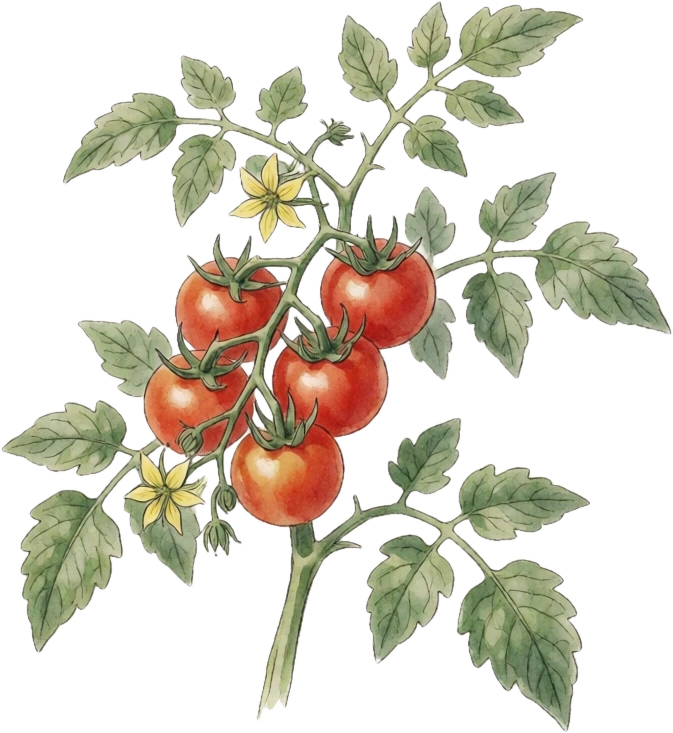
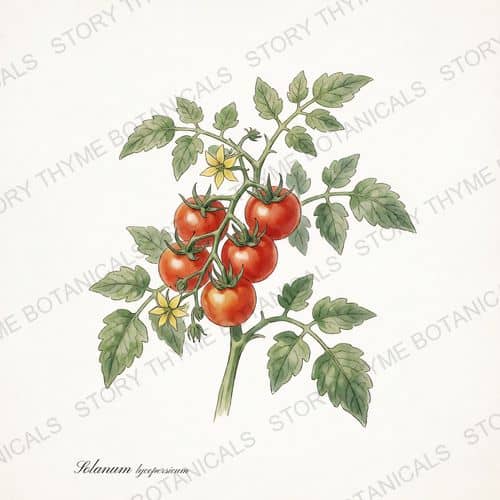
Botanical illustration of Tomato
Annual · Solanum lycopersicum

Stake or cage at planting, not after. Blossom end rot = watering problem, not disease. 'Cherokee Purple' for flavor, 'Celebrity' for reliability, 'Sun Gold' for snacking.

AnnualFull SunModerate waterFast growthExcellent edibleAttracts beesNone winter chill

☤ Juglone-sensitiveTomato is sensitive to juglone — the toxin exuded by black walnut, butternut, and their relatives. Keep it 50+ ft from any walnut or hickory, or its leaves will yellow, wilt, and die back for no obvious reason.

Where to buy the plant — 3 nurseries

Tomato Vine — a print from the Vegetables Vol. 2 - In the Garden collection

From the print shop

Growing tomato? Hang it.

Our Vegetables Vol. 2 - In the Garden collection carries tomatoSolanum lycopersicum, print Nº 4, “Tomato Vine.”

16 designsfrom $21.99white or black groundmatte poster, unframed

Shop Vegetables Vol. 2 - In the Garden botanical prints →

I

Overview

Will tomato suit your garden, and what goes wrong.

Will it fruit where you are?

Enter your ZIP — we look up your USDA hardiness zone (2023 map) and check it against what tomato actually needs.

Life cycleAnnual
Winter chillNone
PollinationSelf-fertile

Tomato at a glance

Life cycleAnnual
Mature size4-8 ft (indeterminate)
PollinationSelf-Fertile (wind/bee vibration)
Chill requirementNone (not chill-dependent)
Bloom seasonEarly Summer onward
Harvest seasonJuly - October
Growth rateFast

Common tomato problems

  • Hornworm
  • Aphids
  • Flea Beetle
  • Stink Bug
  • Early Blight
  • Septoria Leaf Spot
  • Blossom End Rot (calcium/water)

II

Growing

Light, water, soil, propagation and the season’s jobs.

How to grow tomato: light, water & soil

LightFull Sun
WaterDeep, consistent. 1-2 inches/week. Irregular water causes cracking/blossom end rot
SoilRich, Well-drained Loam · pH 6.2 - 6.8
FertilizerAt planting and at first fruit set. Low nitrogen once fruiting (leaves over fruit otherwise).
PruningThroughout season — Prune suckers on indeterminates for airflow, never remove more than 1/3. Determinates: minimal.
Spacing24-36 inches

How to plant & propagate tomato

Maturity60-85 days from transplant
From seedStart indoors 6-8 wks before last frost; germinates 70-85°F
PropagateFrom seed

When to spray tomato

Growing season. Mulch at planting to stop soil splash (blight vector). Copper or chlorothalonil at first blight sign; repeat 7-10 days in wet weather. Remove lower 12 inches of leaves once established.

The tomato growing playbook

Field-tested instructions for every job tomato asks of you, compiled from university extension guidance — in the order the season brings them.

Sowing

Start tomato seeds indoors, five to six weeks before you plant out

Sow into moist seed-starting mix about a quarter inch deep and keep the flat warm and under strong light. Count back five to six weeks from the date you can safely plant out — which is after your last frost AND once soil is above 60F — not from the last frost date itself and not from any fixed calendar date. Tomatoes need a long warm season to set and ripen fruit, but a seedling held indoors too long gets leggy and root-bound and sulks for weeks after planting. Five to six weeks produces a stocky plant that keeps growing the day it goes in the ground.

Planting out

Plant out once frost is past and the soil is above 60F

Harden seedlings off first by setting them outside in wind shelter and partial sun, adding exposure over a week or two and bringing them in if nights approach freezing. Then plant deep, burying the stem up to just below the lowest leaves, or lay the seedling in a three to four inch trench with only the top leaves out. Set them out in late afternoon or on a cool, cloudy, calm day. Tomato stems grow roots anywhere they touch soil, so a buried stem becomes a bigger root system and a more drought-steady plant. Cold soil below 60F stalls root growth even when the air feels warm, which is why a plant set out too early is often overtaken by one planted two weeks later.

Watering

Water deeply and infrequently to head off blossom end rot

Apply one to two inches per week as one or two deep soakings rather than daily sprinkles, and count rainfall toward it. Water at the base and keep the foliage dry. Do not let plants go into the night water-stressed. Blossom end rot is not a disease and usually not a soil calcium shortage. Calcium rides into the fruit on the water the plant takes up, so a plant swinging between bone dry and soaked cannot deliver it to the fruit tip no matter how much calcium sits in the soil. Steady moisture is the fix, not a calcium spray.

Mulching

Mulch once the soil has warmed, not before

Lay organic mulch around the plants after the soil has warmed past about 75F, or use black plastic from the start if you want to warm the soil instead. Apply herbicide-free grass clippings or straw three to four inches deep. Keep it pulled back an inch or so from the stems, and do not pile it so deep that the soil stays sodden. Early blight and Septoria spores overwinter in last year's debris in the soil and reach the plant when rain splashes soil onto the lowest leaves. A mulch layer is a physical lid on that splash. It also buffers soil moisture, which is the real lever on blossom end rot, since calcium only moves into young fruit when moisture is steady. Applied before the soil warms, though, mulch works against you — it locks the cold in.

Feeding

Side-dress when the first fruits start to enlarge

Wait until the first fruits are visibly swelling, then scatter fertilizer alongside the row and water it in: about half a cup of 46-0-0, or one cup of 27-3-3, or three and a half cups of 10-3-1 per 100 feet of row. For a handful of plants, USU's rate is about half a tablespoon of 21-0-0 per plant at four and eight weeks after transplanting. Fruit enlargement is when demand outruns what the soil is supplying. Feeding nitrogen earlier than this buys you a tall leafy plant that flowers late and sets less, because the plant spends the nitrogen on vegetative growth while conditions are still easy.

Pruning

Pull and destroy the vines when the season ends

Pull the plants roots and all and bury or burn them where local rules allow, rather than leaving them standing. If any plant showed late blight, bag it and bin it. Pull volunteer tomato seedlings next spring too, and do not plant tomatoes, potatoes, peppers or eggplant on that ground for three or four years. Early blight and Septoria overwinter in the debris you leave behind, so this season's dead vines are next season's first infection. Late blight is the sharper case: it does not survive on dead tissue but rides through winter in living tissue like cull potatoes and volunteer seedlings, which is why those plants get bagged and not composted. A home compost pile rarely gets hot enough to kill either.

Do not compost late-blight-infected plants. Bag them and dispose of them in the trash.

What to watch for

Scout tomatoes for hornwormJun – Aug

Check at dusk for dark frass and stripped stems; hand-pick the caterpillars. Early removal saves the plant; Bt works if numerous.

Spraying

Early blight and Septoria: start chlorothalonil as the canopy closes

Begin spraying chlorothalonil, or a copper product if you garden organically, as the plants get big enough to shade their own lower leaves, and before you see spots. Repeat on a 7 to 14 day interval through the rest of the season, covering the undersides of the lower leaves. Stake or cage the plants and strip the lowest leaves as they go so air moves through. Alternaria solani and Septoria survive in last season's debris and infect the bottom leaves first, then climb. Both need long hours of leaf wetness, which is exactly what a closing canopy creates by trapping humidity. Once the target-ringed spots are visible the spore load is already in the planting, and a fungicide that only protects healthy tissue can no longer catch up.

Chlorothalonil on tomato carries a 0-day pre-harvest interval, so fruit can be picked the day of spraying, but wash it. It is a protectant only and will not cure existing lesions. It is highly toxic to fish and aquatic life, so keep it out of ponds and storm drains, and follow the label rate.

Harvesting

Pick fully colored but still firm

A tomato takes about 25 to 35 days to go from open flower to ripe, faster in heat and slower in cool weather, so start checking a month after bloom. Pick when the color is full but the fruit is still firm. Ripen anything you pick early indoors at room temperature, laid one layer deep and not touching. Fruit picked at full color has already received everything the plant will send it, and waiting for softness on the vine mostly buys splitting and pest damage. Ripening runs on warmth, not light, so a sunny windowsill is no better than a warm counter and often cooks the fruit instead.

Tomato companion plants

Avoid

Underlined names have their own growing guide in this library.

III

The year

What tomato asks for, month by month.

The tomato year, month by month

MonthJanFebMarAprMayJunJulAugSepOctNovDec
Bloom
Prune
Harvest

What each band means

  • Bloomflowers open — pollinators working, frost on blossoms is the danger.
  • Pruneshape it now — cuts heal cleanly and structure is visible.
  • Harvestpicking time — check ripeness every few days.

The tomato year as text

  • Jan pruning
  • Feb pruning
  • Mar pruning
  • Apr pruning
  • May pruning
  • Jun bloom, pruning
  • Jul pruning, harvest
  • Aug pruning, harvest
  • Sep pruning, harvest
  • Oct pruning, harvest
  • Nov pruning
  • Dec pruning

These are the species' typical months — expect them a few weeks earlier in warm zones and later in cold ones. Watch the plant, not just the calendar.

IV

Ecology & uses

What it does for the garden, and what it is grown for.

Tomato in the garden system

  • Herbaceous layer annual
AttractsBees
MoistureFacultative / average
DeerBrowsed — protect young plants
OriginIntroduced

What tomato is grown for

! Some parts toxic — see notesFoliage toxic — fruit safe

UseFresh
UseSauce
UseCanning
UseSalsa
Edible value5/5

Harvesting & storing tomato

July - October. About 60-85 days from transplant from planting.

Edibility, identification, and traditional-use notes here are general reference — not medical or veterinary advice, and not a claim that any plant treats or prevents anything. Medicinal ratings record how strongly a plant features in herbal tradition, nothing more. Never eat or dose a plant you have not positively identified. More on how to use this library.

V

Cultivars

Named varieties of tomato, ruled as a catalogue.

Best tomato varieties & cultivars

12 on file

Named varieties of tomato differ in days to maturity, disease resistance, flavor, and habit — pick one that fits your season and space.

Sungold

Self-fertile
RipensearlyZones3-11DiseasemoderateSizeindeterminate

intensely sweet gold cherry — Prolific and early

Where to buy ‘Sungold

Story Thyme Farms may earn a small commission from these links, at no cost to you — it never changes what we recommend.

Defiant PhR · Defiant

Self-fertile
Zones3-11DiseaseLate blight, early blight, Alternaria blight, Fusarium wilt 1 and 2, Verticillium wiltSizedeterminate

Carries the Ph2 and Ph3 major genes for late blight resistance. In Penn State's organic trial it was a determinate, medium-sized red slicer, and it was the highest-yielding red slicer among the resistant types.

Where to buy ‘Defiant PhR

Story Thyme Farms may earn a small commission from these links, at no cost to you — it never changes what we recommend.

Mountain Magic · Mountain Magic F1

Self-fertile
Zones3-11DiseaseLate blight, early blight, Alternaria blight, Alternaria stem canker, corky root rot, Fusarium wilt 1 2 and 3, Verticillium wilt

A campari or cocktail-sized cherry type. The broadest resistance package on this list, and one of the few varieties resistant to late blight and early blight at once, which makes it the low-spray choice in a humid summer.

Where to buy ‘Mountain Magic

Story Thyme Farms may earn a small commission from these links, at no cost to you — it never changes what we recommend.

Mountain Merit · Mountain Merit F1

Self-fertile
Zones3-11DiseaseLate blight, early blight, Fusarium wilt 1 2 and 3, Verticillium wilt, root knot nematode, tomato spotted wilt virusSizedeterminate

Carries the Ph2 and Ph3 major genes for late blight resistance. Penn State trialed it as a determinate red slicer. The root knot nematode and spotted wilt resistance make it the pick for warm southern gardens where those are the real limits.

Where to buy ‘Mountain Meritverified

Story Thyme Farms may earn a small commission from these links, at no cost to you — it never changes what we recommend.

Iron Lady · Iron Lady F1

Self-fertile
Zones3-11DiseaseLate blight, early blight, Septoria leaf spot, Fusarium wilt 1 and 2, Verticillium wiltSizedeterminate

One of three varieties here listed as resistant to all three foliar blights at once - late blight, early blight and Septoria - alongside Stellar and Juliet. Penn State trialed it as a determinate red slicer with medium fruit of about 5 ounces. Resistance here means the plant holds up far longer under blight pressure, not that it is immune; in a wet summer with late blight in the area it still benefits from a preventive program.

Where to buy ‘Iron Lady

Story Thyme Farms may earn a small commission from these links, at no cost to you — it never changes what we recommend.

Stellar · Stellar F1

Self-fertile
Zones3-11DiseaseLate blight, early blight, Septoria leaf spot, Fusarium wilt 1 and 2, Verticillium wiltSizedeterminate

The same triple foliar blight package as Iron Lady. Penn State trialed it as a determinate red slicer.

Where to buy ‘Stellar

Story Thyme Farms may earn a small commission from these links, at no cost to you — it never changes what we recommend.

Plum Regal · Plum Regal F1

Self-fertile
Zones3-11DiseaseLate blight, early blight, Alternaria stem canker, Fusarium wilt 1 and 2, Verticillium wilt, tomato spotted wilt virus

A plum or roma type, so this is the sauce and paste tomato for gardeners who lose crops to late blight.

Where to buy ‘Plum Regal

Story Thyme Farms may earn a small commission from these links, at no cost to you — it never changes what we recommend.

Juliet · Juliet F1

Self-fertile
Zones3-11DiseaseLate blight, early blight, Alternaria blight, Septoria leaf spot

A small plum or grape type, and an AAS winner. Cornell lists it as resistant to all three foliar blights - late blight, early blight and Septoria - which puts it in the same tier as Iron Lady and Stellar despite being a grape rather than a slicer. It carries no Fusarium or Verticillium wilt resistance, though, so it is the weaker pick on ground with a wilt history.

Where to buy ‘Juliet

Story Thyme Farms may earn a small commission from these links, at no cost to you — it never changes what we recommend.

Jasper · Jasper F1

Self-fertile
Zones3-11DiseaseLate blight, early blight, Alternaria blight, Fusarium wilt 1 and 2

A red cherry type resistant to both blights - the disease-tough alternative to Sungold, which has no blight resistance.

Where to buy ‘Jasper

Story Thyme Farms may earn a small commission from these links, at no cost to you — it never changes what we recommend.

Big Beef · Big Beef F1

Self-fertile
Zones3-11DiseaseFusarium wilt 1 2 and 3, Verticillium wilt, gray leaf spot, root knot nematode, tobacco and tomato mosaic virus, Alternaria stem cankerSizeindeterminate

Penn State trialed it as an indeterminate producing large red fruit of 10 to 12 ounces. NC State lists it as tolerant of early blight, but note it has no late blight resistance, so it is a poor choice where late blight arrives most summers.

Where to buy ‘Big Beef

Story Thyme Farms may earn a small commission from these links, at no cost to you — it never changes what we recommend.

Celebrity · Celebrity F1

Self-fertile
Zones3-11DiseaseFusarium wilt 1 and 2, Verticillium wilt 1 and 2, gray leaf spot, root knot nematode, tobacco and tomato mosaic virus, Alternaria stem canker

NC State lists it as tolerant of early blight. Like Big Beef it has no late blight resistance, so pair it with a preventive spray program in a wet summer.

Where to buy ‘Celebrity

Story Thyme Farms may earn a small commission from these links, at no cost to you — it never changes what we recommend.

VI

Sources & plant ID

Where the care distinctions come from, and how the plant is filed.

Research basis

Sources behind this profile

No extension citations are attached to tomatoyet. The care figures below come from the library's own catalogue rather than a traced primary source.

Plant ID

BinomialSolanum lycopersicum
FamilySolanaceae
TypeAnnual
USDA symbolSOLY2
OriginIntroduced
Invasive riskLow

VII

Where to buy

Third-party nurseries — not Story Thyme Farms.

Third-party nurseries, not Story Thyme Farms. Prices are theirs.

Story Thyme Farms may earn a small commission from these links, at no cost to you — it never changes what we recommend.

VIII

Questions

Tomato questions, answered straight.

Do I need two tomato plants to get fruit?

No — tomato is self-fertile, so a single plant will set a crop. A second one usually improves yields, but it isn't required.

Is tomato safe for kids and pets?

With care. Foliage toxic — fruit safe Site it accordingly if children or pets roam the garden. This is general reference, not medical or veterinary advice — call a vet or poison control if something has actually been eaten.

When do you harvest tomato?

July - October. From planting, expect about 60-85 days from transplant to maturity.

What grows well with tomato?

Proven companions include basil, marigold, borage — the full companion list, and what to keep away, is in the Growing tab above.

IX

Elsewhere

Where tomato sits in the library.

Where tomato sits in the library

Grows in the same world