The illustrated growing guide

Pepper

Capsicum annuum

Family Solanaceae

Grown as an annual

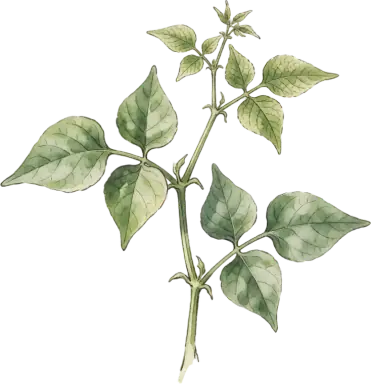
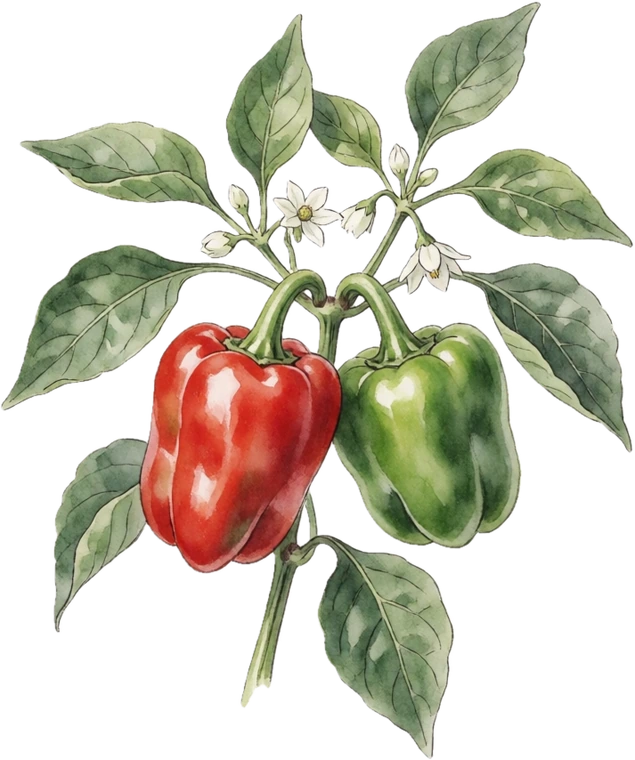
Botanical illustration of Pepper
Annual · Capsicum annuum

Peppers sulk below 55°F nights — don't rush spring planting. Green bells are unripe; leave 2-3 more weeks for red and double the sweetness.

AnnualFull SunModerate waterModerate growthExcellent edibleNone winter chill

☤ Juglone-sensitivePepper is sensitive to juglone — the toxin exuded by black walnut, butternut, and their relatives. Keep it 50+ ft from any walnut or hickory, or its leaves will yellow, wilt, and die back for no obvious reason.

Where to buy the plant — 3 nurseries

Pepper Plant — a print from the Vegetables Vol. 2 - In the Garden collection

From the print shop

Growing pepper? Hang it.

Our Vegetables Vol. 2 - In the Garden collection carries pepperCapsicum annuum, print Nº 13, “Pepper Plant.”

16 designsfrom $21.99white or black groundmatte poster, unframed

Shop Vegetables Vol. 2 - In the Garden botanical prints →

I

Overview

Will pepper suit your garden, and what goes wrong.

Will it fruit where you are?

Enter your ZIP — we look up your USDA hardiness zone (2023 map) and check it against what pepper actually needs.

Life cycleAnnual
Winter chillNone
PollinationSelf-fertile

Pepper at a glance

Life cycleAnnual
Mature size18-30 inches
PollinationSelf-Fertile
Chill requirementNone (not chill-dependent)
Bloom seasonSummer
Harvest seasonJuly - Frost
Growth rateModerate

Common pepper problems

II

Growing

Light, water, soil, propagation and the season’s jobs.

How to grow pepper: light, water & soil

LightFull Sun
WaterModerate, even moisture. Dry spells make hot peppers hotter
SoilWell-drained, Rich · pH 6.0 - 6.8
FertilizerLight feeder. Compost at planting; side-dress at fruit set. Excess N = leaves not fruit.
PruningNone (annual) — Pinch first flower buds on transplants to push root growth.
Spacing18 inches

How to plant & propagate pepper

Maturity60-90 days from transplant
From seedStart indoors 8-10 wks before last frost; germinates 75-85°F (slow, warmth-dependent)
PropagateFrom seed

When to spray pepper

Growing season. Rarely needed. Fixed copper if bacterial spot appears in wet years.

The pepper growing playbook

Field-tested instructions for every job pepper asks of you, compiled from university extension guidance — in the order the season brings them.

Sowing

Start pepper seed indoors 8 to 10 weeks before your last frost

Count back 8 to 10 weeks from your average last frost date and sow indoors. Hold the flat at 80F to 90F on a heat mat until the seedlings emerge, then grow them on at 65F to 75F with lights 2 to 3 inches above the tops for 14 to 16 hours a day. A transplant is ready when it is 5 to 8 inches tall and stocky with 6 to 9 mature leaves. Pepper seed germinates slowly and only in genuinely warm soil, and the plant needs a long warm season to set and ripen fruit, so a head start indoors is the difference between a crop and a few late fruits.

Planting out

Set peppers out only once nights stay above 50F

Wait until soil has reached 60F and nighttime lows are reliably above 50F, which is usually well after your last frost date, not on it. Space plants 18 inches apart in rows 30 to 36 inches apart, setting them at the same depth they grew in the pot. Peppers stall in cold soil and abort their flowers when nights fall below 55F, so a plant set out early is often overtaken by one set out two weeks later.

Watering

Steady deep water from first bloom to prevent blossom-end rot

From the first flowers through fruit development, water deeply and infrequently to deliver 1 to 2 inches per week, keeping the soil evenly moist rather than swinging between soaked and bone dry. The soil should form a ball in your hand without breaking apart. Keep soil pH at or above 6.0. Blossom-end rot is a calcium shortage in the fast-expanding young fruit, and calcium rides to the fruit only in water moving through the roots, so a dry spell during early fruit set starves the fruit tip even when the soil holds plenty of calcium.

Foliar calcium sprays do not fix blossom-end rot, because calcium cannot move from leaves to fruit through the phloem. Correct the watering instead of spraying.

Mulching

Black plastic to warm the soil, organic mulch only once it is hot

Lay black plastic mulch or black landscape fabric before planting to warm the soil, hold moisture and suppress weeds. If you prefer straw or herbicide-free grass clippings, wait until the soil is warmer than 75F, then lay it 3 to 4 inches deep. Organic mulch insulates soil rather than warming it, so laid down early it locks in the cold that peppers are trying to escape. Black plastic does the opposite and also stops rain from splashing soil-borne bacteria up onto the lowest leaves.

Feeding

Side-dress nitrogen only after the first fruits have set

Wait until the first flush of peppers has set, then side-dress with nitrogen at about a quarter tablespoon per plant, placed 6 inches out to the side of the stem and watered into the soil. Utah State times the same two feedings at 4 and 8 weeks after transplanting, which is roughly when that first flush arrives. Apply phosphorus and potassium by soil test rather than by habit. Nitrogen given before fruit set buys leaves instead of peppers, producing a bushy, leafy plant that is slow to bear. Waiting until fruit is actually on the plant puts the nitrogen where it feeds the crop.

Keep the fertilizer 6 inches off the stem and water it in, as banded nitrogen against the stem burns roots.

What to watch for

Check the fruit stem cap for corn borer frass

As fruit sizes up through mid and late summer, look under the stem cap of developing peppers for brown, sawdust-like excrement at the edge of the calyx, which marks a borer entry hole. Hand-pick where numbers are low, or spray Bt when small larvae are first active and still feeding on leaves, before they tunnel in. The second corn borer generation is the damaging one because it arrives when fruit is on the plant. Larvae enter beneath the stem cap and feed on the seed core, and the entry wound lets soft rot bacteria in, so once a larva is inside the fruit no spray can reach it.

Bt is specific to caterpillars and spares bees, and pepper may be harvested four hours after application. Peppers flower continuously all summer, so do not reach for a broad-spectrum insecticide here, since there is no window when the plant is out of bloom.

Spraying

Bacterial leaf spot: fixed copper on a 10 to 14 day interval

If small water-soaked spots with gray to tan centers and dark borders appear on the leaves and older foliage starts yellowing and dropping, spray fixed copper every 10 to 14 days to slow the spread. Start from clean seed and transplants, and rotate peppers to new ground if infection was severe last year. The bacterium spreads in splashing rain and on your own hands and tools, and it overwinters in crop residue and soil, so copper is a barrier that protects healthy tissue rather than a cure for spotted leaves. Losing the canopy also exposes fruit to sunscald.

Copper only slows spread and cannot cure infected leaves. Never work among wet pepper plants, as handling wet foliage moves the bacteria plant to plant faster than any spray can hold it back.

Harvesting

Cut peppers from the plant, never pull them

Cut the stem with snips or a knife rather than pulling, which snaps branches. Pick at full size and firm, plump, smooth skin. You do not have to wait for red. Full colour takes roughly 35 to 45 days from flowering, and leaving fruit to colour up costs further fruit set. Pepper branches are brittle and a pulled fruit tears the branch that was going to carry the next flush. Fruit left to ripen fully signals the plant to slow new fruit set, so green picking keeps the plant producing while colour picking buys sweetness and more vitamin A and C.

When you take the ripest fruit off a crowded plant you can suddenly expose shaded fruit to full sun and cause sunscald, so avoid cutting away leaves as you pick and shade harvested fruit promptly.

Pepper companion plants

Avoid

Underlined names have their own growing guide in this library.

III

The year

What pepper asks for, month by month.

The pepper year, month by month

MonthJanFebMarAprMayJunJulAugSepOctNovDec
Bloom
Harvest

What each band means

  • Bloomflowers open — pollinators working, frost on blossoms is the danger.
  • Harvestpicking time — check ripeness every few days.

The pepper year as text

  • Jan quiet month
  • Feb quiet month
  • Mar quiet month
  • Apr quiet month
  • May quiet month
  • Jun bloom
  • Jul bloom, harvest
  • Aug bloom
  • Sep quiet month
  • Oct quiet month
  • Nov quiet month
  • Dec quiet month

These are the species' typical months — expect them a few weeks earlier in warm zones and later in cold ones. Watch the plant, not just the calendar.

IV

Ecology & uses

What it does for the garden, and what it is grown for.

Pepper in the garden system

  • Herbaceous layer annual
AttractsBirds
MoistureFacultative / average
DeerBrowsed — protect young plants
OriginIntroduced

What pepper is grown for

! Some parts toxic — see notesFoliage toxic — fruit safe

UseFresh
UseRoasting
UsePickling
UseDrying
Edible value4/5

Harvesting & storing pepper

July - Frost. About 60-90 days from transplant from planting.

Edibility, identification, and traditional-use notes here are general reference — not medical or veterinary advice, and not a claim that any plant treats or prevents anything. Medicinal ratings record how strongly a plant features in herbal tradition, nothing more. Never eat or dose a plant you have not positively identified. More on how to use this library.

V

Cultivars

Named varieties of pepper, ruled as a catalogue.

Best pepper varieties & cultivars

23 on file

Named varieties of pepper differ in days to maturity, disease resistance, flavor, and habit — pick one that fits your season and space.

Gypsy

Sweet, thin-walled — Earliest pepper listed at 65 days - the short-season pick. AAS winner. Thin walls fry and roast fast.

Where to buy ‘Gypsy

Story Thyme Farms may earn a small commission from these links, at no cost to you — it never changes what we recommend.
Bell Boy

Sweet, thick-walled — No heat at all - safe to handle bare-handed, unlike hot types. Picks green at 70 days; leave it to turn red for sweeter flavour at the cost of further fruit set.

Where to buy ‘Bell Boy

Story Thyme Farms may earn a small commission from these links, at no cost to you — it never changes what we recommend.

Lady Bell

Sweet — 72 days to green, then red if left. Peppers drop blossoms in extreme heat - in hot regions expect a midsummer pause and a fall flush.

Where to buy ‘Lady Bell

Story Thyme Farms may earn a small commission from these links, at no cost to you — it never changes what we recommend.

Purple Belle

Sweet — Fruit runs purple, then black, then red - the purple stage is IMMATURE, not ripe, so do not treat colour as a maturity cue here. Go by the 70-day clock and size.

Where to buy ‘Purple Belle

Story Thyme Farms may earn a small commission from these links, at no cost to you — it never changes what we recommend.

Chocolate Bell

Rich when fully brown-ripe — Ripens green to chocolate brown, not red - brown IS ripe here, so do not leave it waiting for red.

Where to buy ‘Chocolate Bell

Story Thyme Farms may earn a small commission from these links, at no cost to you — it never changes what we recommend.

Sweet Banana · Banana pepper

Mild, sweet — Mild - NOT to be confused with the hot banana and Hungarian wax types sold under similar names. Harvest pale yellow for pickling, or let it run to red for sweetness.

Where to buy ‘Sweet Bananaverified

Story Thyme Farms may earn a small commission from these links, at no cost to you — it never changes what we recommend.

Poblano · Ancho (when dried)

Rich, mild, earthy — The mildest of the hot peppers - milder than jalapeno, safe for most palates, and the standard chile relleno pepper. Called ancho once dried.

Where to buy ‘Poblanoverified

Story Thyme Farms may earn a small commission from these links, at no cost to you — it never changes what we recommend.
Jalapeño · Jalapeno

Grassy, moderate heat — Genuinely hot - wear gloves when cutting quantity and keep hands away from eyes. The heat concentrates in the internal ribs, so removing ribs and seeds drops the burn substantially.

Where to buy ‘Jalapeñoverified

Story Thyme Farms may earn a small commission from these links, at no cost to you — it never changes what we recommend.

Cayenne, long slim · Long Slim Cayenne

Sharp, clean heat — Roughly 5-10x hotter than a jalapeno - gloves required. Thin walls dry easily on a string without a dehydrator, which is the main reason to grow cayenne over jalapeno.

Where to buy ‘Cayenne, long slim

Story Thyme Farms may earn a small commission from these links, at no cost to you — it never changes what we recommend.

Habanero · Orange Habanero

Fruity, floral, intense — 10-100x a jalapeno - gloves and eye protection are mandatory, and wash tools and boards immediately. As a C. chinense it germinates slowly and needs a long hot season, so start indoors early.

Where to buy ‘Habaneroverified

Story Thyme Farms may earn a small commission from these links, at no cost to you — it never changes what we recommend.

Ghost Pepper · Bhut Jolokia

Smoky, delayed-onset extreme heat — Superhot: gloves and eye protection are non-negotiable, and ventilate when cooking - airborne capsaicin will irritate lungs. Needs a very long hot season; start indoors months early.

Where to buy ‘Ghost Pepperverified

Story Thyme Farms may earn a small commission from these links, at no cost to you — it never changes what we recommend.

Carolina Reaper

Fruity then brutal, lingering — Among the hottest peppers in the world - handle only with gloves and eye protection, never touch skin or eyes, and treat it as a genuine hazard around children.

Where to buy ‘Carolina Reaper

Story Thyme Farms may earn a small commission from these links, at no cost to you — it never changes what we recommend.

Aristotle

Self-fertile
DiseaseBacterial leaf spot races 1-3, Phytophthora root rot, Potato Virus Y race 0, Tobacco Etch Virus, Tobamovirus, Tobacco Mosaic VirusSizeLarge, thick-walled blocky fruit

Sweet, no heat — The workhorse disease-resistant green-to-red bell, carrying both bacterial leaf spot and Phytophthora root rot resistance in one plant. Anthocyanin-less fruit with heavy set and thick walls. Pick this over an heirloom bell if bacterial leaf spot has cost you a crop before. Note that Cornell lists 'Aristotle X3R F1' as a separate entry without Phytophthora root rot resistance, so check the exact name on the packet if Phytophthora is your problem.

Where to buy ‘Aristotle

Story Thyme Farms may earn a small commission from these links, at no cost to you — it never changes what we recommend.

Revolution

Self-fertile
DiseaseBacterial leaf spot races 1, 2, 3, 5; Cucumber Mosaic Virus; Phytophthora blightSizeBlocky red bell

Sweet, no heat — Early blocky red bell with Phytophthora blight resistance plus bacterial leaf spot races 1, 2, 3 and 5. The earliness matters in short-season gardens where a main-season bell never colours up.

Where to buy ‘Revolution

Story Thyme Farms may earn a small commission from these links, at no cost to you — it never changes what we recommend.

Turnpike

Self-fertile
DiseaseBacterial leaf spot races 0-5 and 7-9, tobamoviruses, Phytophthora blightSizeBlocky red bell

Sweet, no heat — Blocky red bell with unusually broad bacterial leaf spot coverage, races 0-5 and 7-9, on top of Phytophthora blight resistance. Broad race coverage is what keeps resistance from collapsing when a new race shows up in your area.

Where to buy ‘Turnpike

Story Thyme Farms may earn a small commission from these links, at no cost to you — it never changes what we recommend.

Nitro S10

Self-fertile
DiseaseBacterial leaf spot races 0-10, Phytophthora blight, high resistance to Tobacco Mosaic Virus, intermediate resistance to Tomato Spotted Wilt VirusSizeLarge blocky red bell, smooth fruit

Sweet, no heat — Large smooth blocky red bell resistant to bacterial leaf spot races 0-10 and to Phytophthora blight, with high TMV resistance. The full 0-10 race coverage is the widest bacterial leaf spot protection currently listed.

Where to buy ‘Nitro S10

Story Thyme Farms may earn a small commission from these links, at no cost to you — it never changes what we recommend.

Tarpon

Self-fertile
DiseaseBacterial leaf spot races 0-10, Phytophthora blight, tobamovirusesSizeCompact plant, dark green smooth blocky fruit

Sweet, no heat — Main-season hybrid on a compact plant, resistant to bacterial leaf spot races 0-10 and Phytophthora blight. The compact habit suits tight beds and containers where a full-size bell sprawls.

Where to buy ‘Tarpon

Story Thyme Farms may earn a small commission from these links, at no cost to you — it never changes what we recommend.

Intruder

Self-fertile
DiseaseBacterial leaf spot races 1, 2, 3; Phytophthora blightSizeLarge, firm, smooth fruit

Sweet, no heat — Large firm smooth bell carrying Phytophthora blight resistance with bacterial leaf spot races 1, 2 and 3. Cornell groups it with the varieties resistant to Phytophthora blight and some bacterial leaf spot races, rather than with the broad 0-10 race types, so choose it where Phytophthora is the main threat and leaf spot pressure is modest.

Where to buy ‘Intruder

Story Thyme Farms may earn a small commission from these links, at no cost to you — it never changes what we recommend.

Red Knight X3R · Red Knight

Self-fertile
DiseaseBacterial leaf spot races 1-3, Potato Virus Y race 0SizeBlocky green-to-red bell

Sweet, no heat — Long-standing X3R bell resisting bacterial leaf spot races 1-3. The X3R label on a seed packet is the shorthand for stacked bacterial leaf spot resistance genes, and it is the single most useful thing to look for on a bell pepper packet in a wet climate.

Where to buy ‘Red Knight X3R

Story Thyme Farms may earn a small commission from these links, at no cost to you — it never changes what we recommend.

Paladin

Self-fertile
DiseasePhytophthora root rot and blight, Tobacco Mosaic Virus, Tomato Mosaic Tobamovirus. NO bacterial leaf spot resistanceSizeLarge blocky bell

Sweet, no heat — The first bell with genuinely good Phytophthora resistance and still a benchmark for it, but it carries no bacterial leaf spot resistance and can show fruit silvering. Choose it for wet, poorly drained ground where Phytophthora is the killer, not where leaf spot is.

Where to buy ‘Paladin

Story Thyme Farms may earn a small commission from these links, at no cost to you — it never changes what we recommend.

El Rey

Self-fertile
DiseaseBacterial leaf spot races 0-5 and 7-9, Tobacco Etch Virus, Tobacco Mosaic VirusSizeJalapeño

Grassy, moderate heat — A jalapeño with broad bacterial leaf spot resistance across races 0-5 and 7-9, which is rare outside the bells. Genuinely hot like any jalapeño, so wear gloves when cutting quantity.

Where to buy ‘El Rey

Story Thyme Farms may earn a small commission from these links, at no cost to you — it never changes what we recommend.

Aruba

Self-fertile
SizeElongated, 3-4 lobed fruit on an erect plant

Mild and sweet, thin-walled — Cubanelle type, early maturing, ripening from pale lime green to bright red. Cubanelles are the thin-walled sweet frying pepper, picked pale green rather than red, and are not a bell substitute for stuffing.

Where to buy ‘Aruba

Story Thyme Farms may earn a small commission from these links, at no cost to you — it never changes what we recommend.

VI

Sources & plant ID

Where the care distinctions come from, and how the plant is filed.

Research basis

Sources behind this profile

No extension citations are attached to pepperyet. The care figures below come from the library's own catalogue rather than a traced primary source.

Plant ID

BinomialCapsicum annuum
FamilySolanaceae
TypeAnnual
USDA symbolCAAN4
OriginIntroduced
Invasive riskLow

VII

Where to buy

Third-party nurseries — not Story Thyme Farms.

Third-party nurseries, not Story Thyme Farms. Prices are theirs.

Story Thyme Farms may earn a small commission from these links, at no cost to you — it never changes what we recommend.

VIII

Questions

Pepper questions, answered straight.

Do I need two pepper plants to get fruit?

No — pepper is self-fertile, so a single plant will set a crop. A second one usually improves yields, but it isn't required.

Is pepper safe for kids and pets?

With care. Foliage toxic — fruit safe Site it accordingly if children or pets roam the garden. This is general reference, not medical or veterinary advice — call a vet or poison control if something has actually been eaten.

When do you harvest pepper?

July - Frost. From planting, expect about 60-90 days from transplant to maturity.

What grows well with pepper?

Proven companions include basil, tomatoes, carrots — the full companion list, and what to keep away, is in the Growing tab above.

IX

Elsewhere

Where pepper sits in the library.

Where pepper sits in the library

Grows in the same world