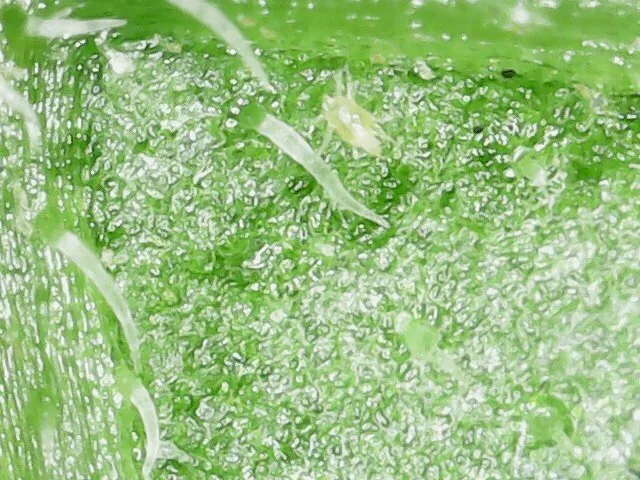
Cyclamen & Broad Mites
Mites far too small to see, so you read them off the damage instead. New growth at the center of the plant twists, hardens and turns brittle or bronzed, and buds die before they open.
Pest checklist
Four things to look for. If most of them match what you are holding, you are in the right place.
What gets rid of them
Gentlest option first. For most backyard cases the first one is enough, so try these in order and stop as soon as it works. If you do spray something, the product label tells you how — please read the notice further down.
1Quarantine new plants
Keep anything new away from the rest of the collection for several weeks. This is almost always how they arrive.
Try this first2Throw out a crippled plant
For a single deformed African violet, discarding it is cheaper and safer than a treatment program.
3Hot water dip
Extension research supports dipping the whole potted plant in water held at about 111°F for 15 minutes. Hotter or longer than that damages the plant, so use a thermometer.
digital instant read thermometer4Use an actual miticide
Most general insect sprays do nothing to these mites. Look for a product labeled as a miticide and repeat on the label's interval.
miticide houseplant spray5Wash your hands between plants
They travel on hands, tools and leaves brushing together, so handle the infested plant last.
As an Amazon Associate, Story Thyme Farms earns from qualifying purchases, at no cost to you. It never changes what we recommend.
Which plants get cyclamen & broad mites
Every plant we cover that gets cyclamen & broad mites, grouped by type — tap any one to open its page. A note beside a plant came from that plant’s own entry, because the same pest can be a minor nuisance on one plant and a serious problem on another. Plenty of plants we do not cover get it too.
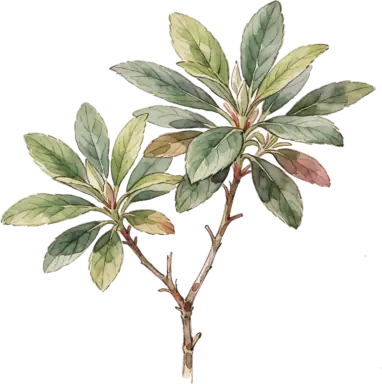



annuals8
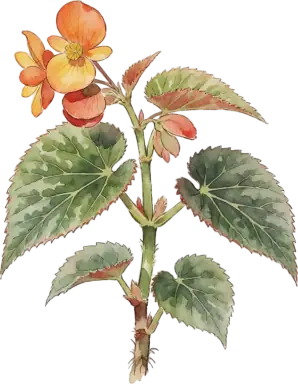
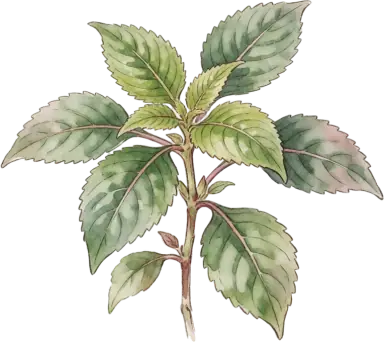







houseplant1

Plant families hit hardest
Related plants often share the same problems, so if one plant in a family has it, check the others. The largest group here is Asteraceae, with 4 of the 14 affected plants.
- Asteraceae4 plants
- Solanaceae2 plants
When to treat
Act the moment new growth starts distorting. You will never see the mite itself, and once a whole crown is deformed, throwing that plant out is usually the better call than treating it.
Timing only — the label is the law
This page tells you when to watch for cyclamen & broad mites and when treating is worth considering. It is not a recommendation to apply any particular product. Read and follow the product label before you spray — under federal law the label is the legal instruction, and using a pesticide against it is illegal.
- Check the pre-harvest interval. Every product that’s cleared for an edible crop sets a minimum number of days between spraying and picking. Find it on the label before you spray anything you intend to eat.
- Check the re-entry interval before you or anyone else works in the treated area again, and use the protective equipment the label names.
- Confirm the product is registered for your crop in your state. This page groups many different crops together, and a product legal on one of them is not legal on all of them — state registrations differ too. Your state pesticide agency or local extension office can confirm both.
- Rates and mixing instructions come from the label, never from us. We don’t publish them because they differ by product and formulation.
Other problems on the same plants
If a plant gets cyclamen & broad mites, these are the problems it most often gets as well, so they are worth checking for while you are out there. They tend to appear together; one does not cause another.