The illustrated growing guide

Borage

Borago officinalis

Family Boraginaceae

Grown as an annual

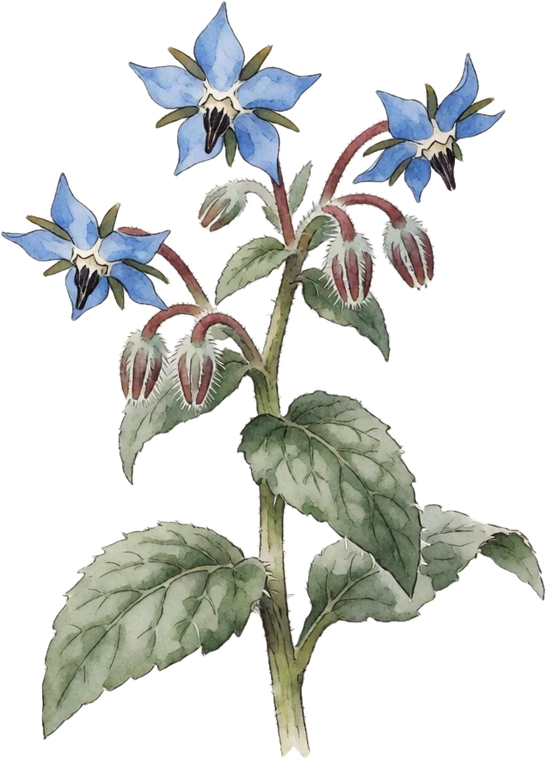
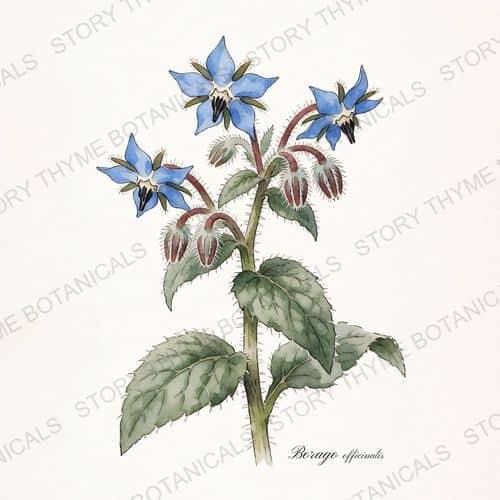
Botanical illustration of Borage
Annual · Borago officinalis

Sow once, have borage forever. Bees choose it over everything else blooming, the flowers garnish drinks, and permaculture folks grow it as living mulch under fruit trees.

AnnualFull SunLow waterFast growthAttracts beesNone winter chill

Where to buy the plant — 2 nurseries

I

Overview

Will borage suit your garden, and what goes wrong.

Will it fruit where you are?

Enter your ZIP — we look up your USDA hardiness zone (2023 map) and check it against what borage actually needs.

Life cycleAnnual
Winter chillNone

Borage at a glance

Life cycleAnnual
Mature size2-3 ft, sprawling
PollinationTHE bee plant — refills nectar every few minutes
Chill requirementNone (not chill-dependent)
Bloom seasonJune - Frost (star-blue, endless)
Harvest seasonFlowers + young leaves (cucumber flavor)
Growth rateFast

Common borage problems

II

Growing

Light, water, soil, propagation and the season’s jobs.

How to grow borage: light, water & soil

LightFull Sun
WaterLow
SoilAny — thrives in poor soil · pH 6.0 - 7.0
FertilizerNone
PruningNone — Chop-and-drop spent plants as mulch; it self-sows for next year.
Spacing12-18 in

How to plant & propagate borage

Maturity55-75 days
From seedDirect-sow after frost; self-sows freely
PropagateFrom seed

The borage growing playbook

Field-tested instructions for every job borage asks of you, compiled from university extension guidance — in the order the season brings them.

Sowing

Direct sow in place once frost danger has passed

Sow borage seed right where it will grow, about a quarter inch deep, after your last frost and once the soil has warmed. Pick a full-sun spot with good drainage; borage is unfussy about soil fertility and will do fine on poor ground. Do not start it in cells and move it out later. Borage sends down a taproot early and resents being lifted, so seedlings started in pots transplant badly and sulk. Seed sown in place skips the check and catches up to a transplant within weeks.

Sow again every four weeks for tender leaves

If you want borage leaves for the kitchen rather than just flowers for the bees, make successive sowings about four weeks apart through the growing season - three plantings is a good target. Only young borage leaves are worth eating; as a plant ages its foliage coarsens and the bristles stiffen until the leaves are unpleasant raw. A fresh batch of plants coming on every month keeps tender growth in supply instead of one aging stand.

Thinning

Thin seedlings to a foot apart

Once seedlings are up and handling well, thin them to stand about 12 inches apart, with roughly 18 inches between rows. Pull the extras rather than cutting around the keepers. A borage plant fills out to two or three feet of coarse, hairy foliage, and crowded plants trap still, humid air between them. That stagnant air is what lets powdery mildew take hold on a plant that otherwise has almost no disease problems.

Pruning

Deadhead to keep bloom coming and volunteers down

Snip spent flower heads off any plants you do not want reseeding themselves. Leave a few heads to set seed if you want borage back next year - one or two plants will supply plenty. Borage is a prolific self-sower and will carpet a bed with volunteers if every head is allowed to ripen. Cutting heads before the seed drops also pushes the plant to keep flowering rather than shutting down once it has set seed.

Protection

Stake plants before they get top-heavy

As plants approach their full two to three feet, give them a stake or a ring support, especially in an exposed or windy site. Borage stems are hollow and brittle rather than woody, and a tall plant loaded with flowers snaps or splays in wind instead of bending with it. A broken main stem ends that plant's bloom for the season.

Harvesting

Pick blossoms as they open and leaves while young

Pick the star-shaped blossoms as each one opens, and take leaves fresh while they are still young and soft - morning, once the dew has dried but before the sun gets hot, is the best time and retains the most flavor. Use both fresh; borage is seldom worth drying because the cucumber flavor does not survive it. Flowers are only good for a day or two once open, and the plant keeps throwing new ones as long as you keep picking. Leaves toughen and grow bristlier with age, so the eating window on any given leaf is short.

Borage leaves contain pyrrolizidine alkaloids, which per NC State Extension can damage the liver and lungs and are potentially carcinogenic - eat the leaves and flowers sparingly and not as a daily staple, and use only borage seed oil certified PA-free. University of Illinois Extension notes the harsh hairs on stems and leaves may cause skin irritation in some people, so consider gloves when harvesting.

Borage companion plants

Good companions

Underlined names have their own growing guide in this library.

III

The year

What borage asks for, month by month.

The borage year, month by month

MonthJanFebMarAprMayJunJulAugSepOctNovDec
Bloom

What each band means

  • Bloomflowers open — pollinators working, frost on blossoms is the danger.

The borage year as text

  • Jan quiet month
  • Feb quiet month
  • Mar quiet month
  • Apr quiet month
  • May quiet month
  • Jun bloom
  • Jul quiet month
  • Aug quiet month
  • Sep quiet month
  • Oct quiet month
  • Nov quiet month
  • Dec quiet month

These are the species' typical months — expect them a few weeks earlier in warm zones and later in cold ones. Watch the plant, not just the calendar.

IV

Ecology & uses

What it does for the garden, and what it is grown for.

Borage in the garden system

  • Herbaceous layer annual
  • Dynamic accumulator
  • Nectary/insectary
AttractsBees
MoistureUpland / dry
DeerBrowsed — protect young plants
OriginIntroduced

What borage is grown for

✓ Commonly eatenSafe in small culinary amounts only — leaves and flowers contain hepatotoxic pyrrolizidine alkaloids, so it is not a bulk salad green and not for regular or long-term use. ASPCA lists borage toxic to dogs, cats and horses.

UseBee forage
UseDrink garnish
UseCompanion plant
Edible value3/5

Harvesting & storing borage

Flowers + young leaves (cucumber flavor). About 55-75 days from planting.

Edibility, identification, and traditional-use notes here are general reference — not medical or veterinary advice, and not a claim that any plant treats or prevents anything. Medicinal ratings record how strongly a plant features in herbal tradition, nothing more. Never eat or dose a plant you have not positively identified. More on how to use this library.

V

Cultivars

Named varieties of borage, ruled as a catalogue.

Best borage varieties & cultivars

'Alba' (white); standard blue

VI

Sources & plant ID

Where the care distinctions come from, and how the plant is filed.

Research basis

Sources behind this profile

No extension citations are attached to borageyet. The care figures below come from the library's own catalogue rather than a traced primary source.

Plant ID

BinomialBorago officinalis
FamilyBoraginaceae
TypeAnnual
USDA symbolBOOF
OriginIntroduced
Invasive riskLow

VII

Where to buy

Third-party nurseries — not Story Thyme Farms.

Third-party nurseries, not Story Thyme Farms. Prices are theirs.

Story Thyme Farms may earn a small commission from these links, at no cost to you — it never changes what we recommend.

VIII

Questions

Borage questions, answered straight.

Is borage safe for kids and pets?

Borage is commonly eaten and isn't considered toxic, but "commonly eaten" isn't a guarantee for any particular person or animal — allergies, quantity, and which part you eat all matter. One caveat on this one: Safe in small culinary amounts only — leaves and flowers contain hepatotoxic pyrrolizidine alkaloids, so it is not a bulk salad green and not for regular or long-term use. ASPCA lists borage toxic to dogs, cats and horses. Never eat a plant you haven't positively identified, and check with a vet before letting pets or livestock graze anything new.

When do you harvest borage?

Flowers + young leaves (cucumber flavor). From planting, expect about 55-75 days to maturity.

What grows well with borage?

Proven companions include tomatoes, strawberries, squash — deters hornworms — the full companion list, and what to keep away, is in the Growing tab above.

How do you propagate borage?

From seed.

IX

Elsewhere

Where borage sits in the library.

Where borage sits in the library

Grows in the same world