Field Guide · Harvest · 5 min read

How to Pick a Ripe American Persimmon

Eat one too early and your mouth dries out completely. A ripe one looks wrinkled and squishy and is usually on the ground.

Story Thyme Farms · Bench cardSept–Nov

Picking ripe American persimmons

Diospyros virginiana. How to tell when they are truly ripe

DifficultyPatience only
Ripe meansSoft, wrinkled, falling
FrostA myth, not a switch
Astringent untilFully soft
1How it looksRipe ones are wrinkled, dull and drooping
2Shaking the treeSpread a sheet and shake the tree
3About the frost ruleFrost is a coincidence, not a requirement
4Processing themTurn them into pulp the same day
Materials needed · Old bed sheet · Food mill · Freezer bags
Written on the farm · Missouristorythymefarms.com/guides/how-to-pick-a-ripe-persimmon
Prints on one page. The long version below stays on the screen.

The long version

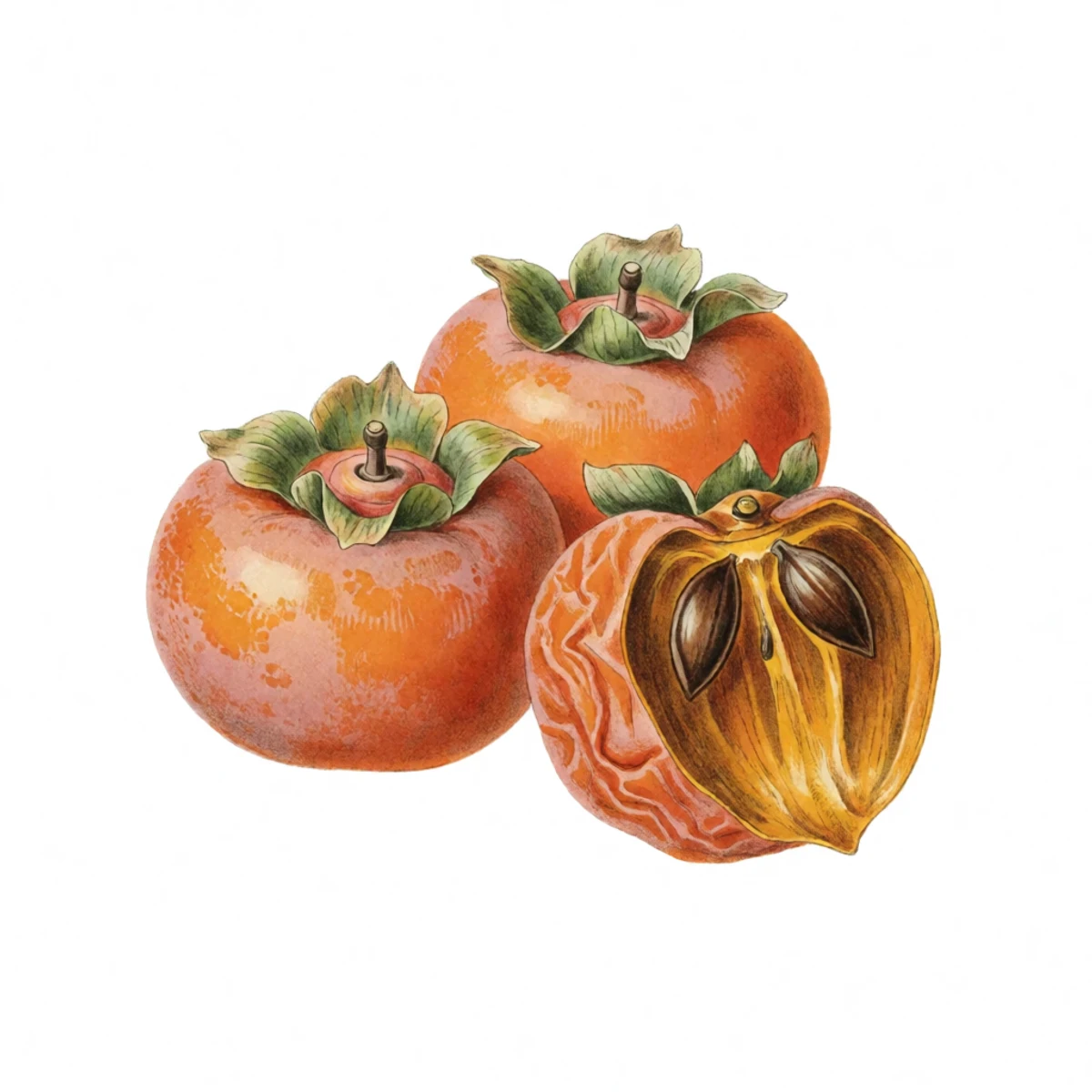
Watercolor plate of ripe American persimmons, one split showing seeds
Diospyros virginiana · field plate

The American persimmon is unforgiving if you pick it early, because an almost-ripe one tastes like chalk and dries your mouth out. Fully ripe, it tastes like spiced apricot custard, and it grows wild along half the fencerows in Missouri. The hard part is believing how unappealing a ripe one looks.

  1. Step 1 · How it looks

    Ripe ones are wrinkled, dull and drooping

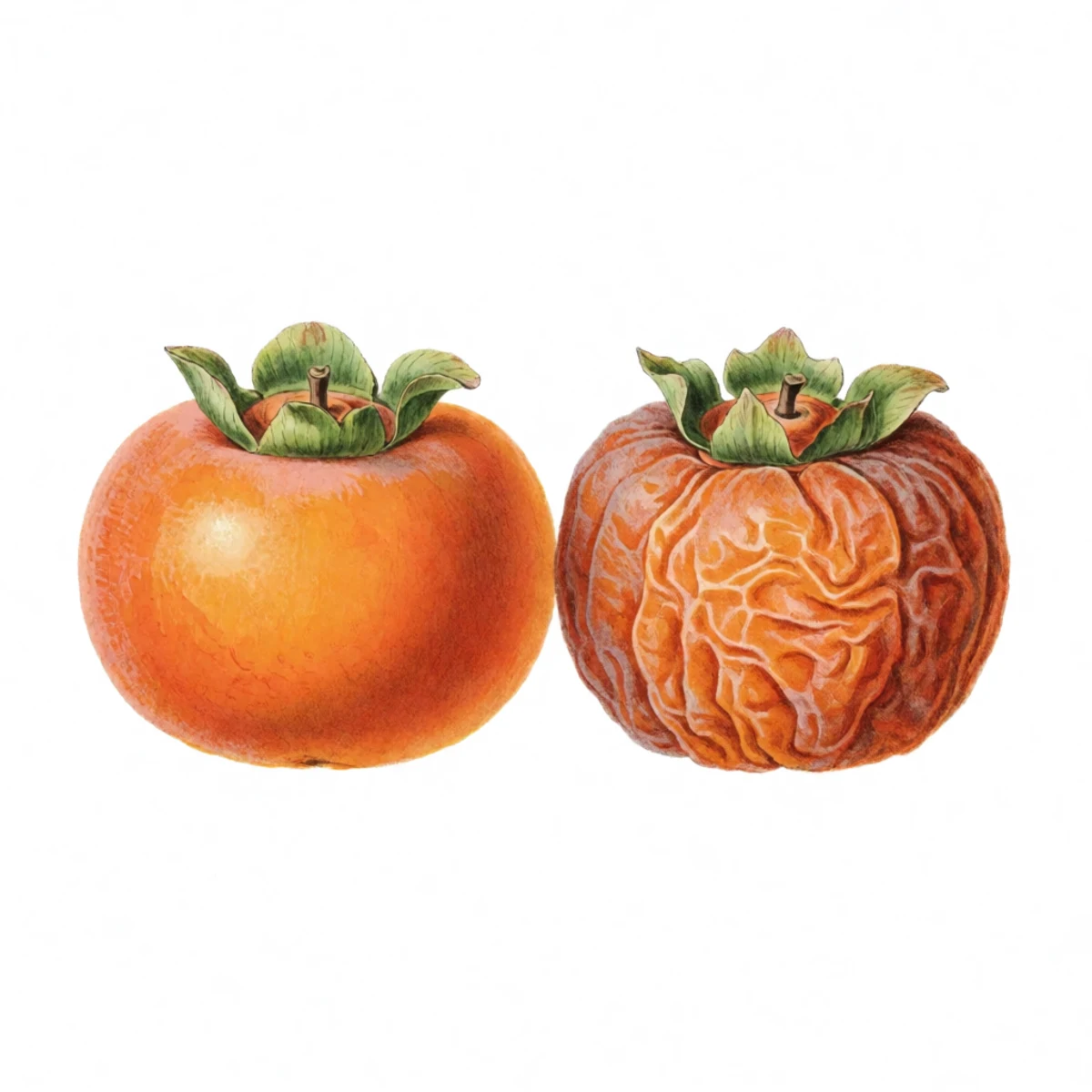
    Watercolour plate of two native persimmons side by side, one firm bright orange and unripe, the other wrinkled dull and drooping with ripeness

    Ignore the bright orange globes you see in October, because those are full of tannins and will dry your mouth out. A truly ripe native persimmon looks past its best: deep orange to a bruised amber color, with dull, wrinkling skin and flesh as soft as pudding, and it is often already on the ground. Looking overripe is the sign that it is ready.

  2. Step 2 · Shaking the tree

    Spread a sheet and shake the tree

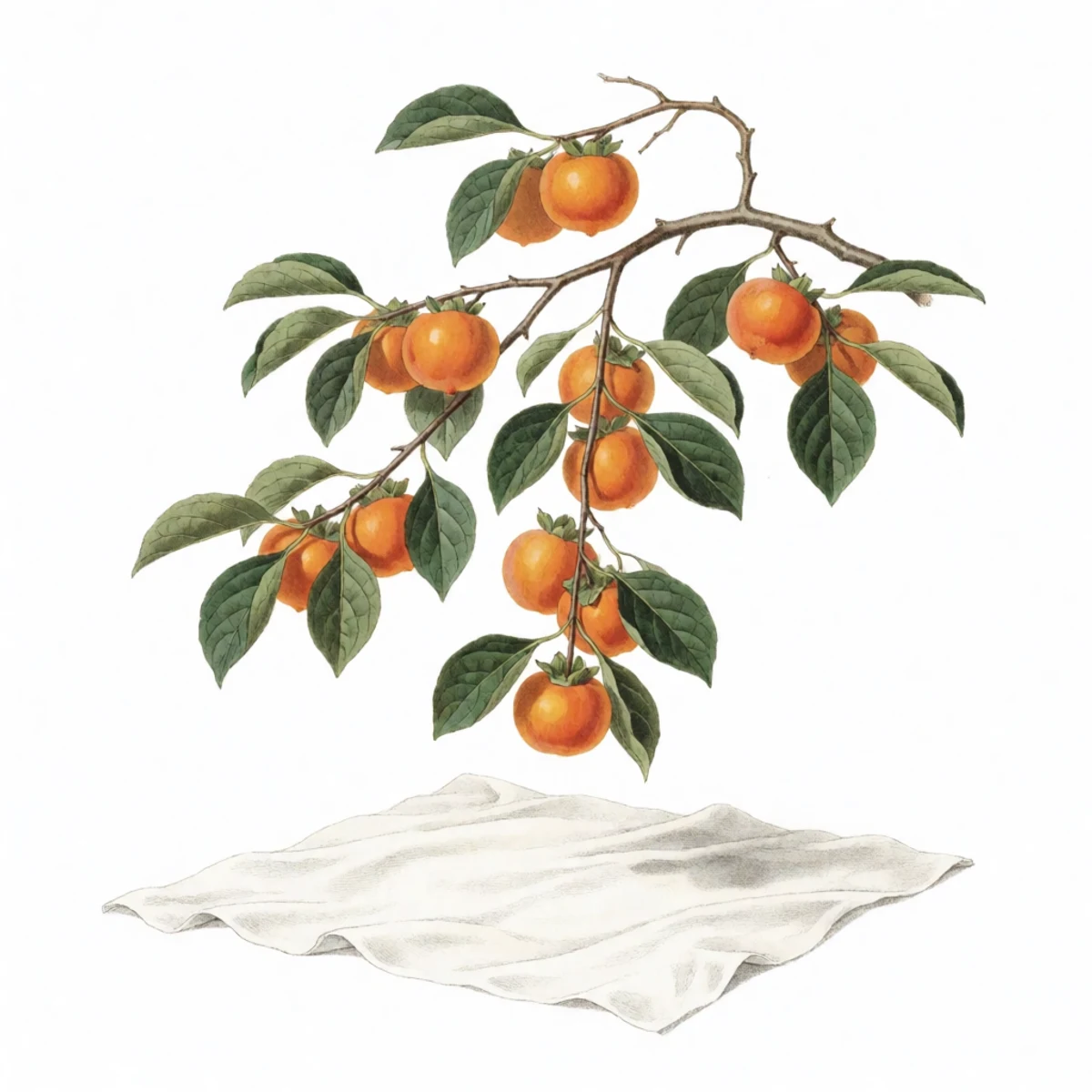
    Watercolour plate of a white sheet spread beneath a persimmon tree with ripe orange fruit dropping onto it as a limb is shaken

    Ripe fruit comes off the tree at a touch. Spread a sheet under the branches and shake the trunk or individual limbs. Whatever falls is ready, and whatever stays on needs more time. Repeat every few days through fall, because a tree ripens in waves rather than all at once.

  3. Step 3 · About the frost rule

    Frost is a coincidence, not a requirement

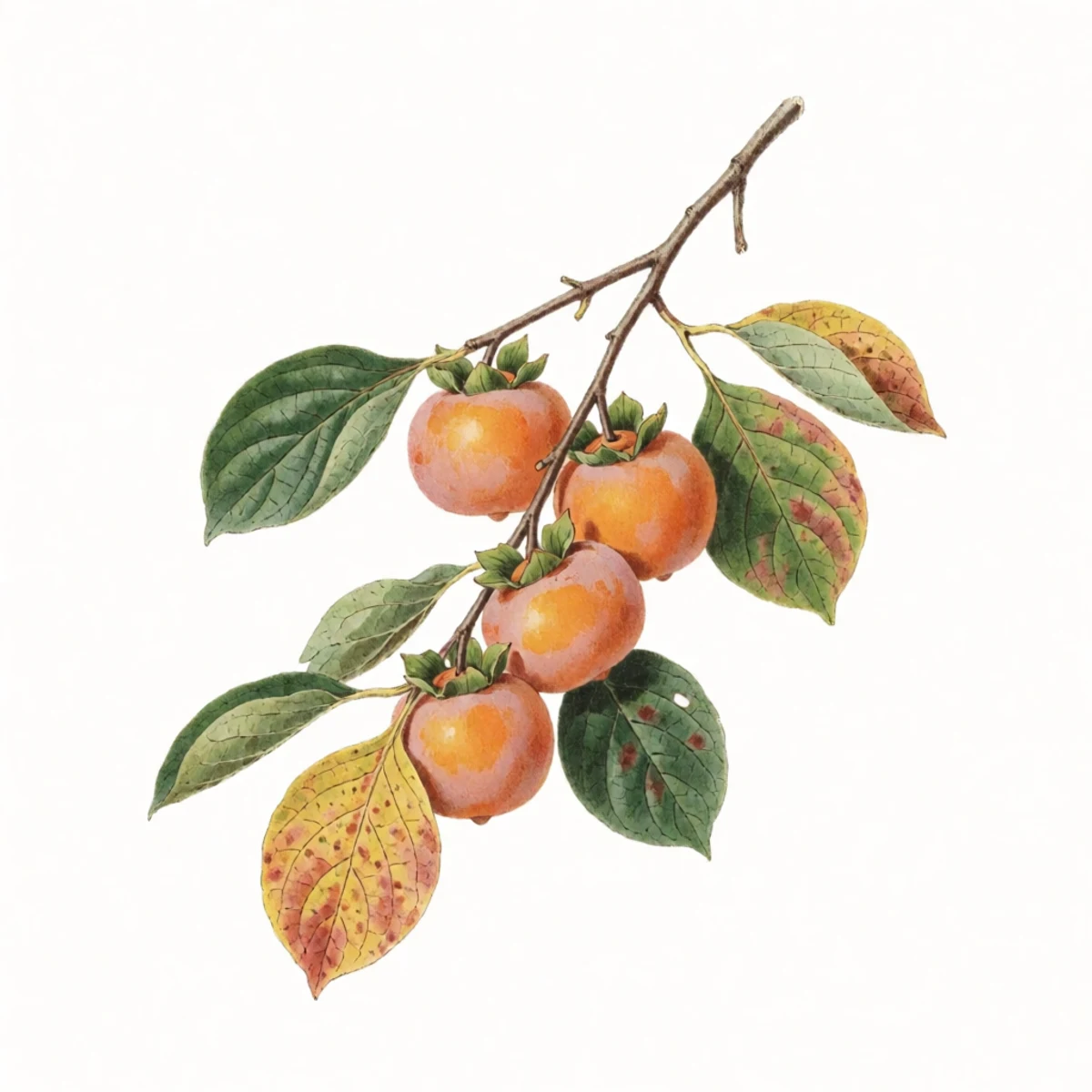
    Watercolour plate of a persimmon branch with ripe fruit and autumn leaves, a suggestion of early frost on the grass below but fruit already soft

    The old saying is to wait for frost. In fact persimmons ripen on their own schedule. Some trees finish in September, well before any frost, and others hold fruit into December. Judge each fruit by how soft it is. Be aware too that a hard freeze can ruin fruit that was not ripe yet.

  4. Step 4 · Processing them

    Turn them into pulp the same day

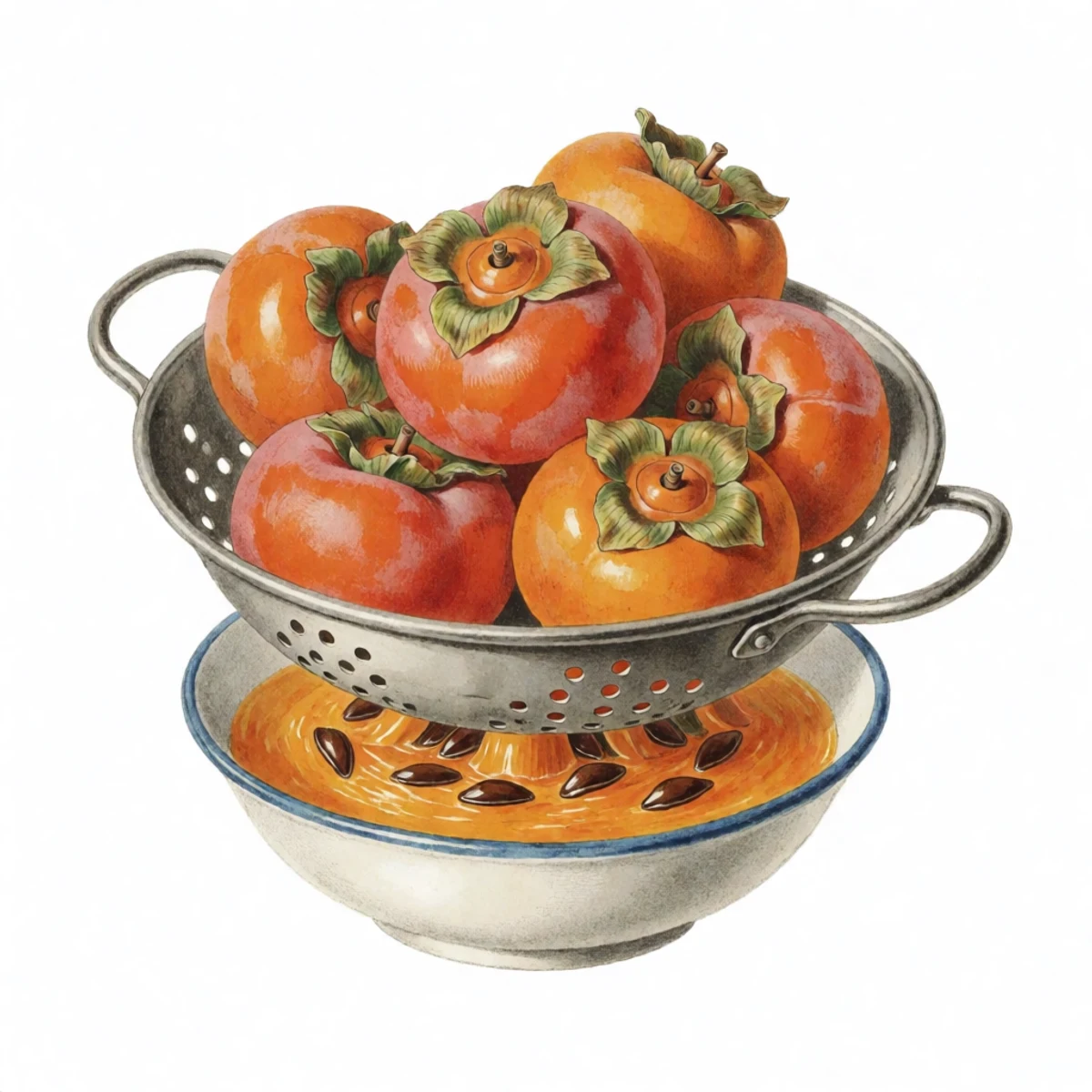
    Watercolour plate of ripe persimmons being rubbed through a colander into a bowl of orange pulp, flat brown seeds caught above

    Fruit gathered off the ground is soft and fragile, so process it the day you pick it up. Push the fruit through a colander or a food mill to separate the pulp from the skins and the large flat seeds. Pulp freezes well laid flat in bags, and will make persimmon pudding, cookies and quick bread all winter.

Materials needed

As an Amazon Associate, Story Thyme Farms earns from qualifying purchases, at no cost to you. It never changes what we recommend.

Questions we actually get

How do I fix an astringent persimmon I picked too soon?
Time sometimes finishes barely-early fruit on the counter, and a day in the freezer, thawed, softens and sweetens borderline ones. Truly green fruit is beyond saving, the tree keeps its own calendar.
Are American persimmons different from the grocery store kind?
Very. Store fruit is Asian persimmon, bigger and often non-astringent. The native is smaller, seedier, richer, and absolutely must be soft-ripe. Flavor-wise the native wins any pudding contest.
Why does my persimmon tree drop fruit with no seeds some years?
Persimmons are usually male or female trees, and a lonely female sets seedless fruit that often drops early. Fruit quality is still fine, a male within bee range fills the seeds and steadies the crop.
From the plant library

American Persimmon — the full profile

Zones, cold-hardy cultivars, spacing, feeding, and where to buy one already rooted.

Open the american persimmon guide →