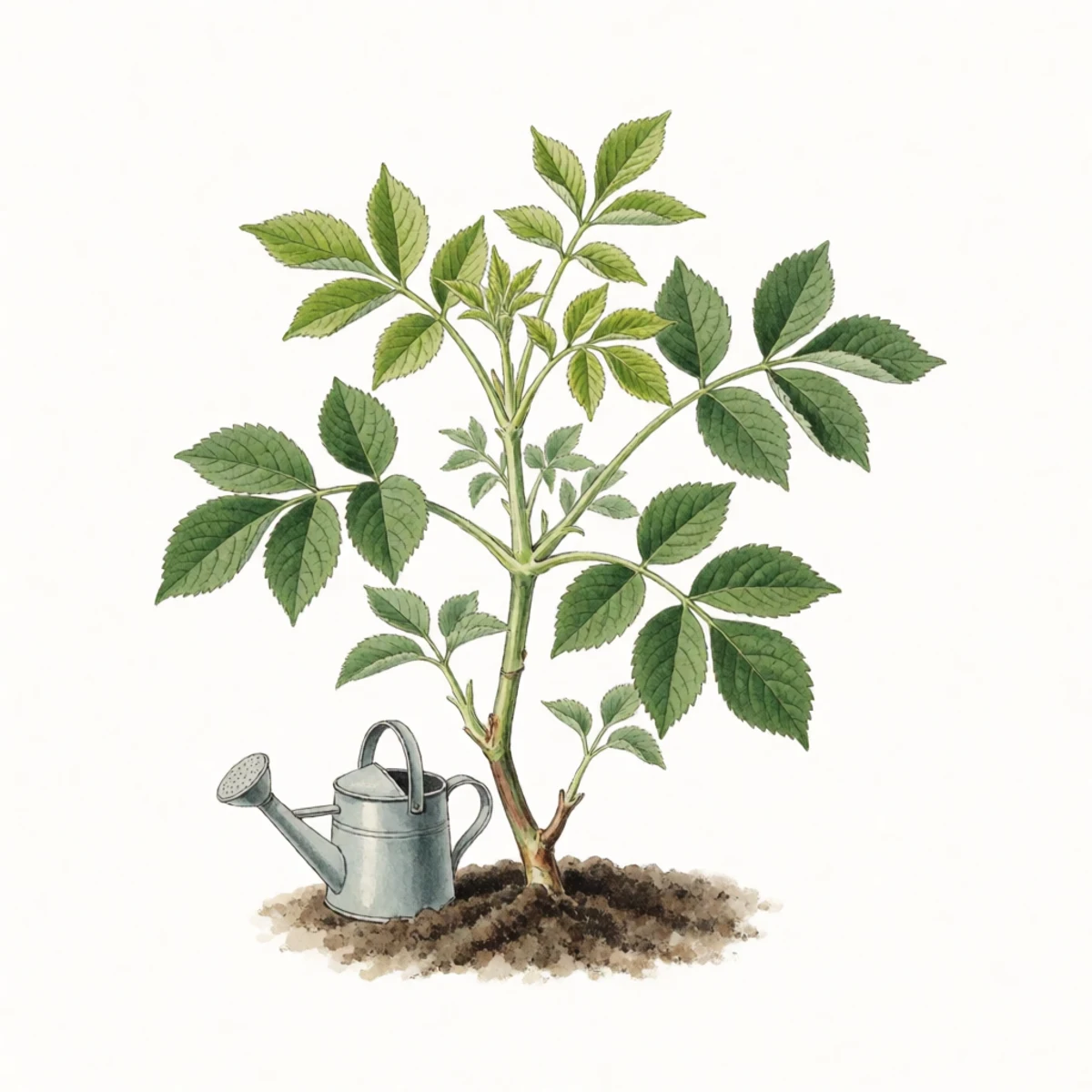
How to root elderberry cuttings
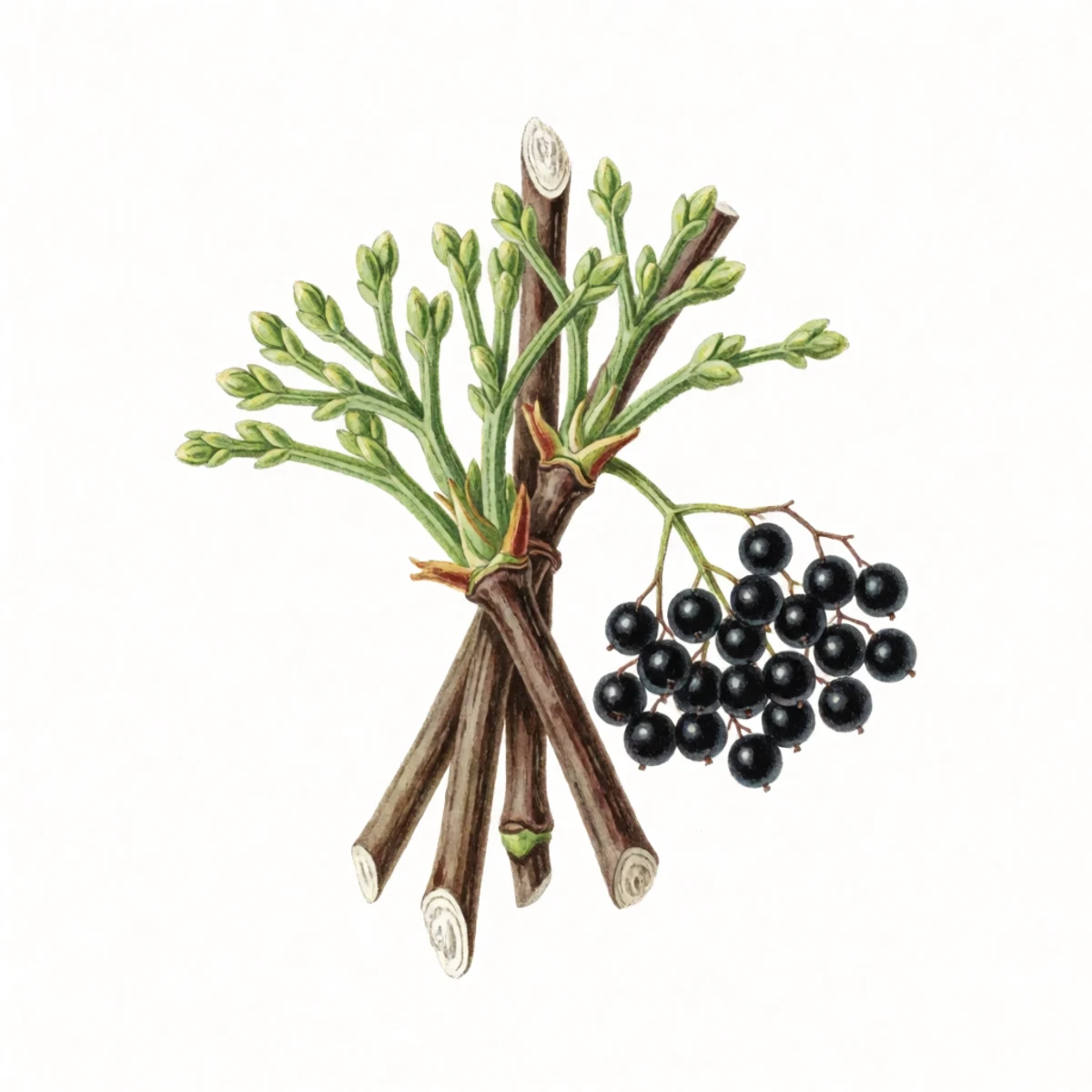
Sambucus canadensis. Dormant hardwood cuttings
Take dormant sticks in late winter and you will have rooted shrubs by summer. Elderberry roots almost as easily as fig.
Sambucus canadensis. Dormant hardwood cuttings
Prints on one page. The long version below stays on the screen.
How to harvest elderberries and make syrup Elderberry, harvest to syrup →
The long version

Every elderberry hedge on this farm started as a stick. Take dormant wood in late winter, keep two nodes above ground and bury one. Enough of them take that we plant them straight into the spot where we want the shrub.

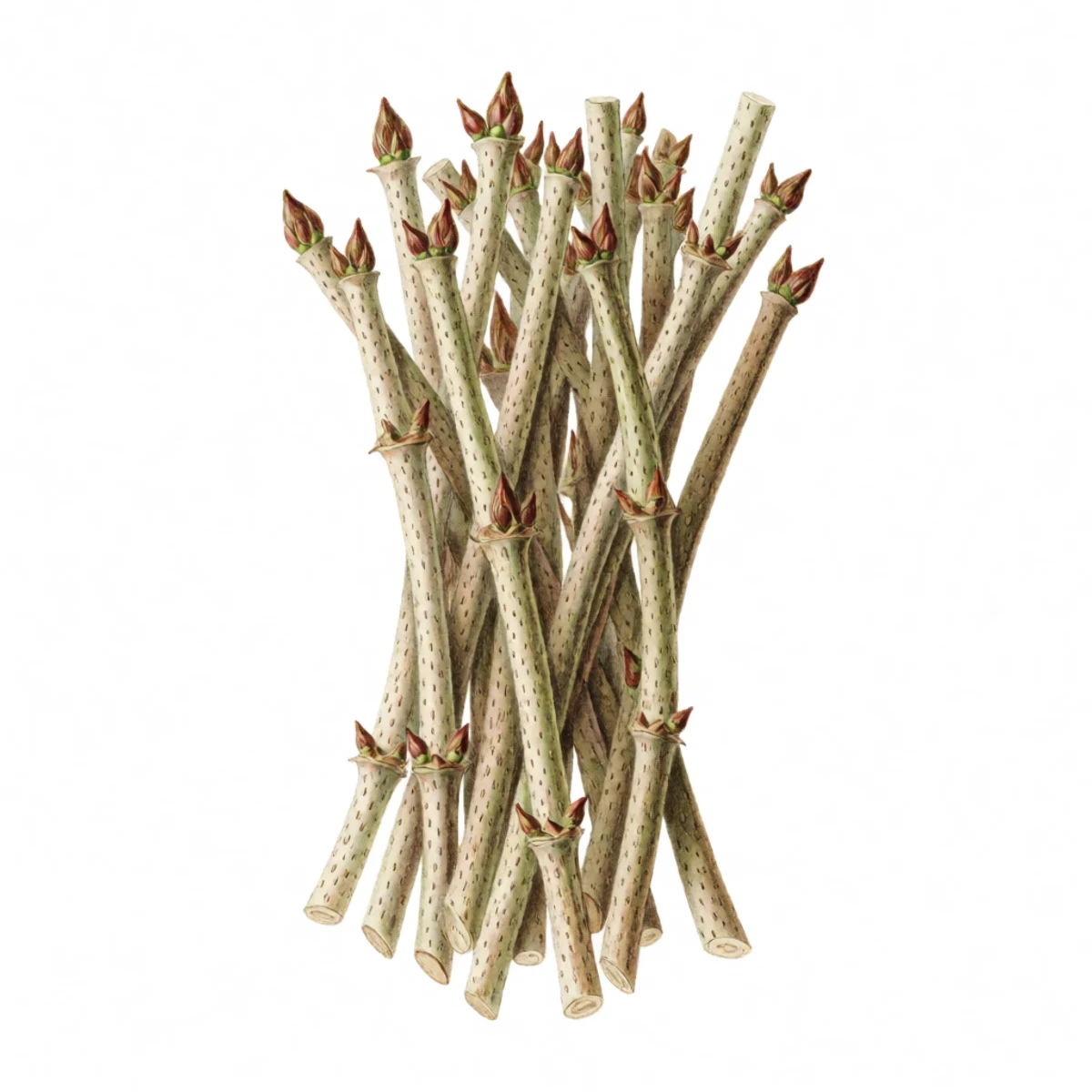
Do this between January and early March, while the shrub is leafless. Cut eight to twelve inch sections of last year's wood, at least half an inch thick, with two or three pairs of nodes. Cut the top flat and the bottom at an angle so you never plant one upside down.

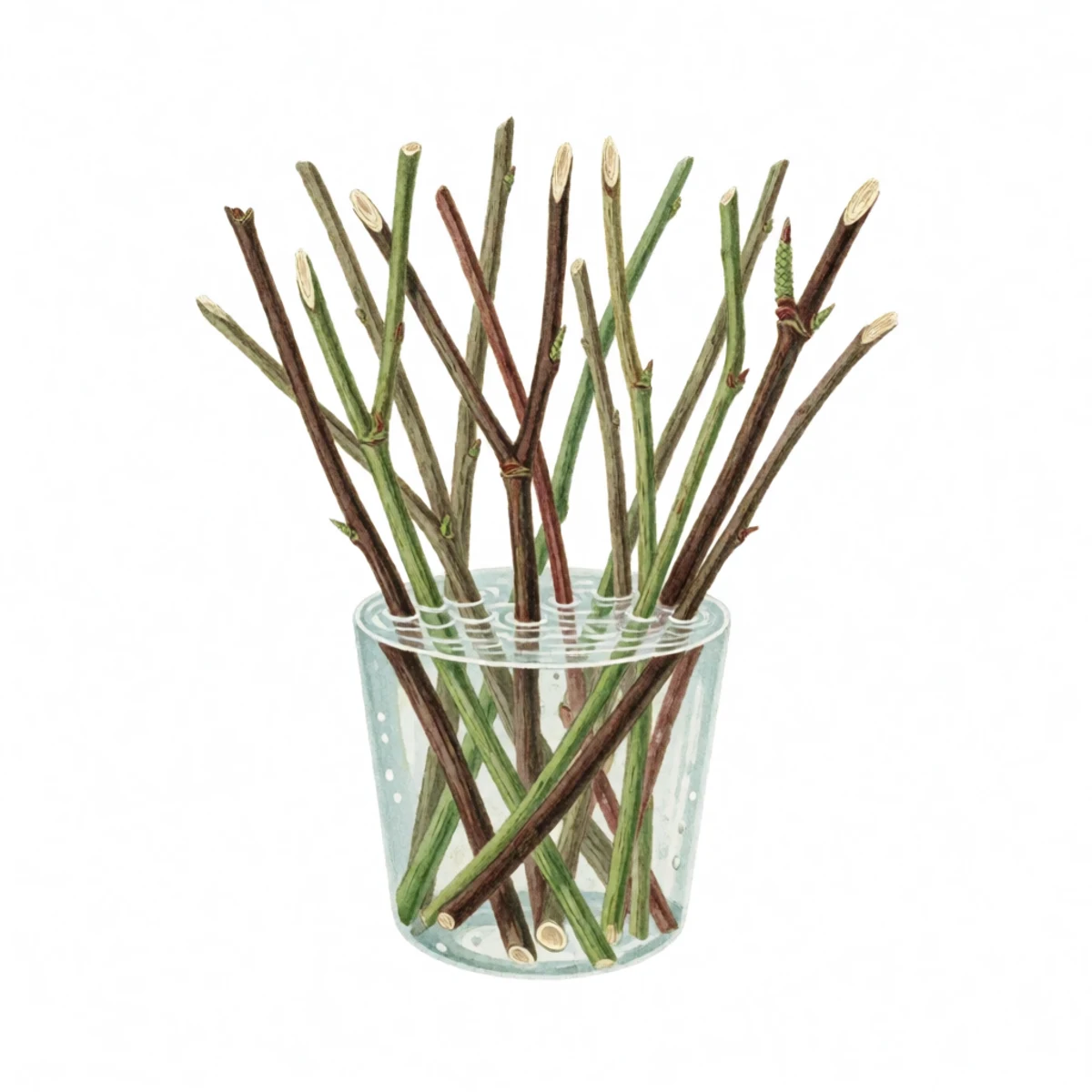
Dormant wood is shipped and stored dry. Soaking for 12 to 24 hours rehydrates the cane and brings it out of dormancy. Some growers soak for a full week, changing the water daily. Overnight has always been enough here.

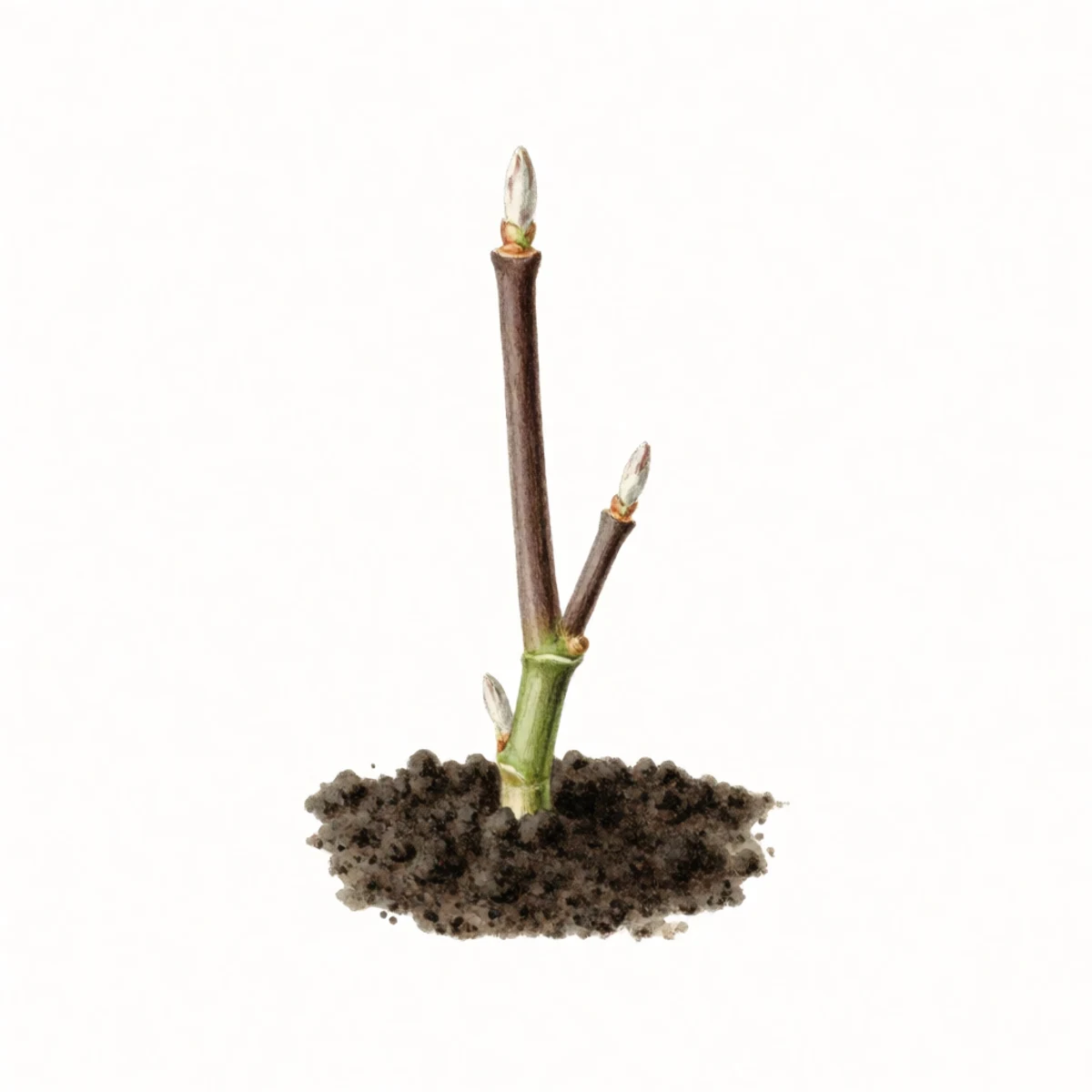
Plant them straight into a pot of damp mix or into worked garden soil. Set each cutting so its lowest node sits about two inches below the surface. Roots grow from the buried nodes and leaves from the ones above ground. Press the soil down firmly against the wood.

Leaves often appear before roots do, so do not assume a leafy cutting has taken. Keep the soil evenly moist through the first summer and keep grass away from the base. By fall, a cutting that took will have real roots. It fruits a little in year two and properly in year three.
As an Amazon Associate, Story Thyme Farms earns from qualifying purchases, at no cost to you. It never changes what we recommend.
Zones, cold-hardy cultivars, spacing, feeding, and where to buy one already rooted.
Open the elderberry guide →