The illustrated growing guide

Elderberry

Sambucus canadensis

Family Viburnaceae

Est. zones 3-9

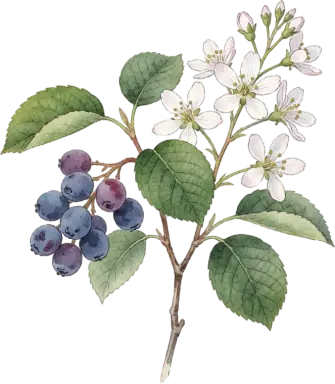
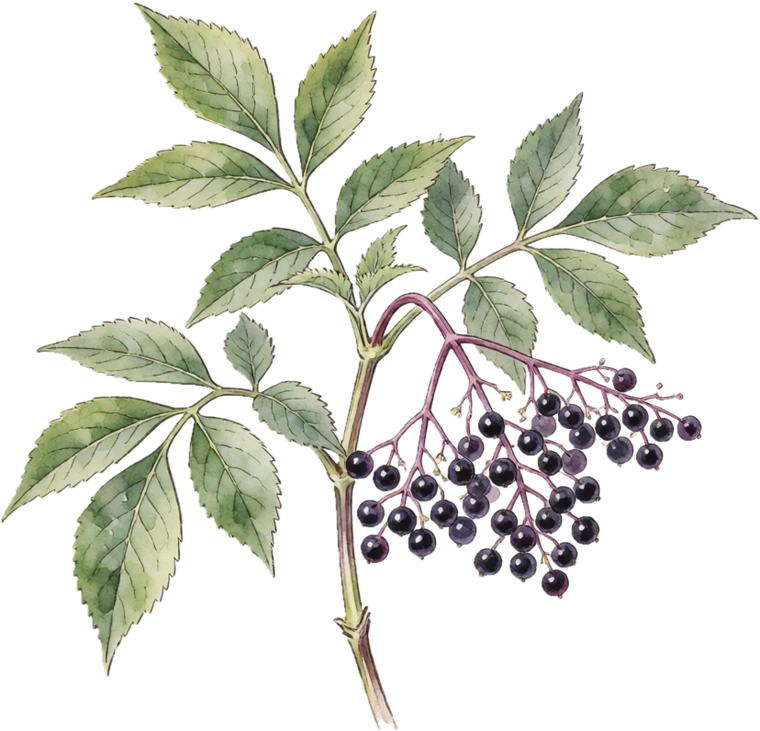
Botanical illustration of Elderberry
Shrub · Sambucus canadensis

Do NOT eat raw berries (mildly toxic/nausea). Cook or dry. Flowers are edible (fritters/tea). Use netting for birds.

Shrub · NativeFull Sun to Part ShadeHigh waterFast growthNative to North AmericaExcellent edibleAttracts beesNeeds a pollination partner

Where to buy the plant — 3 nurseries

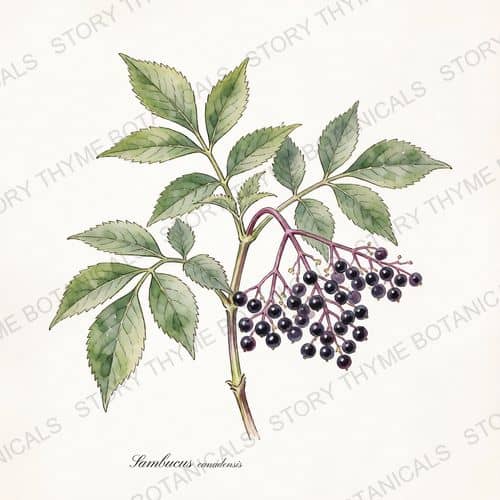
Elderberry — a print from the Berry Plants collection

From the print shop

Growing elderberry? Hang it.

Our Berry Plants collection carries elderberrySambucus canadensis, print Nº 13, “Elderberry.”

16 designsfrom $21.99white or black groundmatte poster, unframed

Shop Berry Plants botanical prints →

I

Overview

Will elderberry suit your garden, and what goes wrong.

Will it fruit where you are?

Enter your ZIP — we look up your USDA hardiness zone (2023 map) and check it against what elderberry actually needs.

Hardy inZones 3-9
PollinationPartner needed

Elderberry at a glance

HardinessUSDA 3–9
Mature size8-12 ft
PollinationPartially Self-Fertile, Need 2 varieties for good crops
Chill requirementNot yet established
Bloom seasonJune (flat white cymes)
Harvest seasonLate July - September in Missouri — clip whole cymes once every berry has colored
Growth rateFast (Vigorous)

Common elderberry problems

II

Growing

Light, water, soil, propagation and the season’s jobs.

How to grow elderberry: light, water & soil

LightFull Sun to Part Shade
WaterHigh - loves moisture/ditches
SoilMoist, Humus-rich · pH 5.5 - 6.5
FertilizerEarly Spring (Nitrogen)
PruningLate Winter — Cane renewal (remove oldest canes) OR cut to ground annually for smaller bushes (sacrifices yield slightly but easier management).
Spacing6-10 ft

How to plant & propagate elderberry

PropagateGrafted, or from cuttings/layering (seed won't come true)

When to spray elderberry

Growing season. Monitor for Japanese Beetles (manual remove). SWD: Insecticide as berries turn purple if detected.

The elderberry growing playbook

Field-tested instructions for every job elderberry asks of you, compiled from university extension guidance — in the order the season brings them.

Feeding

Nitrogen as growth begins

As the buds break and growth begins, spread 1 to 2 pounds of actual nitrogen per 1000 square feet over the root zone of a mature bearing planting. Do not feed nitrogen at planting time; a new plant gets at most a light dose about 4 to 8 weeks after it goes in. Retest the soil every two to three years and add phosphorus or potassium only if the test calls for it, keeping pH between 5.5 and 6.5. Elderberry pushes its whole fruiting frame out of the crown each spring, so the nitrogen has to be there as the shoots extend; applied later it feeds soft growth that will not harden before frost instead of the cymes.

Pruning

Dormant-prune elderberry well before bud breakJan – Mar

Any time the canes are fully dormant and well before bud break, cut out every dead, diseased or damaged stem, remove most wood that is three years old or older, and tip weak canes back to strong wood; leave five to eight strong canes on a mature bush. American cultivars can instead be cut entirely to the ground, which trades a little total yield for one uniform crop on new wood. Gather the prunings and burn or bin them rather than composting them in place. American elderberry fruits on wood at least a year old and also on new shoots thrown from the crown, so clearing spent old wood keeps light and air moving through the bush and pushes the vigorous new canes that carry the biggest cymes. Eriophyid mites overwinter under the buds and bud scales of those canes, so hauling the prunings away removes next year's mite population with them.

European elderberries (Sambucus nigra types such as Samdal, Haschberg, Korsor and Marge) fruit on the previous year's growth - cutting those to the ground removes the crop. Use the selective method on them.

Cut out borer-infested canes after harvest

With the fruit off, walk the planting and cut out any cane that is wilting at the tip, hollow, or showing frass at an entry hole. Burn the infested canes or take them off site - do not leave them in a brush pile or the compost. While you are there, pull out any wild elderberry growing near the planting. Pruning and burning infested canes is the only post-harvest control the Missouri guide lists for elder shoot borer moth: by now the larvae are living inside the wood where no spray can reach them, and they will overwinter there to emerge into next year's crop. (The guide does list a chemical option for this pest - Altacor 35WG - but only as a summer spray, which has to go on earlier, before the larvae are sealed in the cane. Once you are at post-harvest, sanitation is what is left.) Nearby wild elderberry acts as a reservoir that reinfests the planting every season.

What to watch for

Scout the cymes at bloom, but do not spray insecticide

Walk the planting while the cymes are open and record what is building: sawfly larvae stripping foliage, eastern flower thrips in the florets, stink bugs and Jessie's bug at the shoot tips, and adult elder borer beetles, which emerge exactly now. Write down what you find and what it is doing, then hold every insecticide until the petals have dropped. Elderberry is primarily wind-pollinated, so a bloom spray buys you almost nothing in fruit set while still poisoning the bees and other insects working the flowers. Missouri Extension is explicit that insecticides are not to be applied during bloom, and the pests you see now are all still treatable at petal fall a few days later.

Do not apply insecticides during bloom. Only spray a pest you have actually identified - scouting, not the calendar, decides whether an application is needed at all.

Spraying

Horticultural oil at green tip for eriophyid mites

From dormancy through green tip, before any leaves unfurl, spray horticultural oil (Damoil) and wet the canes and buds thoroughly. If you missed the window, the organic pre-bloom options are insecticidal soap (M-Pede), neem oil (Trilogy) or pyrethrins (PyGanic) - but they must go on before the leaves curl. Eriophyid mites spend the winter tucked under the buds and bud scales, and oil smothers them while they are still exposed there. Once they move into the expanding leaves and cause the inward leaflet curl and puckering, they are sealed inside the folded tissue and no rescue spray reaches them; heavy infestations go on to destroy florets and young fruit.

Neem oil (Trilogy) carries a 1-day pre-harvest interval; PyGanic is capped at 10 applications per season. Apply before leaf curl occurs - the label is a legal document, so check that your product is labeled for elderberry.

Elder borer beetle at petal fall

Once the petals have actually dropped, and only if you found elder borer beetles while scouting at bloom, spray bifenthrin (Brigade WSP). Check again about ten days after petal fall and repeat only if adults are still present. The same timing covers sawfly, thrips, stink bugs and Jessie's bug if scouting turned them up. Adult elder borer beetles emerge during bloom and lay their eggs at the base of the plant; the larvae then tunnel into the canes and roots where nothing can reach them. Petal fall is the first moment you can hit the adults without spraying open flowers, and it is the last moment before the eggs are laid.

Bifenthrin (Brigade) has a 1-day pre-harvest interval, a 12-hour restricted-entry interval, and a season cap of 80 oz of product per acre. It is highly toxic to bees - confirm the petals are down, not merely fading, before you spray.

Spotted wing drosophila from first color

From the moment berries begin to color until the last pick, hang a vinegar trap and check it. If you catch spotted wing drosophila, spray spinosad (Entrust, an organic option) or spinetoram (Delegate), and pick up and destroy any fallen fruit. Alternate to a different chemistry rather than following one of these with the other. Unlike ordinary vinegar flies that need already-damaged fruit, SWD females have a serrated ovipositor that saws into sound ripening berries and lays eggs inside them. By the time the fruit looks soft or leaking, the larvae are already in it, so the spray has to be in place before the berries are attractive.

Entrust: 1-day PHI, no more than 2 consecutive applications. Delegate: 1-day PHI, no more than 3 applications a year with at least 7 days between them. Both are IRAC group 5, so rotating from one to the other is not a rotation and breeds resistance.

Harvesting

Clip whole cymes and chill them fast

Harvest when every berry in the cyme is fully colored to a deep purple-black, clipping the entire cluster rather than picking berries off it. Go over the planting at weekly intervals and pick early in the day. Get the fruit to 32-40F as soon as you come in, then freeze the whole cymes and knock the berries loose by hand-shattering them or running them through a de-stemmer. Fresh elderberries tear and bleed juice if you strip them off the stem, but they snap off cleanly once frozen. The fruit is highly perishable and ripens in the heat of summer, and the anthocyanins that make it worth growing are fragile - long storage and repeated freeze-thaw cycles destroy them.

Never harvest from roadside or railway wild stands - those crews often spray herbicide just before the berries are ready. Elderberry ripens over 6 to 8 weeks depending on cultivar, and a bush cut to the ground the previous winter ripens over 2 to 3 weeks while one with mixed-age shoots takes 3 to 4.

III

The year

What elderberry asks for, month by month.

The elderberry year, month by month

MonthJanFebMarAprMayJunJulAugSepOctNovDec
Bloom
Prune
Harvest

What each band means

  • Bloomflowers open — pollinators working, frost on blossoms is the danger.
  • Pruneshape it now — cuts heal cleanly and structure is visible.
  • Harvestpicking time — check ripeness every few days.

The elderberry year as text

  • Jan quiet month
  • Feb pruning
  • Mar pruning
  • Apr quiet month
  • May quiet month
  • Jun bloom
  • Jul harvest
  • Aug harvest
  • Sep harvest
  • Oct quiet month
  • Nov quiet month
  • Dec quiet month

These are the species' typical months — expect them a few weeks earlier in warm zones and later in cold ones. Watch the plant, not just the calendar.

IV

Ecology & uses

What it does for the garden, and what it is grown for.

Elderberry in the garden system

  • Shrub layer shrub
  • Nectary/insectary
  • Hosts Numerous moths; berries and nectar for wildlife
AttractsBees, Birds
MoistureWetland / wet-tolerant
DeerBrowsed — protect young plants
OriginNative to North America

What elderberry is grown for

! Some parts toxic — see notesRaw berries/stems mildly toxic — cook first

Traditional useSyrup (Medicinal)
UseJelly
UseWine
UseFlower tea
Edible value4/5
Traditional use rating4/5 in herbal tradition

Harvesting & storing elderberry

Late July - September in Missouri — clip whole cymes once every berry has colored.

Edibility, identification, and traditional-use notes here are general reference — not medical or veterinary advice, and not a claim that any plant treats or prevents anything. Medicinal ratings record how strongly a plant features in herbal tradition, nothing more. Never eat or dose a plant you have not positively identified. More on how to use this library.

V

Cultivars

Named varieties of elderberry, ruled as a catalogue.

Best elderberry varieties & cultivars

13 on file

Named varieties of elderberry differ in winter-chill needs, ripening time, hardiness, and whether they set fruit on their own — pick one that fits your climate.

Adams · Adams No. 1, Adams No. 2, Adams II

Partly self-fertile
Chill300–600 hrsRipensAugustZones3-9Diseasemoderate; vigorous and productiveSize6-10 ft tall, upright
Pollinationpartially self-fertile; plant a second cultivar (e.g. York or Johns) for reliable, heavier fruit set

large clusters, good for juice, jelly, wine and dried — Classic New York selection with big berry clusters and strong vigor; plant with a second cultivar like York for best set. Chill-hour figure is an estimate only — no extension source gives a chill requirement for elderberry, which is cold-hardy and not chill-limited.

Where to buy ‘Adams

Story Thyme Farms may earn a small commission from these links, at no cost to you — it never changes what we recommend.
York

Partly self-fertile
Chill300–600 hrsRipensMid to late AugustZones4-8DiseasemoderateSize6-10 ft tall
Pollinationpartially self-fertile; classic partner for Adams and a good pollinizer for other canadensis cultivars

largest berries of the American types; soft, sweet, juicy, highly pigmented — NY Ag Experiment Station release (Adams No. 2 x Ezyoff); produces the biggest berries in the group and ripens mid-to-late season, extending harvest alongside earlier cultivars. Zones corrected to 4-8 per WVU Extension. Chill-hour figure is an unverified estimate; elderberry has no documented chill requirement.

Where to buy ‘York

Story Thyme Farms may earn a small commission from these links, at no cost to you — it never changes what we recommend.

Nova

Partly self-fertile
Chill300–600 hrsRipensEarly AugustZones4-8DiseasemoderateSize6 ft tall and wide, compact
Pollinationpartially self-fertile; often paired with York

large soft berries, sweeter than most; excellent for wine, juice and jam — Hardy, early-ripening Canadian (Kentville, Nova Scotia) selection that stays compact, making it a good pollinizer partner and small-yard choice. Zones corrected to 4-8 per WVU Extension. Chill-hour figure is an unverified estimate; elderberry has no documented chill requirement.

Where to buy ‘Nova

Story Thyme Farms may earn a small commission from these links, at no cost to you — it never changes what we recommend.

Johns · John's

Partly self-fertile
Chill300–600 hrsRipensMid-AugustZones3-9Diseasemoderate; very vigorousSize8-10 ft tall, large
Pollinationpartially self-fertile; strong, heavy-flowering pollinizer for Adams and others

glossy firm purple-black fruit, excellent for wine and juice — Tall, vigorous Canadian cultivar valued as a heavy-flowering pollinizer and for wine and elderflower production. Chill-hour figure is an unverified estimate; elderberry has no documented chill requirement.

Where to buy ‘Johns

Story Thyme Farms may earn a small commission from these links, at no cost to you — it never changes what we recommend.

Bob Gordon

Partly self-fertile
Chill300–600 hrsRipensLate July to early August (later, into September, in some regions)Zones3-9Diseasemoderate to good; highly productiveSize6-8 ft tall and wide
Pollinationpartially self-fertile; a second cultivar improves yield

high-sugar (high-Brix) purple berries, top-rated for juice, wine and syrup — University of Missouri release (2011) whose downward-facing clusters resist bird and rain loss and give among the highest yields; a determinate, later-blooming type that ripens all at once. Harvest window per WVU is late July-early August but it ripens later in cooler regions. Chill-hour figure is an unverified estimate.

Where to buy ‘Bob Gordon

Story Thyme Farms may earn a small commission from these links, at no cost to you — it never changes what we recommend.

Wyldewood

Partly self-fertile
Chill300–600 hrsRipensMid-August to early SeptemberZones3-9Diseasegood; very heavy producerSize8-10 ft tall, large
Pollinationpartially self-fertile; best pollinizers are Ranch and Bob Gordon (per WVU Extension)

small dark berries in very large heads, heavy juice yield — Late-ripening University of Missouri release (2010) with enormous, indeterminate flower and fruit heads and broad soil tolerance. Chill-hour figure is an unverified estimate; elderberry has no documented chill requirement.

Where to buy ‘Wyldewood

Story Thyme Farms may earn a small commission from these links, at no cost to you — it never changes what we recommend.

Ranch

Partly self-fertile
Chill300–600 hrsRipensLate July to AugustZones4-8Diseasegood; high pest tolerance and drought tolerantSize5-6 ft tall, compact
Pollinationpartially self-fertile; a second cultivar improves yield

small black berries, good for juice and syrup — Compact, drought- and pest-tolerant University of Missouri selection that ripens early and stays short, ideal for hedgerows and small plots; also cited as a good pollinizer for Wyldewood. Chill-hour figure is an unverified estimate.

Where to buy ‘Ranch

Story Thyme Farms may earn a small commission from these links, at no cost to you — it never changes what we recommend.
Marge · European black elder selection (Sambucus nigra type)

Partly self-fertile
Chill400–700 hrsRipensAugust to SeptemberZones4-8Diseasegood; vigorous and high-yieldingSize6-10 ft tall
Pollinationpartially self-fertile; a single plant will crop, but yields are heavier with a second European (nigra-type) elderberry

very high anthocyanin; primarily a juice and medicinal berry, tart raw — A Sambucus nigra type (parentage debated; DNA leans nigra over hybrid). Marketed as self-pollinating and a single plant does fruit, but sources describe it as only partially self-fertile with heavier crops when a second European elderberry is present. Changed from 'yes' to 'partial'. Chill-hour figure is an unverified estimate; nigra types likely need somewhat more chill than canadensis.

Where to buy ‘Margeverified

Story Thyme Farms may earn a small commission from these links, at no cost to you — it never changes what we recommend.

Kent

Partly self-fertile
RipensVery early; ripens 7-10 days before Adams No. 2Zones4-8Sizevigorous, upright
Pollinationpartially self-fertile; plant a second American cultivar for a heavier set

small but very sweet berries in large clusters; fairly high sugar — A 1957 Kentville, Nova Scotia seedling of Adams No. 1 and the earliest of the named cultivars, which is what makes it the pick for a short season - some Vermont growers call it the best all-around performer, and yields are reliable from the very first years. Zones 4-8 per Grimo Nut Nursery; MSU Extension E2747 lists Kent among elderberry cultivars hardy to USDA zones 4 to 9. No extension source gives a chill requirement for elderberry, so chill is left blank rather than guessed.

Where to buy ‘Kent

Story Thyme Farms may earn a small commission from these links, at no cost to you — it never changes what we recommend.

Scotia

Partly self-fertile
RipensLate July to early September (species window); ripening period not established - UVM lists Scotia under 'Ripening Periods Uncertain' and MU gives no ripening figure for itZones4-8Sizeupright
Pollinationpartially self-fertile; fruits more heavily with another elderberry nearby

the sweetest of the elderberries and the smallest-fruited; highest sugar content — A 1959 Kentville, Nova Scotia seedling of Adams No. 2 and a sibling of Nova. UVM rates it the highest-sugar named cultivar and lists it as the smallest-fruited, and Grimo describes it as 'the smallest fruit, but the sweetest of the elderberries available' - the choice when you want to eat or juice it rather than maximize tonnage. MU af1017 is more restrained, saying only that the berries are sweeter than Kent or Victoria (the same phrase it uses for Nova), and describing the berries as medium to large; sources genuinely disagree on berry size because elderberry hybridizes freely. Ripening is unresolved: UVM files Scotia under 'Ripening Periods Uncertain' and MU gives it no ripening figure, so treat the harvest window as the species window rather than a mid-season slot. Zones 4-8 per Grimo Nut Nursery. Chill left blank: no extension source gives elderberry a chill requirement.

Where to buy ‘Scotia

Story Thyme Farms may earn a small commission from these links, at no cost to you — it never changes what we recommend.

Victoria

Partly self-fertile
RipensEarly; ripens 3-6 days before Adams No. 2Zones4-9Sizemoderately vigorous
Pollinationpartially self-fertile; best set with a second cultivar

medium berries in medium clusters — A 1957 Kentville, Nova Scotia release and another Adams No. 2 seedling. Moderately vigorous with medium berries and clusters, ripening a few days ahead of Adams - a useful early partner rather than a headline yielder. Zones per MSU Extension E2747, which lists Victoria among elderberry cultivars hardy to USDA zones 4 to 9; parentage and fruit description from the UVM production guide, ripening figure from MU af1017. Chill left blank: elderberry has no documented chill requirement in any extension source.

Where to buy ‘Victoria

Story Thyme Farms may earn a small commission from these links, at no cost to you — it never changes what we recommend.

Samdal · Sambucus nigra Samdal

Partly self-fertile
RipensSeptemberZones4-8Sizeup to 10 ft tall; notably does not run or sucker far from the base
Pollinationpartially self-fertile; plant with another European (nigra-type) elderberry to maximize production

large clusters of black fruit, particularly high in anthocyanins — A Danish Sambucus nigra cultivar praised in the UVM guide for excellent yield, high vigor and a grower-friendly habit that stays put instead of suckering across the bed. Important care consequence: like other nigra types it fruits on second-year wood, so the cut-to-the-ground pruning used on American elderberry would remove the crop - prune selectively instead. Zone rating deliberately tightened from the One Green World catalog's 3-8 to 4-8: zone 3 is not plausible for S. nigra, and UVM reports that European elderberry is significantly less winter hardy than S. canadensis with a poor survival rate in New England, so treat even zone 4 as needing a sheltered site. Ripening, size and fruit description per One Green World. Chill left blank - no sourced figure.

Where to buy ‘Samdal

Story Thyme Farms may earn a small commission from these links, at no cost to you — it never changes what we recommend.

Haschberg · Sambucus nigra Haschberg

Partly self-fertile
RipensSeptemberZones4-8Size6-8 ft tall
Pollinationpartially self-fertile; plant two varieties for heavier crops

abundant clusters of large, juicy bluish-black berries — The standard commercial European black elder of Austrian and German orchards, hardy to about -25F and bearing within 2-3 years of planting. A nigra type, so it fruits on the previous year's wood and must not be cut to the ground the way American cultivars can be. UVM cautions that European elderberry is markedly less winter hardy than S. canadensis and ripens less uniformly over a longer period, so treat the catalog zone rating as optimistic outside a mild or sheltered site. Zones, size and traits from the One Green World catalog - nursery-sourced, hence the low confidence. No sourced chill figure.

Where to buy ‘Haschberg

Story Thyme Farms may earn a small commission from these links, at no cost to you — it never changes what we recommend.

VI

Sources & plant ID

Where the care distinctions come from, and how the plant is filed.

Research basis

Sources behind this profile

No extension citations are attached to elderberryyet. The care figures below come from the library's own catalogue rather than a traced primary source.

Plant ID

BinomialSambucus canadensis
FamilyViburnaceae
TypeShrub · Perennial
USDA symbolSACA12
OriginNative to North America
Invasive riskLow

VII

Where to buy

Third-party nurseries — not Story Thyme Farms.

Third-party nurseries, not Story Thyme Farms. Prices are theirs.

Story Thyme Farms may earn a small commission from these links, at no cost to you — it never changes what we recommend.

Elderberry needs a pollination partner — plant two genetically distinct plants (two different cultivars, or a cultivar plus a seedling).

VIII

Questions

Elderberry questions, answered straight.

Why isn't my elderberry fruiting?

Most often: it has no genetically distinct partner nearby. Elderberry is only partly self-fertile, so a lone plant sets a light crop at best — partially self-fertile, need 2 varieties for good crops. Plant a second, unrelated one nearby; two different cultivars, or a cultivar plus a seedling, is the classic pairing.

Is elderberry safe for kids and pets?

With care. Raw berries/stems mildly toxic — cook first Site it accordingly if children or pets roam the garden. This is general reference, not medical or veterinary advice — call a vet or poison control if something has actually been eaten.

When do you harvest elderberry?

Late July - September in Missouri — clip whole cymes once every berry has colored.

How do you propagate elderberry?

Grafted, or from cuttings/layering (seed won't come true).

IX

Elsewhere

Where elderberry sits in the library.