Field Guide · Propagation · 6 min read

How to Root Grape Cuttings

Winter prunings are free plants. Use sticks with three buds and most of them will root.

Story Thyme Farms · Bench cardFeb–early March

How to root grape cuttings

Vitis spp. Dormant hardwood cuttings

DifficultyEasy
Cutting3–4 buds, pencil thick
Soak12–24 hours
Fruit inYear 3
1Choosing the woodUse last year's wood, pencil thick
2Soaking themSoak them for a day before planting
3Planting themBury two buds and leave one or two above
4The first seasonGrow them for a year before planting out
Materials needed · Bypass pruners · Deep nursery pots · Potting mix
Written on the farm · Missouristorythymefarms.com/guides/how-to-root-grape-cuttings
Prints on one page. The long version below stays on the screen.

The long version

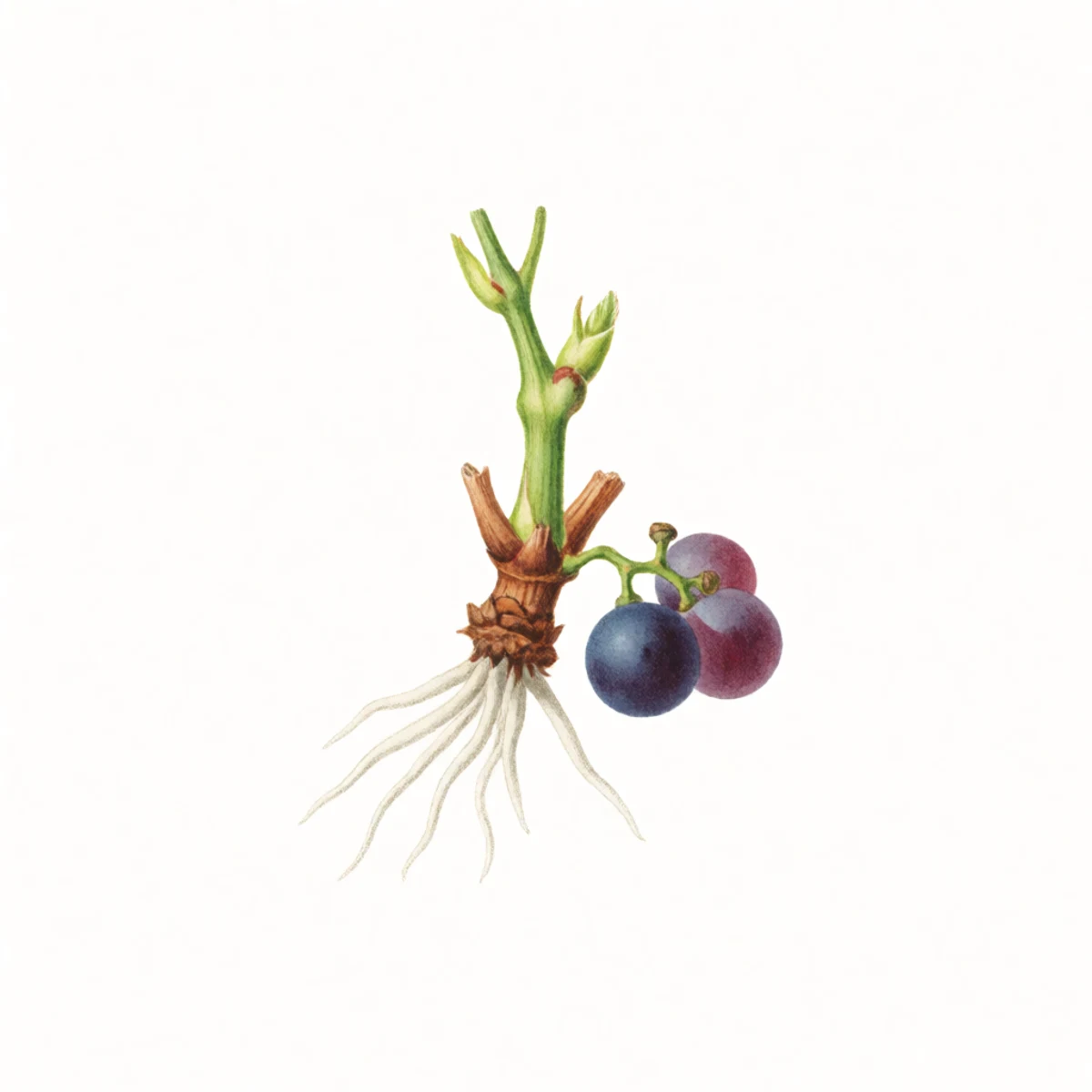
Watercolor plate of a grape hardwood cutting with roots and a breaking bud
Vitis spp · field plate

When you prune the arbor in late winter, the wood on the ground is next year's vines. Grape canes root so readily from dormant wood that commercial vineyards are planted this way. We plant ours the same week we prune.

  1. Step 1 · Choosing the wood

    Use last year's wood, pencil thick

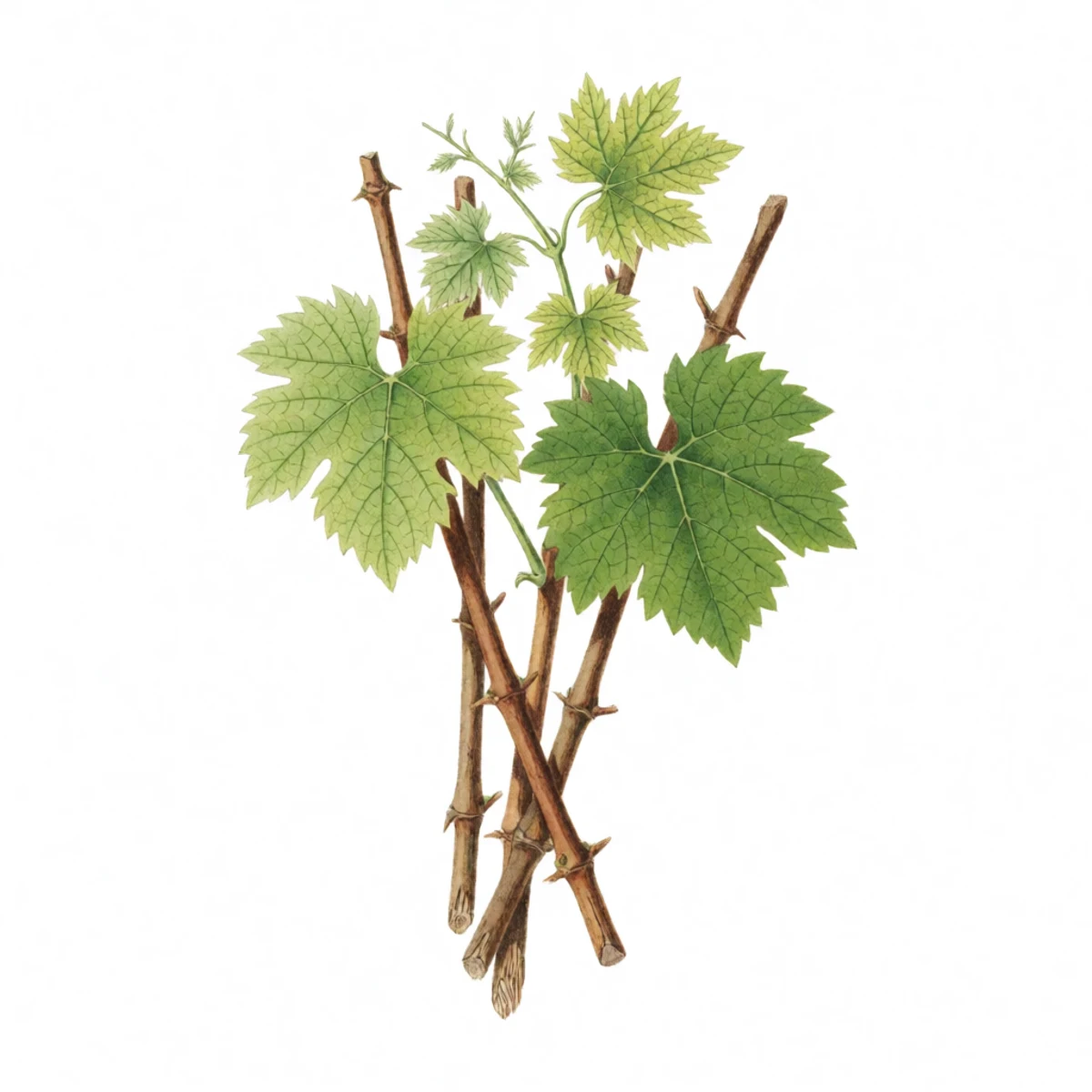
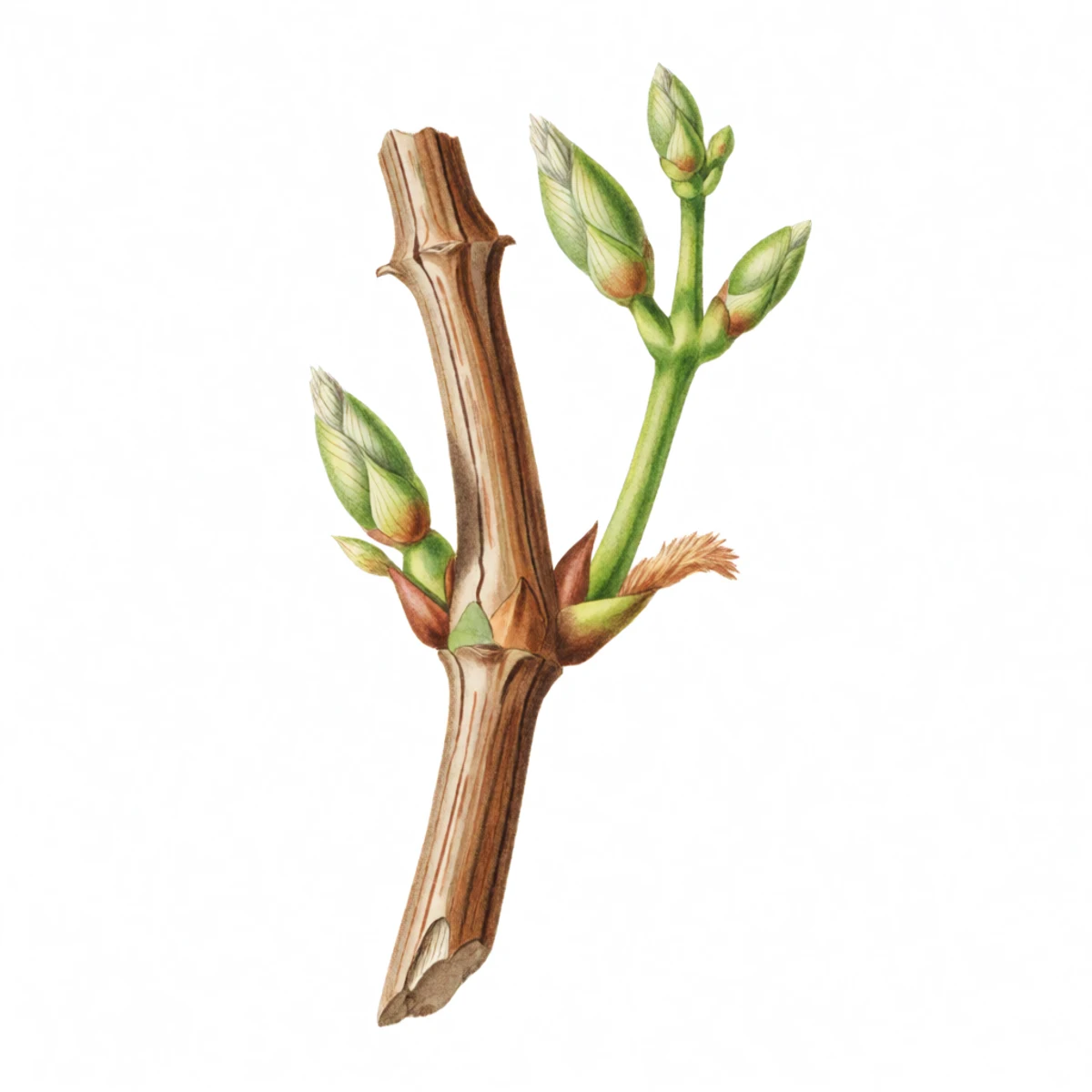
    Watercolour plate of smooth dormant grape canes of last season's growth cut into pencil-thick lengths, papery bark and clear swelling buds

    While the vine is fully dormant, cut smooth canes from last season's growth, between pencil and finger thick. The best wood is the first couple of feet nearest the trunk, where the buds sit close together. Cut the canes into sections with three or four buds, flat across the top and angled at the bottom.

  2. Step 2 · Soaking them

    Soak them for a day before planting

    Watercolour plate of grape hardwood cuttings standing in a jar of water soaking overnight, bark darkening with moisture

    Stand the cuttings in room-temperature water for 12 to 24 hours to rehydrate them. If you cannot plant them right away, they keep for weeks wrapped in something damp in the refrigerator.

  3. Step 3 · Planting them

    Bury two buds and leave one or two above

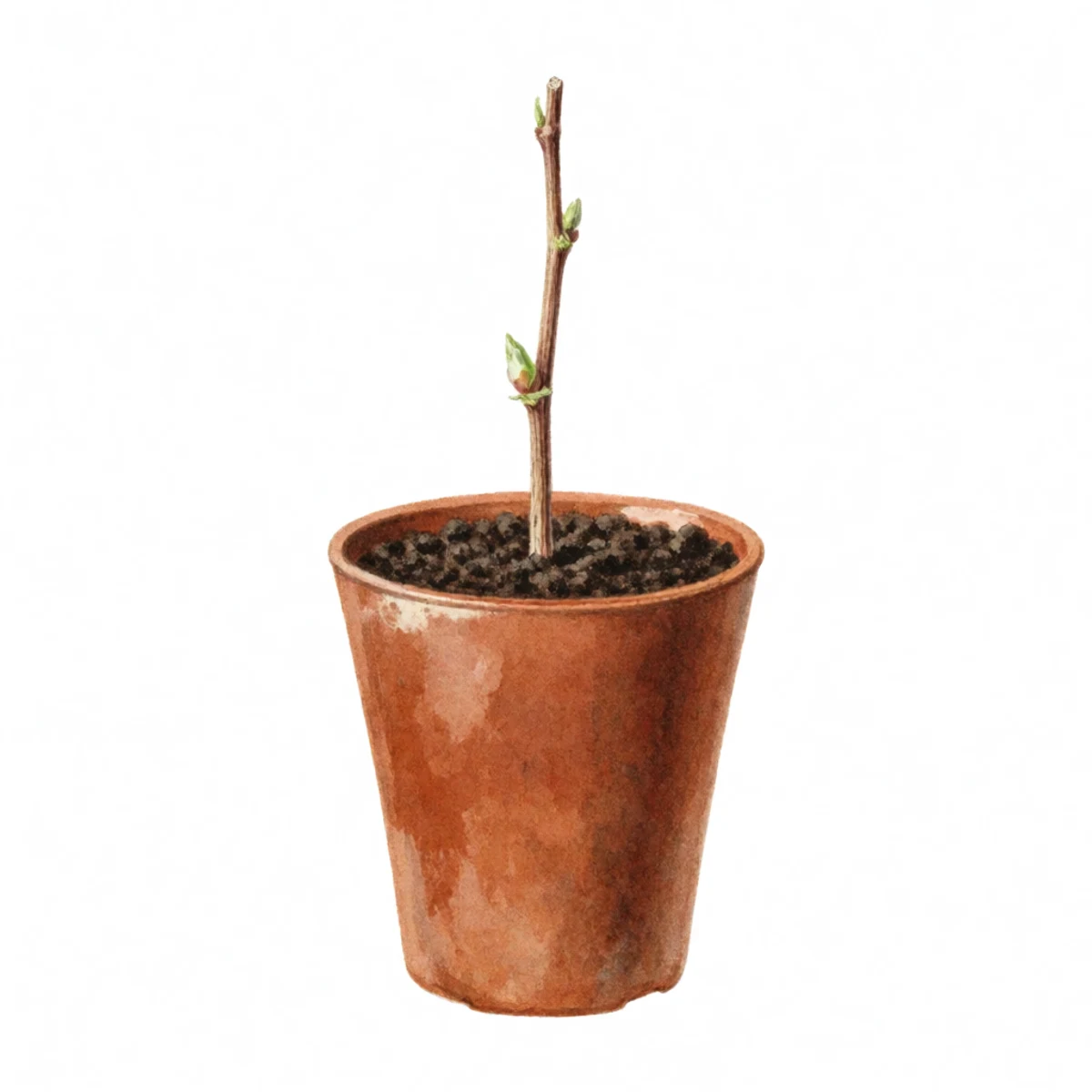
    Watercolour plate of a single grape hardwood cutting standing upright in a tall terracotta pot filled with dark crumbly soil, the bare stick rising well clear of the pot rim with one swelling bud on it, the pot seen plainly from the side

    Push each cutting into a deep pot or a nursery trench so the bottom two buds are under the soil and the top one or two are above it. Press the soil down firmly. If you are planting outdoors, wait until the ground can be worked. Roots form at the buried buds over four to eight weeks as the soil warms.

  4. Step 4 · The first season

    Grow them for a year before planting out

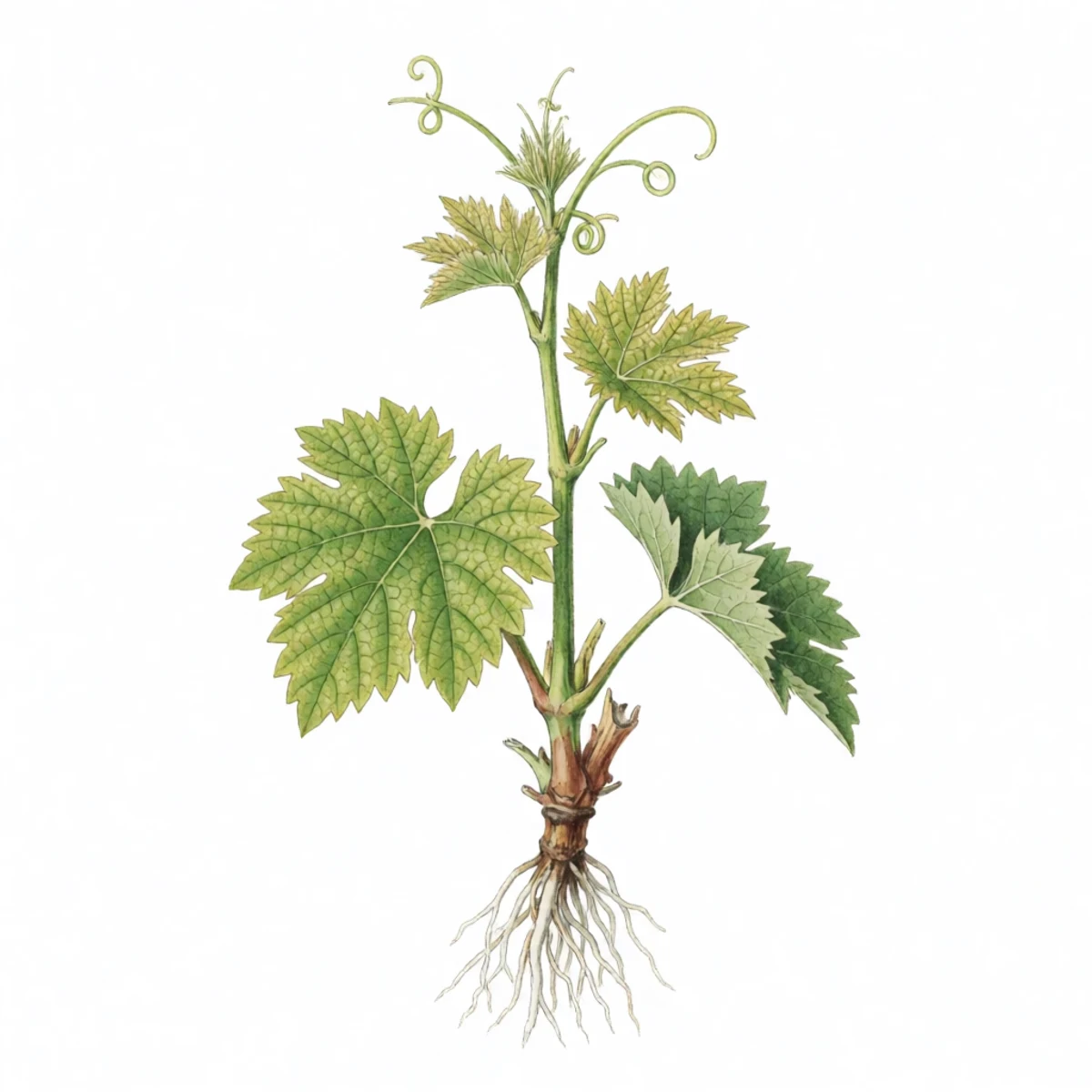
    Watercolour plate of a first-year rooted grape cutting with young green leaves and a tendril, white roots visible in the pot

    Shoots often appear before any roots have formed, so judge by tugging gently rather than by leaves. Keep the cuttings evenly watered all season. By fall, a cutting that took will have roots worth transplanting, and by year three you will be thinning fruit clusters.

Materials needed

As an Amazon Associate, Story Thyme Farms earns from qualifying purchases, at no cost to you. It never changes what we recommend.

Questions we actually get

When exactly do I take grape cuttings?
Any time the vine is leafless works, but late winter, February into early March here, is the sweet spot: the wood is fully hardened, and it goes into the ground just as the soil starts warming.
Do grape cuttings need rooting hormone?
Most table and wine grapes root fine without it. Hormone bumps the take rate on stubborn varieties, so if a cultivar fails you one year, dust it the next.
Will my rooted cutting match the store-bought vine I took it from?
The top will. But many commercial vines are grafted onto pest-resistant rootstock, and your cutting grows on its own roots. In most backyard soil that is fine, in phylloxera-prone vinifera plantings it matters.
From the plant library

Grape — the full profile

Zones, cold-hardy cultivars, spacing, feeding, and where to buy one already rooted.

Open the grape guide →