Purple Grapes
- Hardiness
- 5-9
- Mature size
- Vine (10-20 ft)
- Chill requirement
- 100-400
- Pollination
- Self-Fertile
- Harvest season
- Late Summer/Fall
Vitis spp.
Family Vitaceae
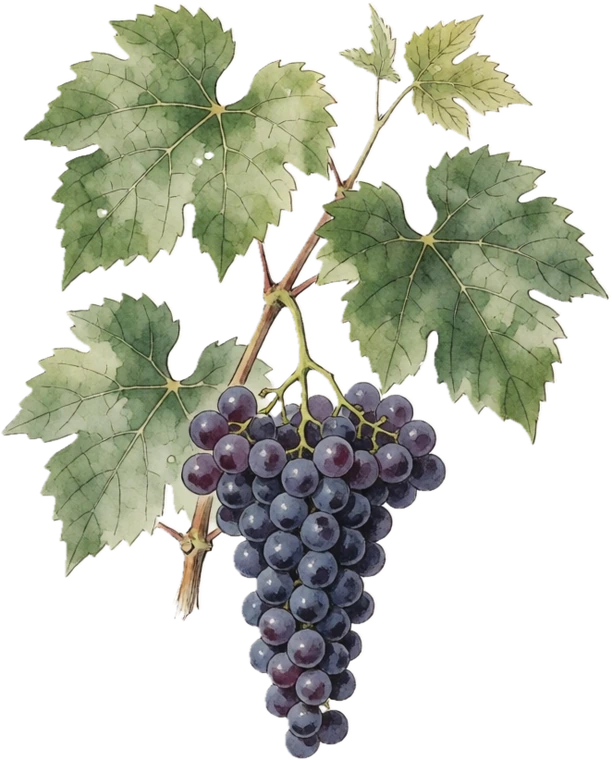
Grapes come with their own architecture: an arbor of green shade in summer, heavy clusters ripening under the leaves, and the choice of table fruit, juice, jelly, or wine depending on which lineage you plant. Few plants turn a bare fence into abundance this fast.
A grapevine is a long-term tenant: vigorous, sun-loving, and generous once it knows its trellis. Which type you grow shapes everything from flavor to disease pressure, so choose the lineage that fits your climate and plans — and keep the harvest away from the dog, since grapes and dogs don't mix.
 Full Sun
 Fast growth
 Excellent edible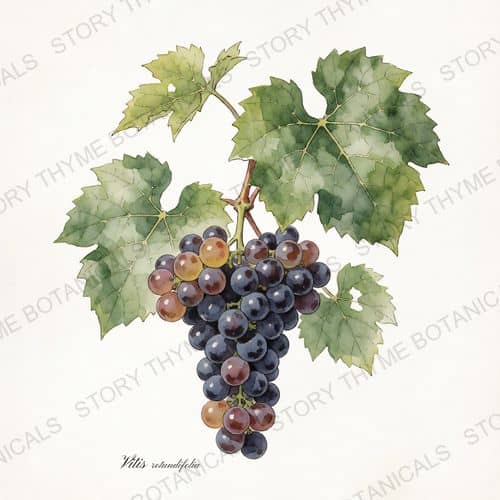
From the print shop
We don’t print Vitis spp. The closest we have is Vitis rotundifolia (“Muscadine Grape”) in the Plant Library collection — the same genus, Vitis, not the same species.
526 designsfrom $12.99white or black backgroundmatte poster, unframed
Hardiness differs across the 2 grapes in this guide, so pick yours and this panel answers for that one.
Purple Grapes
Grape · Common problems
Nothing common enough to list for grape. Watch it like anything else in the garden, and check the plants growing next to it.
Grape · Which one do you have?
Where these differ, the key facts above give the span across all of them. Each type’s own figures, as the catalogue records them:
Grape · Identity matters here
These are practical care groups, not extra catalog cards. Knowing which one you have prevents the most important pruning, spray, and pollination mistakes.
Usually warm-climate vines with looser clusters and slip-skin fruit.
Lineage changes pruning and training assumptions, disease and spray guidance, and whether flower type must be known for pollination.
Often cold-hardy bunch grapes with slip-skin fruit.
Disease pressure and spray necessity differ from European bunch grapes and muscadines; pruning style still needs to be known.
Tight-bunched, non-slip-skin grapes in the Vitis vinifera lineage.
Disease susceptibility can make the spray program more intensive, while cultivar and training system refine pruning and harvest guidance.
Hybrid grapes combine lineages, so visible traits and care needs can be variable.
Parentage or a cultivar name improves disease, cold-hardiness, pruning, and harvest precision.
Photographs from the farm
A close look at a growing vine and its support, alongside the guide’s care instructions.
Photos by Nate · Story Thyme Farms.
Grape · Growing & propagation
LightGrape · Seasonal care & spray guidance
winter, before growth starts
2 jobs PruningIn February and MarchPurple Grapes
Before bud break, remove most of last year's growth and leave selected canes or spurs on the trained cordon. Grapes fruit on new shoots from one-year wood and need heavy dormant pruning for quality clusters.
PruningIn February and MarchMuscadine GrapeIn late winter, cut side shoots back to short spurs along the cordon and remove tangled old growth. Annual pruning keeps muscadine vines productive and prevents arbors from becoming unmanageable.
early spring
2 jobs FeedingAt green tipMuscadine Grape
When the first green shoots push from the spurs, broadcast 3 to 5 pounds of 10-10-10 per established vine, spread in a circle out to the edge of the vine's spread rather than piled against the trunk. Young vines get far less and get it in three passes: a first-year vine takes half a pound of 10-10-10 once it has settled in, then 2 ounces of ammonium nitrate about two months later and 2 ounces again about six weeks after that. Double every one of those rates in the second year. A third-year vine takes 2 pounds of 10-10-10 at budbreak and 1 more pound about two months on. Muscadines carry their crop on shoots that grow from this year's buds, so the nitrogen has to be in the root zone before that flush of shoot growth sets the number of flower clusters the vine can fill.
 SprayingAt green tipPurple Grapes
When new shoots reach 1-2 inches, start black rot protection with mancozeb, captan or myclobutanil (Immunox). This is the spray people skip and it is the one that matters. Black rot overwinters in mummified berries and infects the youngest tissue first; by the time you see it on the fruit in August the infection happened months ago.
at bloom
1 jobSprayingAt bloomPurple GrapesSpray immediately before bloom and again as bloom finishes. If you only spray twice all year, make it these two. The berries are most vulnerable from immediate pre-bloom onward, and this is where the season is won or lost - black rot is the number one cause of a lost grape crop.
as the fruit sets
3 jobsFeedingAfter fruit setMuscadine GrapeRoughly ten to twelve weeks after budbreak, with green berries sizing on the vine, give each established vine a half pound of ammonium nitrate. If the older leaves show yellow between the veins with a green border, add 4 to 6 ounces of Epsom salts for magnesium (2 to 4 ounces on one- and two-year-old vines). The vine is filling berries and building next year's buds at the same time, and a mid-season nitrogen top-up carries it through that double demand without the surge of soft growth a single heavy spring dose would cause.
SprayingAt petal fallPurple GrapesKeep covers going every 10-14 days for about 3-4 weeks after bloom, then stop. Use captan rather than mancozeb once harvest is inside 66 days. Around 3-4 weeks after bloom the fruit becomes resistant to infection and further black rot sprays do nothing - spraying into August is treating a window that has already closed.
SprayingAfter fruit setMuscadine GrapeOnly if rot has cost you fruit before, start captan once the berries are set and repeat about every two weeks through the green-berry period. Muscadines are far more disease tolerant than bunch grapes, and many home vines need no fungicide at all, so let last year's losses decide. Follow the rate and maximum number of applications on the label of the product you buy. Bitter rot, black rot, Macrophoma rot and ripe rot infect the berry while it is still green and hard, then sit latent and only collapse the fruit once sugar rises at ripening, which is why a spray at the first rotten berry is already too late.
the growing season
3 jobs What to watch forIn May, June and JulyPurple Grapes
Check leaves and clusters for white powdery growth and open the canopy with timely shoot and leaf removal. Early scouting and airflow make mildew easier to manage before clusters are damaged.
What to watch forThrough summerMuscadine GrapeIn the weeks after fruit set, while the berries are still green and hard, scrape the soil surface within a foot of the trunk and look for brown papery pupal cases pushed up out of the ground, which is the proof adults are emerging from your vines. A pheromone bucket trap hung in the planting, checked weekly, will confirm it. Mound about ten inches of soil around the trunk base a couple of weeks BEFORE you expect emergence, then pull it away in late summer; this blocks up to ninety percent of the moths. In the Southeast emergence runs late June into early July, so the mounds go up in mid- to late June — adjust to your own trap catch, not to the calendar. The larvae spend nearly two years tunnelling the roots and crown below ground where nothing reaches them, so the brief window when adults emerge at the soil surface is the only point in the life cycle a grower can act on.
SprayingThrough summerMuscadine GrapeIf you find a white powdery film on leaves or young berries in summer, spray wettable sulfur and repeat as the label directs while the growth is still expanding. Powdery mildew is the one common muscadine disease captan does not touch, and unlike the rots it spreads in dry warm weather rather than rain, so it can build during the very spells that look safe.
as it ripens, and picking
1 jobHarvestingAt harvestMuscadine GrapeMuscadines ripen unevenly and hang in loose handfuls rather than bunches, so go over the vine every few days and take only the berries that separate from the stem at a light touch. Fruit that resists is not ready. A gentle shake onto a sheet under the vine collects the ripe ones for juice. The berry releases from its stem only at full maturity, so the vine itself tells you which fruit is ready, and a single vine will keep offering fruit over several weeks rather than all at once.
autumn, and putting it to bed
1 jobPruningAfter harvestMuscadine GrapeAfter the last picking, clear any shrivelled berries left hanging and the dried fruit stems still attached to the spurs, and rake up fallen fruit beneath the vine. Bury or bin it rather than composting it near the planting. If you miss the window, this cleanup still pays off any time before growth resumes in spring. The rot fungi overwinter inside those mummies and old stems and release the spores that start next season's infections, so this cleanup removes the inoculum before it has anything to infect.
Grape · Calculators & field guides
Grape · Yearly calendar
No calendar activity is listed for this month.
 BloomPrune
BloomMay
PruneFebruary to March
These are the species' typical months — expect them a few weeks earlier in warm zones and later in cold ones. Watch the plant, not just the calendar.
Grape · Ecology & uses
Vitis spp.
 Deer
DeerProtect young plants
! Some parts toxic — see notesToxic to dogs (all grape products)
Edible valueEdibility, identification, and traditional-use notes here are general reference — not medical or veterinary advice, and not a claim that any plant treats or prevents anything. Medicinal ratings record how strongly a plant features in herbal tradition, nothing more. Never eat or dose a plant you have not positively identified. More on how to use this library.
Grape · Varieties & cultivars
Compare hardiness, mature size, growth habit, days to maturity and intended use in the seller’s variety description. Where this guide covers several plant types, start with the type you want to grow, then choose a variety for your season and space.
Sources & plant identity
Vitis spp.
Hardiness, size and timing vary with your cultivar, soil and climate.
University extension research, brought together with hands-on growing experience at Story Thyme Farms.
 Clemson University
 NC State Extension
 Penn State
 University of Georgia
 University of Minnesota
 University of Missouri
 University of Wisconsin-Madison
 Alabama Cooperative Extension
 Ison's Nursery & Vineyard
 Oklahoma State University
 University of Florida
 Mississippi State University
Publisher marks identify sources, not sponsorship or endorsement.
Third-party nurseries — not Story Thyme Farms.
Third-party nurseries, not Story Thyme Farms. Prices are theirs.
Story Thyme Farms may earn a small commission from these links, at no cost to you — it never changes what we recommend.
Grape questions, answered straight.
With care. Toxic to dogs (all grape products) Site it accordingly if children or pets roam the garden. This is general reference, not medical or veterinary advice — call a vet or poison control if something has actually been eaten.
Where grape sits in the library.

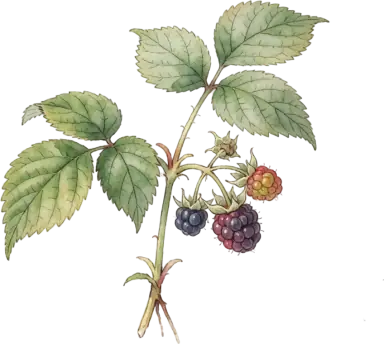 Boysenberry
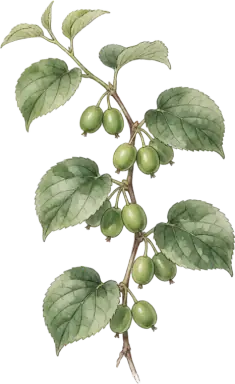 Kiwi
Kiwi Cantaloupe
 Watermelon