The illustrated growing guide

Boysenberry

Rubus ursinus × idaeus

Family Rosaceae

Est. zones 6-9

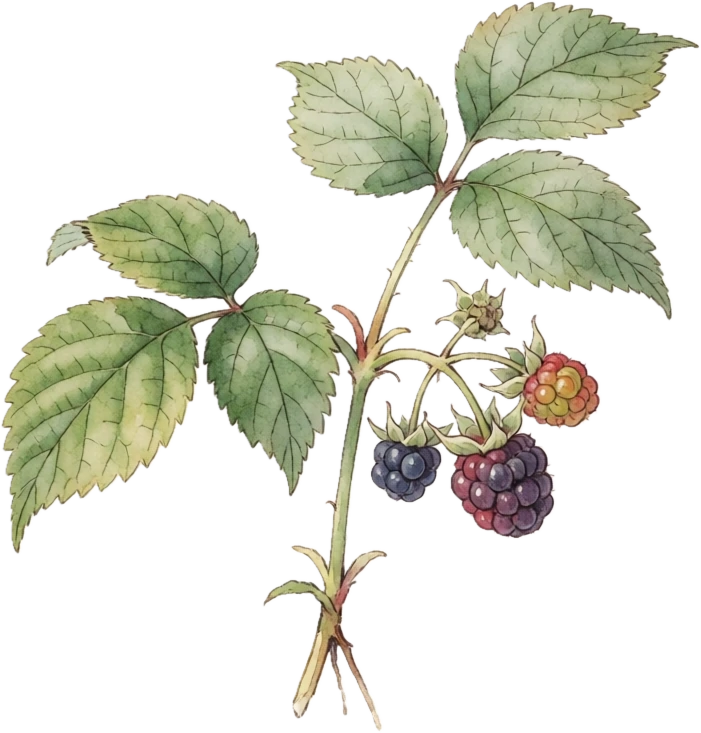
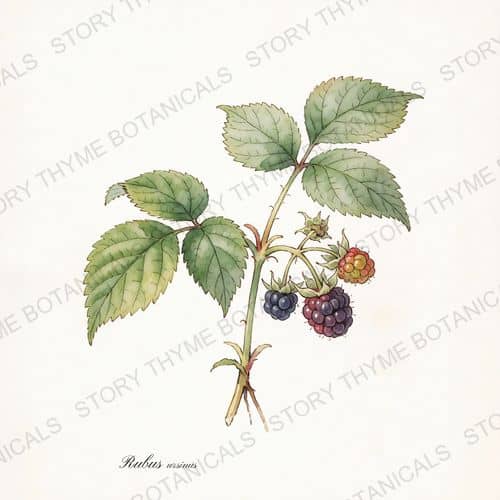
Botanical illustration of Boysenberry
Vine · Rubus ursinus × idaeus

Cross of Raspberry/Blackberry/Loganberry. Very flavorful, large. Thorny!

VineFull SunModerate waterFast growthExcellent edibleAttracts bees300-500 winter chill (unconfirmed)

Where to buy the plant — 1 nursery

Boysenberry — a print from the Berry Plants collection

From the print shop

Growing boysenberry? Hang it.

Our Berry Plants collection carries boysenberryRubus ursinus hybrid, print Nº 9, “Boysenberry.”

16 designsfrom $21.99white or black groundmatte poster, unframed

Shop Berry Plants botanical prints →

I

Overview

Will boysenberry suit your garden, and what goes wrong.

Will it fruit where you are?

Enter your ZIP — we look up your USDA hardiness zone (2023 map) and check it against what boysenberry actually needs.

Hardy inZones 6-9
Winter chill300-500
Unconfirmed

Commonly quoted, but we have not traced this range to a university extension trial or another primary source, and published figures for the same plant often disagree. Chill-hour requirements were only ever established by trial for a handful of commercial fruit crops; for most species the work was never funded. Treat it as a starting point and check your local extension office before you plant on it.

PollinationSelf-fertile

Boysenberry at a glance

HardinessUSDA 6–9
Mature sizeTrailing Vines 6-10 ft
PollinationSelf-Fertile
Chill requirement300-500
Unconfirmed

Commonly quoted, but we have not traced this range to a university extension trial or another primary source, and published figures for the same plant often disagree. Chill-hour requirements were only ever established by trial for a handful of commercial fruit crops; for most species the work was never funded. Treat it as a starting point and check your local extension office before you plant on it.

Bloom seasonSpring
Harvest seasonEarly Summer
Growth rateFast

Common boysenberry problems

  • Beetles
  • SWD
  • Similar to Blackberry

II

Growing

Light, water, soil, propagation and the season’s jobs.

How to grow boysenberry: light, water & soil

LightFull Sun
WaterModerate
SoilWell-drained · pH 5.5 - 6.5
FertilizerSpring
PruningAfter Harvest — Remove fruited canes immediately. Train new canes to trellis.
Spacing4-5 ft

When to spray boysenberry

Dormant season. Lime Sulfur: Delayed Dormant (just as buds swell) for disease cleanup.

Growing season. Monitor SWD during ripening.

The boysenberry growing playbook

Field-tested instructions for every job boysenberry asks of you, compiled from university extension guidance — in the order the season brings them.

Watering

One to two inches of water a week

Once the soil has warmed, give the planting 1 to 2 inches of water per week, more in heat, and keep it steady rather than letting the row dry out and then flooding it. Boysenberry roots are shallow and dry out fast. Water stress shows up as weak new canes, poor fruit set, and small, seedy berries, and by the time you see it the crop is already reduced.

Feeding

Nitrogen in early spring as growth starts

On an established row, spread 3 to 5 pounds of urea (45-0-0) or ammonium sulfate (21-0-0) per 100 feet of row as growth begins, and water or time it to rain so it moves into the root zone. The new canes that grow this year are next year's whole crop, and they build that growth on early-season nitrogen while the shallow roots are active.

Do not overdo the nitrogen. Soft, lush, crowded growth is what gray mold infects, so more is not better here.

Pruning

Late-winter prune and lift the canes onto the trellisJan – Mar

Any time from midwinter until buds begin to swell - January in mild zones, March where winter runs long - pick the best three to eight canes that came through winter and cut the rest out at the ground, along with anything dead, damaged, or diseased. Loop the keepers around the trellis wires and shorten their lateral branches to 12 to 18 inches. Haul the cuttings out of the planting. Only these canes will fruit this year, and the plant ripens what it can feed. Fewer canes with shortened laterals means bigger berries, easier picking, and air moving through the row instead of a damp tangle. Prune before bud swell so the cuts are made while the plant is still dormant.

Cut out the spent floricanes after the last picking

When the last berries are off, cut every cane that fruited down to ground level and haul it out of the row. Pull off any mummified berries and dead leaves clinging to the canopy while you are in there. A floricane fruits once and then dies, and it dies carrying the Botrytis sclerotia and cane disease that will infect next spring's flowers. Removing it opens the row up for this year's new canes and takes the inoculum out with it.

Spraying

Gray mold: canopy first, protectant fungicide only into wet bloom weather

Gray mold is difficult to prevent with fungicides, so the canopy does most of the work: keep the row pruned and open, avoid crowding, do not push nitrogen, and keep weeds down so flowers dry fast. If wet weather is forecast while flowers are open, a protectant fungicide can be applied ahead of the moisture. Bacillus subtilis, copper, horticultural oil, neem oil, chlorothalonil, and thiophanate methyl are listed as potentially effective. If wet conditions persist, more than one application may be warranted. Botrytis overwinters as sclerotia on infected canes and infects flowers only once they open. The infection then sits dormant inside the berry and collapses it into gray fuzz as it nears ripeness, so a spray after you see rot is already too late.

Fungicides, not insecticides - but bees are working these flowers, so spray in the evening after they have quit for the day. Follow the product label; the berry must be named on it. Rotate between different products, because Botrytis builds resistance to a fungicide used over and over.

Spotted wing drosophila: treat once the berries color

Once fruit has colored and started to sweeten, treat for spotted wing drosophila. Spinosad is the main organic option and pyrethrins can go on closest to picking. Rotate by mode-of-action Group number rather than just by product name, and do not use the same Group more than twice in a season. Unlike ordinary fruit flies, spotted wing drosophila has a saw-edged ovipositor and cuts into sound, ripening fruit on the cane. The maggots are inside before the berry looks wrong, and sprays only kill adults, so the window is before egg laying.

Both materials are toxic to bees - spinosad is toxic and pyrethrins are highly toxic to honey bees. Do not spray directly onto blooming plants or let it drift onto blooming weeds where bees are foraging, and apply in the evening after bees stop working. Spinosad PHI on caneberries is 1 day, minimum 5 days between applications, no more than 6 applications a year. Pyrethrins (PyGanic EC 1.4) PHI is 0 days. Rotate mode-of-action Groups to slow resistance; do not repeat a Group more than twice per season. The berry must be named on the product label.

Protection

Leave the canes on the ground and mulch them for winter

Do not lift this year's new canes onto the trellis in fall. Coil them on the ground along the row, cover them with straw or loose mulch, and leave them there until late winter. Do not tip or shorten them going into winter. Boysenberry is a trailing blackberry with tender canes, and the tips die back first. Canes left low are insulated by snow and mulch instead of standing exposed to wind and cold, so more live wood survives to fruit.

Harvesting

Pick every two to three days and chill the fruit fast

Pick when the berry has gone dull rather than glossy and slips off the cane with no tug. Go through the row every 2 to 3 days, harvest in the cool of the morning, and get the fruit down to 35 to 40F right away - it holds about a week. Boysenberries are soft and go over quickly, and warm fruit breaks down in hours. Picking often also strips out the overripe berries that spotted wing drosophila breeds in, so frequent harvest is pest control as much as it is a crop.

Do not compost soft or wormy fruit - home piles do not reliably kill the larvae. Seal it in a bag or bury it at least 6 inches deep.

III

The year

What boysenberry asks for, month by month.

The boysenberry year, month by month

MonthJanFebMarAprMayJunJulAugSepOctNovDec
Bloom
Prune
Harvest

What each band means

  • Bloomflowers open — pollinators working, frost on blossoms is the danger.
  • Pruneshape it now — cuts heal cleanly and structure is visible.
  • Harvestpicking time — check ripeness every few days.

The boysenberry year as text

  • Jan quiet month
  • Feb quiet month
  • Mar bloom
  • Apr bloom
  • May bloom
  • Jun harvest
  • Jul pruning
  • Aug pruning
  • Sep quiet month
  • Oct quiet month
  • Nov quiet month
  • Dec quiet month

These are the species' typical months — expect them a few weeks earlier in warm zones and later in cold ones. Watch the plant, not just the calendar.

IV

Ecology & uses

What it does for the garden, and what it is grown for.

Boysenberry in the garden system

  • Vine layer vine
  • Keystone: Keystone — hosts 140+ caterpillar species
AttractsBees, Birds
MoistureFacultative / average
DeerBrowsed — protect young plants
OriginIntroduced

What boysenberry is grown for

✓ Commonly eaten

UsePie
UsePreserves
Edible value4/5

Harvesting & storing boysenberry

Early Summer.

Edibility, identification, and traditional-use notes here are general reference — not medical or veterinary advice, and not a claim that any plant treats or prevents anything. Medicinal ratings record how strongly a plant features in herbal tradition, nothing more. Never eat or dose a plant you have not positively identified. More on how to use this library.

V

Cultivars

Named varieties of boysenberry, ruled as a catalogue.

Best boysenberry varieties & cultivars

2 on file

Named varieties of boysenberry differ in winter-chill needs, ripening time, hardiness, and whether they set fruit on their own — pick one that fits your climate.

Boysen · Boysenberry; thorny boysenberry

Self-fertile
Ripensearly summerZones5-10Sizetrailing, canes to 15 ft

large, juicy, sweet-tart — The original thorny boysenberry Walter Knott built Knott's Berry Farm on. Generally more productive than the thornless selection and earlier to harvest, at the cost of picking through thorns.

Where to buy ‘Boysen

Story Thyme Farms may earn a small commission from these links, at no cost to you — it never changes what we recommend.

Boysenberry Thornless · Thornless Boysen; Thornless Boysenberry

Self-fertile
RipenssummerZones5-10Sizetrailing, needs a trellis

intense, tangy-sweet, few seeds — Very large dark maroon berries up to 2.5 inches with few seeds. Somewhat less productive than the thorny Boysen but far easier to train and pick, which matters on a plant you have to handle cane by cane twice a year.

Where to buy ‘Boysenberry Thornless

Story Thyme Farms may earn a small commission from these links, at no cost to you — it never changes what we recommend.

VI

Sources & plant ID

Where the care distinctions come from, and how the plant is filed.

Research basis

Sources behind this profile

No extension citations are attached to boysenberryyet. The care figures below come from the library's own catalogue rather than a traced primary source.

Plant ID

BinomialRubus ursinus × idaeus
FamilyRosaceae
TypeVine · Perennial
OriginIntroduced
Invasive riskLow

VII

Where to buy

Third-party nurseries — not Story Thyme Farms.

Third-party nurseries, not Story Thyme Farms. Prices are theirs.

Story Thyme Farms may earn a small commission from these links, at no cost to you — it never changes what we recommend.

VIII

Questions

Boysenberry questions, answered straight.

Do I need two boysenberry plants to get fruit?

No — boysenberry is self-fertile, so a single plant will set a crop. A second one usually improves yields, but it isn't required.

Will boysenberry fruit in a warm-winter climate?

Boysenberry needs roughly 300-500 hours of winter chill (hours between 32–45°F) to break dormancy and set fruit. That range is commonly quoted but we have not traced it to a university extension trial, and published figures for this plant disagree — treat it as a starting point and check your local extension office. Mild-winter growers should count their chill hours before planting.

Is boysenberry safe for kids and pets?

Boysenberry is commonly eaten and isn't considered toxic, but "commonly eaten" isn't a guarantee for any particular person or animal — allergies, quantity, and which part you eat all matter. Never eat a plant you haven't positively identified, and check with a vet before letting pets or livestock graze anything new.

When do you harvest boysenberry?

Early Summer.

IX

Elsewhere

Where boysenberry sits in the library.

Where boysenberry sits in the library

Grows in the same world