Written on the farm · Missouristorythymefarms.com/guides/when-to-harvest-winter-squash
Prints on one page. The long version below stays on the screen.
The long version
On the farm · Missouri
Winter squash is a crop you grow for the pantry, and the whole point is still having it in January. That means harvesting at full maturity, handling it carefully, and curing the ones you plan to store. Three signs in the field tell you a squash is ready, and the calendar tells you when to stop waiting.
01Step 1 · Checking the rind
Test the rind with your thumbnail
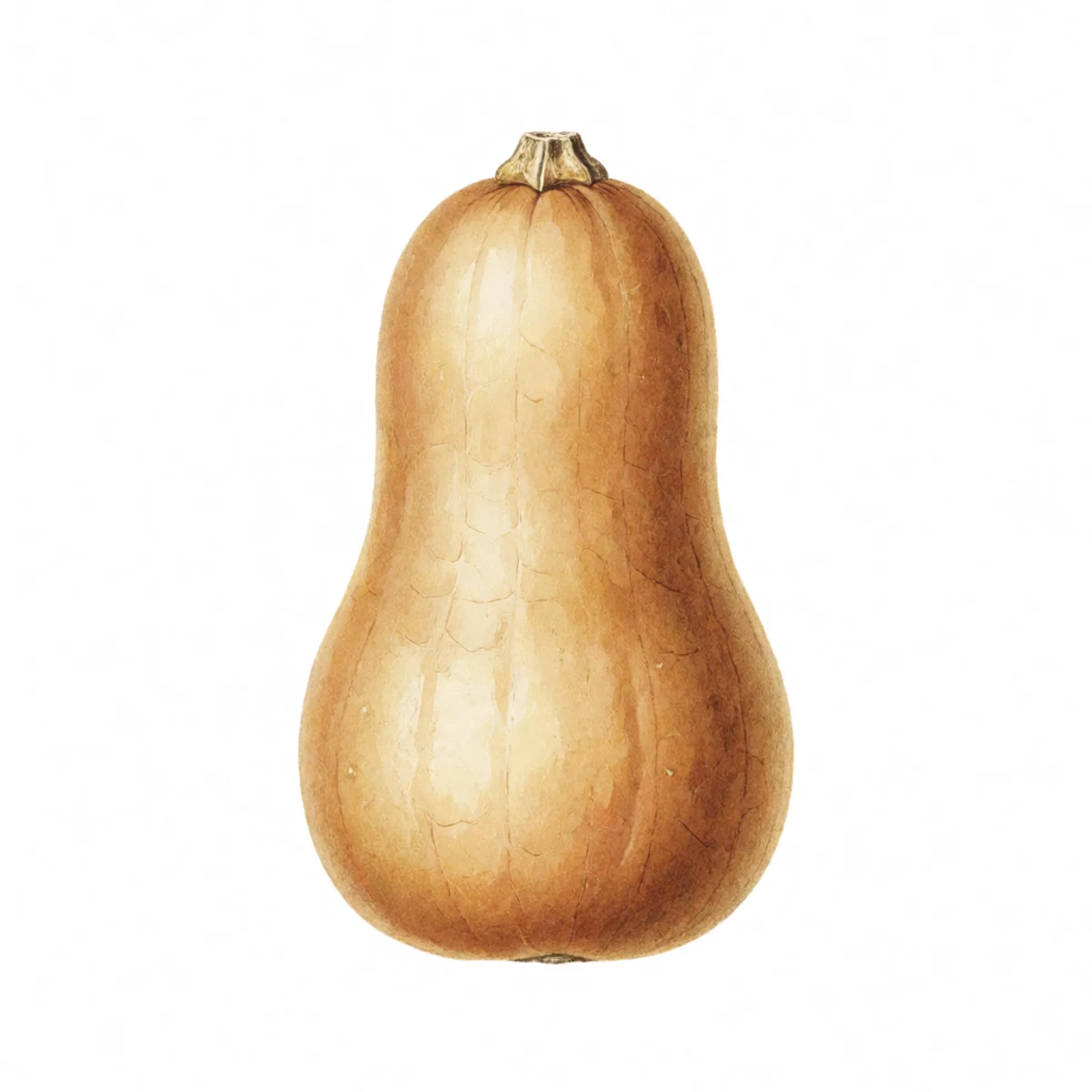
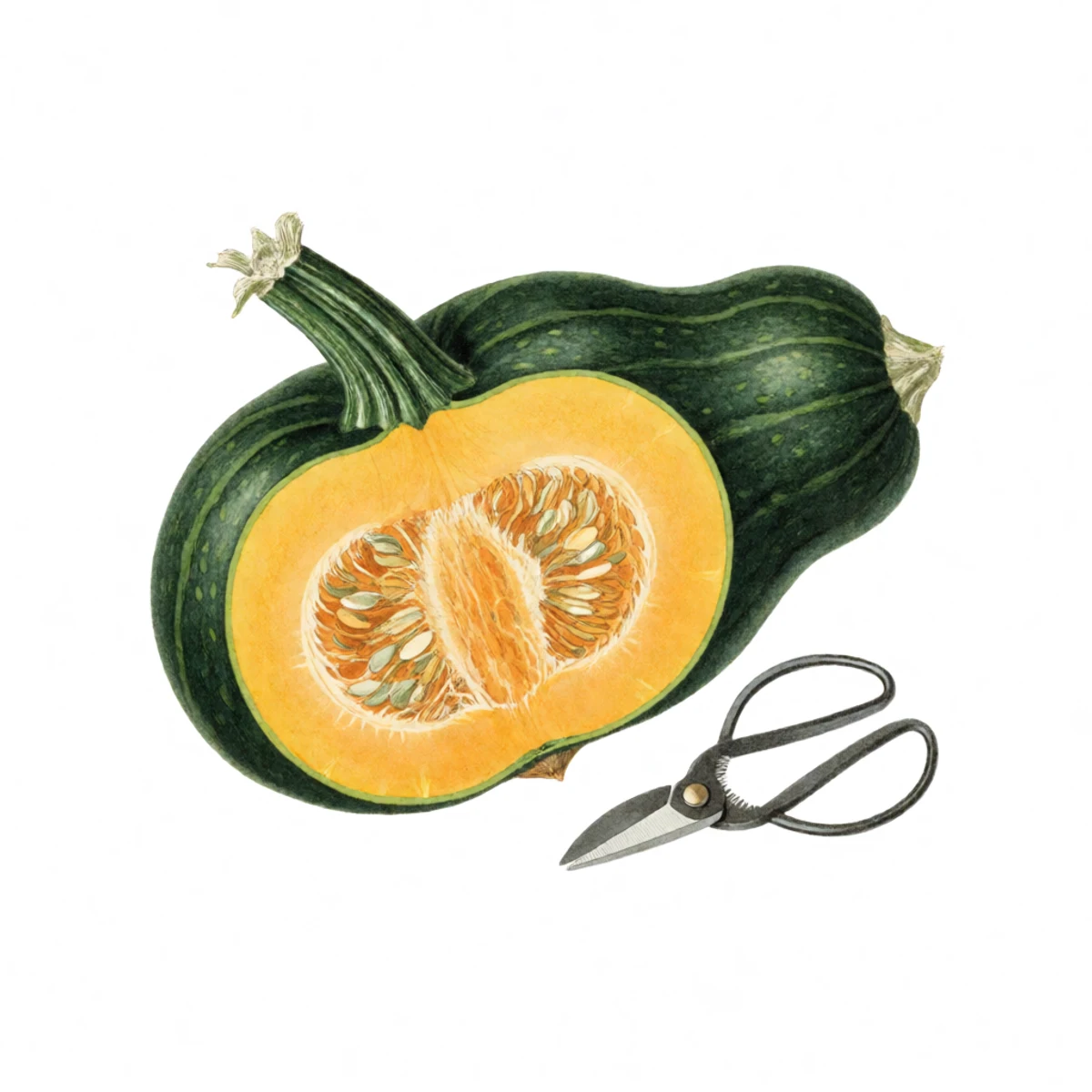
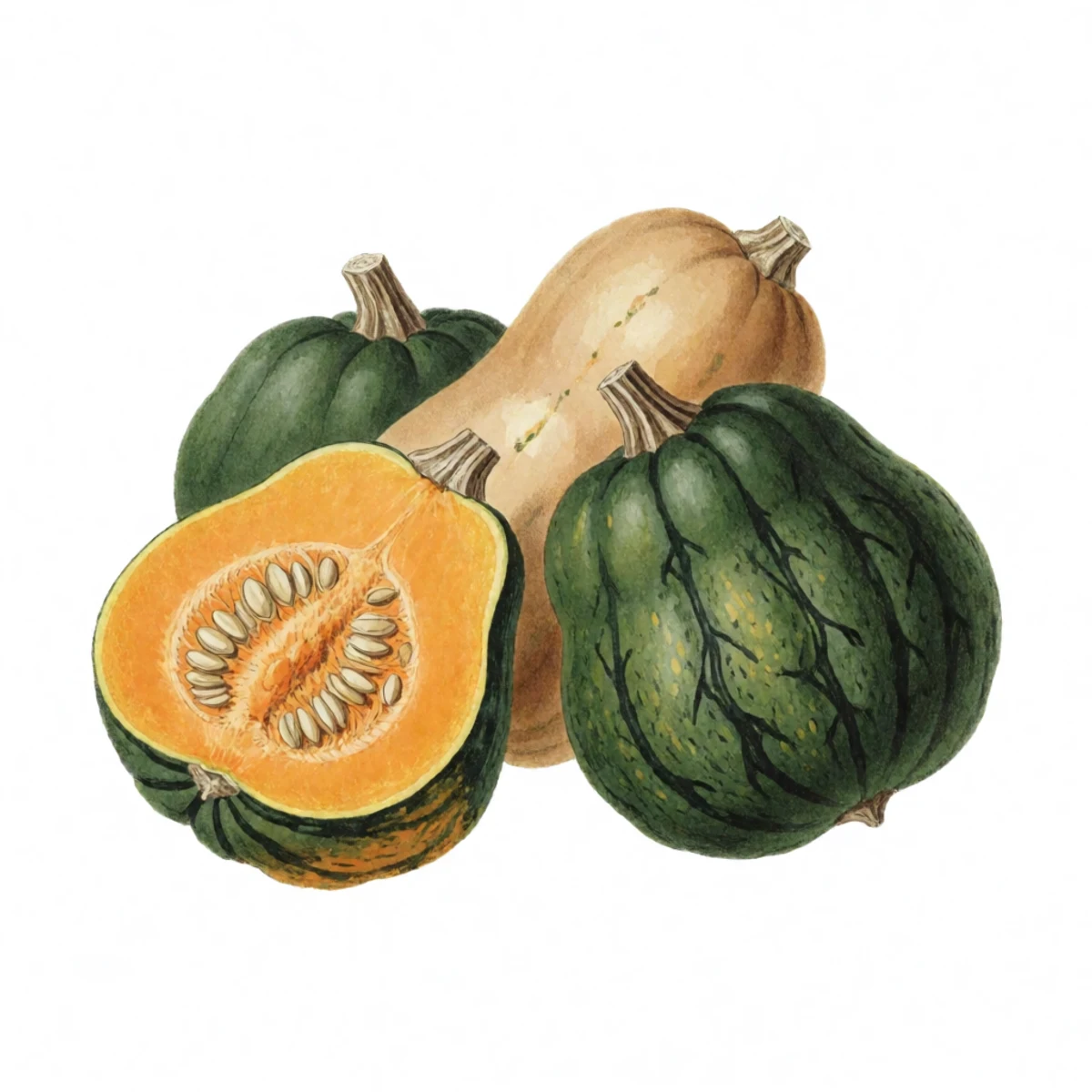
Press a thumbnail into the rind. A mature squash resists being scratched, and if your nail sinks in easily it needs more time. The color should be fully developed too: tan all over for butternut with no green striping, and deep glossy black-green for acorn with a large orange patch where it sat on the ground.
02Step 2 · Checking the stem
A dry, corky stem on a dying vine
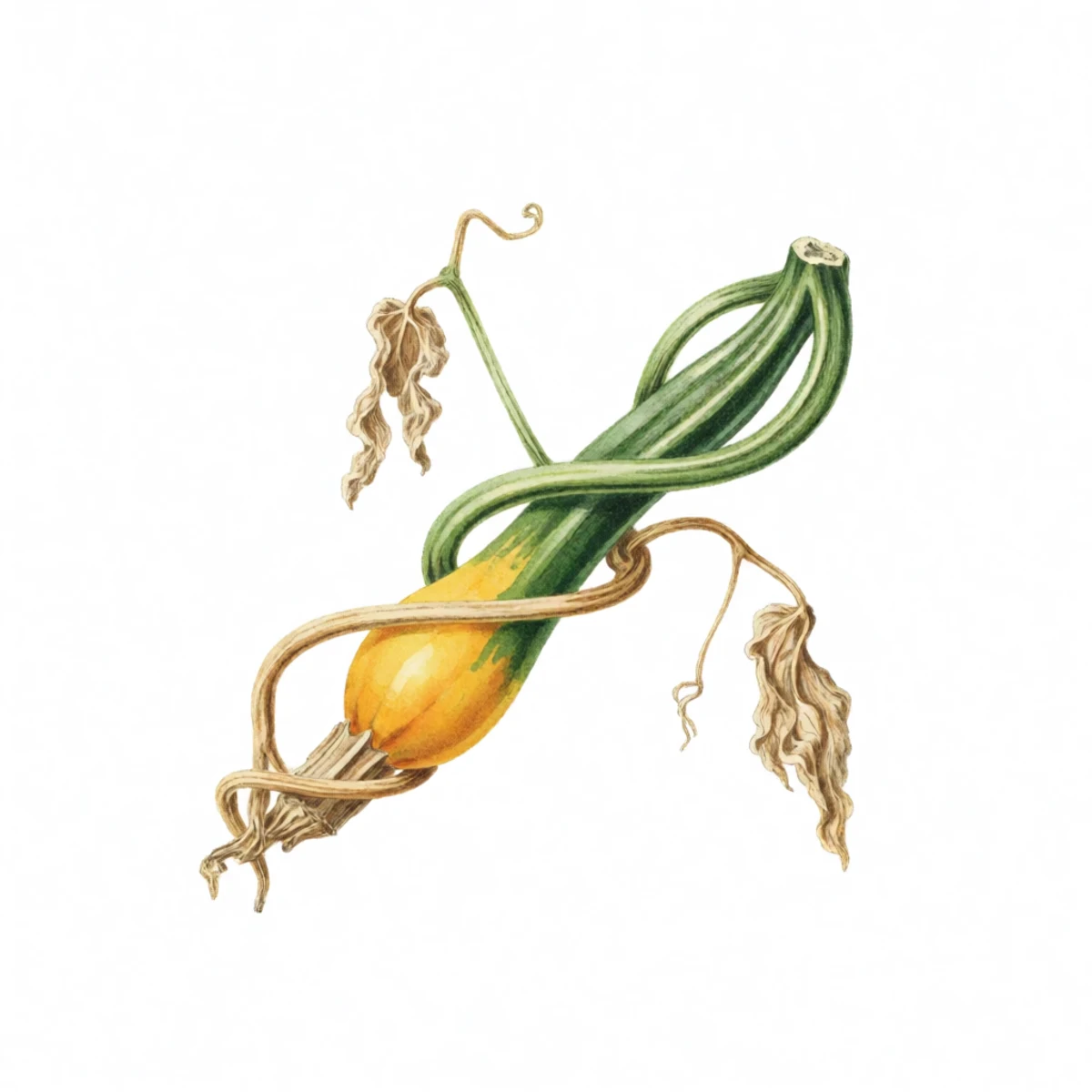
The stem dries out and turns from green to tan as the fruit finishes, while the vine and leaves around it brown and die back. A squash on a dead vine with a dry, corky stem has taken everything the plant had to give.
03Step 3 · Cutting them
Leave two inches of stem, and harvest before frost
Harvest everything before nights drop below 40 °F, because a real frost ruins how long they store even when the fruit still looks fine. Cut the stem rather than twisting it off, and leave a two inch stub. A squash that loses its stem has to be eaten soon. Carry them carefully, because bruises turn into rot spots a month or two later.
04Step 4 · Curing and storing
Two warm weeks, then a cool room
Cure butternut (Cucurbita moschata) and hubbard types (C. maxima) at 80 to 85 °F for ten to fourteen days, which a sunny room or warm porch will do. This hardens the rind, heals small nicks and sweetens the flesh. Acorn squash should not be cured, because it shortens their storage life. Then store everything at 50 to 60 °F, dry, one layer deep and not touching. Butternuts keep four to six months and often longer, and acorns one to two.
As an Amazon Associate, Story Thyme Farms earns from qualifying purchases, at no cost to you. It never changes what we recommend.
Questions we actually get
My butternut has a green streak. Store or eat?
Eat within a month or two. Green striping means it stopped short of full maturity, it will taste fine soon but lacks the rind and sugars for the long haul. The fully tan ones are your keepers.
The vine died early from borers. Are the squash any good?
Whatever passed the thumbnail test when the vine died is fine, cure and eat those first. Immature fruit off a dead vine cooks fine fresh but will not store.
Why did my stored squash rot from the stem end?
The stem broke off flush, or it was carried by the stem and the joint cracked. That plug of cork is the fruit's front door. Leave the stub, lift from below.