Delphinium
Delphinium elatum
Family Ranunculaceae
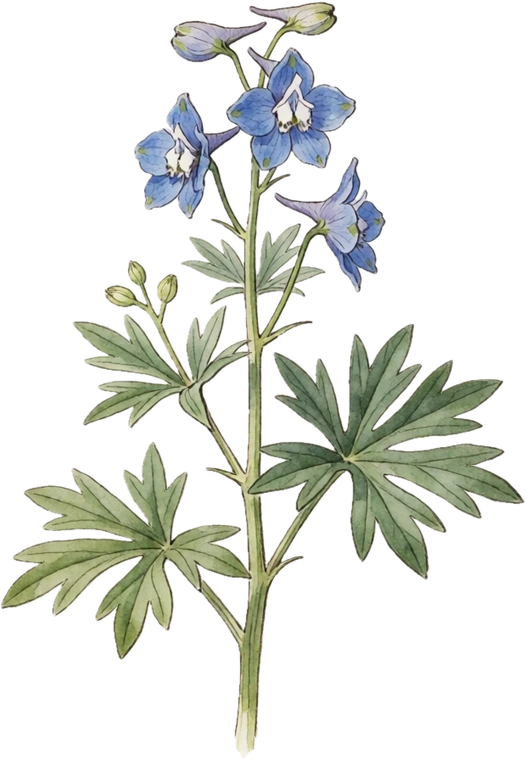
Delphinium is the six-foot blue exclamation point of English borders — towers of true blue, a color almost nothing else in horticulture delivers at that scale, cut-flower royalty from summer into fall. Strictly for admiring, though: every part is toxic, so it stays out of reach and out of salads.
Bees adore the spires, deer skip them entirely, and cool-summer gardens in zones 3 through 7 get the full glory; hot-summer zones grow it as one splendid annual. It's a diva that earns the fuss. Give the back border its exclamation point.
 Full Sun
 Moderate water
 Fast in season growth
 Deer-resistant
 Attracts bees
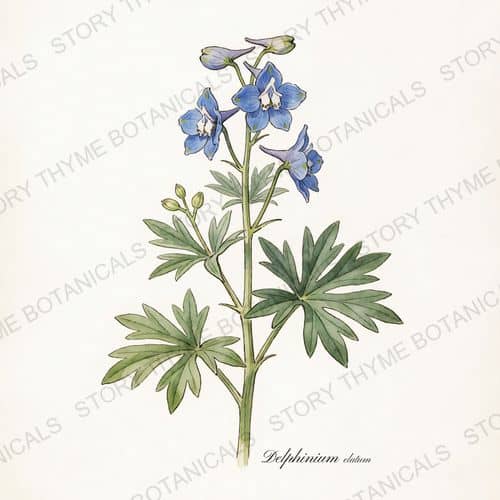
From the print shop
Growing delphinium? Hang it.
Our Plant Library collection carries delphinium — Delphinium elatum, print Nº 153, “Delphinium.”
526 designsfrom $12.99white or black backgroundmatte poster, unframed
Will it fruit where you are?
Enter your ZIP — we look up your USDA hardiness zone (2023 map) and check it against what delphinium actually needs.
 Hardy inZones 3-7
Delphinium · Common problems
Common delphinium problems

Pests
2 problems on file

Diseases
3 problems on file
- Powdery Mildew
- Crown Rot
- Black Blotch
Delphinium · Growing & propagation
Growing delphinium
- Light
- Full Sun, cool summers
- Water
- Moderate-High
 Soil
Soil- RICH, deep, limed · pH 6.5 - 7.0
 Fertilizer
- Heavy: compost + feed at spring growth and after first bloom
 Pruning
- After first bloom
STAKE EARLY (hollow stalks + thunderstorm = heartbreak); cut spent spikes to the ground, feed, and get a fall rebloom.
 Spacing
- 18-24 in
How to plant & propagate delphinium
- Propagate
- Division or seed
Delphinium · Seasonal care & spray guidance
The delphinium growing playbook
When to spray delphinium
Growing season. Slug patrol in April is the make-or-break.
Delphinium · Calculators & field guides
A little help in the garden.
Delphinium · Yearly calendar
The delphinium year, month by month
Jan
No calendar activity is listed for this month.
 Bloom
BloomBloomJune, then September
What each band means
- Bloom — flowers open — pollinators working, frost on blossoms is the danger.
These are the species' typical months — expect them a few weeks earlier in warm zones and later in cold ones. Watch the plant, not just the calendar.
Delphinium · Ecology & uses
Ecology & uses
Delphinium elatum
Delphinium in the garden system
- Herbaceous layer perennial
 Attracts
- Bees
- Moisture
- Facultative / average
- Deer
- Resistant
A safer unfenced choice
 Origin
- Introduced
What delphinium is grown for
⚠ Toxic if eatenALL PARTS TOXIC — site away from grazing pets
 Use
Use- Back-border drama
- Use
- Cut spikes
- Use
- Cottage classics
Edibility, identification, and traditional-use notes here are general reference — not medical or veterinary advice, and not a claim that any plant treats or prevents anything. Medicinal ratings record how strongly a plant features in herbal tradition, nothing more. Never eat or dose a plant you have not positively identified. More on how to use this library.
Delphinium · Varieties & cultivars
Choosing a delphinium variety
'Pacific Giants'; 'Magic Fountains' (shorter, self-supporting-ish); 'New Millennium' (modern vigor)
Sources & plant identity
Know what you’re growing.
See where the knowledge comes from.
Delphinium
Delphinium elatum
The plant, at a glance.
- Botanical name
- Delphinium elatum
- Plant family
- Ranunculaceae
- Growth habit
- Perennial
- Origin
- Introduced
- USDA plant symbol
- DEEL2
- Invasive risk
- Low
Hardiness, size and timing vary with your cultivar, soil and climate.
Rooted in research.
University extension research, brought together with hands-on growing experience at Story Thyme Farms.
for Delphinium
Research from these sources

Publisher marks identify sources, not sponsorship or endorsement.
Questions
Delphinium questions, answered straight.
Do deer eat delphinium?
Rarely — delphinium is considered deer-resistant, which makes it one of the safer unfenced choices in deer country. Hungry deer in a hard winter test every rule, but it's a low-risk pick.
Is delphinium safe for kids and pets?
No — treat it as toxic if eaten. ALL PARTS TOXIC — site away from grazing pets Site it accordingly if children or pets roam the garden. This is general reference, not medical or veterinary advice — call a vet or poison control if something has actually been eaten.
How do you propagate delphinium?
Division or seed.
Elsewhere
Where delphinium sits in the library.
 Sunflower
 Zinnia
 Peony
Peony Daylily