The illustrated growing guide
Duck Potato (Wapato)
Sagittaria latifolia
Family Alismataceae
Est. zones 4-10

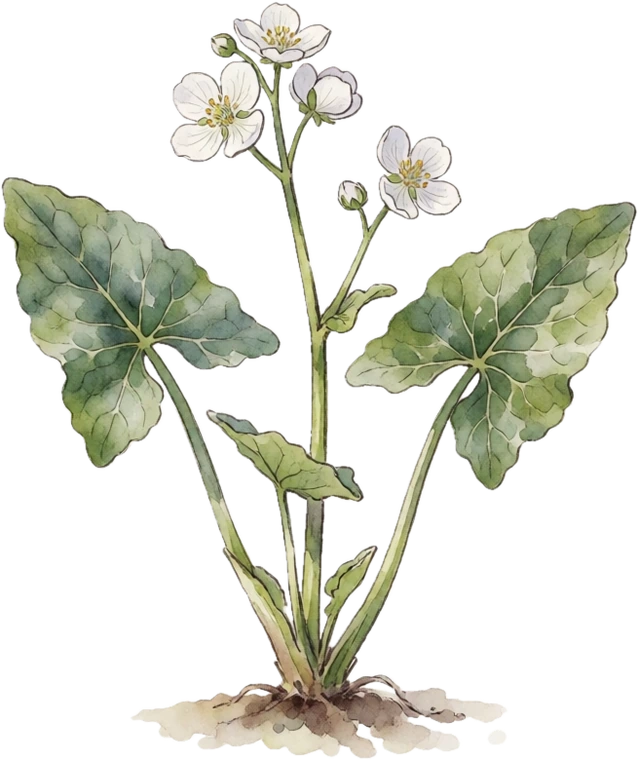
A dual-purpose native for the water garden: striking arrowhead foliage and white pollinator flowers above the water, and starchy edible tubers (wapato — a historic Indigenous staple) buried in the mud below, dug in fall and cooked like little potatoes. Waterfowl feed on it heavily, which is how it earned its name.

From the print shop
The closest print we make
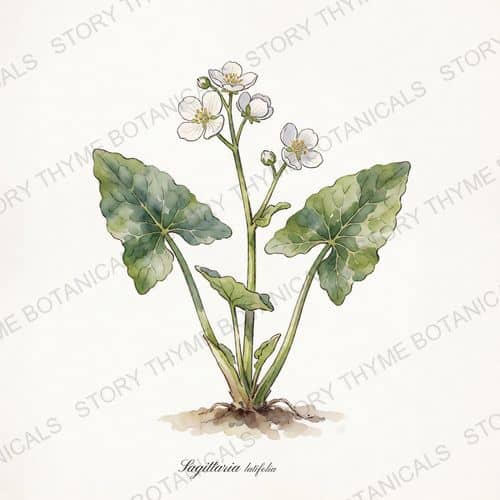
Our Pond & Water Garden collection carries Sagittaria latifolia — the same species as duck potato (wapato) — but the print shows “Arrowhead,” a different cultivar of it, not duck potato (wapato) itself.
16 designsfrom $21.99white or black groundmatte poster, unframed
I
Overview
Will duck potato (wapato) suit your garden, and what goes wrong.
Will it fruit where you are?
Enter your ZIP — we look up your USDA hardiness zone (2023 map) and check it against what duck potato (wapato) actually needs.
Duck Potato (Wapato) at a glance
Common duck potato (wapato) problems
- Almost none
- Almost none
II
Growing
Light, water, soil, propagation and the season’s jobs.
How to grow duck potato (wapato): light, water & soil
How to plant & propagate duck potato (wapato)
The duck potato (wapato) growing playbook
Field-tested instructions for every job duck potato (wapato) asks of you, compiled from university extension guidance — in the order the season brings them.
Sowing
Sow stratified wapato seed onto wet mud
Give cleaned achenes three months of moist cold stratification, then broadcast them in spring onto well worked, saturated soil and leave them uncovered on the surface. Germination wants direct sun and 80 to 90F. Expect this to work in a nursery flat or greenhouse, not scattered across open water. The seed needs sunlight striking the soil surface to germinate, so burying it defeats the sowing. Seed is worth the trouble because it keeps genetic diversity in a patch that otherwise clones itself from tubers forever.
⚠ Field seeding techniques are not refined and give unpredictable results. Seed sown straight into a wetland can take two years to come up because it carries a double dormancy needing cold, then warm, then cold again. If you want plants this year, plant tubers instead.
Planting out
Set out dormant wapato tubers
Plant tubers while the plant is dormant, any time from fall through winter into early spring. Press them into saturated, finely textured mud where permanent standing water is less than a foot deep, and never let the leaves of potted or bare-root stock sit submerged. Space 1 to 2 feet apart on poor or disturbed sites, up to 6 feet apart on good ones. Until you plant, keep collected tubers moist and cool in damp peat moss. Tubers are the plant's overwintering starch store, so moving them while the top has died back costs the plant nothing, and transplanting tubers takes better than bare-root stock. A single plant makes up to 40 tubers and each one can throw 3 to 5 shoots, so even 6-foot spacing closes into a solid stand in one season.
Watering
Hold the water 6 to 12 inches over the crowns
Through the growing season keep fresh water roughly 6 to 12 inches deep over the root zone in full sun, on soil that stays saturated. Right after planting, back the water off to about half an inch over the soil surface until plants take hold. Slightly acid water, pH 6.0 to 6.5, suits it best, though it tolerates worse. Hydrology is the single factor that decides whether a wetland planting takes. Wapato is an obligate wetland plant with no drought strategy, and a patch that dries out mid-season quits building the tubers you are growing it for.
Draw the water down over winter to let it reseed
If you can control the level of your pond or basin, drop it over winter and expose the mud, then bring it back up in spring. Leave it flooded year round and the stand will simply regrow from tubers instead. A winter draw-down exposes the seedbed that fallen achenes need, and a plant can drop up to 20,000 viable achenes. Seedlings are the only way new genetics enter a patch that otherwise just clones itself.
Feeding
Feed only if the water is genuinely nutrient-poor
Test or judge your water first. If it is oligotrophic, low in nutrients, a fertilizer application or a richer water source will speed biomass production and revegetation. If the pond or ditch already runs green and nutrient-rich (eutrophic), fertilization is not necessary — skip it entirely. Many surface waters are already rich in nutrients, so feeding adds nothing the plant cannot get and simply drives algae. Wapato only responds to fertility that is actually missing.
⚠ Fertilizer applied to standing water runs straight into the watershed. Do not fertilize into water that is already nutrient-rich or that drains to a stream or lake.
Dividing
Lift and thin the patch to keep it in bounds
While the plants are dormant, dig through the stand with a rake, hoe, or shovel, take the best tubers for the kitchen or for replanting, and pull the rest. Digging plugs about 6 inches deep is enough. Collect no more than a quarter of the plants in any area: if you take no more than a square foot out of every 4 square feet, the patch closes the gap back up in one good growing season, leaving enough plants and rhizomes to regrow. This is a highly rhizomatous perennial that can become weedy, and a stand left alone crowds itself and everything near it. Harvesting is the thinning, so digging your food and controlling the patch are the same job.
⚠ Check your state's noxious and regulated plant list and your State Department of Natural Resources for this plant's current status before introducing it to open water, and never plant it where it can escape into a waterway it is not native to.
Harvesting
Dig wapato once the leaves die back
Wait until the stems and leaves yellow and collapse and the water level drops, then work the mud with a hoe, rake, or pitchfork, or loosen it with your feet the way it has traditionally been done. The tubers float free and can be skimmed off the surface. They sit on rhizome tips out from the parent plant, not directly under it, so search wide. Boil, roast, or bake them in embers like a potato. Before the top dies back each fall the plant translocates its nutrients and carbohydrates down into the subterranean tubers. Dig early and you get small, starchless tubers and you rob the crown of the reserve it regrows from.
⚠ Duck potato extracts notable amounts of nutrients and metals out of sediment and water, which is exactly why it is planted for pollution removal. Never eat tubers dug from a ditch, stormwater basin, roadside, or any water taking industrial or runoff contamination.
III
The year
What duck potato (wapato) asks for, month by month.
The duck potato (wapato) year, month by month
What each band means
- Bloom — flowers open — pollinators working, frost on blossoms is the danger.
- Prune — shape it now — cuts heal cleanly and structure is visible.
- Harvest — picking time — check ripeness every few days.
The duck potato (wapato) year as text
- Jan harvest
- Feb harvest
- Mar quiet month
- Apr quiet month
- May quiet month
- Jun bloom
- Jul bloom
- Aug bloom
- Sep pruning, harvest
- Oct pruning, harvest
- Nov pruning, harvest
- Dec harvest
These are the species' typical months — expect them a few weeks earlier in warm zones and later in cold ones. Watch the plant, not just the calendar.
IV
Ecology & uses
What it does for the garden, and what it is grown for.
Duck Potato (Wapato) in the garden system
- Root layer perennial
- Nectary/insectary
What duck potato (wapato) is grown for
✓ Commonly eatenTubers edible cooked (a traditional starch); raw are acrid
Harvesting & storing duck potato (wapato)
Starchy egg-sized tubers in the mud (wapato) — a traditional Indigenous food, boiled or roasted like a potato; harvested fall/winter.
Edibility, identification, and traditional-use notes here are general reference — not medical or veterinary advice, and not a claim that any plant treats or prevents anything. Medicinal ratings record how strongly a plant features in herbal tradition, nothing more. Never eat or dose a plant you have not positively identified. More on how to use this library.
V
Cultivars
Named varieties of duck potato (wapato), ruled as a catalogue.
Best duck potato (wapato) varieties & cultivars
Species (native arrowhead)
VI
Sources & plant ID
Where the care distinctions come from, and how the plant is filed.
Research basis
Sources behind this profile
No extension citations are attached to duck potato (wapato)yet. The care figures below come from the library's own catalogue rather than a traced primary source.
Plant ID
VII
Where to buy
Third-party nurseries — not Story Thyme Farms.
Third-party nurseries, not Story Thyme Farms. Prices are theirs.
Story Thyme Farms may earn a small commission from these links, at no cost to you — it never changes what we recommend.
VIII
Questions
Duck Potato (Wapato) questions, answered straight.
Is duck potato (wapato) safe for kids and pets?
Duck Potato (Wapato) is commonly eaten and isn't considered toxic, but "commonly eaten" isn't a guarantee for any particular person or animal — allergies, quantity, and which part you eat all matter. One caveat on this one: Tubers edible cooked (a traditional starch); raw are acrid. Never eat a plant you haven't positively identified, and check with a vet before letting pets or livestock graze anything new.
When do you harvest duck potato (wapato)?
Starchy egg-sized tubers in the mud (wapato) — a traditional Indigenous food, boiled or roasted like a potato; harvested fall/winter.
How do you propagate duck potato (wapato)?
Division or seed.
IX
Elsewhere
Where duck potato (wapato) sits in the library.
Potato
Sweet Potato
Garlic
Onion