The illustrated growing guide

American Groundnut

Apios americana

Family Fabaceae

Est. zones 3-9

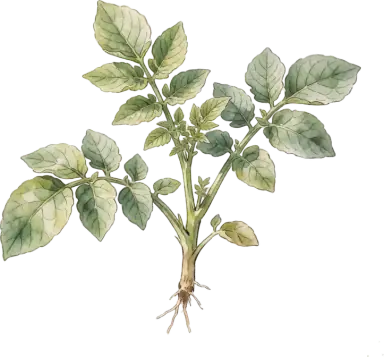
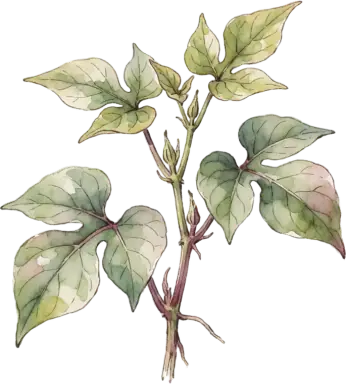
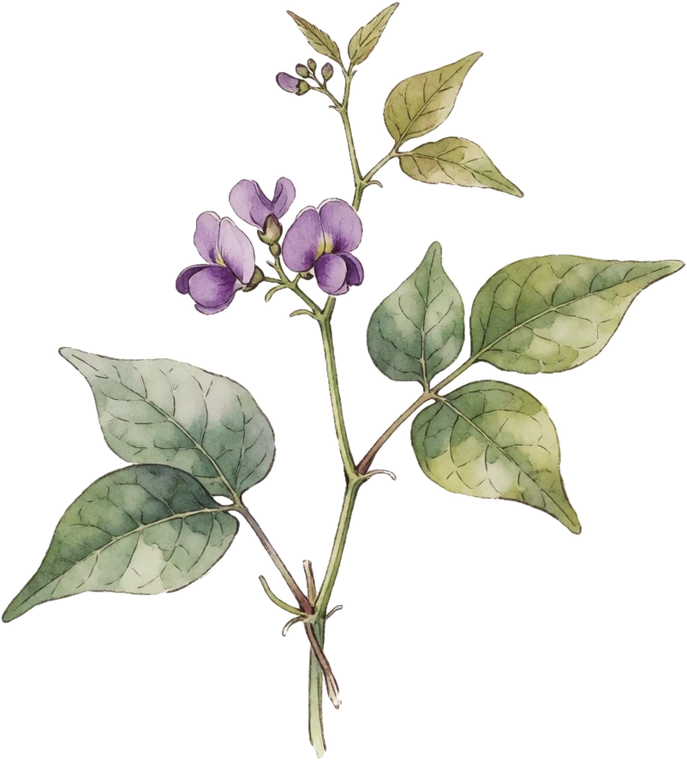
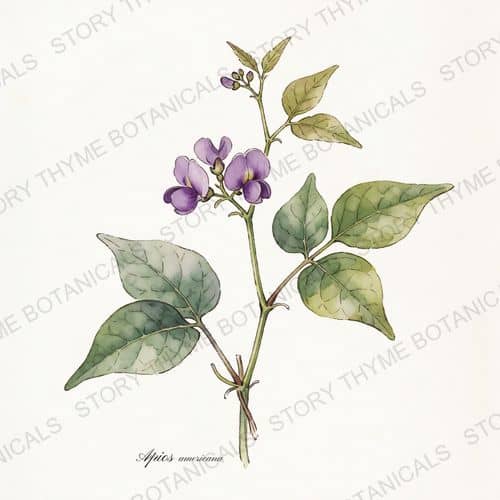
Botanical illustration of American Groundnut
Vine · Apios americana

The lost staple: potato-bean strings that fed Native nations and starving Pilgrims — nutty, high-protein, nitrogen-fixing, perennial. Plant at the wet edge, harvest beads of tubers each fall, replant the small ones. American food history in a guild.

Vine · NativeFull Sun to Part ShadeModerate waterModerate growthNative to North AmericaExcellent edibleAttracts bees

⚠ Spreads aggressivelyAmerican Groundnut spreads vigorously and regrows from bits of root, so it's very hard to fully remove once established — give it a contained bed or a spot where it can roam freely, and edge it every year.

Where to buy the plant — 1 nursery

I

Overview

Will american groundnut suit your garden, and what goes wrong.

Will it fruit where you are?

Enter your ZIP — we look up your USDA hardiness zone (2023 map) and check it against what american groundnut actually needs.

Hardy inZones 3-9

American Groundnut at a glance

HardinessUSDA 3–9
Mature size8-10 ft twining
PollinationBumblebees on the wine-colored blooms
Chill requirementNot yet established
Bloom seasonJuly - August (chocolate-maroon, fragrant, weird, wonderful)
Harvest seasonTubers: fall through spring, dig strings of them like beads
Growth rateModerate (tubers size by year 2-3)

Common american groundnut problems

  • Almost none
  • Few

II

Growing

Light, water, soil, propagation and the season’s jobs.

How to grow american groundnut: light, water & soil

LightFull Sun to Part Shade
WaterModerate-High (bottomland native)
SoilRich, moist · pH 5.5 - 7.0
FertilizerNone (N-fixer)
PruningNone — Give it a host shrub or trellis and a boundary — it wanders underground.
Spacing2 ft at a trellis or shrub to climb

The american groundnut growing playbook

Field-tested instructions for every job american groundnut asks of you, compiled from university extension guidance — in the order the season brings them.

Sowing

Plant tubers two to three inches deep in early spring

Set whole tubers two to three inches deep in early spring, in moist sandy or gravelly loam with humus worked in, in full sun to part shade. Plant them intact rather than cut, and expect the first shoots to be slow and thread-thin. Groundnut is a perennial legume that grows from tuberous swellings on slender rhizomes, so the tuber is the propagule, and it needs warm moist soil and a full season underground before it strings out new tubers.

Leave tubers behind to replant the patch

As you dig, put the small tubers back in the loosened soil and firm it down. Dig with a fork and work slowly so you break as few of the underground runners as you can. Every tuber left in the ground sprouts next spring, so the harvest is also the replanting, and a patch worked this way keeps producing year after year without ever being started over.

Watering

Keep the bed moist through summer

Water whenever the top few inches dry out through the summer. Groundnut tolerates soil that stays occasionally wet, so err toward too damp rather than too dry. In the wild it grows in wet meadows, low thickets, stream banks and moist woodland soil, and in poor dry ground the plant struggles instead of bulking tubers.

Mulching

Mulch the bed once the shoots are up

After the shoots are established and you can see where the plants are, mulch the bed to shut out weeds and grass. Groundnut sends up slender vines that compete poorly against grass at ground level, and mulch also holds the steady soil moisture the rhizomes need to run and set tubers.

Feeding

Skip the nitrogen - this legume makes its own

Do not feed the bed nitrogen fertilizer. Compost or humus worked in at planting is enough. If you are starting from seed rather than tubers, or planting into ground that has never grown a legume, treat the seed with cowpea-group inoculant so it nodulates. Apios americana is a nitrogen-fixing legume that nodulates with cowpea-group rhizobia and supplies its own nitrogen, so bought nitrogen is wasted on it. Compost at planting covers what it needs.

What to watch for

Walk the edges and pull the escapes

Once a summer, walk the perimeter of the patch and dig out vines that have run past where you want them, tracing back to the rhizome and lifting the tubers with it. Give groundnut a bed you have edged, or grow it where colonizing is welcome. Groundnut spreads by rhizome to form colonies and can turn weedy - every stray tuber sprouts in spring and fills in the ground between rows, and pulling the top growth alone leaves the tuber to come back.

Protection

Give the young shoots something to climb, and keep rabbits off them

As shoots emerge, set a trellis, arbor, cattle panel or fence beside them to twine up, and cage or fence the bed while the plants are small if rabbits work your ground. The stems twine and climb rather than stand, and vines left flat on the ground smother each other, while a first-year planting is small enough that a few nights of browsing can set it back a whole season.

Harvesting

Dig the tubers once the vines die back

Wait until the vines yellow and die back, then dig gently and follow the rhizome outward - the tubers come up as a string of knobby beads along an underground runner, not as one clump. Expect several one-inch tubers per plant after a full year. They hold in the ground and can be dug any time from late fall through early spring. The tubers are best from late fall through early spring, after the vine has finished pulling the season's starch down into them, and cold ground stores them better than any cellar.

III

The year

What american groundnut asks for, month by month.

The american groundnut year, month by month

MonthJanFebMarAprMayJunJulAugSepOctNovDec
Bloom
Harvest

What each band means

  • Bloomflowers open — pollinators working, frost on blossoms is the danger.
  • Harvestpicking time — check ripeness every few days.

The american groundnut year as text

  • Jan quiet month
  • Feb quiet month
  • Mar harvest
  • Apr harvest
  • May harvest
  • Jun quiet month
  • Jul bloom
  • Aug bloom
  • Sep harvest
  • Oct harvest
  • Nov harvest
  • Dec quiet month

These are the species' typical months — expect them a few weeks earlier in warm zones and later in cold ones. Watch the plant, not just the calendar.

IV

Ecology & uses

What it does for the garden, and what it is grown for.

American Groundnut in the garden system

  • Root layer vine
  • N-fixer
AttractsBees
MoistureWetland / wet-tolerant
DeerBrowsed — protect young plants
OriginNative to North America

What american groundnut is grown for

! Some parts toxic — see notesSafe cooked (some folks itch handling raw — gloves)

UsePerennial protein
UseWet-edge guilds
UseHeritage food
Edible value4/5

Harvesting & storing american groundnut

Tubers: fall through spring, dig strings of them like beads.

Edibility, identification, and traditional-use notes here are general reference — not medical or veterinary advice, and not a claim that any plant treats or prevents anything. Medicinal ratings record how strongly a plant features in herbal tradition, nothing more. Never eat or dose a plant you have not positively identified. More on how to use this library.

V

Cultivars

Named varieties of american groundnut, ruled as a catalogue.

Best american groundnut varieties & cultivars

Wild types; LSU improved selections (bigger tubers)

VI

Sources & plant ID

Where the care distinctions come from, and how the plant is filed.

Research basis

Sources behind this profile

No extension citations are attached to american groundnutyet. The care figures below come from the library's own catalogue rather than a traced primary source.

Plant ID

BinomialApios americana
FamilyFabaceae
TypeVine · Perennial
USDA symbolAPAM
OriginNative to North America
Invasive riskLow

VII

Where to buy

Third-party nurseries — not Story Thyme Farms.

Third-party nurseries, not Story Thyme Farms. Prices are theirs.

Story Thyme Farms may earn a small commission from these links, at no cost to you — it never changes what we recommend.

VIII

Questions

American Groundnut questions, answered straight.

Is american groundnut safe for kids and pets?

With care. Safe cooked (some folks itch handling raw — gloves) Site it accordingly if children or pets roam the garden. This is general reference, not medical or veterinary advice — call a vet or poison control if something has actually been eaten.

When do you harvest american groundnut?

Tubers: fall through spring, dig strings of them like beads.

IX

Elsewhere

Where american groundnut sits in the library.

Where american groundnut sits in the library

Grows in the same world