Norway Spruce
Picea abies
Family Pinaceae
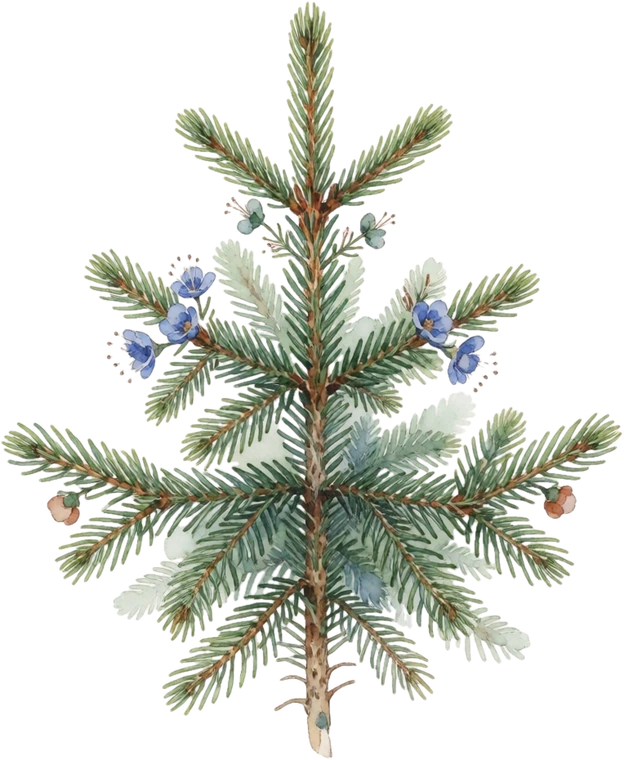
When you need an evergreen wall and don't want to wait decades, Norway spruce is the honest answer — fast for a spruce, hardy to zone 2, and densely graceful, its branchlets draping like curtains and carrying the biggest cones of the whole clan, a full four to six inches.
Where Colorado blue spruce slowly thins from needle-cast in humid summers, this one keeps its density — the reason it anchors so many farm windbreaks and privacy screens. Birds winter in the shelter. For a fast, dependable green wall against wind or neighbors, start here.
 Full Sun
 Moderate water
 Fast growth
From the print shop
Growing norway spruce? Hang it.
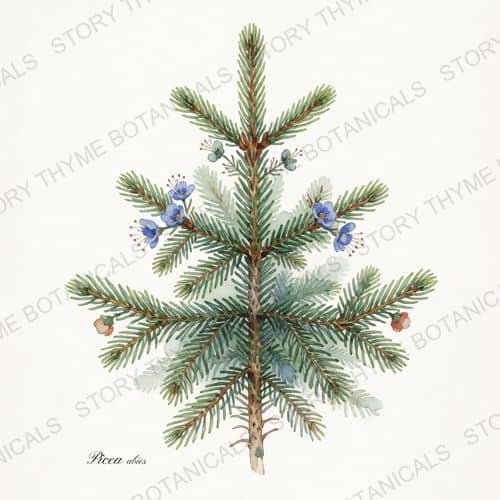
Our Plant Library collection carries norway spruce — Picea abies, print Nº 331, “Norway Spruce.”
526 designsfrom $12.99white or black backgroundmatte poster, unframed
Will it fruit where you are?
Enter your ZIP — we look up your USDA hardiness zone (2023 map) and check it against what norway spruce actually needs.
 Hardy inZones 2-7
Norway Spruce · Common problems
Common norway spruce problems

Pests
2 problems on file
- Spruce Spider Mites
- Budworm

Diseases
2 problems on file
- Less disease-prone than blue spruce
- Cytospora Canker
Norway Spruce · Growing & propagation
Growing norway spruce
- Light
- Full Sun
- Water
- Moderate
More heat/humidity tolerant than blue spruce
 Soil
Soil- Any well-drained
Adaptable · pH 5.0 - 7.0
 Fertilizer
- None
 Pruning
- Little needed
The fast, tough, adaptable evergreen for windbreaks and screens — dark green with gracefully drooping branchlets as it matures, and the largest cones of any spruce. Far more tolerant of heat, humidity, and varied soils than Colorado blue spruce, and less prone to the needle-cast diseases thinning blue spruces across the Midwest. Hardy to zone 2. A reliable big evergreen where you need fast, dense screening.
 Spacing
- 20-30 ft
How to plant & propagate norway spruce
- Propagate
- Seed (stratify), cuttings, or layering
Norway Spruce · Calculators & field guides
A little help in the garden.
Norway Spruce · Yearly calendar
The norway spruce year, month by month
Jan
No calendar activity is listed for this month.
 Bloom
BloomBloomMarch to May
What each band means
- Bloom — flowers open — pollinators working, frost on blossoms is the danger.
These are the species' typical months — expect them a few weeks earlier in warm zones and later in cold ones. Watch the plant, not just the calendar.
Norway Spruce · Ecology & uses
Ecology & uses
Picea abies
Norway Spruce in the garden system
- Canopy layer tree
 Attracts
- Birds
 Habitat
- Dry/rocky
- Moisture
- Facultative / average
 Deer
Deer- Browsed
Protect young plants
 Origin
- Introduced
What norway spruce is grown for
! Some parts toxic — see notesMildly toxic to pets (needles)
 Use
Use- Fast windbreak
- Use
- Dense screen
- Use
- Cold-hardy evergreen
Harvesting & storing norway spruce
Large 4-6 in cones (the biggest of any spruce).
Edibility, identification, and traditional-use notes here are general reference — not medical or veterinary advice, and not a claim that any plant treats or prevents anything. Medicinal ratings record how strongly a plant features in herbal tradition, nothing more. Never eat or dose a plant you have not positively identified. More on how to use this library.
Norway Spruce · Varieties & cultivars
Choosing a norway spruce variety
Species (windbreaks); 'Pendula' (weeping); 'Pumila'/'Nidiformis' (dwarf globes)
Sources & plant identity
Know what you’re growing.
See where the knowledge comes from.
Norway Spruce
Picea abies
The plant, at a glance.
- Botanical name
- Picea abies
- Plant family
- Pinaceae
- Growth habit
- Tree · Perennial
- Origin
- Introduced
- USDA plant symbol
- PIAB
- Invasive risk
- Low
Hardiness, size and timing vary with your cultivar, soil and climate.
Rooted in research.
University extension research, brought together with hands-on growing experience at Story Thyme Farms.
Questions
Norway Spruce questions, answered straight.
Is norway spruce safe for kids and pets?
With care. Mildly toxic to pets (needles) Site it accordingly if children or pets roam the garden. This is general reference, not medical or veterinary advice — call a vet or poison control if something has actually been eaten.
When do you harvest norway spruce?
Large 4-6 in cones (the biggest of any spruce).
How do you propagate norway spruce?
Seed (stratify), cuttings, or layering.
Elsewhere
Where norway spruce sits in the library.
 River Birch
 Southern Magnolia
 Ginkgo
 Colorado Blue Spruce