The illustrated growing guide
Valerian
Valeriana officinalis
Family Caprifoliaceae
Est. zones 4-8

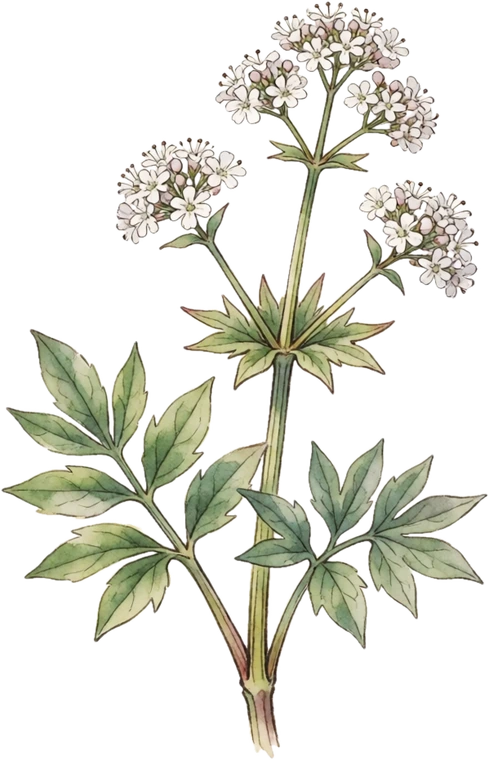
The bedtime-root of European herbals, topped by clouds of honey-scented lace the pollinators mob. Fall-dug roots dry into famously stinky, famously effective sleep tea. Cats treat the patch like a nightclub.

From the print shop
Growing valerian? Hang it.
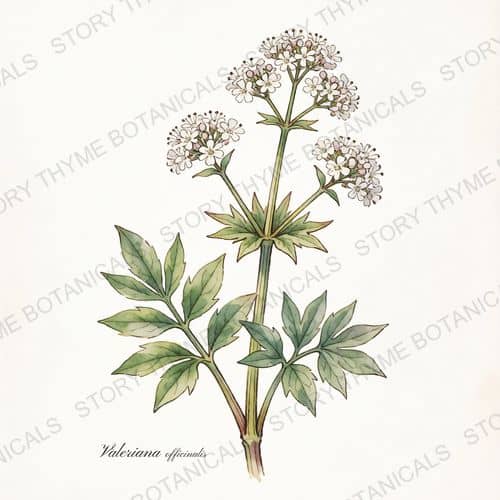
Our Medicinal Herbs collection carries valerian — Valeriana officinalis, print Nº 6, “Valerian.”
16 designsfrom $21.99white or black groundmatte poster, unframed
I
Overview
Will valerian suit your garden, and what goes wrong.
Will it fruit where you are?
Enter your ZIP — we look up your USDA hardiness zone (2023 map) and check it against what valerian actually needs.
Valerian at a glance
Common valerian problems
- Cats — they roll in it like catnip
- Few
II
Growing
Light, water, soil, propagation and the season’s jobs.
How to grow valerian: light, water & soil
How to plant & propagate valerian
The valerian growing playbook
Field-tested instructions for every job valerian asks of you, compiled from university extension guidance — in the order the season brings them.
Sowing
Start seed shallow - valerian needs light to germinate
Sow into flats or a prepared bed and cover no deeper than half an inch (1 cm), pressing the seed into contact with damp soil rather than burying it. Seed started in a greenhouse can be moved out after your last frost. Valerian seed requires light to germinate, so seed buried deeper than about half an inch never gets the signal to break dormancy.
Planting out
Set transplants on 12 to 15 inch centers after last frost
Move seedlings out once the ground can be worked and frost has passed, spacing them 12 to 15 inches apart into moist, rich loam at pH 6.0 to 7.0. Full sun gives the sturdiest plants, though partial shade is tolerated. A plant that reaches three to five feet tall needs that footprint to build root mass, and tight spacing raises total yield per acre but produces lighter individual roots - the trade you are making at planting.
Watering
Keep soil consistently moist through summer
Water through dry spells to hold the soil evenly moist. Valerian will take occasionally dry or occasionally wet ground, but it does not thrive in either. This is a plant of cool, rainy woodland edges, and consistent moisture is the condition it grows fastest under - a root crop that checks in a drought does not catch back up.
Feeding
Feed nitrogen - it drives the root you are growing for
Apply a standard NPK fertilizer as growth resumes, and side-dress established second-year plants with compost. Extra nitrogen is the single most important input in valerian cultivation, because the crop is the root and top growth is what fills it.
Dividing
Lift and divide the whole planting every third year
Every three years, dig the entire planting, split the crowns, and replant the best divisions at fresh spacing. Divisions come true where seedlings vary. Valerian spreads by rhizome into a crowded clump, and crowded crowns compete with themselves for the moisture and nitrogen that would otherwise go into root.
Pruning
Cut the flower heads off before they set seed
As the white-pink clusters open, cut the flowering stalks out at the base. Do not let a single head go to seed if you are anywhere near wild ground. Flower removal is standard practice in valerian production to prevent weedy seedling establishment, and the plant spreads by both seed and rhizome once it gets loose.
⚠ Valeriana officinalis is listed as a noxious weed in Connecticut and Wisconsin and has escaped cultivation across the northern US, where it displaces native plants along shores and woodland edges. Check your state's noxious weed list before planting, and deadhead without fail.
Harvesting
Dig roots in fall, after frost - and consider year one, not year two
Dig whole roots in fall after the first frost, once the top growth has been knocked back and yellows to the ground. Wash them, then dry in the shade with a gentle air flow and low heat, under 100F (40C). Frost signals the plant has moved its reserves down into the root, which is where the sedative compounds sit. Drying hot or in sun drives off the essential oil you dug the plant for.
⚠ Montana State University WARC trials (agresearch.montana.edu/warc/research_current/research_past/herbsandoils/valerian.html) found first-season roots yielded 3,126 lb/a with no disease, while two-year plants yielded 809 lb/a and developed Phoma root rot; that trial concluded growing valerian as an annual may be the best practice where disease is present. If you have lost second-year plantings to rot, harvest at the end of year one instead of waiting.
III
The year
What valerian asks for, month by month.
The valerian year, month by month
What each band means
- Bloom — flowers open — pollinators working, frost on blossoms is the danger.
- Harvest — picking time — check ripeness every few days.
The valerian year as text
- Jan quiet month
- Feb quiet month
- Mar quiet month
- Apr quiet month
- May quiet month
- Jun bloom
- Jul bloom
- Aug quiet month
- Sep harvest
- Oct harvest
- Nov harvest
- Dec quiet month
These are the species' typical months — expect them a few weeks earlier in warm zones and later in cold ones. Watch the plant, not just the calendar.
IV
Ecology & uses
What it does for the garden, and what it is grown for.
Valerian in the garden system
- Herbaceous layer perennial
- Nectary/insectary
What valerian is grown for
✓ Commonly eatensedative use; the smell is the hazing ritual
Harvesting & storing valerian
ROOTS, fall of year 2-3: the classic sleep herb (smells like old socks — that's correct).
Edibility, identification, and traditional-use notes here are general reference — not medical or veterinary advice, and not a claim that any plant treats or prevents anything. Medicinal ratings record how strongly a plant features in herbal tradition, nothing more. Never eat or dose a plant you have not positively identified. More on how to use this library.
V
Cultivars
Named varieties of valerian, ruled as a catalogue.
Best valerian varieties & cultivars
Officinalis (the medicinal); don't confuse with red valerian (Centranthus — ornamental only)
VI
Sources & plant ID
Where the care distinctions come from, and how the plant is filed.
Research basis
Sources behind this profile
No extension citations are attached to valerianyet. The care figures below come from the library's own catalogue rather than a traced primary source.
Plant ID
VII
Where to buy
Third-party nurseries — not Story Thyme Farms.
Third-party nurseries, not Story Thyme Farms. Prices are theirs.
Story Thyme Farms may earn a small commission from these links, at no cost to you — it never changes what we recommend.
VIII
Questions
Valerian questions, answered straight.
Is valerian safe for kids and pets?
Valerian is commonly eaten and isn't considered toxic, but "commonly eaten" isn't a guarantee for any particular person or animal — allergies, quantity, and which part you eat all matter. One caveat on this one: sedative use; the smell is the hazing ritual. Never eat a plant you haven't positively identified, and check with a vet before letting pets or livestock graze anything new.
When do you harvest valerian?
ROOTS, fall of year 2-3: the classic sleep herb (smells like old socks — that's correct).
How do you propagate valerian?
Division or seed.
IX
Elsewhere
Where valerian sits in the library.
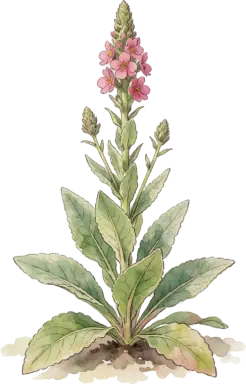
Mullein
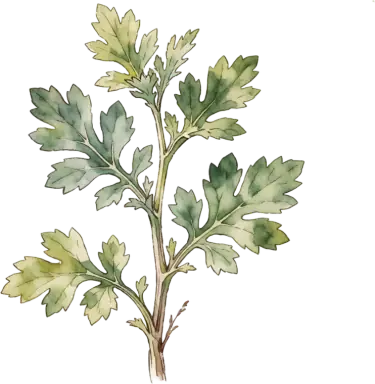
Feverfew
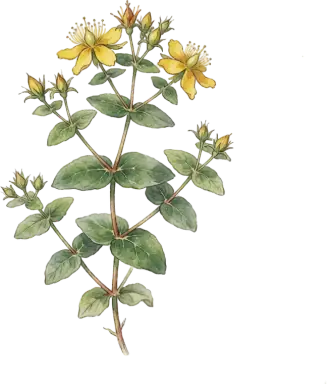
St. John's Wort
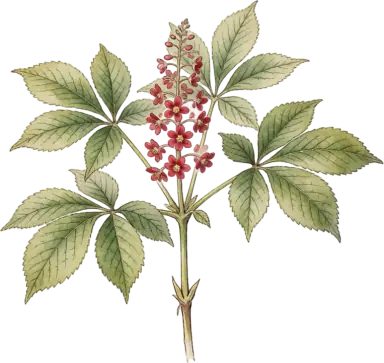
American Ginseng