How to harvest black walnuts
Juglans nigra. Gather, hull, float, cure
Free food falls out of half the trees in Missouri every fall. The work is in removing the husks, and you will need gloves.
Juglans nigra. Gather, hull, float, cure
Prints on one page. The long version below stays on the screen.
How to plant black walnuts How to plant black walnuts →
The long version

Black walnuts harvest themselves, in the sense that they fall on their own. The work is what comes after: get the husks off before they rot into the shell, float off the empty nuts, and dry the rest until the kernels rattle. Wear gloves the whole time. The stain does not wash off, it wears off.

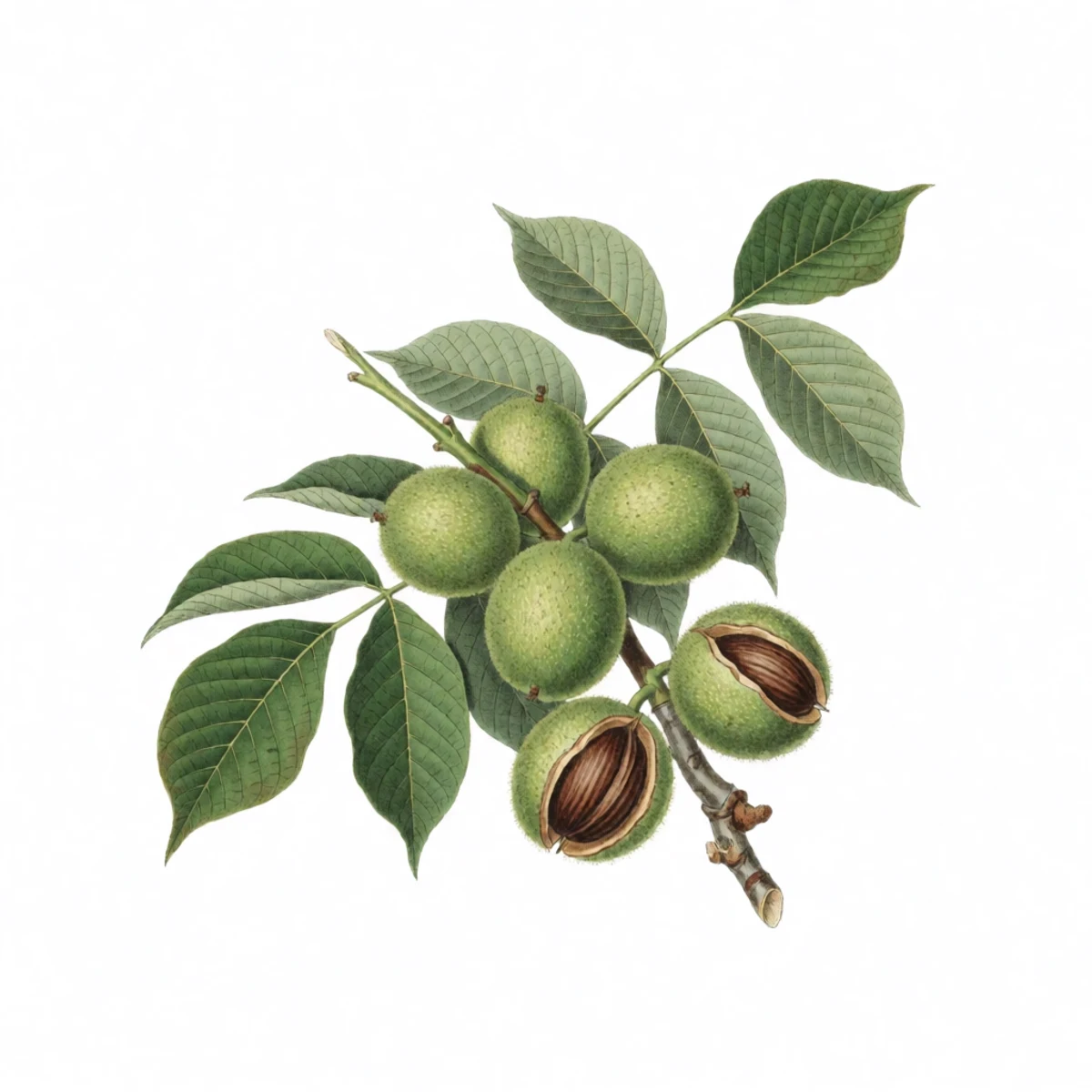
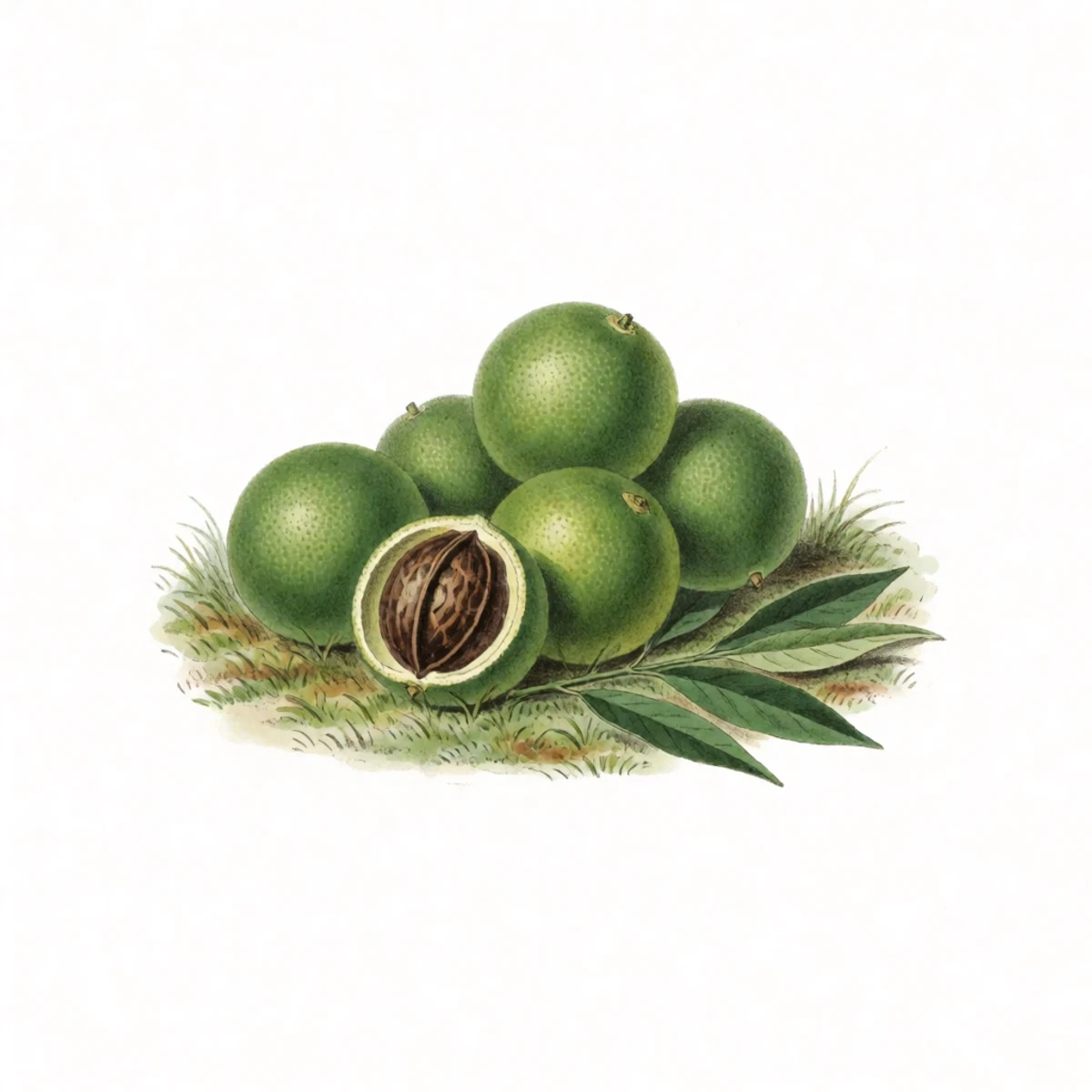
In September and October, collect fallen nuts about the size of tennis balls. A ripe husk is yellow-green and dents when you press it with your thumb. Pick them up every few days, because on wet ground the husks blacken quickly and attract maggots.

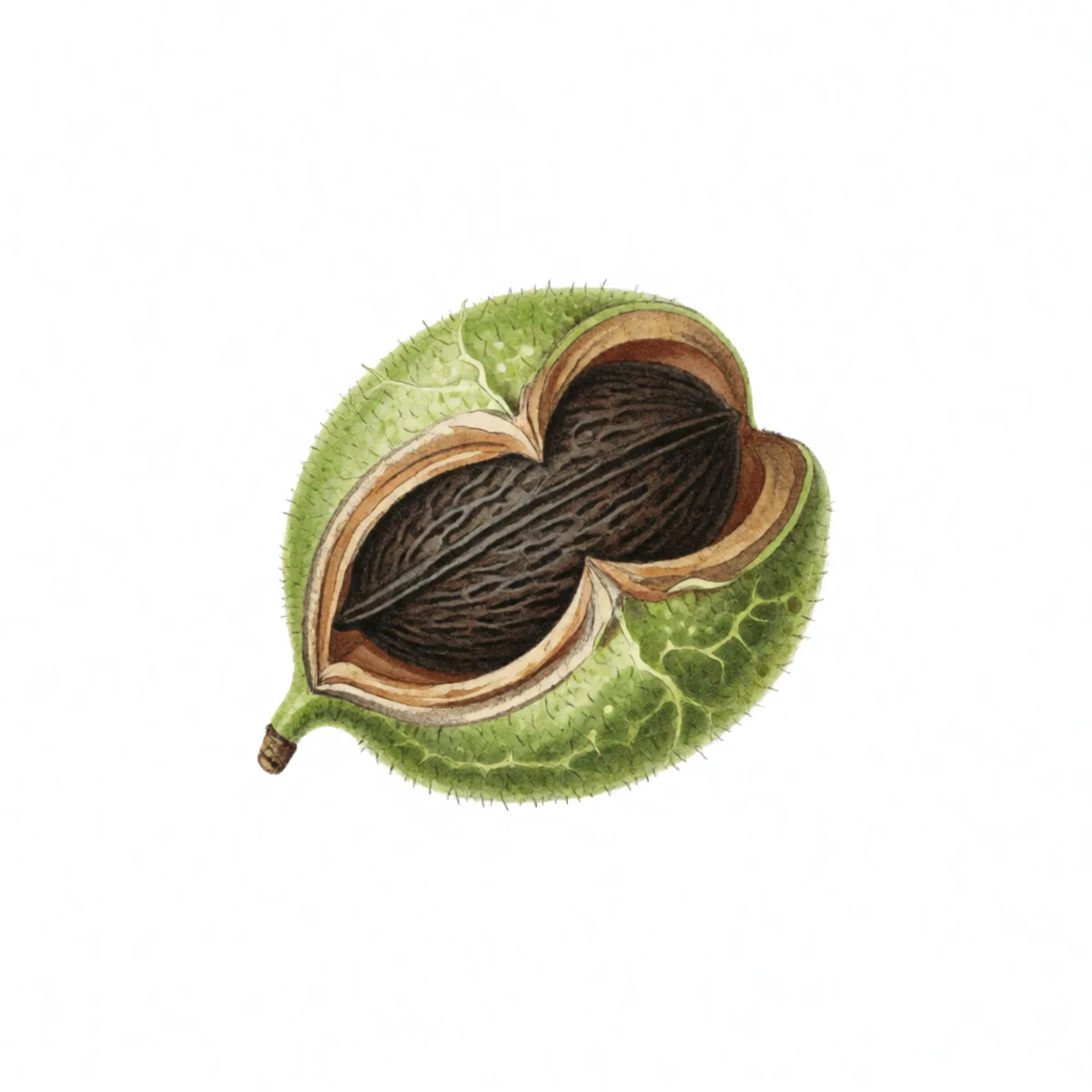
The simplest way is with your boot: set the nut on gravel, press down and roll it with your heel, then pull the nut out. Some people run small harvests through a corn sheller, or drive over a plywood trough of them. However you do it, wear gloves. Walnut stain marks skin for weeks and cloth permanently.

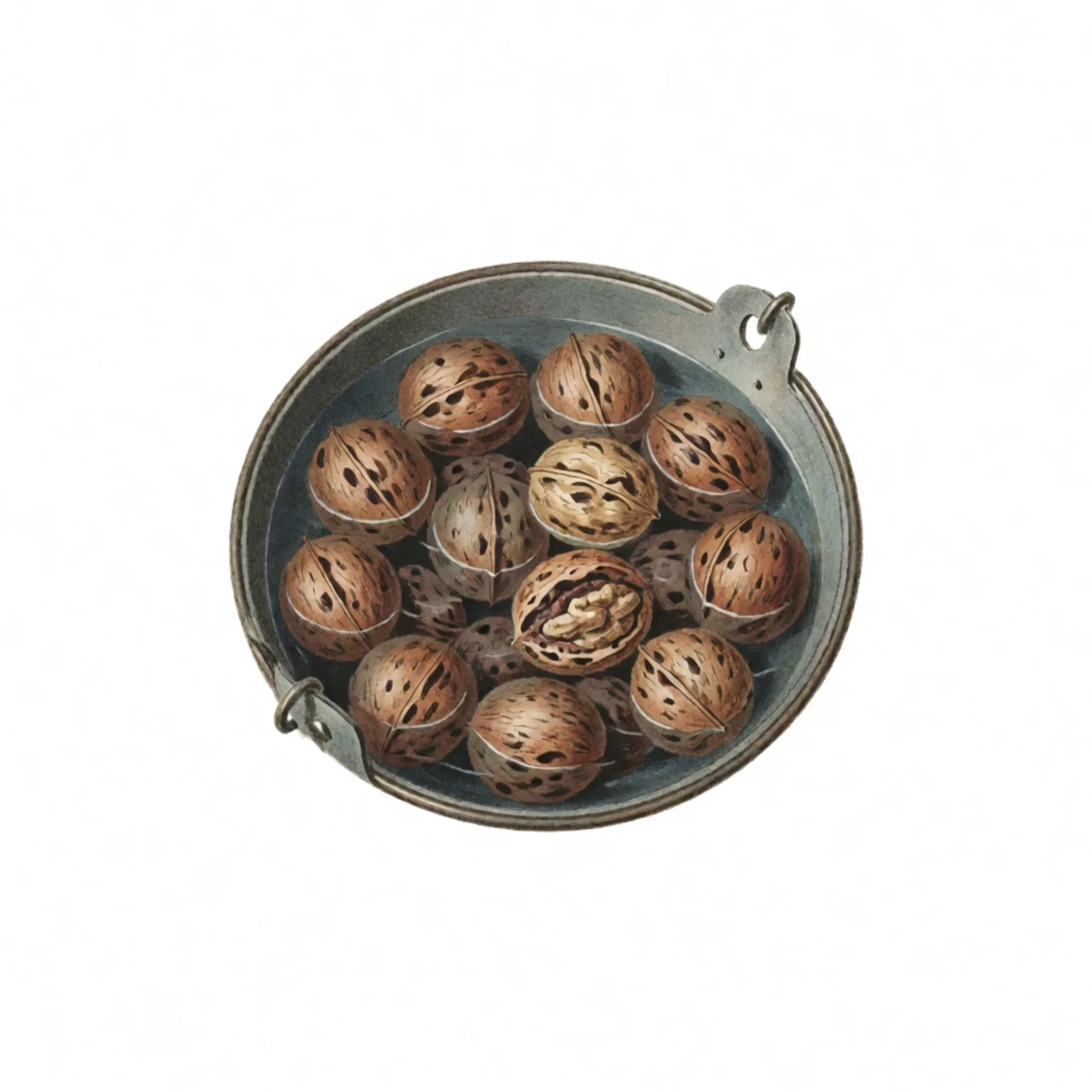
Put the husked nuts in a bucket of water and stir hard, or spray them in a wire basket, until the water runs mostly clear. Anything that floats has no kernel inside, so throw out the floaters and anything spongy. The ones that sink are your crop.

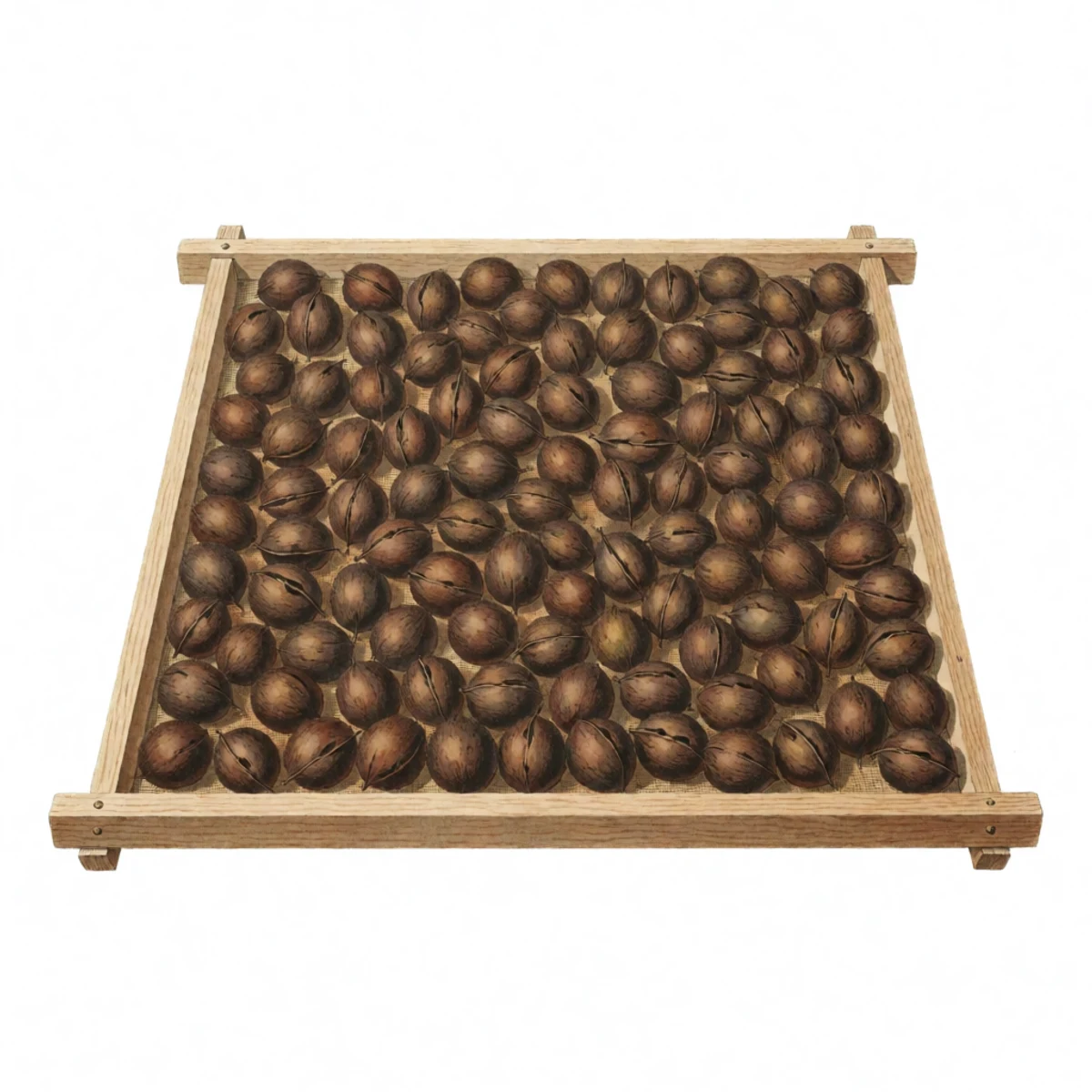
Spread the washed nuts one layer deep somewhere cool, dry and out of the sun, on screens or in shallow crates, for at least two to three weeks. They are ready when the kernel rattles loose inside a shaken shell. Dried nuts keep for months in mesh bags somewhere cool, and for years shelled in the freezer.

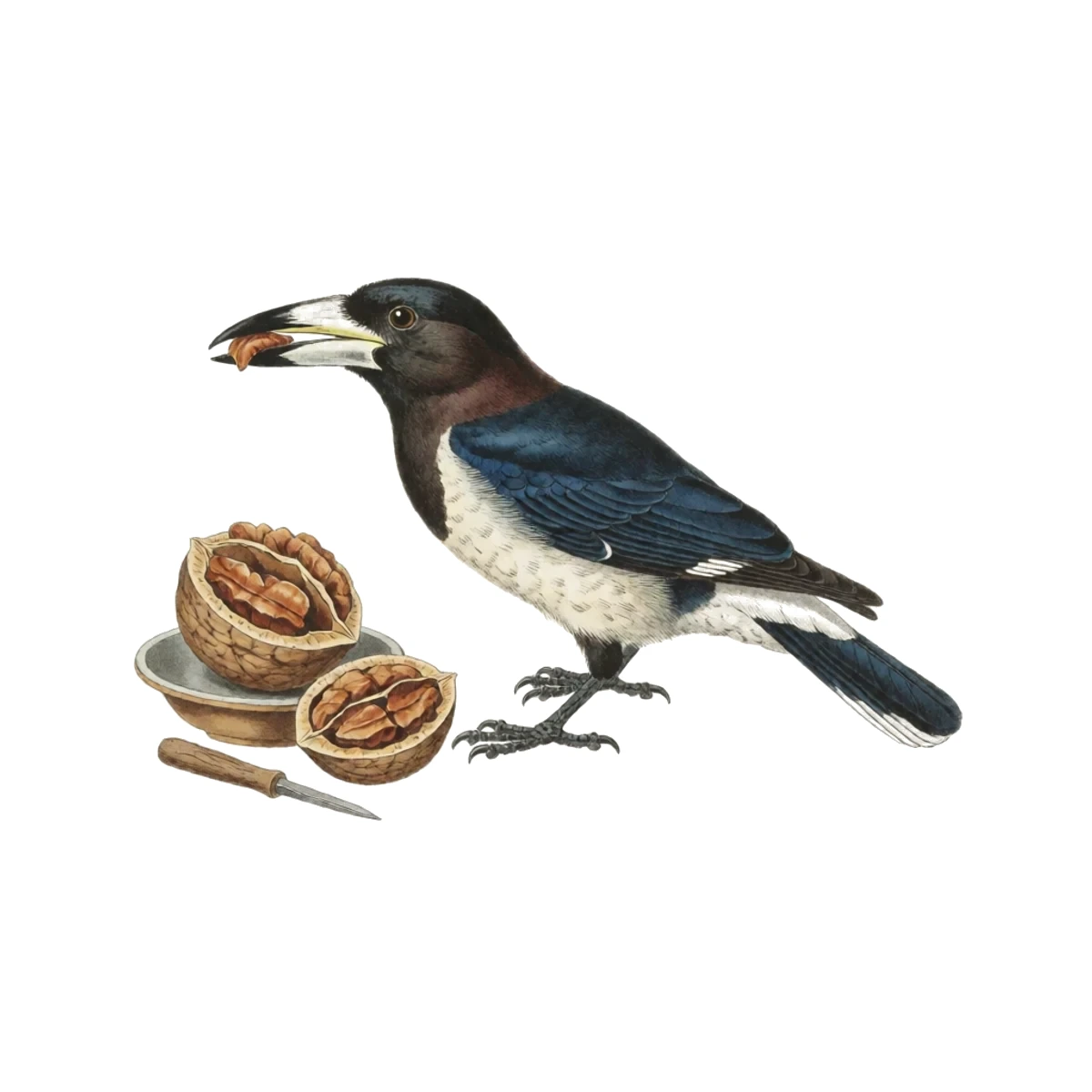
Black walnut shells are far too hard for a nutcracker made for English walnuts. Use a heavy-duty lever cracker, a bench vise, or a hammer on concrete with the nut standing point up. Pick the kernels out with a nut pick, and expect it to take a while to fill a quarter cup. They are worth the effort.
As an Amazon Associate, Story Thyme Farms earns from qualifying purchases, at no cost to you. It never changes what we recommend.
Zones, cold-hardy cultivars, spacing, feeding, and where to buy one already rooted.
Open the black walnut guide →