Black Walnut
- Hardiness
- 4-9
- Mature size
- 75-100 ft
- Chill requirement
- 1400+
- Harvest season
- September - October
Family Juglandaceae
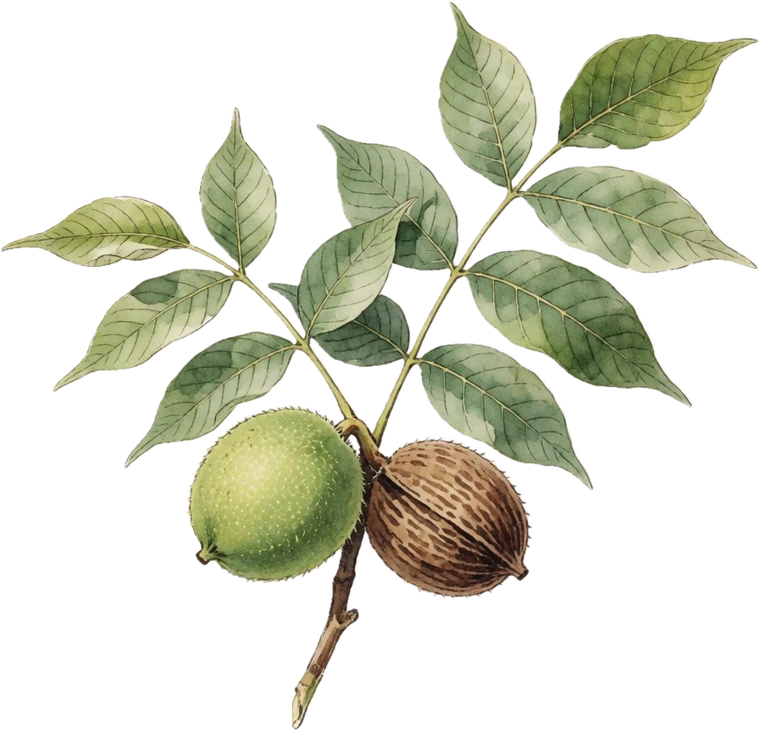
Few trees hand down like a walnut. Whether you grow rich, earthy black walnut, the milder English type, or old-fashioned butternut, you're planting a full-sized nut harvest plus timber-grade shade — a tree with more to give every decade it stands.
Choose the type for your winters — hardiness spans zones 3 through 9 across the three — and give it space of its own: walnut roots politely evict tomatoes and apples, and dogs shouldn't scavenge the drops. Plant two for pollination and start a family heirloom.
☤ Allelopathic — suppresses neighborsWalnut releases juglone, an allelopathic toxin from the walnut family. It kills or badly stunts juglone-sensitive plants — tomatoes, potatoes, peppers, blueberries, apples, azaleas, and rhododendrons among them — within roughly 50–80 ft of a mature tree. Grow only juglone-tolerant species beneath it, and keep the sensitive ones well clear.
 Full Sun
 Moderate growth
 Excellent edible
 Needs a pollination partner
Hardiness differs across the 3 walnuts in this guide, so pick yours and this panel answers for that one.
Black Walnut
Walnut · Common problems
Poor pollination → low fruit set (plant a partner)
Walnut · Which one do you have?
Where these differ, the key facts above give the span across all of them. Each type’s own figures, as the catalogue records them:
Walnut · Growing & propagation
Light Propagate
Seed won't come true
Walnut · Seasonal care & spray guidance
winter, before growth starts
4 jobsThinningIn winterButternut (White Walnut)Remove the trees whose crowns are directly competing with the butternut, especially where its crown is being overtopped or pinched between neighbors. Do this in the dormant season and keep felling away from the butternut's trunk and root flare so you do not wound it. Butternut is shade-intolerant and has to hold a place in the main canopy to survive, and a tree of good vigor in a competitive crown position is better able to delay mortality from canker infection.
 PruningIn winterBlack Walnut
Prune while the tree is fully dormant and leafless. Take out low-hanging, broken, weak, dead or diseased branches, remove water sprouts, and eliminate crossing or rubbing limbs. Remove any branch that meets the trunk at a narrow crotch entirely. Aim for two or three well-spaced laterals staggered around the trunk. Never cut a branch larger than one-third the diameter of the main trunk, and do not paint the wounds. Dormant pruning promotes new growth while summer cuts inhibit it, and the narrow-crotch branches you remove now are the ones that split out under a heavy nut crop later. Painting wounds traps moisture and encourages decay rather than preventing it.
PruningIn winterButternut (White Walnut)If you catch a canker early on a smaller branch, cut six to eight inches below the visible canker margin and destroy the removed wood. Disinfect the blades between every single cut for at least 30 seconds in a 10 percent bleach solution or, preferably, 70 percent alcohol; if you used bleach, rinse and oil the tool afterward so it does not rust. Leave cankers on the trunk and root flare alone, because they cannot be pruned out. The fungus enters through wounds and through leaf and branch scars, and its spores travel mainly in rain splash, which then washes new infections down the trunk from infected branches above.
 SprayingIn winterEnglish (Persian) Walnut
Before buds swell, or in late winter just as buds begin to show their first green, spray a superior-type petroleum horticultural oil to cover the bark and twigs thoroughly. Spray only when daytime temperatures are between 40 and 45 degrees F with no frost forecast overnight, and finish by noon so the tree dries. Scale, aphid eggs, and mites overwinter exposed on the bark with no leaves to shield them, and the oil kills by smothering, so this is the one window where full coverage is possible.
early spring
4 jobsPlanting outIn springButternut (White Walnut)Plant butternut on deep, well-drained ground with good moisture — the rich woods, coves, stream benches, terraces and slopes it occupies naturally — and give it full overhead sunlight. Young trees will take some competition, but a mature butternut has to reach the overstory to survive. Put at least two butternuts near each other. Butternut produces juglone, which selectively inhibits the growth of associated plants: keep juglone-sensitive species — tomatoes and several conifers are the ones documented for butternut — out of the tree's future root zone and dripline, and do not mulch them with butternut leaves, bark, or husks. Butternut carries male catkins and female flowers on the same tree, but they usually do not open at the same time on any one individual, so a solitary tree pollinates itself poorly, and a lack of butternut trees in the immediate vicinity limits pollination and fruit formation. The tree also produces juglone, concentrated in root tissue and fruit husks with lesser amounts in the leaves, catkins, buds, and inner bark, which selectively inhibits susceptible plants.
 FeedingIn springBlack Walnut
On bearing trees, broadcast urea 46-0-0 over the whole orchard floor at a rate supplying about 60 pounds of actual nitrogen per acre while the tree is still dormant and before budbreak. Follow with a second, smaller application of about 40 pounds of actual nitrogen per acre in fall, around harvest. Sample leaflets from late June to early August for a leaf analysis to decide whether phosphorus, potassium or micronutrients are also needed. Added nitrogen stimulates leaf growth and increases annual pistillate flower production, so the nitrogen you apply now is helping decide next year's crop, not just this year's leaves. Maintaining healthy foliage is the only way the tree banks enough carbohydrate to fill this season's nuts and still sustain next season's flowering.
FeedingIn springEnglish (Persian) WalnutApply fertilizer only in spring as active growth begins, and only if the tree is growing poorly or bearing lightly. A healthy walnut carrying a decent crop usually needs nothing. Judge by shoot growth and leaf color rather than fertilizing on schedule. Walnut is a large, deep-rooted tree that forages a lot of soil on its own, and feeding a tree that is already growing well pushes soft late growth instead of nuts.
SprayingAt green tipEnglish (Persian) WalnutSpray a fixed copper fungicide when about 30 to 40 percent of the buds reach the prayer stage, when the first leaflets stand upright and pressed together before unfolding, and repeat 7 to 10 days later. Keep repeating through a prolonged wet spring, since each rain brings a new infection period. Few new infections occur after about May. Commercial growers facing copper resistance tank-mix mancozeb with the copper; mancozeb is a commercial-use material and is not part of a home program - home growers should use fixed copper or Bordeaux mixture alone, which is what UC IPM recommends for home and landscape walnuts. The blight bacterium Xanthomonas arboricola pv. juglandis overwinters inside dormant buds and washes out with rain onto the emerging shoots and young nuts, so the copper has to be on the tissue before the rain moves the bacteria, not after symptoms show.
as the fruit sets
3 jobsSprayingAt petal fallBlack WalnutWatch the female flowers rather than the calendar. As soon as the pistillate flowers are pollinated, when the ovule starts to swell and the stigmas turn brown or black, spray azoxystrobin (Abound) or trifloxystrobin (Flint). A single application at this exact moment often carries the tree all season. On your earliest-flowering cultivars, or in a wet spring, follow with a second spray 10 to 14 days later. The fungus overwinters on last year's decaying leaves and twigs and infects the new leaves just as they reach full expansion, so the spray has to land in that narrow window. Miss it and the tree defoliates by August, losing the photosynthesis that fills this year's kernels and sets next year's flowers.
SprayingAt petal fallBlack WalnutOnce the nutlets are pollinated, adult curculios climb or fly into the canopy to lay eggs in the young fruit. Spray carbaryl (Sevin 80W) or phosmet (Imidan 70WSB) in this same window; the timing overlaps the anthracnose fungicide, and if the labels allow it the two can go in one tank. Hang trunk-mounted cone traps afterward and make a second application only if they show continued curculio activity. The female carves a crescent-shaped gouge in each small nutlet and lays eggs inside; as the larvae feed the tree aborts those nuts, so curculio can strip a large share of the crop before midsummer. Hitting the adults before egg-laying is the only point where the damage is preventable.
SprayingAfter fruit setEnglish (Persian) WalnutSpinosad is effectively the only home-use insecticide for husk fly, and it must be mixed with a bait to work. Spray every 7-14 days until about a month before harvest, then stop. Husk fly maggots stain and rot the husk, which then stains the shell. Eggs laid within about a month of harvest cannot develop in time to damage the nut, so spraying past that point achieves nothing.
the growing season
6 jobs WateringIn summerButternut (White Walnut)
When rain falls short, give the tree roughly one inch of water per week through the growing season using drip irrigation or a soaker hose at the root zone rather than an overhead sprinkler. Fertilize only to correct a deficiency that a soil nutrient test actually shows. Vigor is essentially the only lever a grower holds against butternut canker, since trees in good health delay mortality longer, and watering at the ground keeps water off the bark rather than splashing it, which is how the fungus moves its spores.
 What to watch forThrough summerBlack Walnut
Hang yellow sticky traps baited with an ammonium carbonate lure in the shadiest, dampest parts of the planting, which is where the flies concentrate. Check them two or three times a week. Crush the trapped females and look for eggs: the first female carrying eggs is your spray trigger. You can also inspect husks for small stinglike punctures that darken to black spots near the stem end, though by then the damage is already done. Husk fly has one generation a year and adults emerge over a long window from early summer into early fall, so there is no fixed date to spray by. Trap catch is the only way to know when your own flies are laying.
What to watch forIn summerBlack WalnutLook up in midsummer for yellowing and thinning in the upper crown, then for flagging - wilted leaves hanging on dead branches. Peel bark from a dying limb and look for tiny beetle exit holes and the galleries beneath. Suspect it more strongly if several walnuts at one site are declining together. If a tree is confirmed or has to come down, keep every piece of the wood local: chip it, bury it, or hold it in isolation. The walnut twig beetle carries the Geosmithia morbida fungus, and each of its thousands of small cankers kills a patch of cambium until the branch girdles. Bark-on logs stay infectious for well over a year, so a single piece of firewood moved down the highway can start an outbreak hundreds of miles from the source. Human wood movement, not beetle flight, is what spreads it.
What to watch forIn summerEnglish (Persian) WalnutHang yellow sticky traps baited with ammonium carbonate in dense foliage on the north side of the tree by about June 1, and check them at least twice a week, preferably three times. Watch for a sharp jump in the catch, for the first female carrying eggs, or for the first sting on a husk - any of the three means it is time to treat. Husk fly has one generation a year and the adults emerge over a long stretch from early June into September, so only trapping tells you which weeks matter at your site. Once eggs are laid under the husk the larvae are out of reach of any spray.
What to watch forIn summerButternut (White Walnut)With the canopy fully leafed out, look for sunken elliptical cankers with inky black centers and whitish margins, starting where they start: at leaf scars and buds. Then check the main stem, the base of the tree, and exposed roots, where cankers concentrate and coalesce. Apply the Forest Service retention rule: keep any tree with more than 70 percent live crown and cankers on less than 20 percent of the combined circumference of the bole and root flares, and keep any tree with at least 50 percent live crown and no cankers on the bole or root flares at all. Judge live crown from the upper and outer limbs only, because interior and lower branches die from ordinary shading. Butternut canker is fatal and has cut living butternuts by as much as 80 percent in some states, and there is no practical way to prevent infection, so the decision that actually matters is which trees you keep and breed from rather than which product you spray.
SprayingThrough summerEnglish (Persian) WalnutWhen traps show a sharp increase, an egg-carrying female, or the first sting, spray spinosad promptly and repeat according to the label while trap catches continue. Aim at the husks, where the flies lay. WSU's home-garden walnut schedule also lists kaolin clay (Surround At Home) as an alternative that deters egg-laying by coating the husk. Females lay eggs in groups of about 15 beneath the husk surface and the larvae feed inside for three to five weeks, staining the shell and ruining kernel quality, so the spray only works if it kills adults before egg-laying.
as it ripens, and picking
4 jobsSprayingBefore harvestBlack WalnutOnce traps show the first female carrying eggs, and shortly before the nuts start to ripen, spray spinosad and add a feeding attractant such as a protein bait or molasses to the mix. Repeat on a 7 to 14 day interval while flies are active, but stop once you are within one month of harvest - eggs laid later than that will not have time to develop and cause damage. If you can harvest, hull and wash each cultivar promptly as it ripens, you can skip the insecticide entirely and simply beat the maggots to the husk. The insecticide is aimed at the adult flies, which must feed on the bait droplets to be killed - once eggs are under the husk surface, nothing you spray reaches the maggots. Their feeding turns the husk black and the leaking juice stains the kernel dark and strong-tasting.
HarvestingAt harvestBlack WalnutNuts are ripe when you can press your thumb into the hull and leave an indentation. Gather fallen nuts regularly and hull them promptly while the husks are still spongy. Wash the hulled nuts in a chlorine bath of one teaspoon of regular household bleach per gallon of water to remove remaining hull and disinfect them, discarding any that float. Spread them on screen racks in a cool, well-ventilated place to air dry for two to three weeks. Never use heated air. Store the cured kernels in the freezer. The longer a fully ripened husk stays on the nut, the darker the kernel becomes and the greater the risk of post-harvest spoilage, and a lingering husk is also what husk fly maggots are living in. Nuts that float are poorly filled and not worth cracking.
HarvestingAt harvestEnglish (Persian) WalnutHarvest once the hulls have split and the nuts begin to drop, and pick up everything on the ground right away rather than letting it lie. Hull the nuts, then dry them with warm moving air at 95 to 105 degrees F until the kernels snap rather than bend. Nuts left on damp ground pull moisture back through the shell, which stains the shell and lets mold take hold in the kernel, and the loss happens in days, not weeks.
HarvestingAt harvestButternut (White Walnut)Begin harvesting when about half the fruits yield to finger pressure, which is roughly when the first 10 percent of them have fallen. Knock the clusters down with a long pole or by tossing a throw bag and line over the limbs rather than waiting for a ground fall. Discard the earliest nuts on the ground: they are typically wormy or have shriveled kernels. Hull promptly — a pressure wash removes hulls that have already softened, and firm hulls can be cracked by rolling them under a vehicle wheel on a hard surface, then rinsed clean. The nut is mature once its husk softens and yields to a finger, and squirrels begin taking the crop from that same moment, so waiting for the nuts to drop on their own usually means losing them.
autumn, and putting it to bed
5 jobsSowingIn autumnButternut (White Walnut)The easiest route is to plant nuts in fall, one to two inches deep, under a straw or sawdust mulch up to an inch thick, then pull that mulch in spring if it has crusted or compacted enough to block emergence. To sow in spring instead, soak the seed 3 to 12 hours, air dry it a few hours, then layer it in a barely moist medium such as peat, sphagnum, or sand and hold it between 32 and 40 degrees F for 120 days. Gather seed from as many mother trees as you can rather than a large pile from one tree. Butternut seed will not germinate until it has had about 120 days of moist chilling, and spreading collection across many mothers preserves the considerable genetic diversity that canker-hit butternut populations still carry.
PruningIn autumnEnglish (Persian) WalnutTrain young trees to a central leader or modified central leader, letting four to five scaffold branches space out along the trunk before heading the leader. Prune from late summer into late fall, taking out crossing, broken, and low limbs. Walnut often throws multiple competing leaders after frost or insect damage kills a terminal bud, so cut back to a single leader each year. Walnut pruned in late winter or spring bleeds sap heavily from the cuts, and the tree's structure is set by these early cuts because a walnut carries its crop on limbs that must hold decades of weight.
 ProtectionAfter harvestEnglish (Persian) Walnut
After harvest, pick up all remaining nuts from the ground, including the wormy and blackened ones. Seal infested nuts in large black trash bags and leave the bags in the sun for two weeks to kill the larvae before disposing of them. Do not compost infested husks. Husk fly larvae finish feeding inside fallen husks and then drop into the soil to overwinter as pupae under the tree, so every nut left on the ground is next summer's flies - and some pupae stay dormant more than two years.
ProtectionIn autumnButternut (White Walnut)Put a rigid trunk guard or a fenced cage around young butternuts ahead of the autumn rut, and keep browse protection in place until the leader is clear of deer reach. White-tailed deer favor butternut foliage and rub their antlers on the stems, and every rub is a torn bark wound — precisely the kind of opening the canker fungus infects through.
HarvestingIn September and OctoberBlack WalnutGather fallen yellow-green husked nuts, remove hulls promptly, wash, and dry in shallow layers for two to three weeks. Prompt hulling and drying protect kernel flavor and storage quality.
Walnut · Calculators & field guides
Walnut · Yearly calendar
No calendar activity is listed for this month.
 Bloom
BloomBloomMarch to May
These are the species' typical months — expect them a few weeks earlier in warm zones and later in cold ones. Watch the plant, not just the calendar.
Walnut · Ecology & uses
 Deer
DeerProtect young plants
 Allelopathy
Tomatoes, potatoes, peppers, blueberries, apples, azaleas, and rhododendrons among them — within roughly 50–80 ft of a mature tree. Grow only juglone-tolerant species beneath it, and keep the sensitive ones well clear.
✓ Commonly eatenJuglone is allelopathic — it kills nearby tomatoes and apples. It is also an animal hazard: bedding containing as little as 20% black walnut shavings causes laminitis in horses within 24 hours, so never use it as horse bedding. Moldy fallen nuts and hulls cause tremors and seizures in dogs (penitrem A) — rake up the drops. ASPCA lists black walnut toxic to horses and dogs, non-toxic to cats. · Produces LESS juglone than black walnut but still allelopathic — keep from tomatoes/apples. Moldy fallen walnuts cause tremors and seizures in dogs (penitrem A) — pick up the drops. · Nuts safe (tree-nut allergen); milder juglone than black walnut. Do NOT use butternut wood shavings as horse bedding — MSU Extension names butternut alongside black walnut at the same laminitis risk.
Edible valueEdibility, identification, and traditional-use notes here are general reference — not medical or veterinary advice, and not a claim that any plant treats or prevents anything. Medicinal ratings record how strongly a plant features in herbal tradition, nothing more. Never eat or dose a plant you have not positively identified. More on how to use this library.
Walnut · Varieties & cultivars
Compare hardiness, mature size, growth habit, days to maturity and intended use in the seller’s variety description. Where this guide covers several plant types, start with the type you want to grow, then choose a variety for your season and space.
Sources & plant identity
Hardiness, size and timing vary with your cultivar, soil and climate.
University extension research, brought together with hands-on growing experience at Story Thyme Farms.
 Colorado State University
 Iowa State University
 Penn State
 The Morton Arboretum
 University of California ANR
 USDA Forest Service
 University of Missouri
 Utah State University
 NC State ExtensionSacramento Valley Orchard Source (UC Cooperative Extension / UC Davis Plant Sciences)
 University of Idaho
 Washington State University
 Purdue University
 USDA ARS National Clonal Germplasm Repository, Corvallis (Juglans accession catalog)
 grimonut.com
Publisher marks identify sources, not sponsorship or endorsement.
Walnut questions, answered straight.
Most often: it has no genetically distinct partner nearby. Walnut is only partly self-fertile, so a lone plant sets a light crop at best — partially self-fertile; a second, genetically distinct plant nearby improves set. Plant a second, unrelated one nearby; two different cultivars, or a cultivar plus a seedling, is the classic pairing.
Walnut is commonly eaten and isn't considered toxic, but "commonly eaten" isn't a guarantee for any particular person or animal — allergies, quantity, and which part you eat all matter. One caveat on this one: Juglone is allelopathic — it kills nearby tomatoes and apples. It is also an animal hazard: bedding containing as little as 20% black walnut shavings causes laminitis in horses within 24 hours, so never use it as horse bedding. Moldy fallen nuts and hulls cause tremors and seizures in dogs (penitrem A) — rake up the drops. ASPCA lists black walnut toxic to horses and dogs, non-toxic to cats. · Produces LESS juglone than black walnut but still allelopathic — keep from tomatoes/apples. Moldy fallen walnuts cause tremors and seizures in dogs (penitrem A) — pick up the drops. · Nuts safe (tree-nut allergen); milder juglone than black walnut. Do NOT use butternut wood shavings as horse bedding — MSU Extension names butternut alongside black walnut at the same laminitis risk. Never eat a plant you haven't positively identified, and check with a vet before letting pets or livestock graze anything new.
Grafted, or from cuttings/layering (seed won't come true).
Where walnut sits in the library.
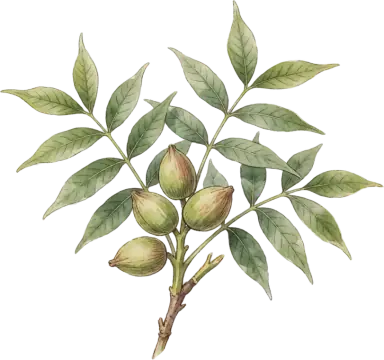 Pecan
Pecan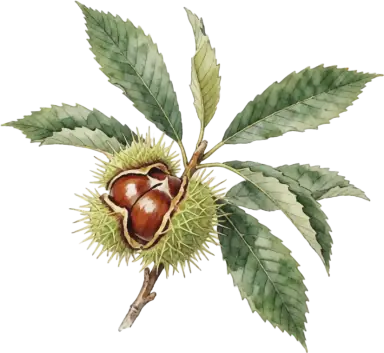 Chestnut
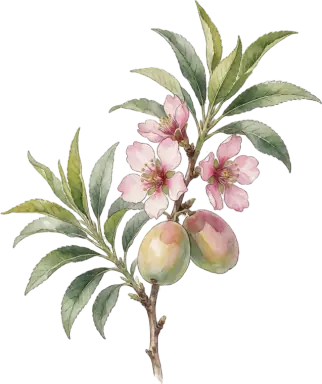 Almond
 Pistachio