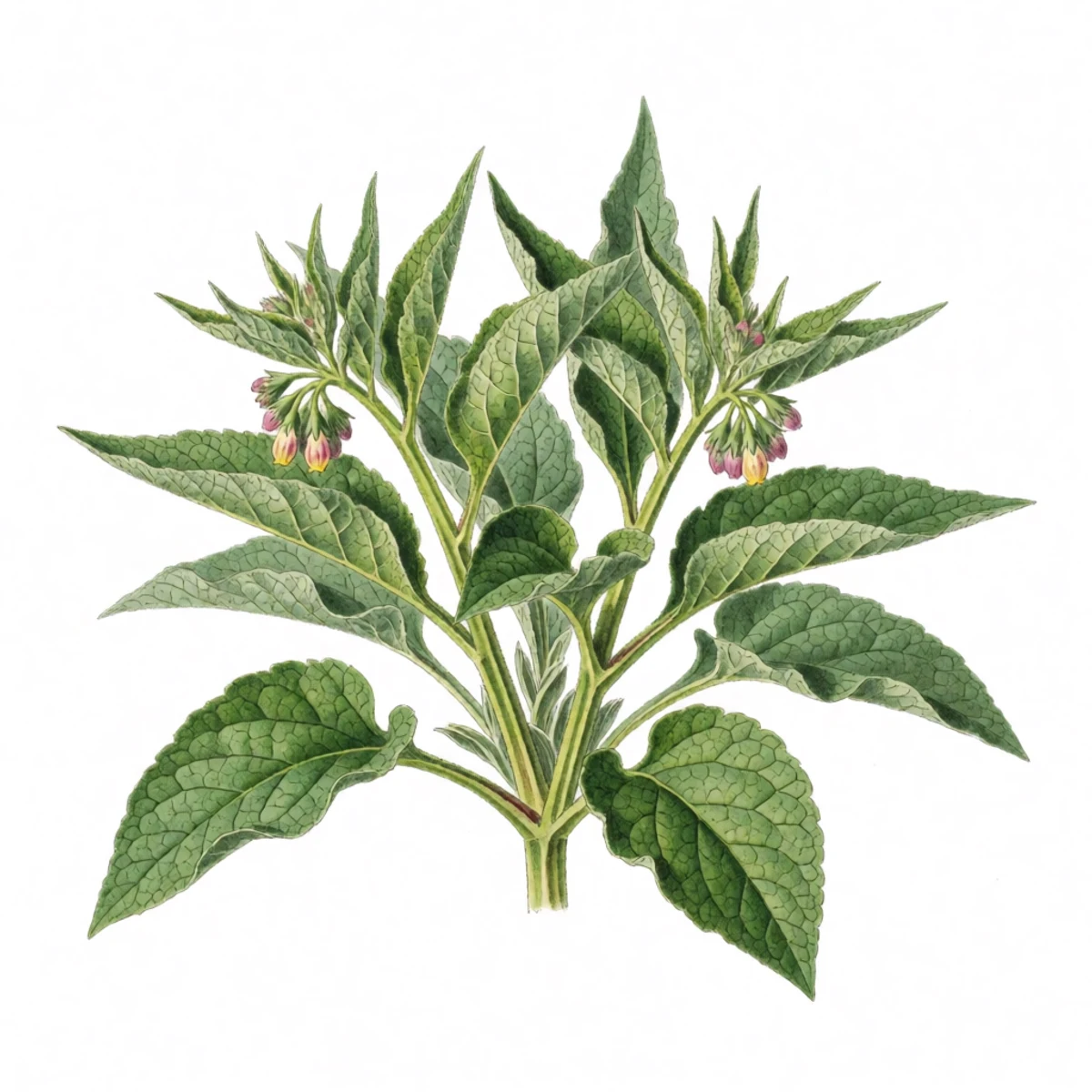
How to harvest and use comfrey
Symphytum × uplandicum. Cutting and using it
Cut it like hay and feed it to the orchard. It regrows four times a summer and its deep roots bring up minerals.
Symphytum × uplandicum. Cutting and using it
Prints on one page. The long version below stays on the screen.
How to grow comfrey from root cuttings How to grow comfrey from root cuttings →
The long version

Comfrey is the only crop here we grow purely to give away, to the fruit trees, the compost pile and the chicken bedding. Its deep taproot pulls minerals out of subsoil the trees cannot reach and stores them in leaves you can cut every six weeks. Harvesting it is basically mowing.

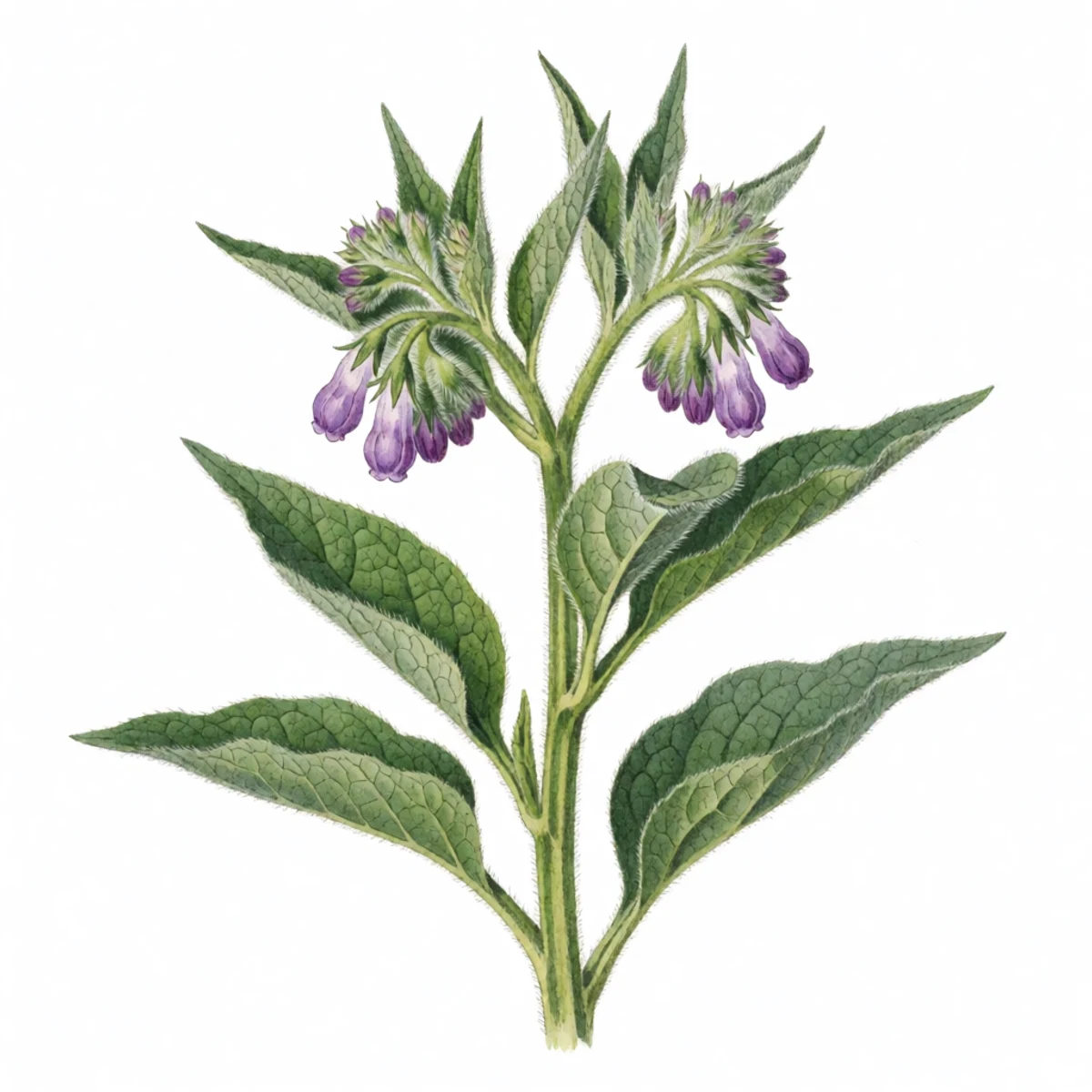
Make the first cut in late spring, when the plants are 18 to 24 inches tall, then cut again every four to six weeks into September. Cutting as it starts to bloom gives you the most leaf while still leaving time to regrow. Do not cut at all in the first year, because a new plant needs to keep every leaf it makes.

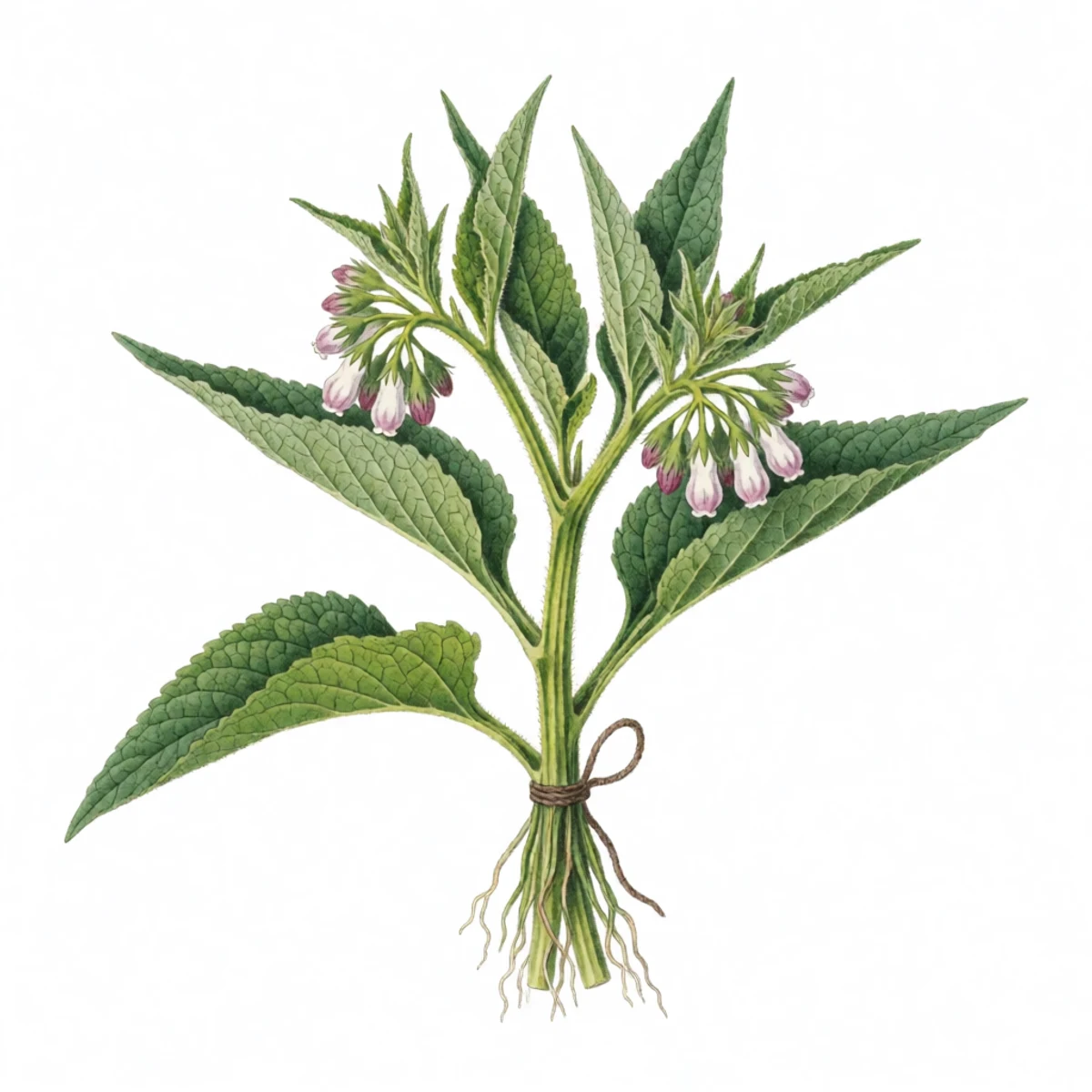
Gather the plant in one hand like a ponytail and cut everything a couple of inches above the crown with a serrated knife or a sickle. Wear long sleeves and gloves, because the leaf bristles sting. The plant will look destroyed and will not be bothered by it at all.

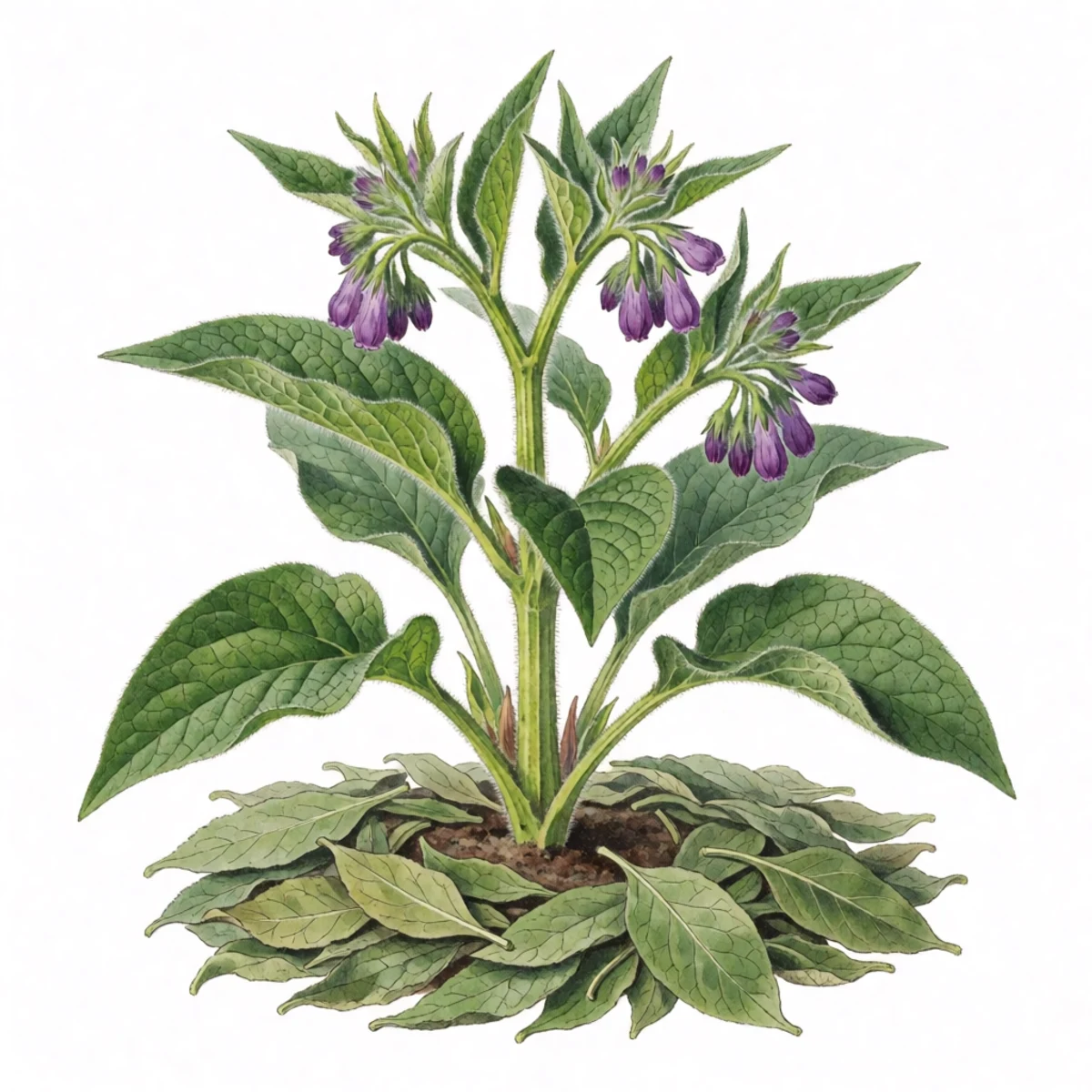
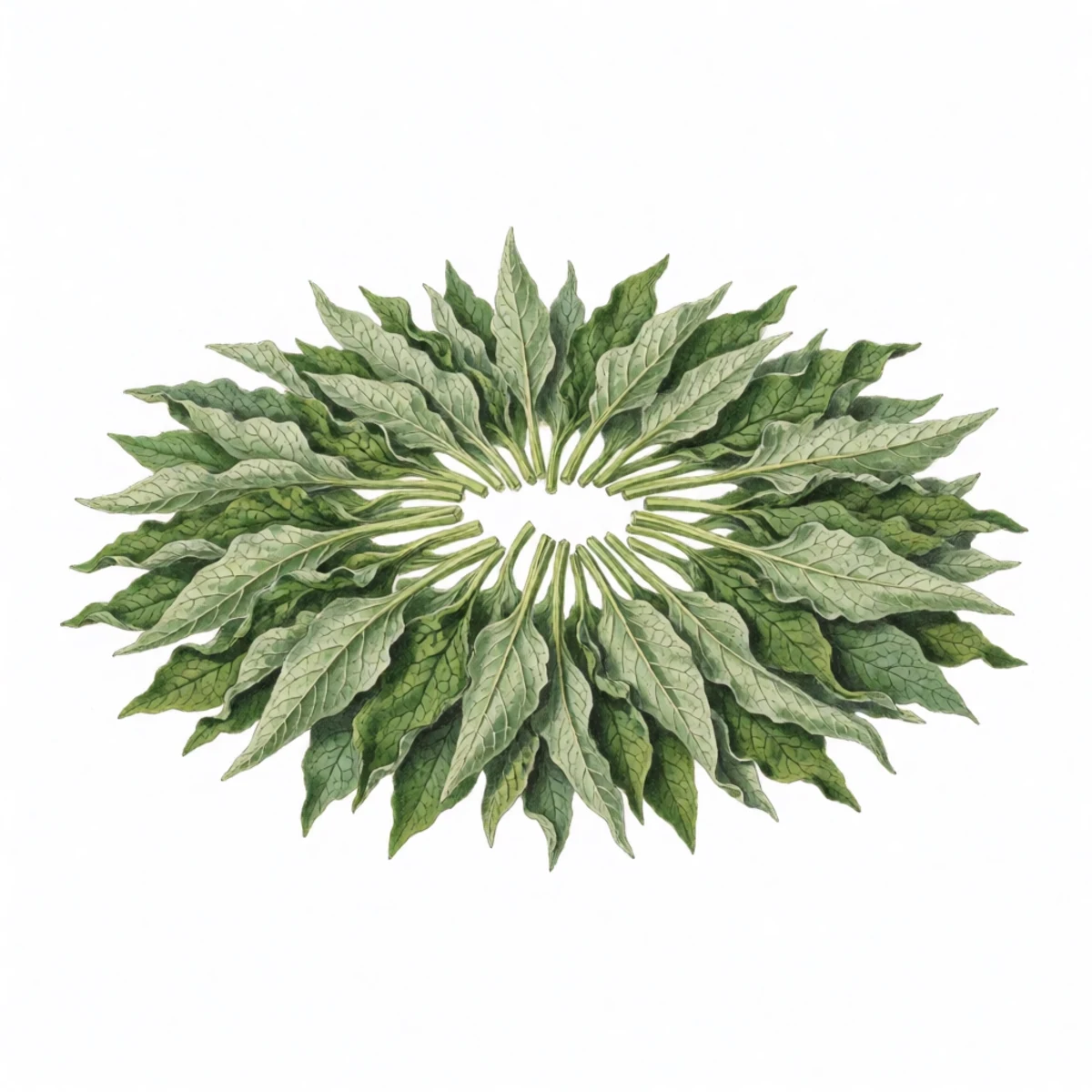
Let the leaves wilt for a day first, so they cannot root where they land. Then spread them in a ring under fruit trees and berry bushes as a green mulch, about an armful per young tree, or layer them into the compost pile, where they break down fast and heat it up. Comfrey leaves contain more potassium than most manures, which is exactly what fruiting trees need.

Here that means making the last cut by early September, so the plants can rebuild their root reserves before winter. A comfrey patch managed this way will outlast the fence posts around it. The chickens get a share too, picking at fresh leaves and shredding the wilted ones into their bedding.
As an Amazon Associate, Story Thyme Farms earns from qualifying purchases, at no cost to you. It never changes what we recommend.
Zones, cold-hardy cultivars, spacing, feeding, and where to buy one already rooted.
Open the comfrey guide →