Field Guide · Propagation · 9 min read

How to Root Fig Cuttings in Sand

Rooting figs in coarse sand is cheap, it rarely rots, and one tree can give you twenty new plants. This is the method we use on the farm.

Story Thyme Farms · Bench cardLate summer

How to root fig cuttings in sand

Ficus carica. Rooting cuttings in a tote of sand

DifficultyEasy
Roots in3–6 weeks
Take rateHigh
This batch18 cuttings
Wear gloves and sleeves. Fig sap plus sunlight burns and blisters skin, often a day later.
1Taking the cuttingsCut pencil-thick wood from this year's growth
2Preparing the sandDampen the sand, but do not soak it
3Planting the cuttingsBury two nodes and press the sand down firmly
4Covering and heatingPut the lid on loosely and warm the tote from below
5Potting them upPot them up once the roots are an inch long
Materials needed · Pruning shears · Coarse sand · 6.5-qt totes · Seedling heat mat · Nitrile gloves
Written on the farm · Missouristorythymefarms.com/guides/how-to-root-fig-cuttings
Prints on one page. The long version below stays on the screen.

How to tell when a fig is ripe When to pick figs

The long version

Fig cuttings standing in a tote of moist coarse sand
On the farm · Missouri

Figs are the easiest fruit tree on this farm to propagate. The usual reason cuttings fail is that potting mix stays too wet and they rot. Coarse sand drains better, so that is what we root them in: plastic totes of sand with gentle heat underneath. There are five steps.

  1. Step 1 · Taking the cuttings

    Cut pencil-thick wood from this year's growth

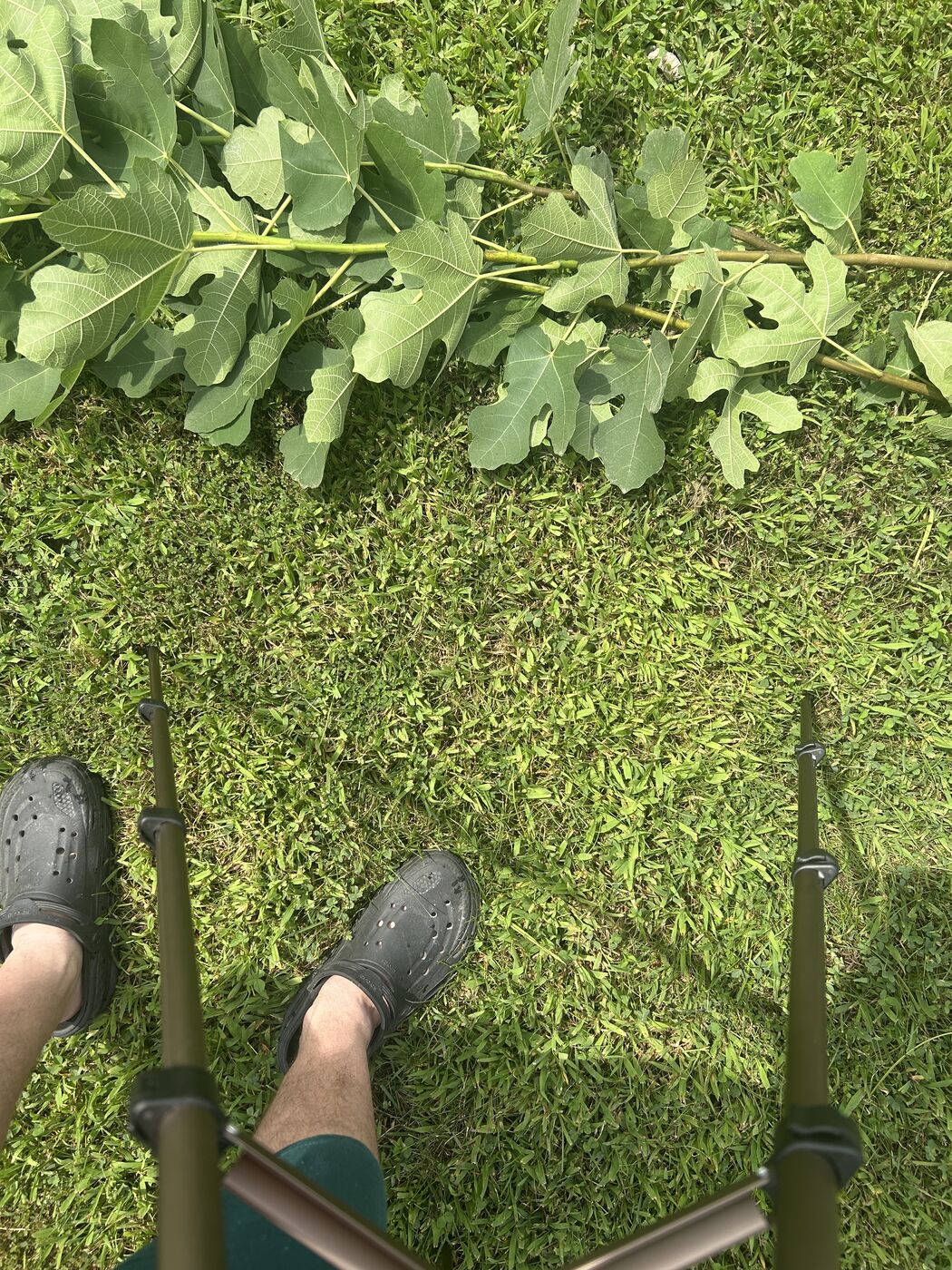
    Fig branches laid out on grass after pruning
    August, on the farm

    Cut pieces six to eight inches long, each with at least three nodes. Use wood that is still green-brown rather than gray and corky. Strip off every leaf, and wear gloves, because the white sap reacts with sunlight and burns skin. Wash any sap off before you go back out in the sun. One round of pruning on a single tree gave us enough wood to fill two totes.

  2. Step 2 · Preparing the sand

    Dampen the sand, but do not soak it

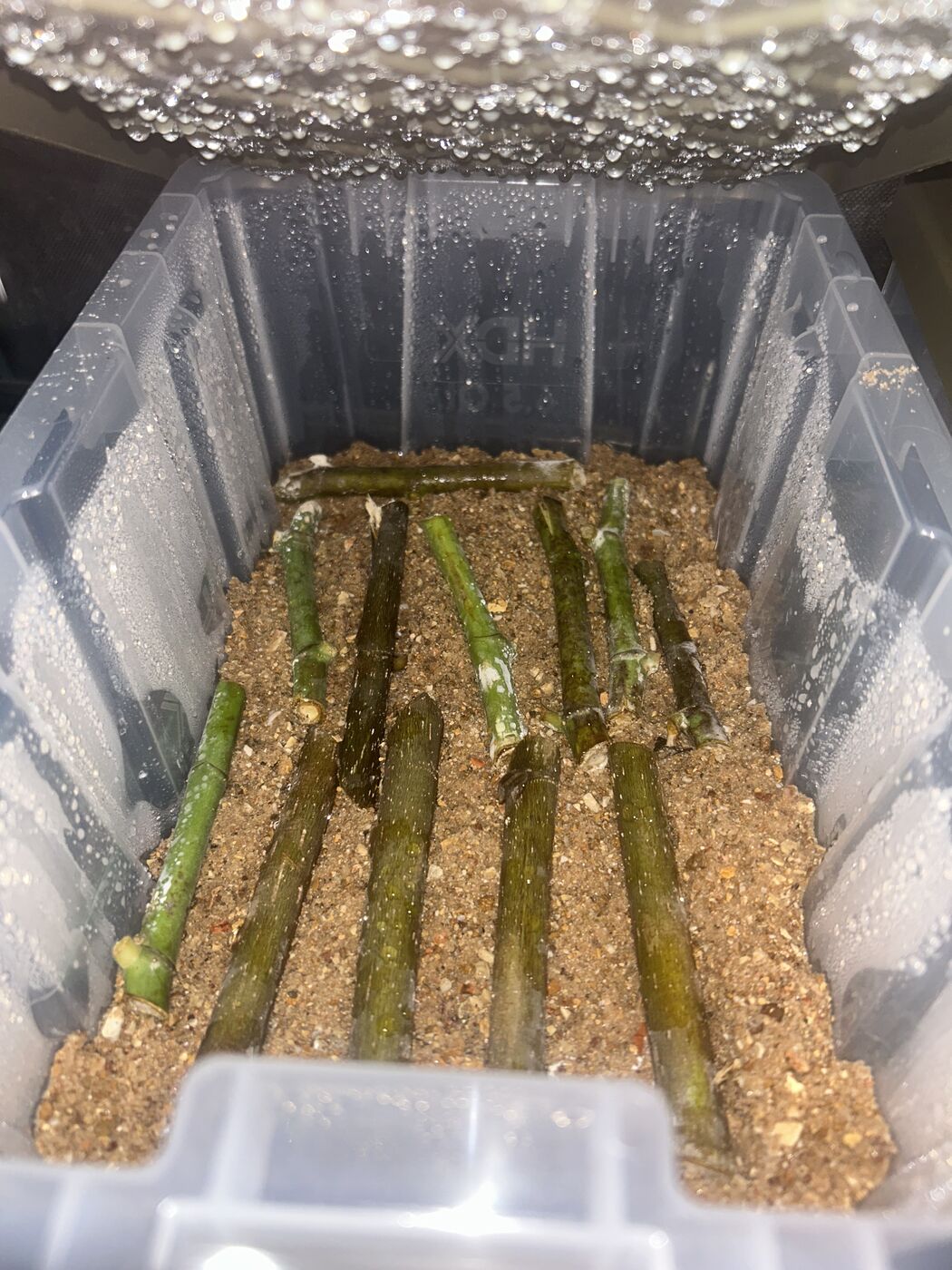
    Cuttings half-buried horizontally in moist sand

    Coarse sand holds enough moisture for the cuttings to callus over and drains the rest away. To check it, squeeze a handful. It should hold its shape and leave your hand barely damp, with no water dripping out. Before each stem goes in, cut the bottom again just below a node, because that is where roots form.

  3. Step 3 · Planting the cuttings

    Bury two nodes and press the sand down firmly

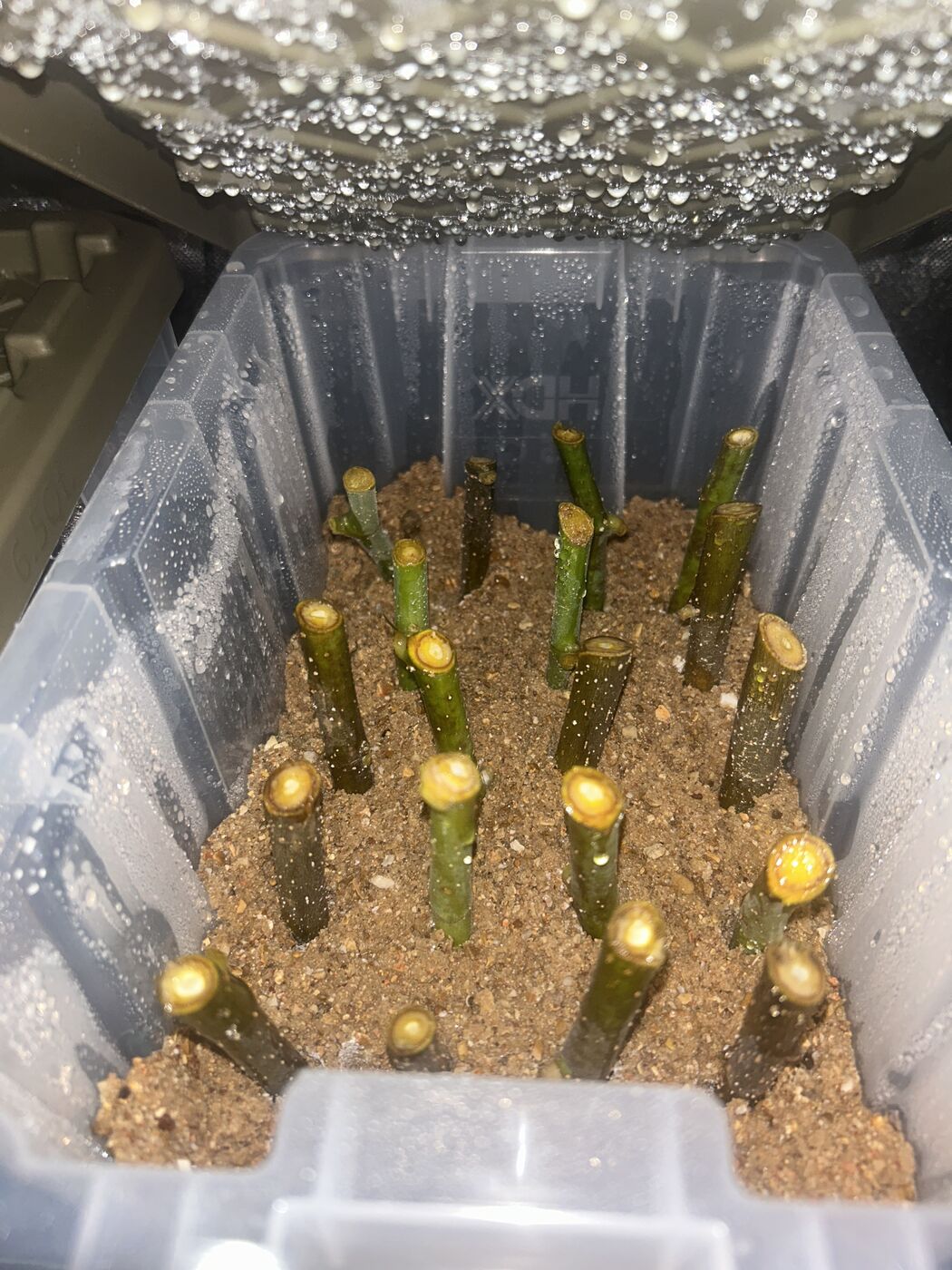
    Cuttings standing two nodes deep in the sand tote

    Push each cutting in far enough to bury the bottom two nodes, then press the sand tight against the stem. Air pockets around a cutting will stop it from rooting. Cut the top of each stick flat and the bottom at an angle, so you can tell the ends apart and never plant one upside down.

  4. Step 4 · Covering and heating

    Put the lid on loosely and warm the tote from below

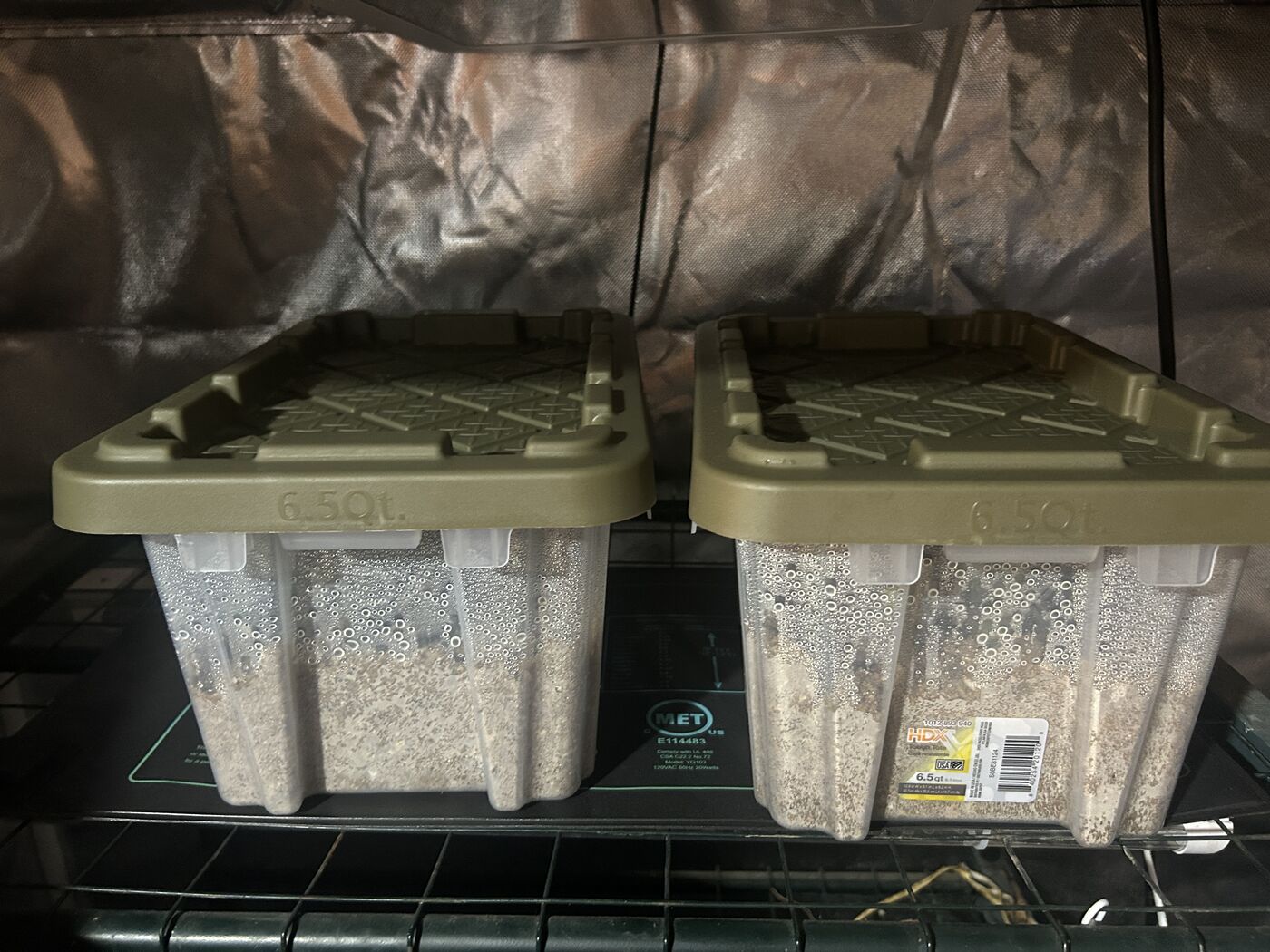
    Fogged totes on a seedling heat mat inside the grow tent
    75 to 80 °F underneath

    The lid holds humidity around the cuttings. Leave one corner open so a little air still moves through. A heat mat under the tote, held at 75 to 80 °F, cuts the time to callus roughly in half. If the inside walls fog up, the humidity is right. Open the tote once a week, and throw out any cutting that has gone soft as soon as you notice it.

  5. Step 5 · Potting them up

    Pot them up once the roots are an inch long

    The cut ends callus over in about two weeks, and roots follow in three to six. Once the roots are an inch or two long, move each cutting into a pot of gritty mix and lower the humidity over about a week. Sand has no nutrients left to feed a rooted plant. After that it is an ordinary potted fig: give it sun and water, and bring it indoors for its first winter in Zone 6.

Materials needed

As an Amazon Associate, Story Thyme Farms earns from qualifying purchases, at no cost to you. It never changes what we recommend.

Questions we actually get

When's the best time to take fig cuttings?
Two windows: late-summer semi-hardwood (what this guide shows) and fully dormant hardwood in late winter. Dormant wood is even more forgiving and ships well, which is why winter is trading season among fig growers.
Can I just root them in a glass of water?
You can — figs will root in nearly anything — but water roots are brittle and many break on transplant. Sand roots transition to soil without the sulk.
Which fig varieties root easiest?
Chicago Hardy, Celeste, and Brown Turkey are all nearly foolproof, and Chicago Hardy is the one we'd plant first against a Missouri winter.
From the plant library

Common Fig — the full profile

Zones, cold-hardy cultivars, spacing, feeding, and where to buy one already rooted.

Open the common fig guide →