A Year of Garlic From One Fall Planting Starts With These Four Things
Garlic is the crop that rewards October planning: cloves in the ground before the freeze become fat bulbs by July. These five cover the whole year, from planting day to the curing rack.
One click drops all five into your Amazon cart at today's prices. Delete what you already own before you check out — nothing is bought until you do.
Real seed garlic
Grocery garlic grows grocery disappointment
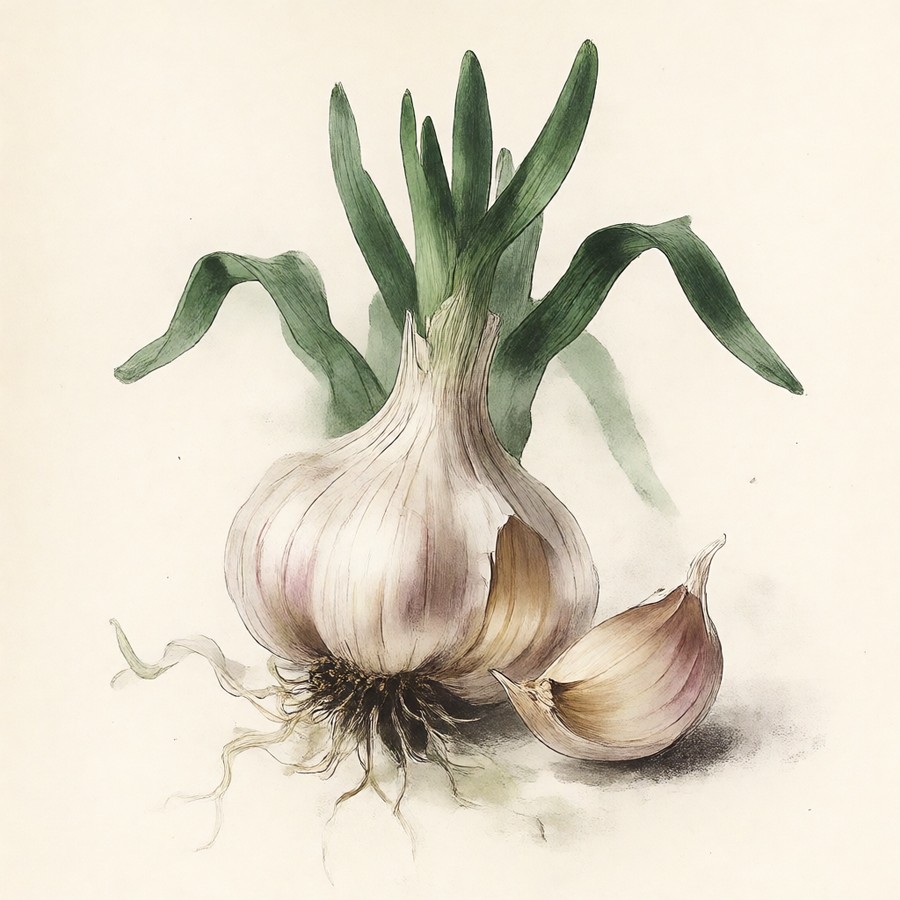
Supermarket garlic is a soft-neck variety bred for California and often sprout-inhibited, and half the cloves rot in a cold northern bed. Seed garlic is certified disease-free and sized for planting - hardnecks like Music throw fat easy-peeling cloves and a bonus crop of June scapes. One pound plants about fifty cloves, and next year's seed is free forever.
Plant the biggest cloves, eat the small ones - clove size sets bulb size.
A long-handled bulb planter
Fifty holes without kneeling once
Garlic wants every clove three inches deep and six apart, and doing fifty holes with a trowel is an hour on your knees in cold October soil. A long-handled planter cores a perfect hole with a step and a twist, standing up. The same tool does all the spring bulbs - one afternoon of use a year, a decade of service.
A dibber or a stout stick works for loose beds; the corer earns its keep in firm soil.
Bone meal at planting
The slow food winter roots want
Garlic spends winter quietly growing roots, and what those roots want is phosphorus already waiting in the soil - a scratch of bone meal in each furrow feeds all winter without pushing tender top growth that frost would burn. Quick nitrogen comes later, in spring; fall is for the slow stuff.
Skip it if a soil test says phosphorus is already high - more is not better.
Clean straw for the blanket
Frost-heave pops unmulched cloves out
Freeze-thaw cycles heave shallow-planted things right out of the ground, and a clove lying on the January surface is finished. Four inches of straw keeps soil temperature steady, smothers the winter weeds, and rots into the bed by summer. Bagged garden straw costs more than a farm bale but arrives clean and seed-free.
A farm bale is cheaper if you can get one - just ask whether the field was sprayed.
A stacking curing rack
July's harvest ruined in an August pile
Fresh-dug garlic is full of water, and bulbs piled in a box mould before they cure. Curing wants air on all sides for three or four weeks somewhere shaded and breezy - stacked mesh racks give fifty bulbs that airflow in two square feet of shed. The same racks cure the onions and dry the last herbs.
An old window screen on two sawhorses does the same job for free.
All five in your Amazon cart in one click — today's prices, nothing to remember.
As an Amazon Associate, Story Thyme Farms earns from qualifying purchases, at no cost to you. It never changes what we recommend.