The illustrated growing guide

German Chamomile

Matricaria chamomilla

Family Asteraceae

Grown as an annual

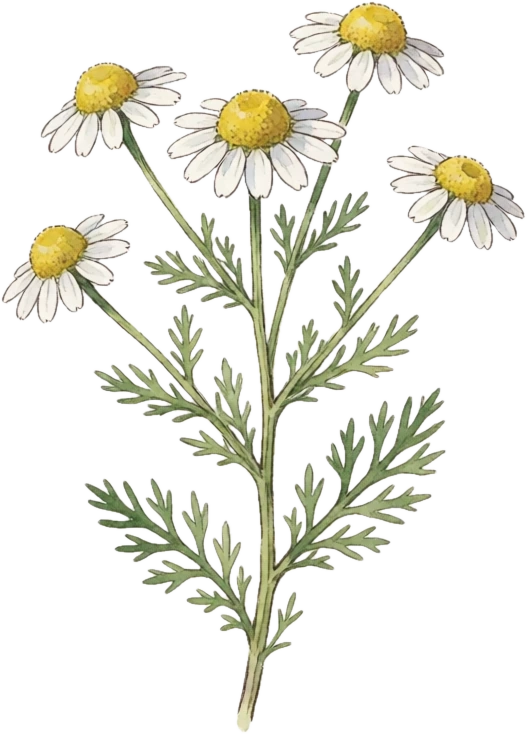
Botanical illustration of German Chamomile
Annual · Matricaria chamomilla

Fifty flower-heads dry to a handful, so plant a wide patch. Self-sows politely forever after year one — apple-scented lawn edges and free bedtime tea for life.

AnnualFull SunLow waterFast growthAttracts beesNone winter chill

Where to buy the plant — 2 nurseries

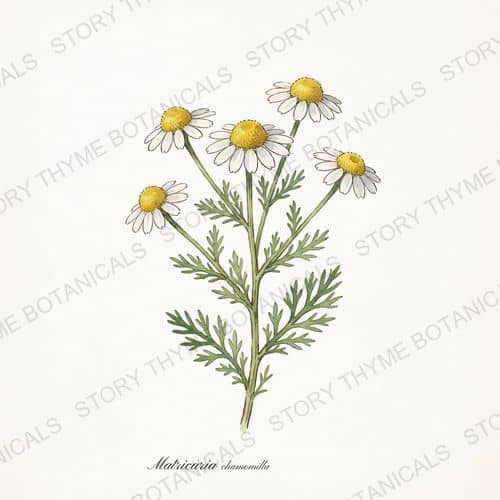
Chamomile — a print from the Garden Blooms collection

From the print shop

Growing german chamomile? Hang it.

Our Garden Blooms collection carries german chamomileMatricaria chamomilla, print Nº 13, “Chamomile.”

16 designsfrom $21.99white or black groundmatte poster, unframed

Shop Garden Blooms botanical prints →

I

Overview

Will german chamomile suit your garden, and what goes wrong.

Will it fruit where you are?

Enter your ZIP — we look up your USDA hardiness zone (2023 map) and check it against what german chamomile actually needs.

Life cycleAnnual
Winter chillNone

German Chamomile at a glance

Life cycleAnnual
Mature size18-24 in airy
PollinationBeneficial-insect magnet
Chill requirementNone (not chill-dependent)
Bloom seasonJune - September
Harvest seasonFlowers only — pluck heads every 2-3 days at full open
Growth rateFast

Common german chamomile problems

II

Growing

Light, water, soil, propagation and the season’s jobs.

How to grow german chamomile: light, water & soil

LightFull Sun
WaterLow
SoilAverage — blooms harder in lean soil · pH 5.6 - 7.5
FertilizerNone
PruningNone — None — pick, pick, pick; picking is the pruning.
Spacing6-8 in

How to plant & propagate german chamomile

Maturity60-65 days
From seedSurface-sow (needs light); self-sows
PropagateFrom seed

The german chamomile growing playbook

Field-tested instructions for every job german chamomile asks of you, compiled from university extension guidance — in the order the season brings them.

Sowing

Surface sow in early spring - do not bury the seed

Scatter seed on a firmed, weed-free bed in early spring and press it into the surface without covering it (UW-Madison Extension: 'The seeds need light to germinate, so surface sow and press into the soil'). Keep the surface damp until seedlings appear. Montana State's WARC notes that succession plantings may be made to spread the harvest out rather than taking one flush - sow a further patch once the previous one is up and growing away. Chamomile seed needs light to germinate, so any soil over the top simply stops it. Montana State's trials seeded in early spring because the seedlings tolerate a light frost, which gets the plants flowering before the worst summer heat.

Planting out

Move starts out while they are still small

If you started seed indoors, set the plants out while they are still young - Montana State's WARC sowed in the greenhouse on April 8 and transplanted to the field on May 15, about five weeks - at 8 inches apart in rows 18 inches apart. Grow them in individual cells or containers rather than an open flat so the roots come out intact. Start indoors roughly 6 to 8 weeks before your average last frost date and set out after that date. Larger chamomile plants do not transplant well, so they are either grown individually in containers or moved while small; the small ones establish without a check and catch up and pass the big ones.

Watering

Water through seedling establishment, then ease off

Keep the bed evenly moist from sowing until the seedlings are a few inches tall and clearly growing away. After that, water only in real drought - established chamomile carries itself on far less. The seed sits on the surface and the seedling roots are shallow, so a single dry spell at establishment is what usually kills a chamomile stand outright.

Feeding

Skip the feeding - chamomile wants poor ground

Do not work fertilizer into a chamomile bed. Well-drained soil in full sun is the whole requirement. If you are following a heavily manured crop, expect tall floppy plants and plan to sow somewhere leaner next year. Chamomile thrives in poor soil and needs minimal fertilizer; pushing it with nitrogen buys leaf and stem, which is not the part you harvest.

What to watch for

Check the shoot tips for aphids

Every week or so, turn over the growing tips and look for clusters of aphids. Chamomile has few pest problems other than aphids, and light colonies on a vigorous stand rarely justify doing anything; knock heavy ones off with a jet of water or pinch out the worst tips. Aphids feed on the soft tips and flower stalks, and it is the only pest that reliably shows up on this crop - so a quick tip check is the whole scouting program.

Do not spray insecticide on chamomile. The flowers you harvest are open blooms that bees are working, and the crop is in bloom for its entire harvest window - there is no safe spray timing here.

Harvesting

Pick the heads at full bloom, and keep picking

Snip or rake off just the flower heads, no stem, once they are at or near full bloom - a practical field cue is that the white rays start folding back from the yellow center. Go over the planting every few days by hand; Montana State's WARC raked its stand and repeated every 10 days. Dry the heads promptly in a warm, well-ventilated place out of direct sun, spread thin enough that they never heat - flowers must be dried carefully to avoid discoloration or heating. Flower quality is best at or near full bloom and falls off as the head ages toward seed. Stripping the heads is also what keeps the plant flowering - UW-Madison Extension notes plants readily self-seed unless all flower heads are removed.

Per NC State Extension, Matricaria chamomilla 'can cause allergic skin reactions or oral swelling to those with ragweed allergies' and can cause contact dermatitis or oral swelling in those sensitive to it. It is in the same family as ragweed - handle and drink cautiously the first time.

III

The year

What german chamomile asks for, month by month.

The german chamomile year, month by month

MonthJanFebMarAprMayJunJulAugSepOctNovDec
Bloom

What each band means

  • Bloomflowers open — pollinators working, frost on blossoms is the danger.

The german chamomile year as text

  • Jan quiet month
  • Feb quiet month
  • Mar quiet month
  • Apr quiet month
  • May quiet month
  • Jun bloom
  • Jul bloom
  • Aug bloom
  • Sep bloom
  • Oct quiet month
  • Nov quiet month
  • Dec quiet month

These are the species' typical months — expect them a few weeks earlier in warm zones and later in cold ones. Watch the plant, not just the calendar.

IV

Ecology & uses

What it does for the garden, and what it is grown for.

German Chamomile in the garden system

  • Herbaceous layer annual
  • Nectary/insectary
AttractsBees
MoistureUpland / dry
DeerBrowsed — protect young plants
OriginIntroduced

What german chamomile is grown for

✓ Commonly eatenragweed-allergy folks: caution

UseBedtime tea
UseSkin rinses
UseSelf-sowing charm
Edible value3/5
Traditional use rating4/5 in herbal tradition

Harvesting & storing german chamomile

Flowers only — pluck heads every 2-3 days at full open. About 60-65 days from planting.

Edibility, identification, and traditional-use notes here are general reference — not medical or veterinary advice, and not a claim that any plant treats or prevents anything. Medicinal ratings record how strongly a plant features in herbal tradition, nothing more. Never eat or dose a plant you have not positively identified. More on how to use this library.

V

Cultivars

Named varieties of german chamomile, ruled as a catalogue.

Best german chamomile varieties & cultivars

3 on file

Named varieties of german chamomile differ in days to maturity, disease resistance, flavor, and habit — pick one that fits your season and space.

Bodegold

RipensSummer to fall, repeat pickingZones2-8SizeUpright, to about 2 ft

Sweet, classic apple-scented chamomile — German bred selection trialed at Montana State's Western Agricultural Research Center. Its upright habit is what makes it the standard choice where flowers are raked or machine harvested rather than picked by hand.

Where to buy ‘Bodegold

Story Thyme Farms may earn a small commission from these links, at no cost to you — it never changes what we recommend.

Bona

RipensSummer, earlier than BodegoldZones2-8SizeSpreading, lower growing

Trialed alongside Bodegold at Montana State's Western Agricultural Research Center, where it flowered earlier but grew with a spreading rather than upright habit, which suits hand picking better than raking.

Where to buy ‘Bona

Story Thyme Farms may earn a small commission from these links, at no cost to you — it never changes what we recommend.

Zloty Lan · Zloty Lan Polish Chamomile

RipensSummer to fall, repeat pickingZones2-8Size8-18 in

Aromatic, slightly less sweet than Bodegold — Polish tetraploid cultivar bred for commercial flower production. Flowers are ready to gather when the petals fall back from the center, and a blueberry rake works well on it. Will self sow if left unharvested.

Where to buy ‘Zloty Lan

Story Thyme Farms may earn a small commission from these links, at no cost to you — it never changes what we recommend.

VI

Sources & plant ID

Where the care distinctions come from, and how the plant is filed.

Research basis

Sources behind this profile

No extension citations are attached to german chamomileyet. The care figures below come from the library's own catalogue rather than a traced primary source.

Plant ID

BinomialMatricaria chamomilla
FamilyAsteraceae
TypeAnnual
USDA symbolMACH2
OriginIntroduced
Invasive riskLow

VII

Where to buy

Third-party nurseries — not Story Thyme Farms.

Third-party nurseries, not Story Thyme Farms. Prices are theirs.

Story Thyme Farms may earn a small commission from these links, at no cost to you — it never changes what we recommend.

VIII

Questions

German Chamomile questions, answered straight.

Is german chamomile safe for kids and pets?

German Chamomile is commonly eaten and isn't considered toxic, but "commonly eaten" isn't a guarantee for any particular person or animal — allergies, quantity, and which part you eat all matter. One caveat on this one: ragweed-allergy folks: caution. Never eat a plant you haven't positively identified, and check with a vet before letting pets or livestock graze anything new.

When do you harvest german chamomile?

Flowers only — pluck heads every 2-3 days at full open. From planting, expect about 60-65 days to maturity.

How do you propagate german chamomile?

From seed.

IX

Elsewhere

Where german chamomile sits in the library.

Where german chamomile sits in the library

Grows in the same world