Chives

Allium schoenoprasum / A. tuberosum

Family Amaryllidaceae

PerennialNative & introducedZones 3-9

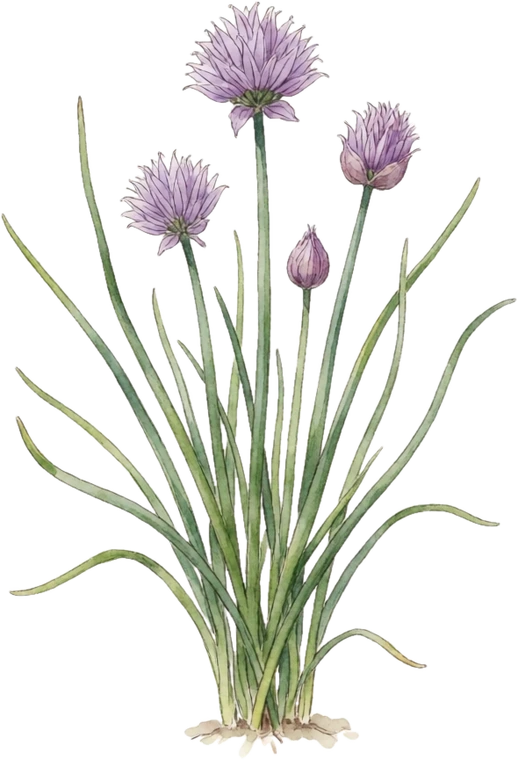
Botanical illustration of Chives

Chives break ground in March when the garden is still asleep and hold a spot of green until December — the longest-serving herb in the yard. Come spring they crown themselves with purple pom-pom blooms that bees mob and cooks scatter over everything.

Neat enough to edge a bed, hardy through zones 3-9, and back every year without being asked, chives are as close to free as gardening gets. One caution: like all alliums they're for people, not pets. Line a sunny path and snip forever.

Where to buy chives — 7 nurseries compared

  • Full Sun to Part Shade
  • Moderate water
  • Fast growth
  • Attracts bees
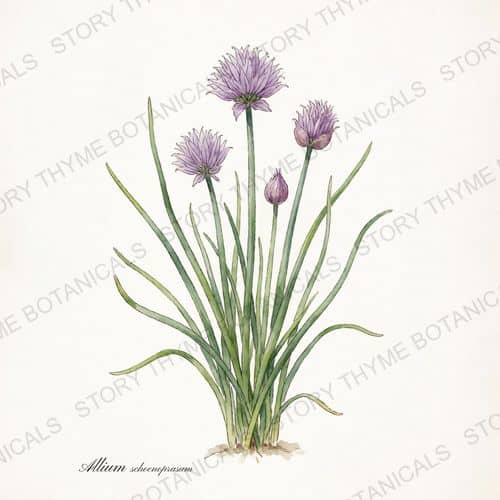
Chives — a print from the Plant Library collection

From the print shop

Growing chives? Hang it.

Our Plant Library collection carries chives — Allium schoenoprasum, print Nº 111, “Chives.”

526 designsfrom $12.99white or black backgroundmatte poster, unframed

Shop Plant Library botanical prints →

✓

Will it fruit where you are?

Enter your ZIP — we look up your USDA hardiness zone (2023 map) and check it against what chives actually needs.

Hardy inZones 3-9

Chives · Common problems

Common chives problems

Pests, diseases and weather to keep an eye on.

Pests

1 problem on file

  • None — actually repels some pests

Diseases

2 problems on file

Chives · Growing & propagation

Growing chives

Light, water, soil, propagation and the season’s jobs.
What it needsThe details
Light
Full Sun to Part Shade
Water
Moderate
Soil
Average, Well-drained · pH 6.0 - 7.0
Fertilizer
Compost topdress spring.
Pruning
None

Shear clumps to 2 inches after bloom — regrows in days, prevents seeding.

Spacing
8-12 inches

How to plant & propagate chives

Propagate
Division or seed

Chives · Seasonal care & spray guidance

The chives growing playbook

Field-tested instructions for every job chives asks of you, compiled from university extension guidance — in the order the season brings them.

As growth begins

early spring

3 jobs
SowingIn spring

Sow chive seed as early as the soil can be worked

Sow seed a quarter inch deep as early as possible in spring, then thin seedlings to stand 4 to 6 inches apart in all directions. If you are starting indoors, give transplants 6 to 8 weeks of growth before they go out, and set them out once frost danger has passed. Chives are a cool-season perennial and the seed is slow, taking four to six weeks to make a transplant, so an early start is what buys you a harvest the same year rather than the next one.

FeedingIn spring

One light spring feeding, and only if the clump is weakening

Give the bed a very light application of a 5-10-5 fertilizer once each spring. Container and indoor chives get a liquid fertilizer at half the label strength every four to six weeks instead, and nothing at all through winter. An established clump lives off its own bulblets and rarely needs feeding, so the spring application is a correction for a plant that has visibly lost vigor, not a routine. Overfeeding buys soft growth and weak flavor.

DividingIn spring

Split the clump every two to three years in spring

In spring, lift the clump and pull it apart into divisions carrying at least 5 bulblets each, and replant them 6 to 12 inches apart. Let the divisions reestablish for several weeks before you start cutting them again. The bulblets multiply underground until they are crowded shoulder to shoulder, and a congested clump thins out and quits producing. Dividing gives the younger, more vigorous bulbs room, which is why a regularly split planting outyields one left alone.

Just after bloom

as the fruit sets

1 job
PruningAt petal fall

Cut the spent flower stalks at the soil line before seed sets

As the purple pompom flowers fade, cut the flower stalks right off at the soil line. Do this before the heads dry and shatter, not weeks later. The stalks themselves are tough and unpalatable, so they go to the compost rather than the kitchen. Chives self-sow hard enough to seed themselves through a bed, and a clump that is ripening seed diverts energy out of the leaves you actually eat. Cutting the stalks off ends both problems in one pass and pushes the plant back into leaf.

Through summer

the growing season

1 job
What to watch forThrough summer

Check for thrips silvering the leaves in hot weather

In hot dry stretches, look down into the clump for leaves turning silver or gray, twisting, and dying back. That is thrips feeding. On a culinary clump the fix is to shear the planting to within an inch or two of the soil and let it regrow clean, which removes the infested tissue and the harvest in one cut. Thrips rasp the leaf surface and drain the cells, which is what leaves the silvered streaks. Chives are cut and eaten fresh every few weeks, so shearing is both the control and the harvest, and it sidesteps spraying a crop you eat raw.

Harvest time

as it ripens, and picking

1 job
HarvestingAt harvest

Shear the whole clump low rather than picking leaves

Once the leaves are about 6 inches long, cut the plant back to within 1 to 2 inches of the soil with scissors, taking the whole clump rather than tipping the leaves. Expect three or four cuttings the first year, and a cutting roughly monthly in the years after. Chives regrow from the bulblet, so a hard low cut resets the whole clump to fresh tender growth at once. Leaves left standing keep aging and turn tough and fibrous, and tipping them only leaves you a clump of blunt old foliage.

Chives · Calculators & field guides

A little help in the garden.

Calculators for the figures. Field guides for the hands-on work.

Chives · Yearly calendar

The chives year, month by month

What chives asks for, month by month.

Jan

No calendar activity is listed for this month.

MonthJanFebMarAprMayJunJulAugSepOctNovDec
Bloom
Harvest

BloomMay

HarvestMarch to December

What each band means

  • Bloom — flowers open — pollinators working, frost on blossoms is the danger.
  • Harvest — picking time — check ripeness every few days.

These are the species' typical months — expect them a few weeks earlier in warm zones and later in cold ones. Watch the plant, not just the calendar.

Chives · Ecology & uses

Ecology & uses

What it does for the garden, and what it is grown for.
Botanical illustration of Chives

Allium schoenoprasum / A. tuberosum

Chives in the garden system

  • Herbaceous layer perennial
  • Nectary/insectary
Attracts
Bees
Moisture
Facultative / average
Deer
Browsed

Protect young plants

Origin
Introduced

What chives is grown for

! Some parts toxic — see notesToxic to dogs, cats and horses — organosulfur compounds cause Heinz-body haemolytic anaemia; also toxic to cattle, sheep and goats. Cats are the most sensitive.

Use
Culinary
Use
Blooms in salads
Use
Edging
Edible value
3/5

Harvesting & storing chives

March - December, shear as needed.

Edibility, identification, and traditional-use notes here are general reference — not medical or veterinary advice, and not a claim that any plant treats or prevents anything. Medicinal ratings record how strongly a plant features in herbal tradition, nothing more. Never eat or dose a plant you have not positively identified. More on how to use this library.

Chives · Varieties & cultivars

Best chives varieties & cultivars

There are far more than these — the ones below are the named varieties of chives people actually plant.

Named varieties of chives differ in winter-chill needs, ripening time, hardiness, and whether they set fruit on their own — pick one that fits your climate.

4 varieties

PROFUSION

Also known as Profusion

Zones
3-9

A sterile vegetative form, so it is propagated by division rather than seed and never volunteers. Zones given are the species hardiness range, not a cultivar-specific figure.

Where to buy ‘PROFUSION’

Story Thyme Farms may earn a small commission from these links, at no cost to you — it never changes what we recommend.

Sources & plant identity

Know what you’re growing.
See where the knowledge comes from.

Botanical illustration of Chives

Chives

Allium schoenoprasum / A. tuberosum

The plant, at a glance.

Botanical name
Allium schoenoprasum / A. tuberosum
Plant family
Amaryllidaceae
Growth habit
Perennial
Origin
Introduced
USDA plant symbol
ALSC
Invasive risk
Low
Every garden is different.

Hardiness, size and timing vary with your cultivar, soil and climate.

Rooted in research.

University extension research, brought together with hands-on growing experience at Story Thyme Farms.

Explore Chives’s sources3 reference links
for Chives

Research from these sources

Publisher marks identify sources, not sponsorship or endorsement.

Questions

Chives questions, answered straight.

Is chives safe for kids and pets?

With care. Toxic to dogs, cats and horses — organosulfur compounds cause Heinz-body haemolytic anaemia; also toxic to cattle, sheep and goats. Cats are the most sensitive. Site it accordingly if children or pets roam the garden. This is general reference, not medical or veterinary advice — call a vet or poison control if something has actually been eaten.

When do you harvest chives?

March - December, shear as needed.

How do you propagate chives?

Division or seed.

Elsewhere

Where chives sits in the library.

Where chives sits in the library

Grows in the same world