The illustrated growing guide

Creeping Thyme

Thymus serpyllum

Family Lamiaceae

Est. zones 4-9

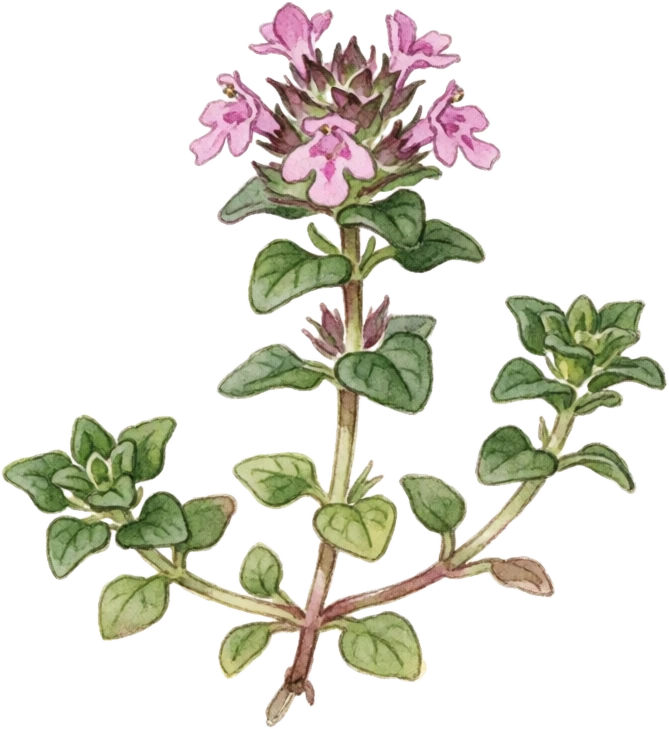
Botanical illustration of Creeping Thyme
Perennial · Thymus serpyllum

The flagstone-path plant: steppable, drought-proof, thyme-scented at every footfall, and a June bee festival. It replaces lawn in small sunny areas — but only where a hose never reaches.

PerennialFull SunLow waterSlow-Moderate growthAttracts bees

Where to buy the plant — 3 nurseries

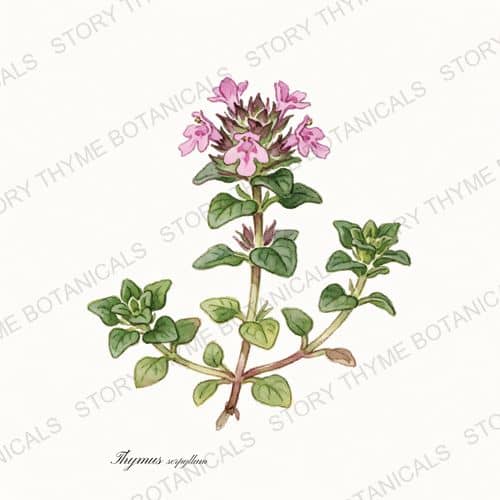
Thyme — a print from the Kitchen & Orchard collection

From the print shop

The closest print we make

We don’t print Thymus serpyllum. The closest we have is Thymus vulgaris (“Thyme”) in the Kitchen & Orchard collection — the same genus, Thymus, not the same species.

16 designsfrom $21.99white or black groundmatte poster, unframed

Shop Kitchen & Orchard botanical prints →

I

Overview

Will creeping thyme suit your garden, and what goes wrong.

Will it fruit where you are?

Enter your ZIP — we look up your USDA hardiness zone (2023 map) and check it against what creeping thyme actually needs.

Hardy inZones 4-9

Creeping Thyme at a glance

HardinessUSDA 4–9
Mature size2-3 in mat
PollinationBee carpet in bloom — audible
Chill requirementNot yet established
Bloom seasonJune - July (pink-purple haze)
Harvest seasonCulinary in a pinch (milder than bush thyme)
Growth rateSlow-Moderate

Common creeping thyme problems

  • None
  • Root Rot in irrigated clay (the usual death)

II

Growing

Light, water, soil, propagation and the season’s jobs.

How to grow creeping thyme: light, water & soil

LightFull Sun
WaterVery low — irrigation is the main killer
SoilSandy, gritty, sharp drainage · pH 6.0 - 8.0
FertilizerNever
PruningAfter bloom, shear lightly — One post-bloom shear keeps mats dense.
Spacing8-12 in (fills in 2 seasons)

How to plant & propagate creeping thyme

PropagateDivision or seed

The creeping thyme growing playbook

Field-tested instructions for every job creeping thyme asks of you, compiled from university extension guidance — in the order the season brings them.

Dividing

Divide established mats in spring

In spring, lift the whole root ball of an established plant and pull or cut it into smaller parts, making sure every piece keeps rootlets attached. Replant the divisions 8 to 12 inches apart in gritty, well drained soil and water them in. Thyme is slow and erratic from seed and can take years to fill in, but division carries mature roots and true-to-type growth, so it re-establishes fast. It is also the cheapest way to renew a patch that has gone woody, using the young outer growth and discarding the old center.

Pruning

Cut the mat back hard in spring to fight woodiness

As new growth starts in spring, shear the mat back hard, cutting into the older stems but leaving some green shoots on each one. Do this every few years, or yearly on patches that have gone bare and twiggy in the middle. Creeping thyme is a sub-shrub: its stems lignify with age, and old wood carries few leaves, so an unpruned mat thins to bare wood at the center while it creeps outward. Cutting back forces fresh leafy growth from the base before the plant has to be replaced.

What to watch for

Watch for melt-out in humid heat, and mites in dry heat

Through hot, humid stretches, check the mat for patches that brown and collapse from the center. Shear the affected plants back rather than pulling them: melted-out thyme usually recovers from a hard cutback. Only dig out a plant whose crown has actually rotted through, and fix the drainage before replanting that spot by working in coarse grit or raising the bed. Separately, in hot, DRY stretches look on the undersides of leaves for the fine stippling and webbing of spider mites, and knock them back with a hose spray and by relieving drought stress. Thyme evolved on thin, rocky, dry ground and has no tolerance for wet feet, so warm wet soil invites root rot and the mat melts out from the center; Iowa State reports that cutting plants back helps them recover, so a collapse is not automatically a death sentence, and only a crown that has truly rotted needs replacing. Spider mites run the opposite way, building up on plants already stressed by hot, dry weather rather than humid weather.

Do not spray an insecticide on thyme in bloom -- creeping thyme flowers June-July, squarely inside this scouting window, and the flowers are heavily worked by bees and butterflies. Mite outbreaks here are driven by heat and drought stress, which watering, hosing off, and shade address rather than a spray.

Harvesting

Cut for the kitchen just before the flowers open

When the flower buds have formed but before they open, cut the leafy stem tips on a dry morning, before midday heat. Hang the cuttings in small bunches in a dark, warm, well ventilated place to dry. The essential oils that carry thyme's flavor peak in the leaves just before bloom, then drop as the plant shifts its energy into flowering and seed. Cutting on a dry morning after the dew has burned off but before the day's heat means the oils are still in the leaf and the foliage is dry enough not to mold as it dries.

III

The year

What creeping thyme asks for, month by month.

The creeping thyme year, month by month

MonthJanFebMarAprMayJunJulAugSepOctNovDec
Bloom

What each band means

  • Bloomflowers open — pollinators working, frost on blossoms is the danger.

The creeping thyme year as text

  • Jan quiet month
  • Feb quiet month
  • Mar quiet month
  • Apr quiet month
  • May quiet month
  • Jun bloom
  • Jul bloom
  • Aug quiet month
  • Sep quiet month
  • Oct quiet month
  • Nov quiet month
  • Dec quiet month

These are the species' typical months — expect them a few weeks earlier in warm zones and later in cold ones. Watch the plant, not just the calendar.

IV

Ecology & uses

What it does for the garden, and what it is grown for.

Creeping Thyme in the garden system

  • Groundcover layer perennial
  • Nectary/insectary
  • Living mulch
AttractsBees
HabitatDry/rocky
MoistureUpland / dry
DeerBrowsed — protect young plants
OriginIntroduced

What creeping thyme is grown for

✓ Commonly eaten

UsePath joints
UseLawn alternatives
UseRock gardens
Edible value3/5

Harvesting & storing creeping thyme

Culinary in a pinch (milder than bush thyme).

Edibility, identification, and traditional-use notes here are general reference — not medical or veterinary advice, and not a claim that any plant treats or prevents anything. Medicinal ratings record how strongly a plant features in herbal tradition, nothing more. Never eat or dose a plant you have not positively identified. More on how to use this library.

V

Cultivars

Named varieties of creeping thyme, ruled as a catalogue.

Best creeping thyme varieties & cultivars

'Elfin' (tightest, for path cracks); 'Coccineus' (magenta); woolly thyme (silver, softest, rarely blooms)

VI

Sources & plant ID

Where the care distinctions come from, and how the plant is filed.

Research basis

Sources behind this profile

No extension citations are attached to creeping thymeyet. The care figures below come from the library's own catalogue rather than a traced primary source.

Plant ID

BinomialThymus serpyllum
FamilyLamiaceae
TypePerennial
USDA symbolTHSE
OriginIntroduced
Invasive riskLow

VII

Where to buy

Third-party nurseries — not Story Thyme Farms.

Third-party nurseries, not Story Thyme Farms. Prices are theirs.

Story Thyme Farms may earn a small commission from these links, at no cost to you — it never changes what we recommend.

VIII

Questions

Creeping Thyme questions, answered straight.

Is creeping thyme safe for kids and pets?

Creeping Thyme is commonly eaten and isn't considered toxic, but "commonly eaten" isn't a guarantee for any particular person or animal — allergies, quantity, and which part you eat all matter. Never eat a plant you haven't positively identified, and check with a vet before letting pets or livestock graze anything new.

When do you harvest creeping thyme?

Culinary in a pinch (milder than bush thyme).

How do you propagate creeping thyme?

Division or seed.

IX

Elsewhere

Where creeping thyme sits in the library.

Where creeping thyme sits in the library

Grows in the same world