Ginger

Zingiber officinale

Family Zingiberaceae

PerennialZones 9-11

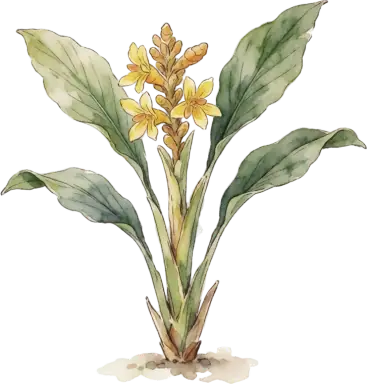
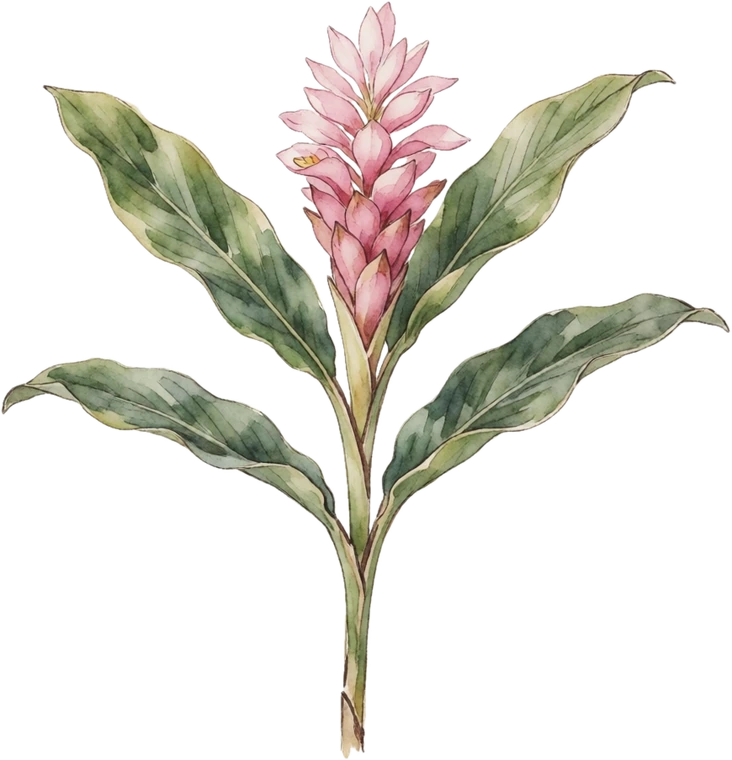
Botanical illustration of Ginger

Fresh baby Ginger — pink-tipped, tender, no peeling required — is a crop most Americans have never tasted, and one pot grows pounds of it. Started on a windowsill in March, a single grocery-store rhizome becomes an October harvest that stocks the freezer for a year of tea and stir-fry.

The plant itself is a graceful two-to-four-foot stand of bamboo-like canes, happiest in the bright shade of a porch or patio — a jungle-floor plant that treats a big pot as home. It's the easy first step into growing potted tropical edibles. Sprout a knob and see.

Where to buy ginger — 4 nurseries compared

  • Bright shade / morning sun
  • Moderate water
  • Slow start growth
  • Excellent edible
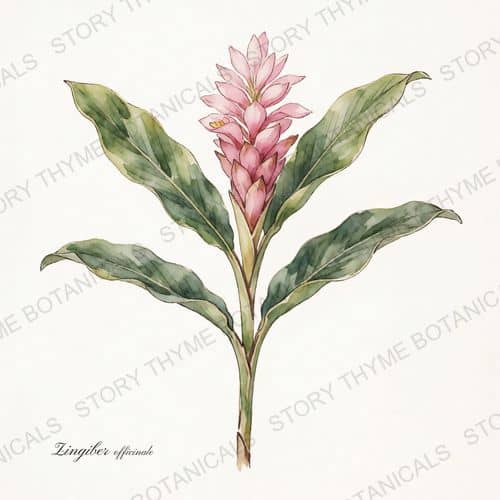
Ginger — a print from the Plant Library collection

From the print shop

Growing ginger? Hang it.

Our Plant Library collection carries ginger — Zingiber officinale, print Nº 204, “Ginger.”

526 designsfrom $12.99white or black backgroundmatte poster, unframed

Shop Plant Library botanical prints →

✓

Will it fruit where you are?

Enter your ZIP — we look up your USDA hardiness zone (2023 map) and check it against what ginger actually needs.

Life cyclePerennial zones 9–11, annual elsewhere

Ginger · Common problems

Common ginger problems

Pests, diseases and weather to keep an eye on.

Pests

1 problem on file

  • Almost none in pots

Diseases

1 problem on file

  • Rhizome rot in cold wet soil

Ginger · Growing & propagation

Growing ginger

Light, water, soil, propagation and the season’s jobs.
What it needsThe details
Light
Bright shade / morning sun

A jungle floor plant

Water
Moderate-High in growth

Dry in dormancy

Soil
Rich, loose, compost-heavy · pH 5.5 - 6.5
Fertilizer
Monthly liquid feed in season
Pruning
None

Hill compost over rhizome shoulders as they swell (like potatoes).

Spacing
Plant store rhizomes 4 in apart in a wide tub, MARCH indoors

How to plant & propagate ginger

Propagate
Division or seed

Ginger · Seasonal care & spray guidance

The ginger growing playbook

Field-tested instructions for every job ginger asks of you, compiled from university extension guidance — in the order the season brings them.

As growth begins

early spring

2 jobs
SowingIn spring

Pre-sprout seed rhizomes indoors before your last frost

About 6 to 8 weeks before your last frost date, cut dormant rhizomes into 1 to 3 ounce pieces, each with 1 or 2 growing points, and let the cut faces cure at least 48 hours until they callus. Nest the pieces 2 inches apart in moist coconut coir or potting mix on a heat mat held near 76F, misting every 24 to 48 hours and letting the surface dry every third day. Roots and green tips appear in 3 to 4 weeks. Ginger needs roughly 6 warm months to size up a rhizome, which is longer than the frost-free season almost anywhere in the mainland US, so the crop only finishes if you steal the first weeks indoors. The 48-hour cure matters because an open cut face on a wet rhizome is an invitation to rot.

Planting outIn spring

Transplant once soil hits 55F and the cold is truly done

Move sprouts out when about half of them show green shoots several inches tall, soil temperature is at least 55F, and no sub-45F weather appears in the two-week forecast. Harden off the flat for 7 to 10 days first. Set pieces 2 to 4 inches deep with buds pointing up, spaced about 6 to 10 inches apart, in loose well-drained sandy loam rich in organic matter at pH 5.5 to 7. Ginger is a tropical that wants 78 to 95F and is outright killed by frost. Cold wet soil early stalls the plant and rots seed pieces, so the two-week forecast check protects the whole crop. Go by soil temperature rather than a calendar date: extension transplant dates are written for one region and do not travel.

Through summer

the growing season

4 jobs
WateringIn summer

Keep it evenly moist, never waterlogged

Water lightly and often while plants establish, then hold the soil around 60 to 80 percent of field capacity for best yields. Do not let plants dry out while they are actively growing. As the weather cools toward the end of the season, cut watering back. Ginger is shallow-rooted and stalls when dry, but free-draining soil matters just as much: waterlogged rhizomes rot, and wet ground favors the bacterium behind ginger wilt, which is why extension calls for a well-drained site. Growth slows as soil cools, so the crop needs less water late in the season.

MulchingIn summer

Hill soil over the rhizomes as the clump expands

Starting about 30 days after planting, ridge soil or compost up around the base of the plants to cover the root collar, much as you would earth up potatoes. Repeat as the clump expands and shoulders work their way back to the surface. Earthing up to cover the root collar maximizes rhizome quality, and rhizome shoulders left exposed to light lose eating and market quality. Hilled rows also shed water faster, which suits a crop that will not tolerate standing water.

FeedingIn summer

Feed monthly through the growing season

Correct lime, phosphorus and potassium from a soil test before planting and work in compost. Once growing, apply nitrogen monthly at roughly 40 pounds per acre equivalent, or a balanced liquid feed every few weeks in containers. Ginger carries a single long push of growth over 5 or 6 months with no rest, and beginning growers routinely underfeed it, which shows up directly as a small rhizome.

What to watch forIn summer

Watch for bacterial wilt and treat it as a seed and soil problem

Walk the planting for yellowing, drooping leaves and stems that collapse without spotting. Pull and remove suspect plants along with the soil around them, and keep off wet infested ground. Buy seed from a supplier that tests for the pathogen, plant on well-drained ground with no previous history of ginger, never site a bed downslope of another ginger planting where runoff can carry the bacterium in, and bring no soil-caked tools, boots or equipment onto the site. Bacterial wilt is caused by Ralstonia solanacearum. UH CTAHR (SCM-8) reports it is present systemically in seed rhizomes as both an active and a latent infection that contaminates seed-pieces when they are cut for planting, so it arrives on the seed rather than blowing in, and it cost Hawaii a 45 percent statewide production loss in 1993. It also spreads on infested soil clinging to hands, boots, tools, tires and equipment, and in irrigation or rain water.

Harvest time

as it ripens, and picking

1 job
HarvestingAt harvest

Lift baby ginger before the first frost

Baby ginger is ready about 4 to 5 months after transplanting under cover, or 5 to 6 months in the open field. Loosen the soil with a shovel, uproot whole plants steadily by the leaves, then cut the pseudostems and roots free of the rhizomes with a hand pruner and wash them. The skin is thin and bruises easily, so handle gently and skip peeling. Mature ginger needs 8 to 12 months, which usually means holding pots somewhere frost-free. Ginger is very sensitive to cold and is killed by frost, so the first freeze is a hard deadline rather than a signal. Pink-tipped baby ginger needs no peeling, but it stores only about 3.5 months refrigerated, against 6 to 12 months for mature rhizomes.

After harvest

autumn, and putting it to bed

1 job
ProtectionIn autumn

Bring containers in below 50F and let them go dormant dry

Outside zones 9 to 11, move potted ginger indoors once nighttime temperatures drop below 50F. A 14-inch pot holds about three rhizomes. Once the plant drops its leaves for winter, stop watering entirely and resume only when new shoots push in spring. Ginger needs soil above 68F to grow at all and simply idles below that, so a dormant leafless rhizome is doing no work and cannot use water. Watering it then just rots it.

Ginger · Calculators & field guides

A little help in the garden.

Calculators for the figures. Field guides for the hands-on work.

Ginger · Yearly calendar

The ginger year, month by month

What ginger asks for, month by month.

Jan

No calendar activity is listed for this month.

MonthJanFebMarAprMayJunJulAugSepOctNovDec
Harvest

HarvestSeptember to October

What each band means

  • Harvest — picking time — check ripeness every few days.

These are the species' typical months — expect them a few weeks earlier in warm zones and later in cold ones. Watch the plant, not just the calendar.

Ginger · Ecology & uses

Ecology & uses

What it does for the garden, and what it is grown for.
Botanical illustration of Ginger

Zingiber officinale

Ginger in the garden system

  • Root layer perennial
Moisture
Facultative / average
Deer
Browsed

Protect young plants

Origin
Introduced

What ginger is grown for

✓ Commonly eatenit's ginger

Use
Baby ginger
Use
Tea
Use
Stir-fry
Use
Candying
Edible value
4/5
Traditional use rating
3/5 in herbal tradition

Harvesting & storing ginger

'Baby ginger' September - October (pink-tipped, no peel needed); or hold pots to frost for mature rhizomes.

Edibility, identification, and traditional-use notes here are general reference — not medical or veterinary advice, and not a claim that any plant treats or prevents anything. Medicinal ratings record how strongly a plant features in herbal tradition, nothing more. Never eat or dose a plant you have not positively identified. More on how to use this library.

Ginger · Varieties & cultivars

Choosing a ginger variety

Match the plant to your climate, season and available space.

Grocery organic rhizomes sprout fine; 'Bubba Baba' (big baby-ginger strain)

Sources & plant identity

Know what you’re growing.
See where the knowledge comes from.

Botanical illustration of Ginger

Ginger

Zingiber officinale

The plant, at a glance.

Botanical name
Zingiber officinale
Plant family
Zingiberaceae
Growth habit
Perennial · Tender Perennial
Origin
Introduced
USDA plant symbol
ZIOF
Invasive risk
Low
Every garden is different.

Hardiness, size and timing vary with your cultivar, soil and climate.

Rooted in research.

University extension research, brought together with hands-on growing experience at Story Thyme Farms.

Explore Ginger’s sources3 reference links
for Ginger

Research from these sources

Publisher marks identify sources, not sponsorship or endorsement.

Questions

Ginger questions, answered straight.

Is ginger safe for kids and pets?

Ginger is commonly eaten and isn't considered toxic, but "commonly eaten" isn't a guarantee for any particular person or animal — allergies, quantity, and which part you eat all matter. One caveat on this one: it's ginger. Never eat a plant you haven't positively identified, and check with a vet before letting pets or livestock graze anything new.

When do you harvest ginger?

'Baby ginger' September - October (pink-tipped, no peel needed); or hold pots to frost for mature rhizomes.

How do you propagate ginger?

Division or seed.

Elsewhere

Where ginger sits in the library.

Where ginger sits in the library

Grows in the same world