The illustrated growing guide

Hazelnut

Corylus americana

Family Betulaceae

Est. zones 4-9

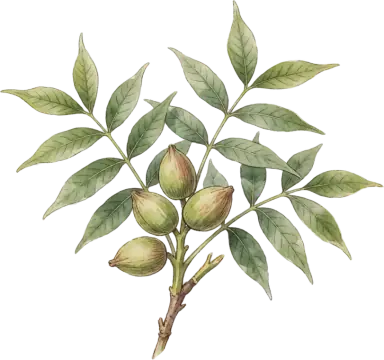
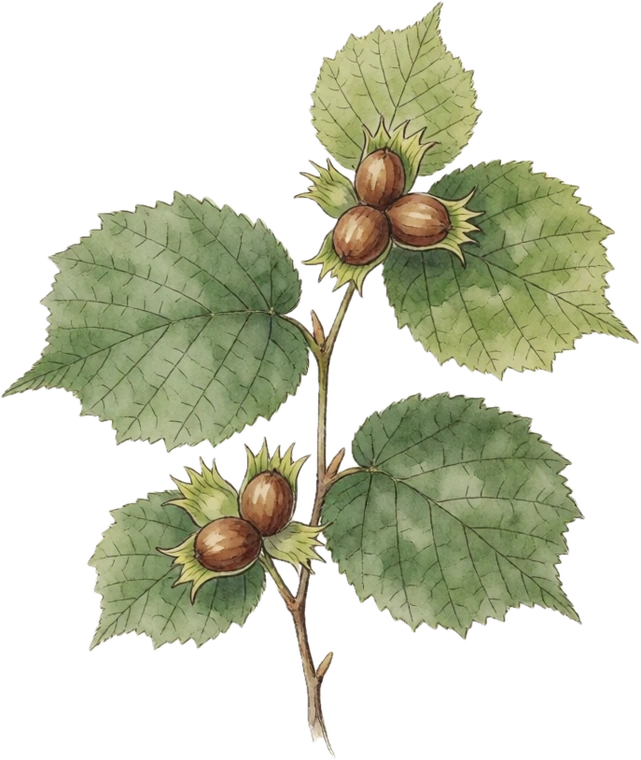
Botanical illustration of Hazelnut
Shrub · Corylus americana

Native = small nuts + total blight immunity; hybrids = bigger nuts, mostly resistant. Harvest when husks brown but BEFORE squirrels — one weekend late is total loss. Great multipurpose hedge.

Shrub · NativeFull SunDrought-tolerant · low waterModerate growthNative to North AmericaExcellent edible800-1200 winter chill (unconfirmed)Needs a pollination partner

Where to buy the plant — 1 nursery

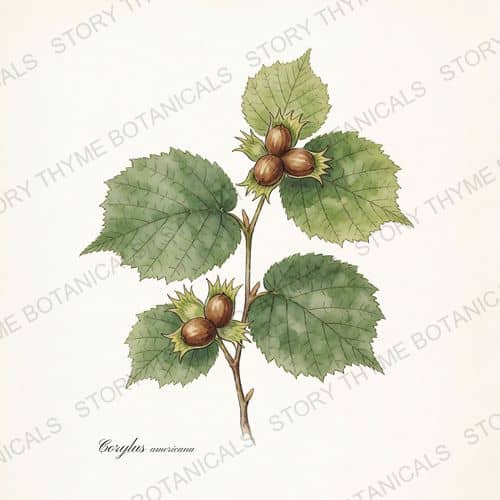
Hazelnut — a print from the Nut Trees collection

From the print shop

The closest print we make

We don’t print Corylus americana. The closest we have is Corylus avellana (“Hazelnut”) in the Nut Trees collection — the same genus, Corylus, not the same species.

16 designsfrom $21.99white or black groundmatte poster, unframed

Shop Nut Trees botanical prints →

I

Overview

Will hazelnut suit your garden, and what goes wrong.

Will it fruit where you are?

Enter your ZIP — we look up your USDA hardiness zone (2023 map) and check it against what hazelnut actually needs.

Hardy inZones 4-9
Winter chill800-1200
Unconfirmed

Commonly quoted, but we have not traced this range to a university extension trial or another primary source, and published figures for the same plant often disagree. Chill-hour requirements were only ever established by trial for a handful of commercial fruit crops; for most species the work was never funded. Treat it as a starting point and check your local extension office before you plant on it.

PollinationPartner needed

Hazelnut at a glance

HardinessUSDA 4–9
Mature size8-15 ft multi-stem shrub
PollinationWind-pollinated, NOT self-fertile — plant 2+ genetically distinct
Chill requirement800-1200
Unconfirmed

Commonly quoted, but we have not traced this range to a university extension trial or another primary source, and published figures for the same plant often disagree. Chill-hour requirements were only ever established by trial for a handful of commercial fruit crops; for most species the work was never funded. Treat it as a starting point and check your local extension office before you plant on it.

Bloom seasonVery Early Spring (catkins)
Harvest seasonSeptember (squirrel race)
Growth rateModerate

Common hazelnut problems

  • Squirrels/Chipmunks/Jays (the harvest)
  • Filbertworm
  • Japanese Beetle
  • Eastern Filbert Blight (natives resist; European cultivars die)
  • Poor pollination → low fruit set (plant a partner)

II

Growing

Light, water, soil, propagation and the season’s jobs.

How to grow hazelnut: light, water & soil

LightFull Sun (fruits poorly in shade)
WaterModerate; drought-tolerant established
SoilAdaptable Well-drained · pH 6.0 - 7.0
FertilizerLight balanced feed young; none mature.
PruningLate Winter — Coppice oldest stems to ground every few years; or thin to tree form.
Spacing4-6 ft (hedge) or 15 ft (specimen)

How to plant & propagate hazelnut

PropagateGrafted, or from cuttings/layering (seed won't come true)

The hazelnut growing playbook

Field-tested instructions for every job hazelnut asks of you, compiled from university extension guidance — in the order the season brings them.

Planting out

Plant at least two unrelated hazelnuts, or you get no nuts

Set bare-root dormant plants in spring on a site with good air drainage, not a frost pocket, and plant at least two genetically different hazelnuts rather than two divisions of the same clone. Space them 15 to 20 feet apart in an orchard planting, closer if you are growing them as a hedgerow shrub. Hazelnuts are self-incompatible: pollen from a plant cannot fertilize the female flowers on that same plant, so a lone shrub or a block of one clone flowers heavily and sets nothing. Pollen also travels on wind, not bees, so partners need to be close and their bloom has to overlap.

Watering

Deep-water new plants through their first two summers

Give newly installed hazelnuts supplemental irrigation for at least their first two years. Water deeply and periodically, then let the soil in and around the root zone dry moderately before watering again. Do not plant them in turf and water them on the lawn's schedule. A young hazelnut's roots have not yet reached beyond the planting hole, and the deep-then-dry rhythm pulls roots downward instead of holding them in a constantly wet surface layer where this species, which demands good drainage, is prone to root rot.

Feeding

Feed only in spring, and only if the plant asks for it

If the shrub is growing weakly or yielding poorly, apply fertilizer in spring as growth begins. If it looks healthy and is carrying a decent crop, skip it - no fertilizer is needed. Let a soil test rather than a calendar decide the rate. Hazelnut is fertilized in spring because that is when it is actively taking nutrients up and can use them; feeding later in the season pushes soft growth instead of nuts.

Pruning

Renewal-prune about a sixth of the oldest stems while dormant

While the plant is dormant and leafless, cut 15 to 20 percent of the oldest stems out at ground level, taking the thickest and least productive wood first. If you are keeping a tree form rather than a thicket, also cut the root suckers off around the base; if you want a hedgerow, leave them. American hazelnut is a multi-stemmed shrub that spreads by rhizomes and bears its best nuts on younger wood, so replacing a fraction of the old stems each year keeps the plant in productive wood without ever losing a crop to a hard renovation.

What to watch for

Eastern filbert blight: look for cankers on bare wood

With the leaves off, walk the stems and look for sunken dead cankers carrying rows of black football-shaped bumps, often in pairs. Cut any affected branch off two to three feet below the canker, and disinfect your pruners between cuts for at least 30 seconds in 70 percent alcohol or a 10 percent bleach solution. Burn, deep-bury, or chip and fully dry the prunings. American hazelnut is the fungus's native host and tolerates it - cankers spread slowly or never appear, and the shrub can live almost indefinitely with it. The catch is that your healthy-looking plant is a spore source, and any European hazelnut nearby has no such tolerance and will be killed by it.

Do not put a preventive fungicide program on American hazelnut. The bud-break chlorothalonil schedule is for susceptible European hazelnut; this species does not need it and chlorothalonil requires 120 days between the last application and nut harvest.

Filbertworm: check kernels before you commit to a harvest

As nuts fill and approach ripeness, crack a sample and look for a larva ranging from beige to pink with a dark brown to black head, up to about half an inch long, or for entry holes and frass at the shell. Rake up and destroy fallen and unharvested nuts rather than leaving them on the ground under the plant, which is the cultural control the source gives for keeping numbers from building up. Filbertworm larvae overwinter in organic matter or soil beneath the planting and pupate in a silk cocoon the following spring; the moths emerge late spring to early summer, lay eggs singly that hatch in 8 to 11 days, and the larvae bore into the fruit to feed. Last year's dropped and unharvested nuts are what carry the population into this year, so sanitation under the plant is the lever a home grower actually has.

Harvesting

Handpick once the husks brown, and keep going back

Nuts ripen from late September through October depending on your site. Handpick clusters after the surrounding husks have browned, and collect the dropped nuts from the ground several times a week rather than waiting for one tidy harvest day. Ripe nuts usually drop to the ground upon ripening rather than holding on the plant, so a single harvest day loses the crop to the ground and to squirrels, which prize native hazelnuts heavily. Repeated handpicking of browned-husk clusters plus frequent ground collection is what puts the crop in your basket.

Dry the nuts within days of picking

Dry hazelnuts soon after harvest at 95 to 105 degrees F for 72 to 96 hours. Spread them in a single shallow layer with air moving through, and do not exceed that temperature range. Freshly picked nuts carry enough moisture in the kernel to mold or go rancid in storage, and this is the window where a good crop is either kept or lost. Too much heat instead of too much time will cook the oils and ruin the flavor.

III

The year

What hazelnut asks for, month by month.

The hazelnut year, month by month

MonthJanFebMarAprMayJunJulAugSepOctNovDec
Bloom
Prune
Harvest

What each band means

  • Bloomflowers open — pollinators working, frost on blossoms is the danger.
  • Pruneshape it now — cuts heal cleanly and structure is visible.
  • Harvestpicking time — check ripeness every few days.

The hazelnut year as text

  • Jan quiet month
  • Feb pruning
  • Mar bloom, pruning
  • Apr bloom
  • May quiet month
  • Jun quiet month
  • Jul quiet month
  • Aug quiet month
  • Sep harvest
  • Oct quiet month
  • Nov quiet month
  • Dec quiet month

These are the species' typical months — expect them a few weeks earlier in warm zones and later in cold ones. Watch the plant, not just the calendar.

IV

Ecology & uses

What it does for the garden, and what it is grown for.

Hazelnut in the garden system

  • Shrub layer shrub
  • Keystone: Keystone — hosts 130+ caterpillar species
AttractsBirds
MoistureFacultative / average
DeerBrowsed — protect young plants
OriginNative to North America

What hazelnut is grown for

✓ Commonly eatentree-nut allergen

UseNuts
UseHedge
UseWildlife
Edible value4/5

Harvesting & storing hazelnut

September (squirrel race).

Edibility, identification, and traditional-use notes here are general reference — not medical or veterinary advice, and not a claim that any plant treats or prevents anything. Medicinal ratings record how strongly a plant features in herbal tradition, nothing more. Never eat or dose a plant you have not positively identified. More on how to use this library.

V

Cultivars

Named varieties of hazelnut, ruled as a catalogue.

Best hazelnut varieties & cultivars

3 on file

Named varieties of hazelnut differ in winter-chill needs, ripening time, hardiness, and whether they set fruit on their own — pick one that fits your climate.

Rush

Needs a pollinizer
RipensSeptember-OctoberZones4-9Diseaseresistant to eastern filbert blight (carries the 'Rush' R-gene)Sizemulti-stemmed shrub

A Pennsylvania selection of the native species. Rutgers notes that very few clonal Corylus americana cultivars have ever been selected, and that Rush, along with Winkler from Iowa, was among the few available from nurseries. It is the American parent behind hybrids including Slate (Rush x Barcelona) and Gene (Rush x Red Lambert), and the source of the R-gene carrying eastern filbert blight resistance into them. MU Extension names Rush as one of two options for home growers wanting a cold-selected American hazelnut. Self-incompatible like all hazelnuts - plant a second, genetically different hazelnut.

Where to buy ‘Rushverified

Story Thyme Farms may earn a small commission from these links, at no cost to you — it never changes what we recommend.

Winkler

Needs a pollinizer
RipensSeptember-OctoberZones4-9Sizeshrub

An Iowa selection of the native species. Rutgers notes that very few clonal Corylus americana cultivars have been selected, and that Winkler, along with Rush from Pennsylvania, was among the few available from nurseries. MU Extension names Winkler as one of two options for home growers who want an American hazelnut selected to withstand colder climates. Nursery catalogs often call it self-fertile, but extension sources are clear that hazelnuts are self-incompatible - plant a second, genetically different hazelnut regardless.

Where to buy ‘Winkler

Story Thyme Farms may earn a small commission from these links, at no cost to you — it never changes what we recommend.

Slate · NY 616

Needs a pollinizer
RipensSeptember-OctoberZones6a-7bDiseaseresistant to eastern filbert blight in New Jersey trialsSizelarge shrub to small tree

A hybrid of American hazelnut Rush crossed with European Barcelona, bred to pair the native species' blight resistance with European nut size. Not a pure Corylus americana - treat its zone range as the hybrid's, narrower than the native species.

Where to buy ‘Slate

Story Thyme Farms may earn a small commission from these links, at no cost to you — it never changes what we recommend.

VI

Sources & plant ID

Where the care distinctions come from, and how the plant is filed.

Research basis

Sources behind this profile

No extension citations are attached to hazelnutyet. The care figures below come from the library's own catalogue rather than a traced primary source.

Plant ID

BinomialCorylus americana
FamilyBetulaceae
TypeShrub · Perennial
USDA symbolCOAM3
OriginNative to North America
Invasive riskLow

VII

Where to buy

Third-party nurseries — not Story Thyme Farms.

Third-party nurseries, not Story Thyme Farms. Prices are theirs.

Story Thyme Farms may earn a small commission from these links, at no cost to you — it never changes what we recommend.

Hazelnut needs a pollination partner — plant two genetically distinct plants (two different cultivars, or a cultivar plus a seedling).

VIII

Questions

Hazelnut questions, answered straight.

Why isn't my hazelnut fruiting?

Most often: it has no genetically distinct partner nearby. Hazelnut can't pollinate itself — wind-pollinated, not self-fertile — plant 2+ genetically distinct. Plant a second, unrelated one nearby; two different cultivars, or a cultivar plus a seedling, is the classic pairing.

Will hazelnut fruit in a warm-winter climate?

Hazelnut needs roughly 800-1200 hours of winter chill (hours between 32–45°F) to break dormancy and set fruit. That range is commonly quoted but we have not traced it to a university extension trial, and published figures for this plant disagree — treat it as a starting point and check your local extension office. Mild-winter growers should count their chill hours before planting.

Is hazelnut safe for kids and pets?

Hazelnut is commonly eaten and isn't considered toxic, but "commonly eaten" isn't a guarantee for any particular person or animal — allergies, quantity, and which part you eat all matter. One caveat on this one: tree-nut allergen. Never eat a plant you haven't positively identified, and check with a vet before letting pets or livestock graze anything new.

When do you harvest hazelnut?

September (squirrel race).

IX

Elsewhere

Where hazelnut sits in the library.

Where hazelnut sits in the library

Grows in the same world