The illustrated growing guide

Horseradish

Armoracia rusticana

Family Brassicaceae

Est. zones 3-9

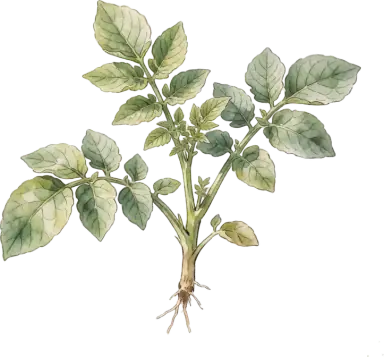
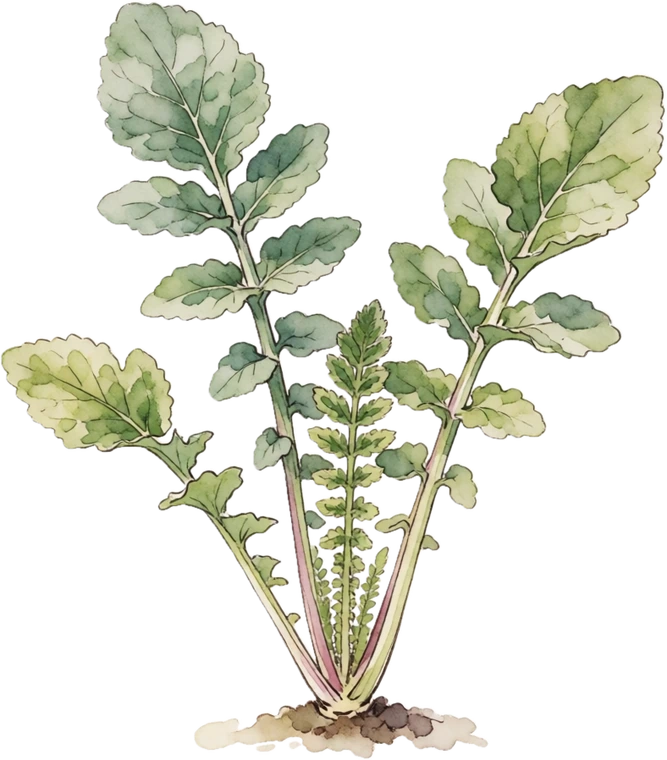
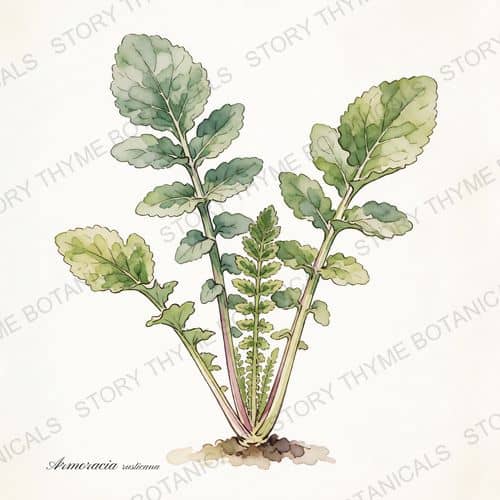
Botanical illustration of Horseradish
Perennial · Armoracia rusticana

CONTAIN IT — every root scrap regrows; site it like mint with a shovel-barrier or dedicated bed. Dig after hard frost for maximum heat. Grate outdoors, seriously.

PerennialFull Sun to Part ShadeModerate waterFast growthExcellent edibleAttracts bees

⚠ Spreads aggressivelyHorseradish spreads vigorously and regrows from bits of root, so it's very hard to fully remove once established — give it a contained bed or a spot where it can roam freely, and edge it every year.

Where to buy the plant — 2 nurseries

I

Overview

Will horseradish suit your garden, and what goes wrong.

Will it fruit where you are?

Enter your ZIP — we look up your USDA hardiness zone (2023 map) and check it against what horseradish actually needs.

Hardy inZones 3-9

Horseradish at a glance

HardinessUSDA 3–9
Mature size2-3 ft leaves
PollinationNone (root cuttings)
Chill requirementNot yet established
Bloom seasonEarly Summer (sterile)
Harvest seasonOctober - November, after frost
Growth rateFast

Common horseradish problems

II

Growing

Light, water, soil, propagation and the season’s jobs.

How to grow horseradish: light, water & soil

LightFull Sun to Part Shade
WaterModerate; wants steady moisture for fat roots
SoilDeep, Rich, Loose · pH 6.0 - 7.0
FertilizerCompost in spring. Little else.
PruningNone — None.
Spacing24-30 inches

How to plant & propagate horseradish

PropagateDivision or seed

The horseradish growing playbook

Field-tested instructions for every job horseradish asks of you, compiled from university extension guidance — in the order the season brings them.

Sowing

Plant root sets as soon as the soil is workable

Spade or rototill 8 to 10 inches deep and work in well-decayed compost. Set 8 to 10 inch root cuttings a foot apart, angled at about 45 degrees with the fat end up, and cover the top with 2 to 3 inches of soil. Sink a bottomless tub or a 12 inch wide section of PVC around the planting if you do not want it to run. Horseradish makes its root growth in the long cool stretch before summer, so a set that goes in late never sizes up. It also spreads by underground shoots and out-competes almost everything near it, which is why growers confine it from day one rather than fight it later.

Skip fresh manure. It drives leafy top growth and forks the root into a knot of side branches instead of one straight grating root.

Watering

One deep soak a week through the growing season

Give 1 to 2 inches of water once a week, enough to wet the soil 18 to 24 inches down. Water deeply and infrequently rather than in daily sips. The harvestable root sits a foot and a half or more below the surface, and it only chases water that reaches it. Both drought and waterlogging show up directly in the eating quality, turning the root woody or bland.

Do not overwater. Root rot in horseradish is mostly a wet-soil problem, and it is the disease most likely to cost you the crop.

Feeding

Side-dress nitrogen twice in the first two months

Work in a complete garden fertilizer such as 10-10-10 at one pound per 100 square feet at planting, then side-dress about a teaspoon of 21-0-0 per plant at 4 weeks and again at 8 weeks after the sets go in. Follow a soil test where you have one. Horseradish is pulling a large leaf canopy and a thick storage root out of the same season, and the nitrogen it needs for that is spent early. Feeding twice in the first two months carries the canopy that fills the root.

Do not push past these rates. Excess nitrogen makes the plant overgrow on top and branch the root, which is the main quality defect in home-grown horseradish.

Thinning

Lift and strip the roots twice for one straight root

When the largest leaves reach 8 to 10 inches, ease the soil away from the upper root without pulling the plant, rub off every small side root along the crown and sides of the main root, and cut back to the single best crown of leaves. Firm the soil back and repeat the whole operation about six weeks later. Left alone, every side root and every extra crown becomes its own branch, and you dig a tangled mat instead of a root you can grate. Stripping forces the plant to put the season's growth into one main root.

Dividing

Save next year's sets and clear every root fragment

As you dig, cut the straight pencil-thick side roots into 8 to 10 inch sets for next spring, bundle them, and bury them in moist sand at 32 to 40 degrees in a root cellar or basement. Chase down and lift every remaining root piece in the bed, and move the planting to fresh ground every three or four years. Any fragment left behind sprouts next spring, which is how a tidy bed becomes a permanent one you cannot dig out. Rotating the site and replanting only clean, disease-free cuttings is the whole defense against the root rots that build up in horseradish ground.

What to watch for

Watch young plants for flea beetles, then mostly let them be

Check new plantings for the shot-hole peppering of horseradish flea beetles and for imported cabbageworm larvae chewing the leaves. Treatment is warranted only on young plants carrying more than about five beetles each, or where 10 to 30 percent of the leaves on seedlings have dropped. Once plants are past the 4 to 5 leaf stage, damage is generally cosmetic and needs nothing. A floating row cover over young plants excludes the beetles without any spray. Horseradish flea beetles feed on the foliage and not on the root you are actually harvesting, and an established plant carries far more leaf than it needs. Spraying a root crop for cosmetic leaf damage buys nothing.

If pressure on young plants truly crosses the threshold, spinosad and carbaryl are among the active ingredients cleared for garden flea beetles, but confirm the product label lists horseradish and follow its pre-harvest interval before you use it. Pull row covers before any flowering so pollinators can reach the blooms.

Harvesting

Dig after frost has killed the tops

Wait until several frosts have taken the leaves down and the ground is close to freezing, then dig a trench 12 to 24 inches deep along one side of the row and lever the roots out from the opposite side with a spading fork. Expect to need a full 150 day season before the roots are worth digging. Horseradish makes its greatest root growth in late summer and early fall, so every week you wait past Labor Day is adding weight. Frost kills the canopy but the root below is unharmed and at its best flavor.

Keep dug roots in the dark. Light greens the root and spoils it.

III

The year

What horseradish asks for, month by month.

The horseradish year, month by month

MonthJanFebMarAprMayJunJulAugSepOctNovDec
Bloom
Harvest

What each band means

  • Bloomflowers open — pollinators working, frost on blossoms is the danger.
  • Harvestpicking time — check ripeness every few days.

The horseradish year as text

  • Jan quiet month
  • Feb quiet month
  • Mar quiet month
  • Apr quiet month
  • May quiet month
  • Jun bloom
  • Jul quiet month
  • Aug quiet month
  • Sep quiet month
  • Oct harvest
  • Nov harvest
  • Dec quiet month

These are the species' typical months — expect them a few weeks earlier in warm zones and later in cold ones. Watch the plant, not just the calendar.

IV

Ecology & uses

What it does for the garden, and what it is grown for.

Horseradish in the garden system

  • Root layer perennial
  • Dynamic accumulator
AttractsBees
MoistureFacultative / average
DeerBrowsed — protect young plants
OriginIntroduced

What horseradish is grown for

✓ Commonly eatenSafe in food amounts

UseCondiment
Traditional useMedicinal
UseCompanion
Edible value4/5

Harvesting & storing horseradish

October - November, after frost.

Edibility, identification, and traditional-use notes here are general reference — not medical or veterinary advice, and not a claim that any plant treats or prevents anything. Medicinal ratings record how strongly a plant features in herbal tradition, nothing more. Never eat or dose a plant you have not positively identified. More on how to use this library.

V

Cultivars

Named varieties of horseradish, ruled as a catalogue.

Best horseradish varieties & cultivars

7 on file

Named varieties of horseradish differ in winter-chill needs, ripening time, hardiness, and whether they set fruit on their own — pick one that fits your climate.

Common · Maliner Kren

RipensOctober - November, after frostZones3-9DiseaseSusceptible to white rust and turnip mosaic virusSizeLarge, vigorous; largest roots of the common types

Superior eating quality, the benchmark for pungency — The broad crinkled-leaf type long preferred for commercial production and the standard against which other horseradish is judged. Its weakness is disease, not flavor. Days to maturity reflects the 150 day season Utah State gives for horseradish generally.

Where to buy ‘Common

Story Thyme Farms may earn a small commission from these links, at no cost to you — it never changes what we recommend.

Big Top Western

RipensOctober - November, after frostZones3-9DiseaseBred for disease resistance, particularly to turnip mosaic virusSizeLarge roots; wide smooth leaves

Bred to carry the root size growers want without the virus vulnerability of the common type, which makes it the usual pick where turnip mosaic is established. Days to maturity reflects the 150 day season Utah State gives for horseradish generally.

Where to buy ‘Big Top Western

Story Thyme Farms may earn a small commission from these links, at no cost to you — it never changes what we recommend.

New Bohemian

RipensOctober - November, after frostZones3-9DiseaseResistant to white rust and mosaic virusSizeNarrow smooth leaves; roots smaller than the common type

Somewhat lower quality than the common type — A Bohemian type that trades some root size and eating quality for resistance to the two diseases that ruin common horseradish. Days to maturity reflects the 150 day season Utah State gives for horseradish generally.

Where to buy ‘New Bohemian

Story Thyme Farms may earn a small commission from these links, at no cost to you — it never changes what we recommend.

Bohemian Giant

RipensOctober - November, after frostZones3-9DiseaseBohemian type: better disease resistance than common horseradishSizeNarrow smooth leaves; roots smaller than the common type

Somewhat lower quality than the common type — Nebraska Extension names it as a Bohemian cultivar and characterizes the Bohemian type as a group rather than listing traits unique to this variety, so treat it as a Bohemian-type selection. Days to maturity reflects the 150 day season Utah State gives for horseradish generally.

Where to buy ‘Bohemian Giant

Story Thyme Farms may earn a small commission from these links, at no cost to you — it never changes what we recommend.

Sass

RipensOctober - November, after frostZones3-9DiseaseBohemian type: better disease resistance than common horseradishSizeNarrow smooth leaves; roots smaller than the common type

Somewhat lower quality than the common type — Named by Nebraska Extension as a Bohemian cultivar. The source characterizes the Bohemian type as a group rather than listing traits unique to Sass, so treat it as a Bohemian-type selection. Days to maturity reflects the 150 day season Utah State gives for horseradish generally.

Where to buy ‘Sass

Story Thyme Farms may earn a small commission from these links, at no cost to you — it never changes what we recommend.

Swiss

RipensOctober - November, after frostZones3-9DiseaseBohemian type: better disease resistance than common horseradishSizeNarrow smooth leaves; roots smaller than the common type

Somewhat lower quality than the common type — Named by Nebraska Extension as a Bohemian cultivar. The source characterizes the Bohemian type as a group rather than listing traits unique to Swiss, so treat it as a Bohemian-type selection. Days to maturity reflects the 150 day season Utah State gives for horseradish generally.

Where to buy ‘Swiss

Story Thyme Farms may earn a small commission from these links, at no cost to you — it never changes what we recommend.

Variegata · Variegated horseradish

RipensOctober - November, after frostZones3-9SizeSlightly lower vigor than standard green types; may take 2 to 3 years to make a nice stand

Dark green leaves splashed irregularly with cream. Nebraska Extension rates its vigor slightly below the standard green varieties and says it may take 2-3 years from planting to achieve a nice stand. Wisconsin Extension notes the variegation can disappear after transplanting and returns once the plant is well established, and that named varieties are rarely available to homeowners other than this ornamental. Utah State adds that it is less invasive and tolerates partial shade, which makes it the one horseradish worth planting where you cannot contain a running root. Days to maturity left blank because it needs two to three years to establish rather than one season.

Where to buy ‘Variegata

Story Thyme Farms may earn a small commission from these links, at no cost to you — it never changes what we recommend.

VI

Sources & plant ID

Where the care distinctions come from, and how the plant is filed.

Research basis

Sources behind this profile

No extension citations are attached to horseradishyet. The care figures below come from the library's own catalogue rather than a traced primary source.

Plant ID

BinomialArmoracia rusticana
FamilyBrassicaceae
TypePerennial
USDA symbolARRU4
OriginIntroduced
Invasive riskSpreads aggressively

VII

Where to buy

Third-party nurseries — not Story Thyme Farms.

Third-party nurseries, not Story Thyme Farms. Prices are theirs.

Story Thyme Farms may earn a small commission from these links, at no cost to you — it never changes what we recommend.

VIII

Questions

Horseradish questions, answered straight.

Is horseradish safe for kids and pets?

Horseradish is commonly eaten and isn't considered toxic, but "commonly eaten" isn't a guarantee for any particular person or animal — allergies, quantity, and which part you eat all matter. One caveat on this one: Safe in food amounts. Never eat a plant you haven't positively identified, and check with a vet before letting pets or livestock graze anything new.

When do you harvest horseradish?

October - November, after frost.

How do you propagate horseradish?

Division or seed.

Is horseradish invasive?

It can be an aggressive spreader — give it room or a barrier, and check your state's invasive-species list before planting.

IX

Elsewhere

Where horseradish sits in the library.

Where horseradish sits in the library

Grows in the same world