The illustrated growing guide

Sweet Marjoram

Origanum majorana

Family Lamiaceae

Est. zones 9-10

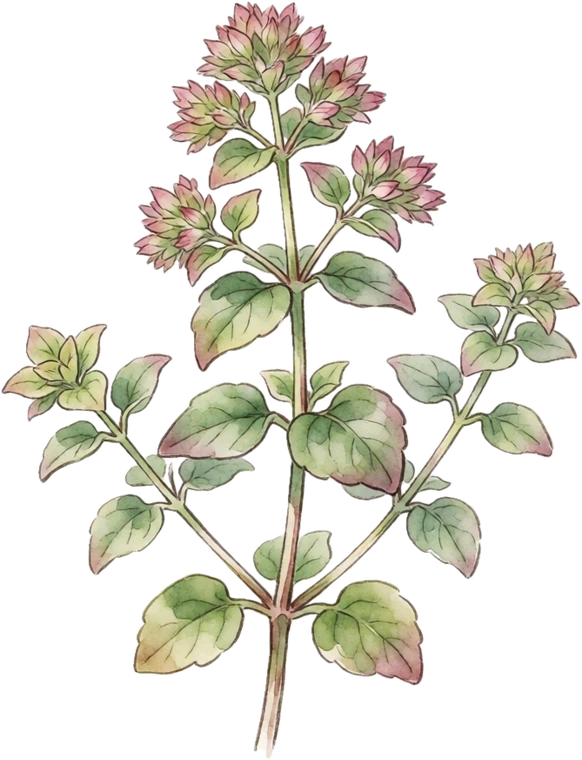
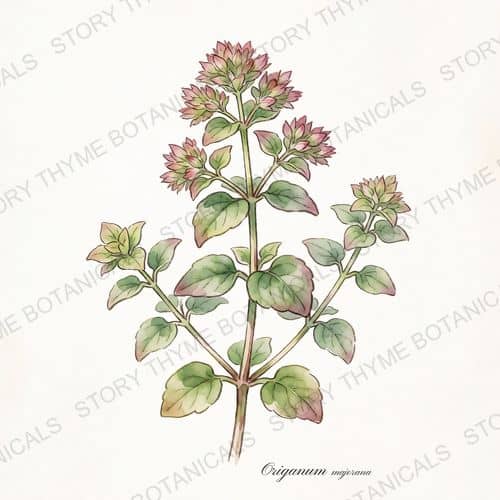
Botanical illustration of Sweet Marjoram
Perennial · Origanum majorana

Oregano's gentle cousin — floral where oregano is loud. The herb sausage-makers and Germans (Bratkartoffeln!) can't work without. Pot one and winter it on a windowsill.

PerennialFull SunLow waterModerate growthAttracts bees

Where to buy the plant — 1 nursery

Oregano — a print from the Kitchen & Orchard collection

From the print shop

The closest print we make

We don’t print Origanum majorana. The closest we have is Origanum vulgare (“Oregano”) in the Kitchen & Orchard collection — the same genus, Origanum, not the same species.

16 designsfrom $21.99white or black groundmatte poster, unframed

Shop Kitchen & Orchard botanical prints →

I

Overview

Will sweet marjoram suit your garden, and what goes wrong.

Will it fruit where you are?

Enter your ZIP — we look up your USDA hardiness zone (2023 map) and check it against what sweet marjoram actually needs.

Life cyclePerennial zones 9–10, annual elsewhere

Sweet Marjoram at a glance

Life cyclePerennial zones 9–10, annual elsewhere
Mature size1-2 ft
PollinationBees love the knotted blooms
Chill requirementNot yet established
Bloom seasonSummer (harvest just as knots form — peak oil)
Harvest seasonAll season
Growth rateModerate

Common sweet marjoram problems

II

Growing

Light, water, soil, propagation and the season’s jobs.

How to grow sweet marjoram: light, water & soil

LightFull Sun
WaterLow-Moderate
SoilLight, well-drained · pH 6.5 - 7.5
FertilizerLittle
PruningSpring (overwintered pots) — Shear by half when flower knots appear; it regrows twice more.
Spacing8-12 in

How to plant & propagate sweet marjoram

PropagateDivision or seed

The sweet marjoram growing playbook

Field-tested instructions for every job sweet marjoram asks of you, compiled from university extension guidance — in the order the season brings them.

Sowing

Start seed indoors 6 to 8 weeks before your last frost

Sow indoors about 6 to 8 weeks before your last spring frost date, or direct sow outdoors about two weeks before that date. The seed is very fine, so press it into the surface rather than burying it. Marjoram is slow off the mark from seed and needs a long warm run to make usable leaf, so a cold-climate grower who waits for settled weather outdoors loses most of the harvest season. Starting under cover buys back the weeks the season will not give you.

Planting out

Set plants out once frost danger has passed

Move seedlings to the garden after the danger of frost has passed, into full sun and well-drained soil. Marjoram prefers a sandy loam and requires good drainage; it will rot in poorly drained, saturated soils. This is a Mediterranean tender perennial rated for USDA zones 9a-10b with no frost tolerance, and it rots outright in poorly drained saturated soil, so both the timing and the drainage are survival questions rather than preferences.

Pruning

Pinch back at 6 to 8 inches tall

Once the plant reaches 6 to 8 inches tall, prune it back to force branching. Keep cutting stems back before flowers appear. Marjoram is naturally a low, spreading plant that will run to a few lanky stems and then bloom if left alone. Cutting the growing tips early pushes side shoots and builds the bushy frame that carries the season's leaf.

Cut hard to the ground at bloom for a second flush

When the plant starts to bloom, cut it back close to the ground rather than tidying it lightly. It will push a fresh flush of growth for a second cutting. A hard cut at bloom resets the plant out of flowering and back into leaf production, and Illinois Extension notes the second flush of growth tends to be a more desired crop than the first cutting.

Protection

Pot it up and bring it in before the first frost

If you want the plant to live past this year, dig it from the garden before frost and bring it indoors to a sunny window. Below USDA zone 9 it is otherwise simplest to treat marjoram as an annual and resow next spring. Marjoram is a tender perennial that generally will not survive a winter north of zone 9, so the first hard frost is the end of the plant, not a dormancy it wakes from. Container plants brought in often struggle through winter, which is why resowing is the honest fallback in cold zones.

Marjoram is listed as toxic to dogs and cats, so place plants brought indoors out of reach of pets.

Harvesting

Cut as the knots form, before the flowers open

Harvest when the ball-like knotted tips appear at the ends of the stems and before the flowers actually open. Cut the leafy stems and air dry them, then store in sealed containers. Leaves can be picked for fresh use at any point in the season. Flavor peaks just before bloom. Once the plant commits to flowering it moves resources out of the leaves, so the knot stage is the narrow window where the essential oil in the foliage is at its strongest.

III

The year

What sweet marjoram asks for, month by month.

The sweet marjoram year, month by month

MonthJanFebMarAprMayJunJulAugSepOctNovDec
Bloom
Prune

What each band means

  • Bloomflowers open — pollinators working, frost on blossoms is the danger.
  • Pruneshape it now — cuts heal cleanly and structure is visible.

The sweet marjoram year as text

  • Jan quiet month
  • Feb quiet month
  • Mar pruning
  • Apr pruning
  • May pruning
  • Jun bloom
  • Jul bloom
  • Aug bloom
  • Sep quiet month
  • Oct quiet month
  • Nov quiet month
  • Dec quiet month

These are the species' typical months — expect them a few weeks earlier in warm zones and later in cold ones. Watch the plant, not just the calendar.

IV

Ecology & uses

What it does for the garden, and what it is grown for.

Sweet Marjoram in the garden system

  • Herbaceous layer perennial
  • Nectary/insectary
AttractsBees
MoistureUpland / dry
DeerBrowsed — protect young plants
OriginIntroduced

What sweet marjoram is grown for

✓ Commonly eaten

UseSausage
UsePotatoes
UseDelicate dishes
Edible value3/5

Harvesting & storing sweet marjoram

All season.

Edibility, identification, and traditional-use notes here are general reference — not medical or veterinary advice, and not a claim that any plant treats or prevents anything. Medicinal ratings record how strongly a plant features in herbal tradition, nothing more. Never eat or dose a plant you have not positively identified. More on how to use this library.

V

Cultivars

Named varieties of sweet marjoram, ruled as a catalogue.

Best sweet marjoram varieties & cultivars

'Sweet' (standard)

VI

Sources & plant ID

Where the care distinctions come from, and how the plant is filed.

Research basis

Sources behind this profile

No extension citations are attached to sweet marjoramyet. The care figures below come from the library's own catalogue rather than a traced primary source.

Plant ID

BinomialOriganum majorana
FamilyLamiaceae
TypePerennial · Tender Perennial
USDA symbolORMA
OriginIntroduced
Invasive riskLow

VII

Where to buy

Third-party nurseries — not Story Thyme Farms.

Third-party nurseries, not Story Thyme Farms. Prices are theirs.

Story Thyme Farms may earn a small commission from these links, at no cost to you — it never changes what we recommend.

VIII

Questions

Sweet Marjoram questions, answered straight.

Is sweet marjoram safe for kids and pets?

Sweet Marjoram is commonly eaten and isn't considered toxic, but "commonly eaten" isn't a guarantee for any particular person or animal — allergies, quantity, and which part you eat all matter. Never eat a plant you haven't positively identified, and check with a vet before letting pets or livestock graze anything new.

When do you harvest sweet marjoram?

All season.

How do you propagate sweet marjoram?

Division or seed.

IX

Elsewhere

Where sweet marjoram sits in the library.

Where sweet marjoram sits in the library

Grows in the same world