Nerve Plant (Fittonia)
Fittonia albivenis
Family Acanthaceae
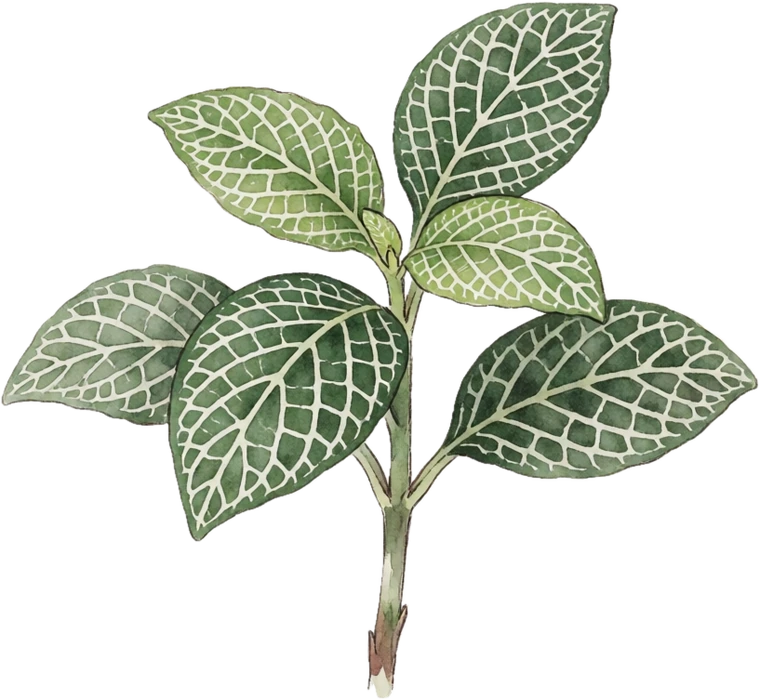
Every leaf looks etched — nerve plant's foliage is netted with veins in white, pink, or red so vivid the pattern seems printed. At three to six inches tall it is genuinely tiny, a jewel-box plant that turns a terrarium or a humid corner into a miniature landscape.
It is also the most honest houseplant you can own: let it get thirsty and it faints flat, then springs back within an hour of a drink — a built-in reminder no app can match. Pet-safe and terrarium-sized, it belongs under glass on a desk near you.
 Medium indirect — no direct sun
 Moderate water
 Slow growth
 None winter chill
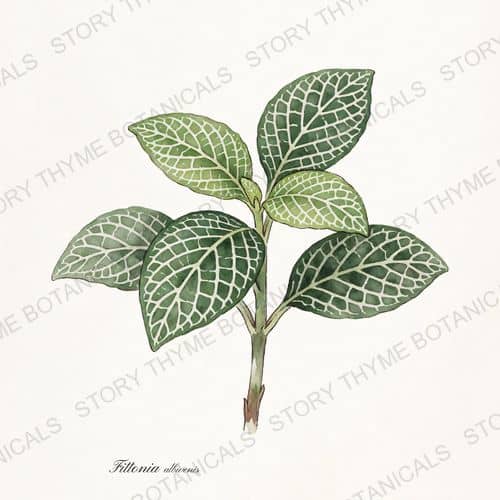
From the print shop
Growing nerve plant (fittonia)? Hang it.
Our Plant Library collection carries nerve plant (fittonia) — Fittonia albivenis, print Nº 324, “Nerve Plant (Fittonia).”
526 designsfrom $12.99white or black backgroundmatte poster, unframed
Will it thrive where you are?
Enter your ZIP — we look up your USDA hardiness zone (2023 map) and check it against what nerve plant (fittonia) actually needs.
 Hardy inZones 11-12
Nerve Plant (Fittonia) · Common problems
Common nerve plant (fittonia) problems

Pests
2 problems on file

Diseases
2 problems on file
- Root Rot
- leaf-drop from dry air
Nerve Plant (Fittonia) · Growing & propagation
Growing nerve plant (fittonia)
- Light
- Medium indirect
No direct sun
- Water
- Keep evenly moist
It FAINTS (dramatic full collapse) when dry, revives in an hour
 Soil
Soil- Peaty, moisture-retentive · pH 6.0 - 6.5
 Fertilizer
- Monthly dilute in season
 Pruning
- As needed
Pinch flower buds and tips to keep it dense and low.
 Spacing
- One per pot
How to plant & propagate nerve plant (fittonia)
- Propagate
- Stem/leaf cuttings, division, or pups
Nerve Plant (Fittonia) · Seasonal care & spray guidance
The nerve plant (fittonia) growing playbook
When to spray nerve plant (fittonia)
Growing season. High humidity — a terrarium or pebble tray is ideal.
Nerve Plant (Fittonia) · Calculators & field guides
A little help in the garden.
Nerve Plant (Fittonia) · Yearly calendar
The nerve plant (fittonia) year, month by month
No fixed season calendar for nerve plant (fittonia) — its care follows conditions, not the calendar.
Nerve Plant (Fittonia) · Ecology & uses
Ecology & uses
Fittonia albivenis
Nerve Plant (Fittonia) in the garden system
- Moisture
- Facultative / average
 Deer
Deer- Browsed
Protect young plants
 Origin
- Introduced
What nerve plant (fittonia) is grown for
✓ Not known to be toxicSafe for pets
 Use
Use- Terrariums
- Use
- Humid spots
- Use
- Pet-safe
Edibility, identification, and traditional-use notes here are general reference — not medical or veterinary advice, and not a claim that any plant treats or prevents anything. Medicinal ratings record how strongly a plant features in herbal tradition, nothing more. Never eat or dose a plant you have not positively identified. More on how to use this library.
Nerve Plant (Fittonia) · Varieties & cultivars
Choosing a nerve plant (fittonia) variety
'Red Anne', 'White Anne', 'Mosaic' — pink, white, or red vein networks
Sources & plant identity
Know what you’re growing.
See where the knowledge comes from.
Nerve Plant (Fittonia)
Fittonia albivenis
The plant, at a glance.
- Botanical name
- Fittonia albivenis
- Plant family
- Acanthaceae
- Growth habit
- Houseplant · Perennial
- Origin
- Introduced
- Invasive risk
- Low
Hardiness, size and timing vary with your cultivar, soil and climate.
Rooted in research.
University extension research, brought together with hands-on growing experience at Story Thyme Farms.
for Nerve Plant (Fittonia)
Research from these sources


Publisher marks identify sources, not sponsorship or endorsement.
Where to buy
Third-party nurseries — not Story Thyme Farms.
Third-party nurseries, not Story Thyme Farms. Prices are theirs.
Story Thyme Farms may earn a small commission from these links, at no cost to you — it never changes what we recommend. As an Amazon Associate I earn from qualifying purchases.
Questions
Nerve Plant (Fittonia) questions, answered straight.
Is nerve plant (fittonia) safe for kids and pets?
Nerve Plant (Fittonia) is commonly eaten and isn't considered toxic, but "commonly eaten" isn't a guarantee for any particular person or animal — allergies, quantity, and which part you eat all matter. One caveat on this one: Safe for pets. Never eat a plant you haven't positively identified, and check with a vet before letting pets or livestock graze anything new.
How do you propagate nerve plant (fittonia)?
Stem/leaf cuttings, division, or pups.
Elsewhere
Where nerve plant (fittonia) sits in the library.
 Monstera
 Golden Pothos
 Snake Plant
 Heartleaf Philodendron