Peperomia
Peperomia spp.
Family Piperaceae
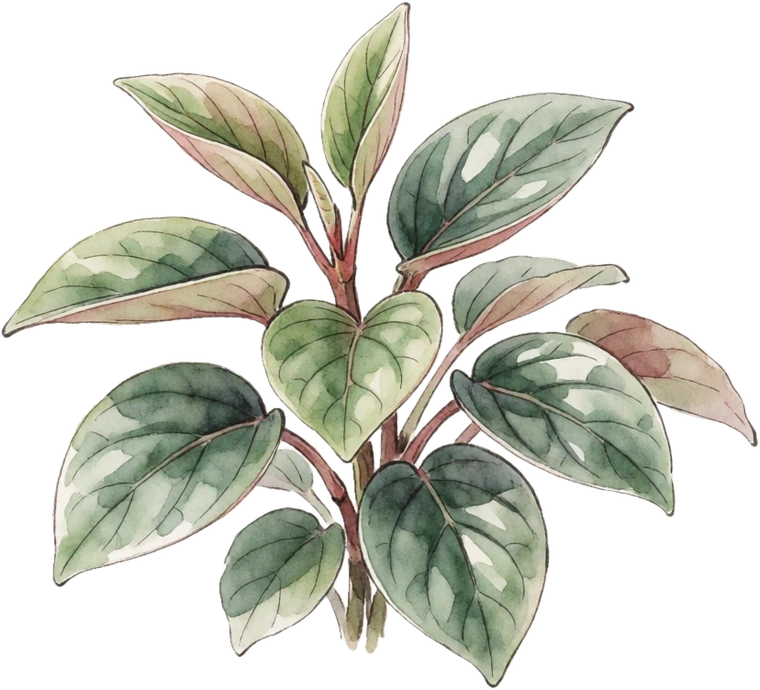
A whole collection in miniature — peperomia comes in dozens of leaf shapes and patterns, rippled, striped, teardrop, watermelon-marked, every one compact enough for a desk. The thick, semi-succulent leaves have a polished, sculptural quality that reads as far fussier than it actually is.
This is the rare houseplant that is both pet-safe and forgetful-owner-safe: those water-storing leaves forgive missed waterings, and its slow growth means it never outgrows the shelf you gave it. Start with one on the desk; nobody stops at one.
 Medium to bright indirect
 Low water
 Slow growth
 None winter chill
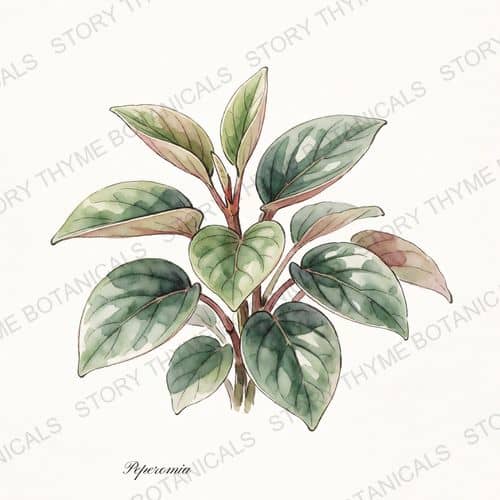
From the print shop
Growing peperomia? Hang it.
Our Plant Library collection carries peperomia — Peperomia, print Nº 360, “Peperomia.”
526 designsfrom $12.99white or black backgroundmatte poster, unframed
Will it thrive where you are?
Enter your ZIP — we look up your USDA hardiness zone (2023 map) and check it against what peperomia actually needs.
 Hardy inZones 10-12
Peperomia · Common problems
Common peperomia problems

Pests
2 problems on file

Diseases
1 problem on file
- Root Rot (overwatering — the main killer)
Peperomia · Growing & propagation
Growing peperomia
- Light
- Medium to bright indirect
- Water
- Low
Semi-succulent leaves store water; let it dry
 Soil
Soil- Airy, well-drained mix · pH 6.0 - 6.5
 Fertilizer
- Monthly dilute in season
 Pruning
- As needed
Pinch to shape; leaf or stem cuttings root easily.
 Spacing
- One per pot
How to plant & propagate peperomia
- Propagate
- Stem/leaf cuttings, division, or pups
Peperomia · Seasonal care & spray guidance
The peperomia growing playbook
When to spray peperomia
Growing season. Let it dry; airy mix.
Peperomia · Calculators & field guides
A little help in the garden.
Peperomia · Yearly calendar
The peperomia year, month by month
No fixed season calendar for peperomia — its care follows conditions, not the calendar.
Peperomia · Ecology & uses
Ecology & uses
Peperomia spp.
Peperomia in the garden system
 Moisture
- Upland / dry
 Deer
Deer- Browsed
Protect young plants
What peperomia is grown for
✓ Not known to be toxicSafe for pets
 Use
Use- Desks
- Use
- Shelves
- Use
- Pet-safe
Edibility, identification, and traditional-use notes here are general reference — not medical or veterinary advice, and not a claim that any plant treats or prevents anything. Medicinal ratings record how strongly a plant features in herbal tradition, nothing more. Never eat or dose a plant you have not positively identified. More on how to use this library.
Peperomia · Varieties & cultivars
Choosing a peperomia variety
'Watermelon' (striped teardrop leaves); 'Obtusifolia' (baby rubber plant); 'Ruby Cascade'; 'Hope'
Sources & plant identity
Know what you’re growing.
See where the knowledge comes from.
Peperomia
Peperomia spp.
The plant, at a glance.
- Botanical name
- Peperomia spp.
- Plant family
- Piperaceae
- Growth habit
- Houseplant · Perennial
- USDA plant symbol
- PEPER
- Invasive risk
- Low
Hardiness, size and timing vary with your cultivar, soil and climate.
Rooted in research.
University extension research, brought together with hands-on growing experience at Story Thyme Farms.
for Peperomia
Research from these sources




Publisher marks identify sources, not sponsorship or endorsement.
Where to buy
Third-party nurseries — not Story Thyme Farms.
Third-party nurseries, not Story Thyme Farms. Prices are theirs.
Story Thyme Farms may earn a small commission from these links, at no cost to you — it never changes what we recommend. As an Amazon Associate I earn from qualifying purchases.
Questions
Peperomia questions, answered straight.
Is peperomia safe for kids and pets?
Peperomia is commonly eaten and isn't considered toxic, but "commonly eaten" isn't a guarantee for any particular person or animal — allergies, quantity, and which part you eat all matter. One caveat on this one: Safe for pets. Never eat a plant you haven't positively identified, and check with a vet before letting pets or livestock graze anything new.
How do you propagate peperomia?
Stem/leaf cuttings, division, or pups.
Elsewhere
Where peperomia sits in the library.
 Monstera
 Golden Pothos
 Snake Plant
 Heartleaf Philodendron