The illustrated growing guide

Rue

Ruta graveolens

Family Rutaceae

Est. zones 4-9

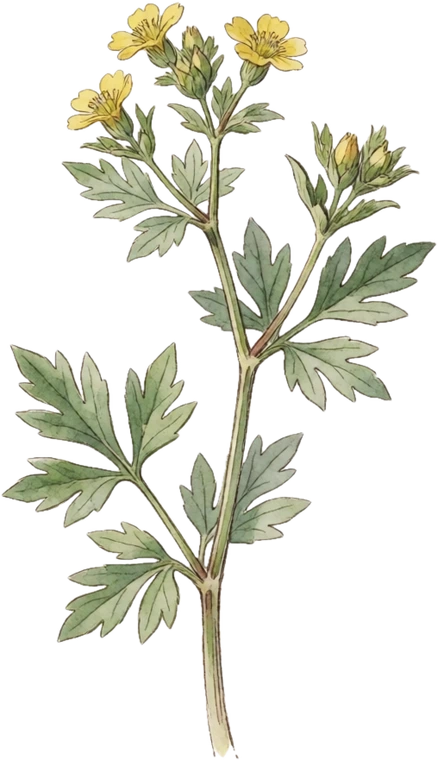
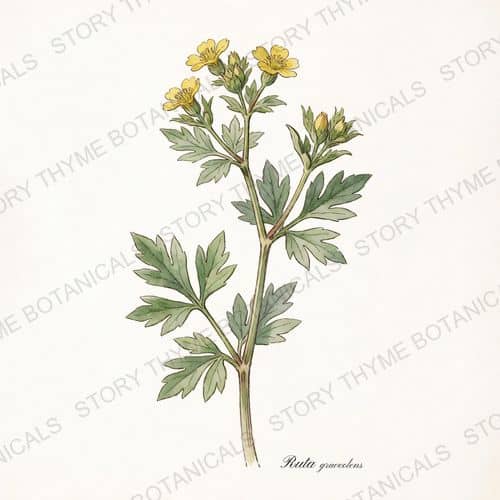
Botanical illustration of Rue
Perennial · Ruta graveolens

A striking blue-green ferny herb of medieval gardens, drought-proof and deer-repellent, and a host plant for giant swallowtail caterpillars. But respect it: the sap combined with sunlight causes serious blistering skin burns on many people, so prune it covered up, and it's toxic taken internally (never in pregnancy). Grow it today as a handsome ornamental and butterfly host, not a home remedy.

PerennialFull SunLow waterModerate growthAttracts butterfliesAttracts bees

Where to buy the plant — 1 nursery

I

Overview

Will rue suit your garden, and what goes wrong.

Will it fruit where you are?

Enter your ZIP — we look up your USDA hardiness zone (2023 map) and check it against what rue actually needs.

Hardy inZones 4-9

Rue at a glance

HardinessUSDA 4–9
Mature size2-3 ft
PollinationBees; a larval HOST for giant swallowtail butterflies
Chill requirementNot yet established
Bloom seasonSummer (small yellow flowers)
Harvest seasonHistorically medicinal — but see caution; mostly grown as an ornamental/host now
Growth rateModerate

Common rue problems

  • Almost none — deer- and pest-repellent
  • Almost none

II

Growing

Light, water, soil, propagation and the season’s jobs.

How to grow rue: light, water & soil

LightFull Sun
WaterLow — drought-tough Mediterranean herb
SoilLean, well-drained · pH 6.0 - 7.5
FertilizerNone
PruningSpring — cut back to shape — A blue-green, ferny, aromatic subshrub, drought- and deer-proof. Wear gloves and long sleeves to prune: rue sap plus sunlight causes serious blistering burns (phytophotodermatitis) on many people.
Spacing18-24 in

How to plant & propagate rue

PropagateDivision or seed

The rue growing playbook

Field-tested instructions for every job rue asks of you, compiled from university extension guidance — in the order the season brings them.

Sowing

Start new plants from seed, cuttings, or division

Set rue out in spring or fall, spacing plants 18 to 24 inches apart in full sun to partial shade on well-drained ground. Propagate by seed, stem cuttings, or division of an established clump. Individual plants are short-lived, about five years, so a bed needs replacements coming along. Rue also self-seeds readily and will often replace itself if you let a few seedlings stand. The wide spacing suits a plant that finishes 2 to 3 feet tall and equally wide.

Handle seedlings and cuttings with gloves. Rue is not a plant to eat your way through: ingestion in quantity causes stomach pain, vomiting, exhaustion, confusion, and convulsions, and may be fatal.

Mulching

Mulch the crown for winter in cold zones

In the north end of its range, surround the plant with mulch going into winter. Keep the mulch off soggy ground and do not pile it where water collects. Rue is hardy to zone 4 but it is a Mediterranean subshrub that hates wet feet more than cold. Mulch buffers the crown through freeze and thaw, while the real killer is root rot in poorly drained soil, which is why drainage matters more than depth of cover.

Pruning

Cut back to old wood in early spring

In early spring, before the new blue-green growth pushes, cut the plant back hard into the old woody framework. Take out anything dead or damaged at the same time. Rue is a subshrub that turns woody and bare-legged with age, and it is short-lived, roughly five years. Cutting into old wood while it is still dormant forces fresh shoots from the base and keeps the plant dense instead of a bundle of leggy sticks.

Wear gloves and long sleeves. Rue sap causes contact dermatitis, and the irritation follows contact plus sunlight, so prune on an overcast day or in the evening and wash any skin the sap touches with soap and water before you go back into the sun.

Shear once over the summer to stop it going lanky

Trim the shoot tips back by a few inches at least once during the summer to hold the mound shape. Do not wait for the spring cut to do all the work. Left alone through the growing season, rue grows woody with lanky stems that flop open and expose the center. A single summer shearing keeps the branching tight and the habit compact.

Gloves and long sleeves again, and avoid cutting in bright midday sun. Summer is exactly when sap on skin plus strong UV produces the worst blistering.

What to watch for

Check for swallowtail caterpillars before you reach for anything

Through the summer, look over the foliage for the bird-dropping-mimic caterpillars of black, anise, and giant swallowtails. If you want the foliage intact, handpick them off; otherwise leave them and let them finish. Rue is one of the few Rutaceae hosts these butterflies will lay on, and the larvae are almost never numerous enough to hurt an established plant. The chewed leaves are the point of growing it for most people.

Do not spray this plant. Foliar insecticides and Bt (Bacillus thuringiensis) both kill swallowtail larvae outright, and insecticide is rarely justified here. Handpicking solves it in nearly every situation. Wear gloves when picking, since the sap blisters skin that then sees sun.

III

The year

What rue asks for, month by month.

The rue year, month by month

MonthJanFebMarAprMayJunJulAugSepOctNovDec
Bloom
Prune

What each band means

  • Bloomflowers open — pollinators working, frost on blossoms is the danger.
  • Pruneshape it now — cuts heal cleanly and structure is visible.

The rue year as text

  • Jan quiet month
  • Feb quiet month
  • Mar pruning
  • Apr pruning
  • May pruning
  • Jun bloom
  • Jul bloom
  • Aug bloom
  • Sep quiet month
  • Oct quiet month
  • Nov quiet month
  • Dec quiet month

These are the species' typical months — expect them a few weeks earlier in warm zones and later in cold ones. Watch the plant, not just the calendar.

IV

Ecology & uses

What it does for the garden, and what it is grown for.

Rue in the garden system

  • Herbaceous layer perennial
  • Pest control
  • Hosts Giant swallowtail & black swallowtail butterflies
AttractsButterflies, Bees
MoistureUpland / dry
DeerBrowsed — protect young plants
OriginIntroduced

What rue is grown for

⚠ Toxic if eatenDo not eat — all parts are toxic. Ingestion causes vomiting, seizures and liver and kidney injury, and deaths are documented in women who took it to end a pregnancy (WHO/IPCS PIM 475). Sap plus sunlight causes blistering burns that have needed burns-unit treatment, in children as well as adults. Grow it as an ornamental and butterfly host only; handle with gloves and long sleeves. Extension services disagree on severity — NC State rates it 'medium', UF/IFAS says 'may be fatal if eaten' — and we state the more cautious position.

UseButterfly host
UseOrnamental foliage
UseDeer-repellent
Traditional use rating1/5 in herbal tradition

Harvesting & storing rue

Historically medicinal — but see caution; mostly grown as an ornamental/host now.

Edibility, identification, and traditional-use notes here are general reference — not medical or veterinary advice, and not a claim that any plant treats or prevents anything. Medicinal ratings record how strongly a plant features in herbal tradition, nothing more. Never eat or dose a plant you have not positively identified. More on how to use this library.

V

Cultivars

Named varieties of rue, ruled as a catalogue.

Best rue varieties & cultivars

'Jackman's Blue' (compact, best blue foliage); 'Variegata'

VI

Sources & plant ID

Where the care distinctions come from, and how the plant is filed.

Research basis

Sources behind this profile

No extension citations are attached to rueyet. The care figures below come from the library's own catalogue rather than a traced primary source.

Plant ID

BinomialRuta graveolens
FamilyRutaceae
TypePerennial
USDA symbolRUGR3
OriginIntroduced
Invasive riskLow

VII

Where to buy

Third-party nurseries — not Story Thyme Farms.

Third-party nurseries, not Story Thyme Farms. Prices are theirs.

Story Thyme Farms may earn a small commission from these links, at no cost to you — it never changes what we recommend.

VIII

Questions

Rue questions, answered straight.

Is rue safe for kids and pets?

No — treat it as toxic if eaten. Do not eat — all parts are toxic. Ingestion causes vomiting, seizures and liver and kidney injury, and deaths are documented in women who took it to end a pregnancy (WHO/IPCS PIM 475). Sap plus sunlight causes blistering burns that have needed burns-unit treatment, in children as well as adults. Grow it as an ornamental and butterfly host only; handle with gloves and long sleeves. Extension services disagree on severity — NC State rates it 'medium', UF/IFAS says 'may be fatal if eaten' — and we state the more cautious position. Site it accordingly if children or pets roam the garden. This is general reference, not medical or veterinary advice — call a vet or poison control if something has actually been eaten.

When do you harvest rue?

Historically medicinal — but see caution; mostly grown as an ornamental/host now.

How do you propagate rue?

Division or seed.

IX

Elsewhere

Where rue sits in the library.

Where rue sits in the library

Grows in the same world