The illustrated growing guide

Sage

Salvia officinalis

Family Lamiaceae

Est. zones 4-8

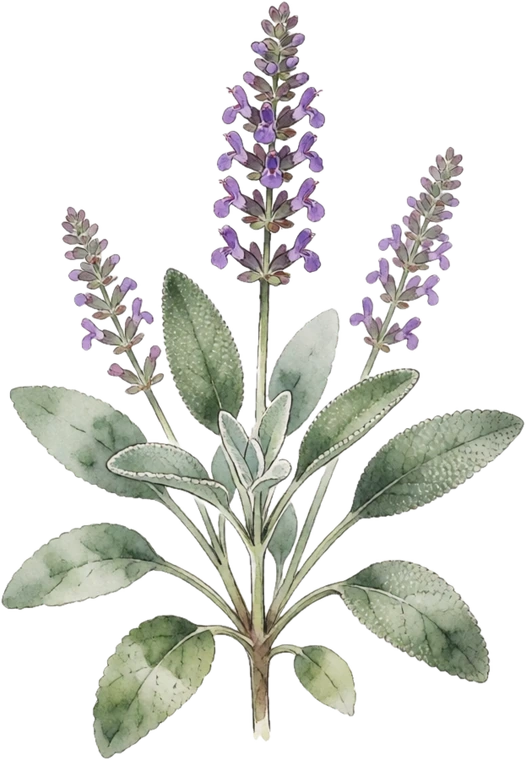
Botanical illustration of Sage
Shrub · Salvia officinalis

Woody perennial. Replace every 4-5 years as it gets leggy.

ShrubFull SunLow waterModerate growthAttracts bees

Where to buy the plant — 2 nurseries

Sage — a print from the Kitchen & Orchard collection

From the print shop

Growing sage? Hang it.

Our Kitchen & Orchard collection carries sageSalvia officinalis, print Nº 13, “Sage.”

16 designsfrom $21.99white or black groundmatte poster, unframed

Shop Kitchen & Orchard botanical prints →

I

Overview

Will sage suit your garden, and what goes wrong.

Will it fruit where you are?

Enter your ZIP — we look up your USDA hardiness zone (2023 map) and check it against what sage actually needs.

Hardy inZones 4-8

Sage at a glance

HardinessUSDA 4–8
Mature size1-2 ft
PollinationBees
Chill requirementNot yet established
Bloom seasonEarly Summer
Harvest seasonLeaves anytime
Growth rateModerate

Common sage problems

  • None major
  • Mildew in humidity

II

Growing

Light, water, soil, propagation and the season’s jobs.

How to grow sage: light, water & soil

LightFull Sun
WaterLow
SoilWell-drained, Sandy · pH 6.0 - 7.0
FertilizerLow
PruningSpring — Prune to shape, remove woody centers.
Spacing2 ft

How to plant & propagate sage

PropagateSeed (stratify), cuttings, or layering

The sage growing playbook

Field-tested instructions for every job sage asks of you, compiled from university extension guidance — in the order the season brings them.

Dividing

Divide or start replacements every few years

Split large plants in spring, or root softwood cuttings in summer in a moist, well-drained mix to grow on as replacements. Rooting hormone is generally not necessary. Plan on replacing culinary plants every few years rather than trying to rejuvenate an old woody one. Garden sage tends to be a short-lived perennial that goes woody and unproductive with age, so keeping a younger plant coming along is what keeps you in usable leaf.

Pruning

Cut back in spring, but stop at the old wood

In mid- to late spring, once stronger new growth appears, prune back to a low framework of branches, cutting just above a healthy pair of shoots. Keep it light rather than hard, clear out dead twiggy stems, and never cut down into bare mature wood. Sage is a subshrub that builds woody stems with age, and older stems may not reshoot, so a cut back into bare wood is risky and can leave a permanent dead stub instead of regrowth.

Keep it cut back so it does not run to flower

Through the growing season, tip back the shoots a few times to keep the plant bushy and to head off flower spikes. If you are growing sage as an ornamental instead, let it bloom and cut it back once the flowers fade. Flowering shifts the plant's energy out of leaf and into seed, and the leaves on a blooming, leggy plant are the weaker-flavored ones; young shoots hold the best flavor.

What to watch for

Watch for the wet-soil diseases, and fix the drainage instead

Check plants for powdery mildew, spittlebugs, spider mites, slugs, and leafhoppers, and for stems that wilt or collapse from root rot. Space plants 18 to 24 inches apart for airflow and move sage to a well-drained site rather than reaching for a spray. Sage has few pests when the soil drains freely; nearly all of its real trouble is root rot and foliar fungus driven by wet soil and stagnant air, and no spray fixes a drainage problem.

Protection

Winter survival is about drainage, not cold

Going into winter, make sure sage is not sitting anywhere water collects. Do not pile wet mulch over the crown. If your plant is a colored-leaf cultivar in a cold zone, take summer cuttings and overwinter a rooted plant indoors as insurance. Sage must have very well drained soil especially over winter to come through as a perennial; the ornamental purple, golden, and tricolor cultivars are also less hardy than the plain species and are the ones that fail in a cold zone.

Harvesting

Cut the top 6 to 8 inches, twice a season

Pick leaves as you need them, and at least twice over the season cut 6 to 8 inches off the tops of the plants for drying. Never take more than half the plant at once. Cutting back the tips keeps pushing young shoots, which carry the strongest flavor, and stripping more than half at once leaves too little leaf area for the plant to rebuild and it stops producing.

III

The year

What sage asks for, month by month.

The sage year, month by month

MonthJanFebMarAprMayJunJulAugSepOctNovDec
Bloom
Prune
Harvest

What each band means

  • Bloomflowers open — pollinators working, frost on blossoms is the danger.
  • Pruneshape it now — cuts heal cleanly and structure is visible.
  • Harvestpicking time — check ripeness every few days.

The sage year as text

  • Jan harvest
  • Feb harvest
  • Mar pruning, harvest
  • Apr pruning, harvest
  • May pruning, harvest
  • Jun bloom, harvest
  • Jul harvest
  • Aug harvest
  • Sep harvest
  • Oct harvest
  • Nov harvest
  • Dec harvest

These are the species' typical months — expect them a few weeks earlier in warm zones and later in cold ones. Watch the plant, not just the calendar.

IV

Ecology & uses

What it does for the garden, and what it is grown for.

Sage in the garden system

  • Herbaceous layer shrub
AttractsBees
MoistureUpland / dry
DeerBrowsed — protect young plants
OriginIntroduced

What sage is grown for

✓ Commonly eaten

UseCulinary
Traditional useMedicinal
Edible value3/5
Traditional use rating3/5 in herbal tradition

Harvesting & storing sage

Leaves anytime.

Edibility, identification, and traditional-use notes here are general reference — not medical or veterinary advice, and not a claim that any plant treats or prevents anything. Medicinal ratings record how strongly a plant features in herbal tradition, nothing more. Never eat or dose a plant you have not positively identified. More on how to use this library.

V

Cultivars

Named varieties of sage, ruled as a catalogue.

Best sage varieties & cultivars

4 on file

Named varieties of sage differ in winter-chill needs, ripening time, hardiness, and whether they set fruit on their own — pick one that fits your climate.

Berggarten

Zones5-10DiseaseMildew resistantSizeBushy habit, dense to the base

Rarely blooms, which means it stays in leaf instead of running to flower. Leaves are gray-blue-silvery and much broader than the typical species. Noted as mildew resistant.

Where to buy ‘Berggarten

Story Thyme Farms may earn a small commission from these links, at no cost to you — it never changes what we recommend.

Purpurascens · Purpurea;Purple Sage

Zones6-10

Purple-tinted young leaves, still a culinary sage. Noticeably less winter hardy than the plain species and questionable in zone 5.

Where to buy ‘Purpurascens

Story Thyme Farms may earn a small commission from these links, at no cost to you — it never changes what we recommend.

Tricolor

Zones6-10

Foliage streaked white and rose-pink. A tender variety; treat as an ornamental or overwinter it indoors in cold zones.

Where to buy ‘Tricolor

Story Thyme Farms may earn a small commission from these links, at no cost to you — it never changes what we recommend.

Aurea · Golden Sage

Zones6-10

Chartreuse-yellow leaves splashed with green. Not reliably winter hardy in zone 5.

Where to buy ‘Aurea

Story Thyme Farms may earn a small commission from these links, at no cost to you — it never changes what we recommend.

VI

Sources & plant ID

Where the care distinctions come from, and how the plant is filed.

Research basis

Sources behind this profile

No extension citations are attached to sageyet. The care figures below come from the library's own catalogue rather than a traced primary source.

Plant ID

BinomialSalvia officinalis
FamilyLamiaceae
TypeShrub · Perennial
USDA symbolSAOF2
OriginIntroduced
Invasive riskLow

VII

Where to buy

Third-party nurseries — not Story Thyme Farms.

Third-party nurseries, not Story Thyme Farms. Prices are theirs.

Story Thyme Farms may earn a small commission from these links, at no cost to you — it never changes what we recommend.

VIII

Questions

Sage questions, answered straight.

Is sage safe for kids and pets?

Sage is commonly eaten and isn't considered toxic, but "commonly eaten" isn't a guarantee for any particular person or animal — allergies, quantity, and which part you eat all matter. Never eat a plant you haven't positively identified, and check with a vet before letting pets or livestock graze anything new.

When do you harvest sage?

Leaves anytime.

How do you propagate sage?

Seed (stratify), cuttings, or layering.

IX

Elsewhere

Where sage sits in the library.

Where sage sits in the library

Grows in the same world