The illustrated growing guide

Summer Savory

Satureja hortensis

Family Lamiaceae

Grown as an annual

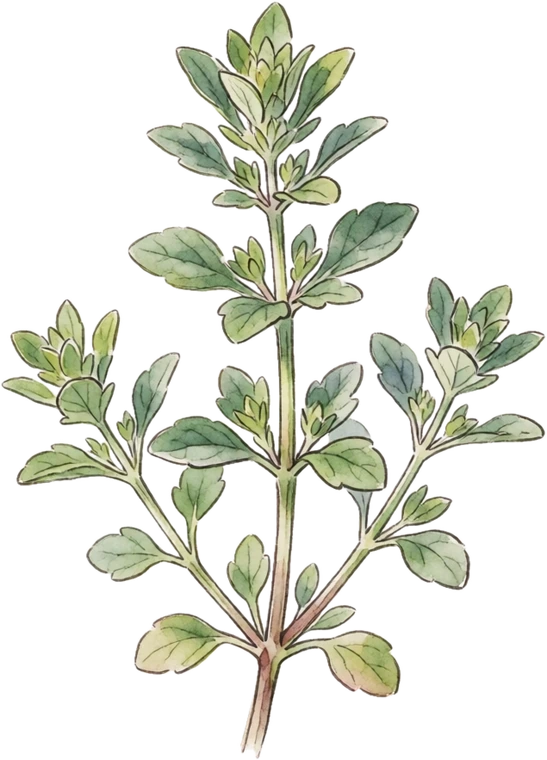
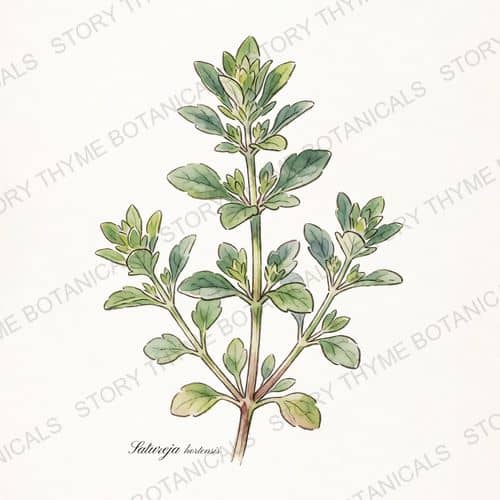
Botanical illustration of Summer Savory
Annual · Satureja hortensis

'The bean herb' — Germans call it Bohnenkraut because green beans without it are considered undressed. Peppery-thyme flavor that loves everything from the legume patch.

AnnualFull SunLow waterFast growthAttracts beesNone winter chill

Where to buy the plant — 2 nurseries

I

Overview

Will summer savory suit your garden, and what goes wrong.

Will it fruit where you are?

Enter your ZIP — we look up your USDA hardiness zone (2023 map) and check it against what summer savory actually needs.

Life cycleAnnual
Winter chillNone

Summer Savory at a glance

Life cycleAnnual
Mature size12-18 in
PollinationBee-visited
Chill requirementNone (not chill-dependent)
Bloom seasonSummer
Harvest seasonAll season; best just before bloom
Growth rateFast

Common summer savory problems

  • None significant
  • None significant

II

Growing

Light, water, soil, propagation and the season’s jobs.

How to grow summer savory: light, water & soil

LightFull Sun
WaterLow-Moderate
SoilAverage, well-drained · pH 6.5 - 7.5
FertilizerNone needed
PruningNone — Cut whole stems; successive sowings keep tender growth coming.
Spacing6-10 in

How to plant & propagate summer savory

Maturity60 days
From seedDirect-sow after frost; the 'bean herb'
PropagateFrom seed

The summer savory growing playbook

Field-tested instructions for every job summer savory asks of you, compiled from university extension guidance — in the order the season brings them.

Sowing

Direct sow after the last frost, barely covering the seed

Once frost danger has passed, sow seed thinly into moist, well-drained soil in full sun, covering no more than about 1/8 inch. Do not bury it. Thin seedlings to stand about 8 inches apart in rows 18 inches apart. Summer savory seed is sown shallow because light helps improve germination, so burying it is a common reason a sowing fails. Spacing follows Montana State's Western Agricultural Research Center savory trial, which grew rows 18 inches apart with 8.7 inches between plants. That trial also found direct seeding more efficient than transplanting, with direct-seeded stands yielding more essential oil per acre (44.3 vs 36.9 lb/acre), though slightly less dry matter (2,737 vs 3,007 lb/acre).

Succession sow every 3 to 4 weeks for tender leaves

Make successive sowings about 3 to 4 weeks apart through the summer so a new planting is always coming into bud as the older one flowers out. This is an annual that runs to flower and then declines, and leaf quality falls off once it blooms. Staggered sowings keep young pre-bloom growth available instead of leaving you one narrow window.

Planting out

Set out indoor-started plants once frost is past

If you started seed indoors, allow 4 to 6 weeks to produce transplants and set them into full sun only after danger of frost has passed. In a short season this buys you an earlier cut. Handle the root ball carefully and firm plants in well. Summer savory is a frost-tender annual, so transplants go out only once frost danger has passed. Montana State's savory trial found direct seeding the more efficient method overall: transplanted plants were poorly anchored and only 60 percent survived, and while the transplanted crop produced somewhat more dry matter across two cuts, it produced less essential oil per acre than a direct-seeded stand.

Harvesting

Cut the leafy tops as flower buds show, before petals open

When the plants start to show buds and before the flowers open, cut the top two-thirds of the plant. Use it fresh, or hang it in a warm, dark, well-ventilated place to dry. Cutting back at the bud stage also pushes a fresh flush of foliage for a second cut. Leaves are harvested just before the plant comes into flower, and cutting back as the flower buds appear produces a fresh flush of leaves. In Montana State's trial the top two-thirds was cut as plants were beginning to flower, with a second cut of the regrowth taken later at full bloom.

III

The year

What summer savory asks for, month by month.

The summer savory year, month by month

MonthJanFebMarAprMayJunJulAugSepOctNovDec
Bloom

What each band means

  • Bloomflowers open — pollinators working, frost on blossoms is the danger.

The summer savory year as text

  • Jan quiet month
  • Feb quiet month
  • Mar quiet month
  • Apr quiet month
  • May quiet month
  • Jun bloom
  • Jul bloom
  • Aug bloom
  • Sep quiet month
  • Oct quiet month
  • Nov quiet month
  • Dec quiet month

These are the species' typical months — expect them a few weeks earlier in warm zones and later in cold ones. Watch the plant, not just the calendar.

IV

Ecology & uses

What it does for the garden, and what it is grown for.

Summer Savory in the garden system

  • Herbaceous layer annual
  • Nectary/insectary
AttractsBees
MoistureUpland / dry
DeerBrowsed — protect young plants
OriginIntroduced

What summer savory is grown for

✓ Commonly eaten

UseGreen beans
UseSausages
UseBean soups
Edible value3/5

Harvesting & storing summer savory

All season; best just before bloom. About 60 days from planting.

Edibility, identification, and traditional-use notes here are general reference — not medical or veterinary advice, and not a claim that any plant treats or prevents anything. Medicinal ratings record how strongly a plant features in herbal tradition, nothing more. Never eat or dose a plant you have not positively identified. More on how to use this library.

V

Cultivars

Named varieties of summer savory, ruled as a catalogue.

Best summer savory varieties & cultivars

2 on file

Named varieties of summer savory differ in days to maturity, disease resistance, flavor, and habit — pick one that fits your season and space.

Aromata

RipensCut at bud stage through full bloomZones2-11SizeBushy, upright

Intensely aromatic, peppery — The variety Montana State's Western Agricultural Research Center used in its savory oil trials, sourced from Johnny's Selected Seeds. Direct-seeded Aromata yielded 44.3 lb/acre of essential oil and 2,737 lb/acre dry matter in 1999, against 36.9 lb/acre oil and 3,007 lb/acre dry matter from transplanted stock in 1998. The trial rated direct seeding the more efficient method overall, but the two figures come from different years and are not a head-to-head comparison.

Where to buy ‘Aromata

Story Thyme Farms may earn a small commission from these links, at no cost to you — it never changes what we recommend.

Midget

RipensCut at bud stageZones2-11SizeCompact, about 12 inches tall and 12 inches wide

Peppery — A compact selection about half the spread of the species, which NCSU lists at 1 to 3 feet wide. Suited to pots and small beds. Existence and size from nursery listings; zones follow the species.

Where to buy ‘Midget

Story Thyme Farms may earn a small commission from these links, at no cost to you — it never changes what we recommend.

VI

Sources & plant ID

Where the care distinctions come from, and how the plant is filed.

Research basis

Sources behind this profile

No extension citations are attached to summer savoryyet. The care figures below come from the library's own catalogue rather than a traced primary source.

Plant ID

BinomialSatureja hortensis
FamilyLamiaceae
TypeAnnual
USDA symbolSAHO3
OriginIntroduced
Invasive riskLow

VII

Where to buy

Third-party nurseries — not Story Thyme Farms.

Third-party nurseries, not Story Thyme Farms. Prices are theirs.

Story Thyme Farms may earn a small commission from these links, at no cost to you — it never changes what we recommend.

VIII

Questions

Summer Savory questions, answered straight.

Is summer savory safe for kids and pets?

Summer Savory is commonly eaten and isn't considered toxic, but "commonly eaten" isn't a guarantee for any particular person or animal — allergies, quantity, and which part you eat all matter. Never eat a plant you haven't positively identified, and check with a vet before letting pets or livestock graze anything new.

When do you harvest summer savory?

All season; best just before bloom. From planting, expect about 60 days to maturity.

How do you propagate summer savory?

From seed.

IX

Elsewhere

Where summer savory sits in the library.

Where summer savory sits in the library

Grows in the same world