The illustrated growing guide

Yarrow

Achillea millefolium

Family Asteraceae

Est. zones 3-9

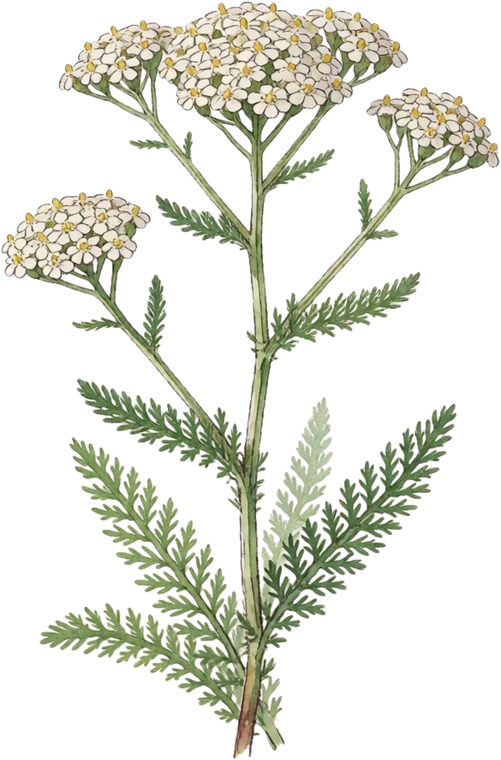
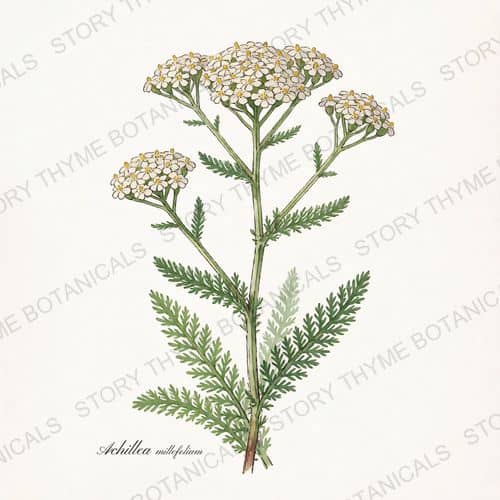
Botanical illustration of Yarrow
Perennial · Achillea millefolium

Spreads by runners. very tough. Compost activator.

PerennialFull SunLow waterFast growthAttracts bees

Where to buy the plant — 3 nurseries

Yarrow — a print from the Medicinal Herbs collection

From the print shop

Growing yarrow? Hang it.

Our Medicinal Herbs collection carries yarrowAchillea millefolium, print Nº 3, “Yarrow.”

16 designsfrom $21.99white or black groundmatte poster, unframed

Shop Medicinal Herbs botanical prints →

I

Overview

Will yarrow suit your garden, and what goes wrong.

Will it fruit where you are?

Enter your ZIP — we look up your USDA hardiness zone (2023 map) and check it against what yarrow actually needs.

Hardy inZones 3-9

Yarrow at a glance

HardinessUSDA 3–9
Mature size1-3 ft
PollinationPollinators
Chill requirementNot yet established
Bloom seasonSummer
Harvest seasonFlowers/Leaves summer
Growth rateFast

Common yarrow problems

II

Growing

Light, water, soil, propagation and the season’s jobs.

How to grow yarrow: light, water & soil

LightFull Sun
WaterLow
SoilPoor, Well-drained · pH 6.0 - 7.0
FertilizerNone
PruningFall/Spring — Deadhead to prevent seeding (if desired).
Spacing1-2 ft

How to plant & propagate yarrow

PropagateDivision or seed

The yarrow growing playbook

Field-tested instructions for every job yarrow asks of you, compiled from university extension guidance — in the order the season brings them.

Watering

Leave established yarrow off the watering schedule

Once the plants have a season of roots on them, water only in prolonged drought. Keep yarrow in full sun on lean, well drained ground rather than in a bed that is irrigated on a timer. Yarrow is drought tolerant and is short lived wherever the soil stays wet, because constantly moist ground brings on root rot and favors powdery mildew.

Dividing

Divide the clump in fall, once the bloom is finished

Lift the whole clump in fall, pull or cut it into sections that each carry roots and shoots, throw away the old woody center, and replant the vigorous outer pieces at the same depth. Time the work for four to six weeks before your ground freezes so the divisions root in before winter; in cold zones that means early fall, not late. Water the divisions in and expect to repeat this every two to three years. Yarrow dies out from the middle as it ages, and once the crown is hollow the plant blooms less and carries smaller heads. Minnesota Extension puts spring- and summer-blooming perennials in the fall division window, and Clemson calls for dividing yarrow every two to three years.

Pruning

Deadhead spent flowers to extend bloom and stop the seeding

As the first flush of flowers browns, cut the spent heads back to the next set of leaves or down to the basal foliage. Heads left standing set seed, and common yarrow seeds itself around aggressively on top of spreading by rhizome. Cutting them also prolongs the bloom on most cultivars.

What to watch for

Check for powdery mildew in shade and for spittlebug foam

Through summer look over the leaves for a white powdery coating and the stems for frothy spit. Open crowded clumps up by dividing or by cutting back whatever is shading them, so sun and air reach the foliage, and wash spittlebug foam off with a strong jet of water. Powdery mildew on yarrow is worse in shade and crowding, so sun and air movement are the real control. The spittlebug's foam is what shields it from UV and from predators, so knocking the foam off does the work a spray would.

Harvesting

Cut flowers for drying when the heads feel firm

Cut the stems once every flower cluster has reached full size and color and the heads feel firm to the touch. Bundle the stems and hang them upside down in a warm, dry, well ventilated place such as an attic or shed for two to three weeks, until thoroughly dry. Heads cut before they firm up collapse and shatter as they dry, and yarrow only holds its color as an everlasting if it goes into dry moving air at peak.

III

The year

What yarrow asks for, month by month.

The yarrow year, month by month

MonthJanFebMarAprMayJunJulAugSepOctNovDec
Bloom
Prune
Harvest

What each band means

  • Bloomflowers open — pollinators working, frost on blossoms is the danger.
  • Pruneshape it now — cuts heal cleanly and structure is visible.
  • Harvestpicking time — check ripeness every few days.

The yarrow year as text

  • Jan quiet month
  • Feb quiet month
  • Mar pruning
  • Apr pruning
  • May pruning
  • Jun bloom, harvest
  • Jul bloom, harvest
  • Aug bloom, harvest
  • Sep pruning
  • Oct pruning
  • Nov pruning
  • Dec quiet month

These are the species' typical months — expect them a few weeks earlier in warm zones and later in cold ones. Watch the plant, not just the calendar.

IV

Ecology & uses

What it does for the garden, and what it is grown for.

Yarrow in the garden system

  • Herbaceous layer perennial
  • Dynamic accumulator
  • Nectary/insectary
AttractsBees
MoistureUpland / dry
DeerBrowsed — protect young plants
OriginIntroduced

What yarrow is grown for

! Some parts toxic — see notesToxic to dogs, cats and horses (ASPCA) — vomiting, diarrhoea, drooling, loss of appetite and dermatitis.

Traditional useMedicinal (Stop bleeding)
UsePollinator
Edible value3/5
Traditional use rating4/5 in herbal tradition

Harvesting & storing yarrow

Flowers/Leaves summer.

Edibility, identification, and traditional-use notes here are general reference — not medical or veterinary advice, and not a claim that any plant treats or prevents anything. Medicinal ratings record how strongly a plant features in herbal tradition, nothing more. Never eat or dose a plant you have not positively identified. More on how to use this library.

V

Cultivars

Named varieties of yarrow, ruled as a catalogue.

Best yarrow varieties & cultivars

7 on file

Named varieties of yarrow differ in winter-chill needs, ripening time, hardiness, and whether they set fruit on their own — pick one that fits your climate.

Petra

Needs a pollinizer
Zones3-9Size1.5 feet tall

Clemson lists it as a fiery red hybrid, 1.5 feet tall, and sterile, so there is no danger of it spreading by seed in the garden.

Where to buy ‘Petra

Story Thyme Farms may earn a small commission from these links, at no cost to you — it never changes what we recommend.

Cerise Queen

Zones3-9Size1.5 feet tall

One of the oldest cultivars available; drifts of vivid fuchsia or cerise-red flowers on a 1.5 foot plant. Not sterile, so deadhead it to keep it from seeding.

Where to buy ‘Cerise Queen

Story Thyme Farms may earn a small commission from these links, at no cost to you — it never changes what we recommend.

Paprika

Zones3-9Size2 foot flower stalk

Red and yellow flowers on a flattened inflorescence rising from a 2 foot flower stalk.

Where to buy ‘Paprika

Story Thyme Farms may earn a small commission from these links, at no cost to you — it never changes what we recommend.

The Beacon

Zones3-9Size2-3 feet tall

A Galaxy hybrid with rich red flowers and yellow centers on 2-3 foot stems. Clemson notes it performs better in zone 7 than other Galaxy hybrids, and that Galaxy hybrid stems resist lodging.

Where to buy ‘The Beacon

Story Thyme Farms may earn a small commission from these links, at no cost to you — it never changes what we recommend.

Great Expectation

Zones3-9Size2 feet tall

A Galaxy hybrid with primrose yellow flowers on 2 foot stems; Clemson notes it performs better in zone 7 than other Galaxy hybrids.

Where to buy ‘Great Expectation

Story Thyme Farms may earn a small commission from these links, at no cost to you — it never changes what we recommend.

Lilac Beauty

Zones3-9Size2.5 foot stalks

Lavender flowers on 2.5 foot stalks, described by Clemson as a striking mass of lavender. One of the taller cultivars, though Clemson lists 'The Beacon' at 2-3 feet as the tallest.

Where to buy ‘Lilac Beauty

Story Thyme Farms may earn a small commission from these links, at no cost to you — it never changes what we recommend.

Red Beauty

Zones3-9Size2 feet tall

Rose-red flowers on 2 foot stalks in midsummer.

Where to buy ‘Red Beauty

Story Thyme Farms may earn a small commission from these links, at no cost to you — it never changes what we recommend.

VI

Sources & plant ID

Where the care distinctions come from, and how the plant is filed.

Research basis

Sources behind this profile

No extension citations are attached to yarrowyet. The care figures below come from the library's own catalogue rather than a traced primary source.

Plant ID

BinomialAchillea millefolium
FamilyAsteraceae
TypePerennial
USDA symbolACMI2
OriginIntroduced
Invasive riskLow

VII

Where to buy

Third-party nurseries — not Story Thyme Farms.

Third-party nurseries, not Story Thyme Farms. Prices are theirs.

Story Thyme Farms may earn a small commission from these links, at no cost to you — it never changes what we recommend.

VIII

Questions

Yarrow questions, answered straight.

Is yarrow safe for kids and pets?

With care. Toxic to dogs, cats and horses (ASPCA) — vomiting, diarrhoea, drooling, loss of appetite and dermatitis. Site it accordingly if children or pets roam the garden. This is general reference, not medical or veterinary advice — call a vet or poison control if something has actually been eaten.

When do you harvest yarrow?

Flowers/Leaves summer.

How do you propagate yarrow?

Division or seed.

IX

Elsewhere

Where yarrow sits in the library.

Where yarrow sits in the library

Grows in the same world