Field Guide · Food forest · 9 min read

How to Plant a Fruit Tree Guild

Plant a ring of plants around one tree that feed it, protect it and mulch it. It is a small food forest you can build in an afternoon.

Story Thyme Farms · Bench cardPlant in spring or fall

Planting a fruit tree guild

The peach guild layout, plant by plant

DifficultyOne afternoon per tree
Guild radiusTo the mature drip line
RolesFeed, guard, mulch, attract
Our modelThe peach guild
1Clearing the circleSheet mulch out to where the branches will reach
2Plants that feed the treeNitrogen fixers and mineral gatherers
3Plants that protect the treeOnions and strong-smelling herbs near the trunk
4Plants that attract insectsFlowers and herbs that bring in helpful insects
5UpkeepCut the plants down and drop them as mulch
Materials needed · Cardboard (free) · Wood chips · White clover seed · Comfrey root cuttings · Daffodil bulbs
Written on the farm · Missouristorythymefarms.com/guides/fruit-tree-guild-planting
Prints on one page. The long version below stays on the screen.

The long version

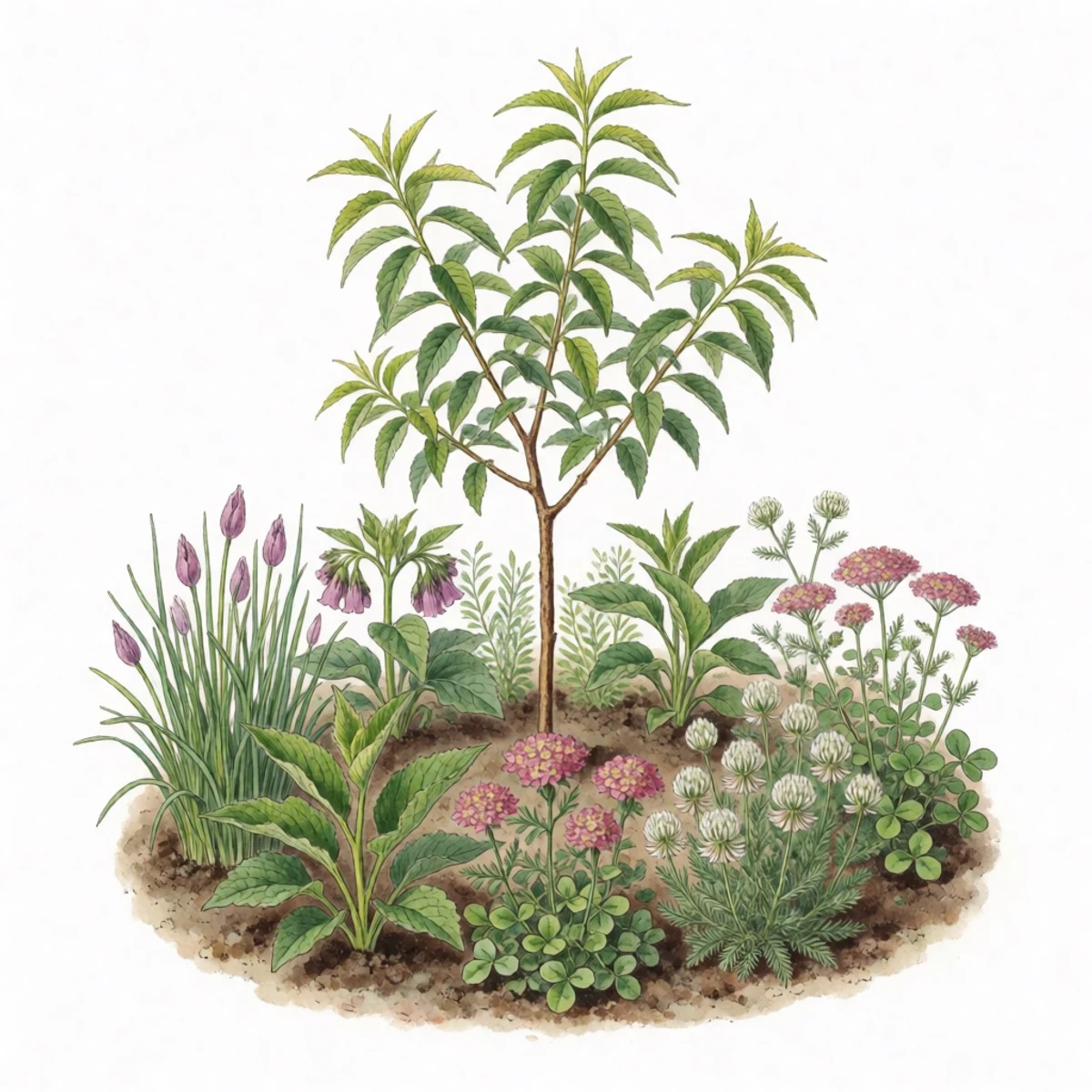
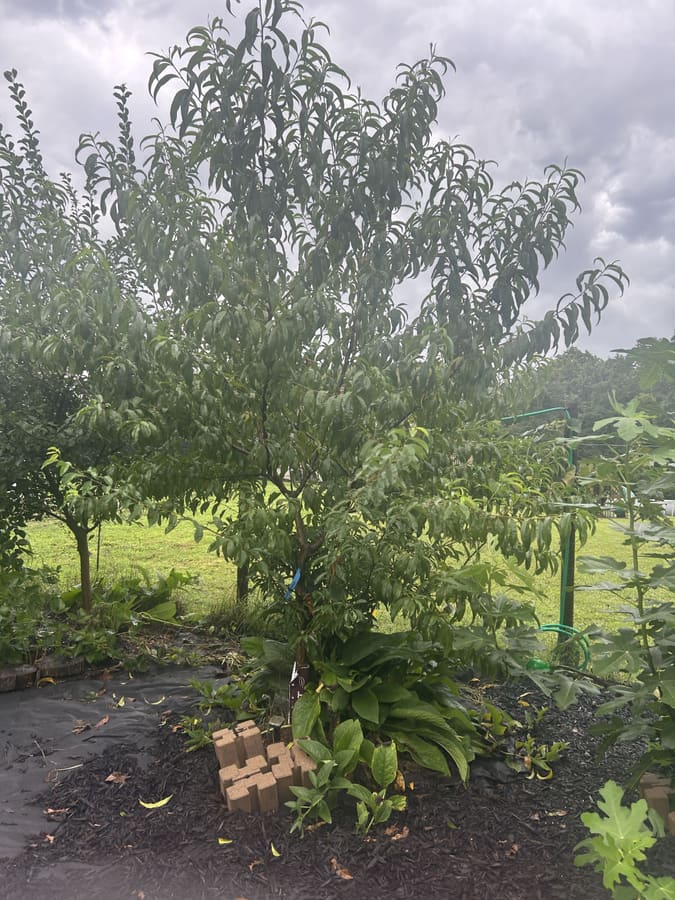
The peach tree guild on the farm, ringed with companions
On the farm · Missouri

A guild is a fruit tree surrounded by plants that each do a job for it: nitrogen fixers feeding it, strong-smelling plants confusing its pests, flowers drawing in pollinators, and ground cover shading its roots. The first thing to remove is grass, which is the tree's worst competitor. This is the layout under our peach tree, and it works unchanged for apples, pears and plums.

  1. Step 1 · Clearing the circle

    Sheet mulch out to where the branches will reach

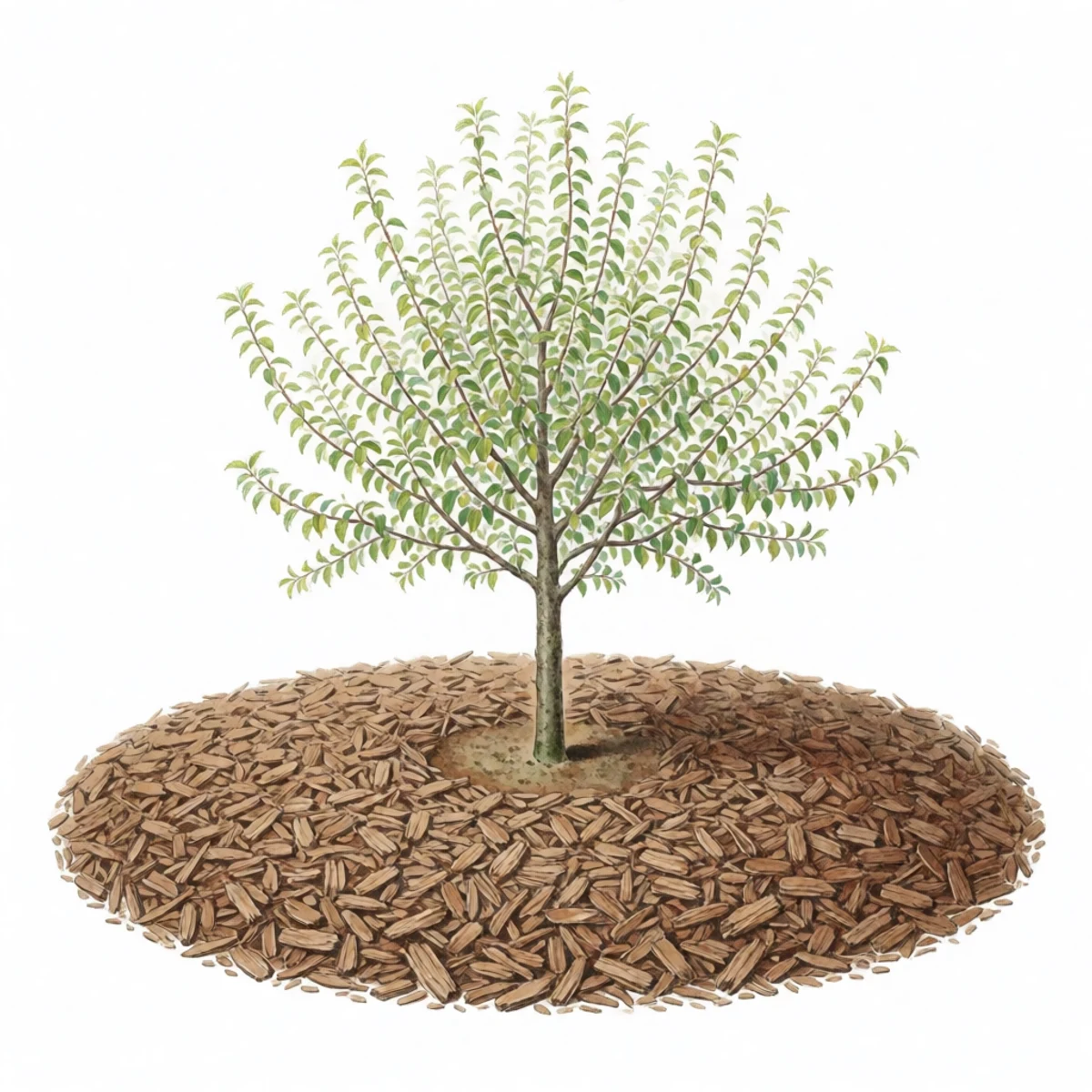
    Watercolour plate of a circle of sheet mulch laid out around a young fruit tree to the width of its future canopy, cardboard and wood chips

    Mark a circle as wide as the tree's canopy will eventually be, which is eight to ten feet across for most backyard fruit trees, and smother the grass inside it with overlapping cardboard, two inches of compost and four inches of wood chips. Leave a bare ring right at the trunk. Grass takes more water and nitrogen from a young fruit tree than any pest does.

  2. Step 2 · Plants that feed the tree

    Nitrogen fixers and mineral gatherers

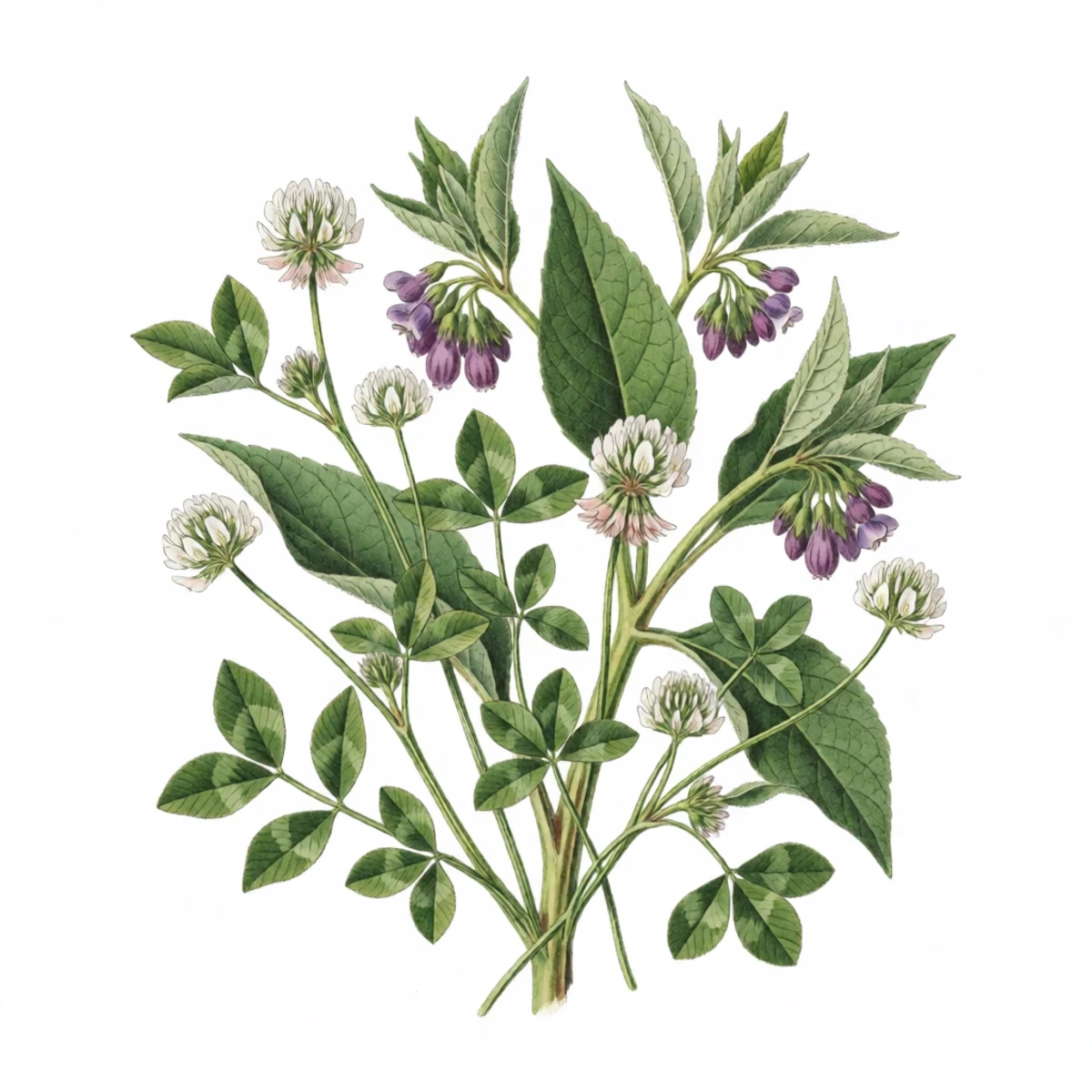
    Watercolour plate of the outer ring of a fruit tree guild planted with white clover, false indigo and comfrey

    Plant nitrogen fixers in the outer ring: white clover as a living path, and a shrub such as false indigo or goumi in larger guilds. Add two or three comfrey plants at the edge of the canopy, whose deep roots bring potassium and calcium up to the surface for you to cut and drop as mulch. Comfrey is permanent once planted, so put it where it can stay.

  3. Step 3 · Plants that protect the tree

    Onions and strong-smelling herbs near the trunk

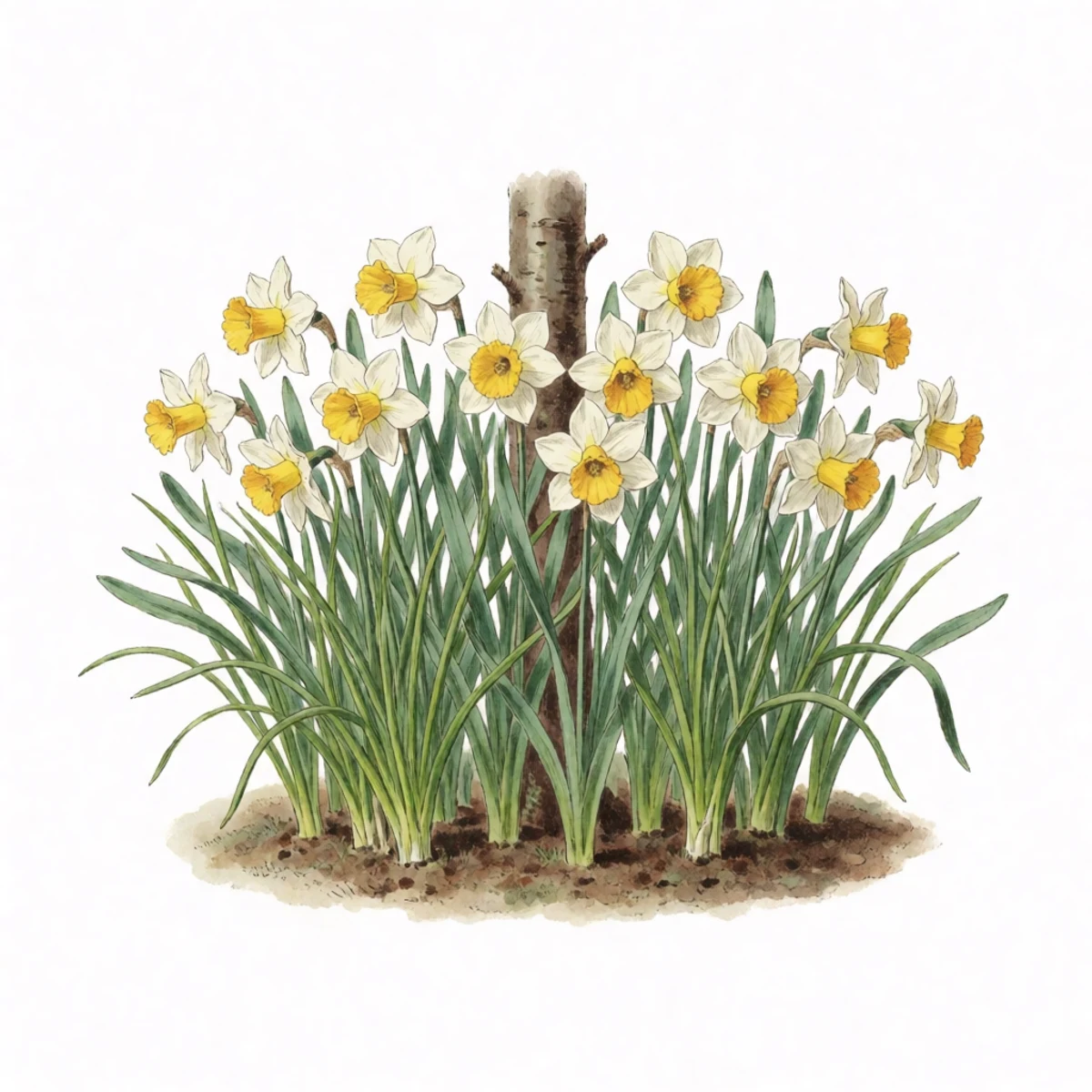
    Watercolour plate of a ring of chives, garlic chives and daffodils planted close around a young fruit tree trunk

    The inner ring gets the strong-smelling plants: chives, garlic chives, walking onions and daffodils, in a loop just outside the bare ring at the trunk. The smell makes it harder for borers and browsing animals to find the tree, daffodil bulbs deter voles, and the chive flowers feed the first bees of spring.

  4. Step 4 · Plants that attract insects

    Flowers and herbs that bring in helpful insects

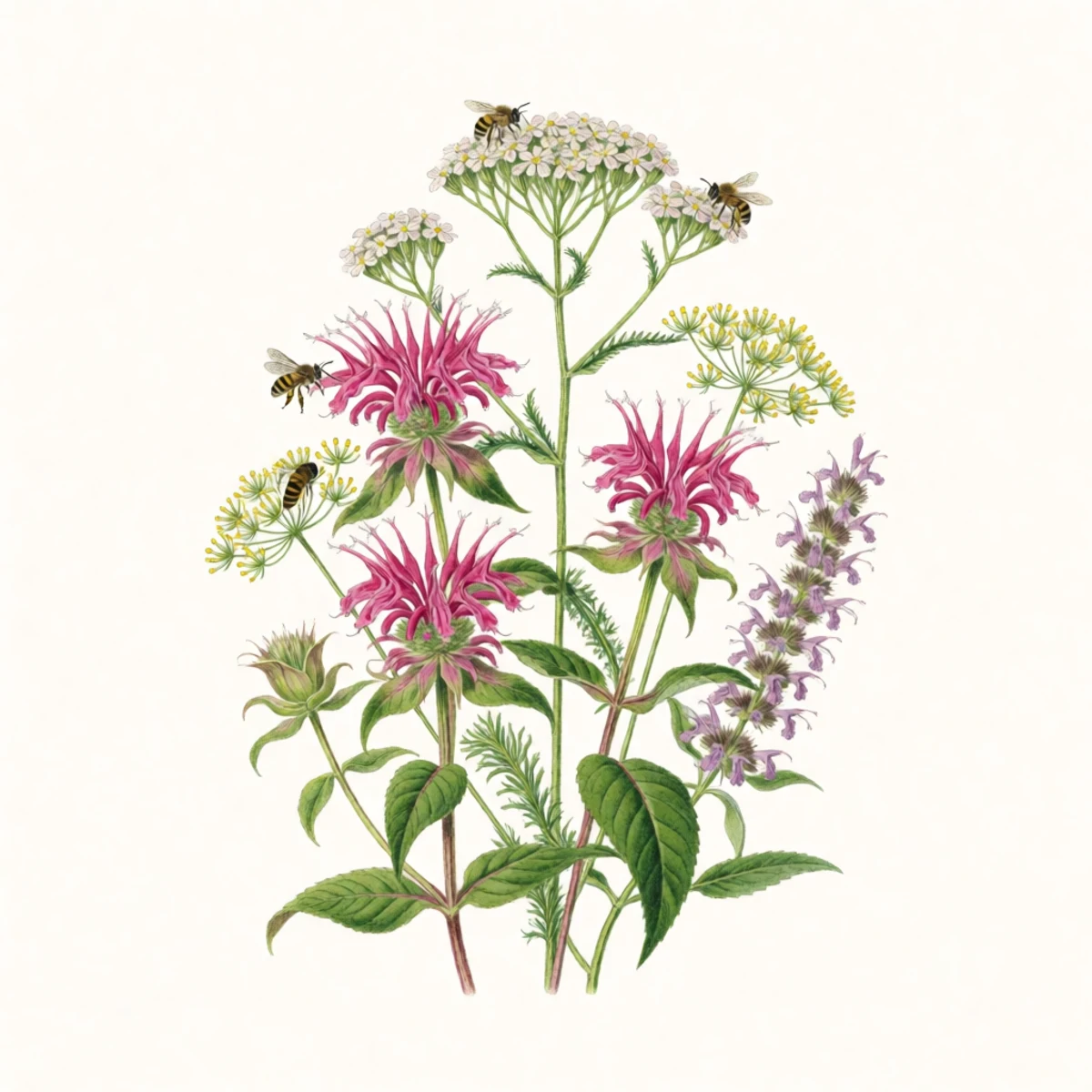
    Watercolour plate of yarrow, bee balm, dill and anise hyssop flowering between the rings of a fruit tree guild with bees and a hoverfly

    Yarrow, bee balm, dill and anise hyssop planted between the rings bring in pollinators for fruit set, along with the parasitic wasps and hoverflies that eat aphids and moth larvae. Yarrow also pulls up minerals and dries well for winter bouquets. Ideally every plant in a guild does more than one job.

  5. Step 5 · Upkeep

    Cut the plants down and drop them as mulch

    Twice a season, cut the comfrey and yarrow down and lay them in the mulch ring. That is the entire fertilizer program. Top up the wood chips each year and divide the herbs as they get crowded. By the third year the circle looks after itself, with a closed canopy over living ground cover, and you never need to bring a mower into it again.

Materials needed

As an Amazon Associate, Story Thyme Farms earns from qualifying purchases, at no cost to you. It never changes what we recommend.

Questions we actually get

Can I guild an existing mature tree?
Absolutely, it is the fastest upgrade in the orchard. Sheet mulch out to the drip line, keeping cardboard a hand's width off the trunk, and plant into the mulch. Skip deep digging over the root zone, plugs and shallow planting only.
Won't the guild plants compete with my tree?
Less than the grass they replace, that is the whole trade. Keep the first two feet around the trunk as plain mulch, put the vigorous perennials at the drip line, and the layers sort out their own light and water.
What goes under a black walnut?
Only juglone-tolerant staff: currants, elderberry, mulberry understory, wild ginger, and most alliums cope. Apples, tomatoes, and blueberries decline politely. It is the one tree here that dictates its own guest list.
From the plant library

Peach — the full profile

Zones, cold-hardy cultivars, spacing, feeding, and where to buy one already rooted.

Open the peach guide →