Field Guide · Propagation · 12 min read

How to Make a Cocktail Fruit Tree (Fruit Salad Tree)

Four different stone fruits on one trunk, in a space that only fits one tree, plus the pruning it takes to keep all four alive.

Story Thyme Farms · Bench cardLate winter

How to make a cocktail fruit tree

Prunus on one trunk. Grafting several varieties onto one tree

DifficultyModerate
Varieties3–5 is plenty
First fruit2–3 years
UpkeepPrune yearly, always
Skip one year of balancing pruning and the strongest branch will kill off the other three.
1Choosing the varietiesPick varieties from one genus and match how fast they grow
2Shaping the treeBuild the tree's shape first, then graft it
3Grafting the limbsGraft one variety onto each limb in late winter
4Labeling the limbsLabel every limb permanently, the same day
5Every winter afterwardPrune to balance the tree, not to shape it
Materials needed · Grafting knife · Grafting tape · Metal plant labels · Bypass pruners
Written on the farm · Missouristorythymefarms.com/guides/how-to-make-a-cocktail-fruit-tree
Prints on one page. The long version below stays on the screen.

How to graft a fruit tree How to graft a fruit tree

How to plant a fruit tree guild Planting a fruit tree guild

The long version

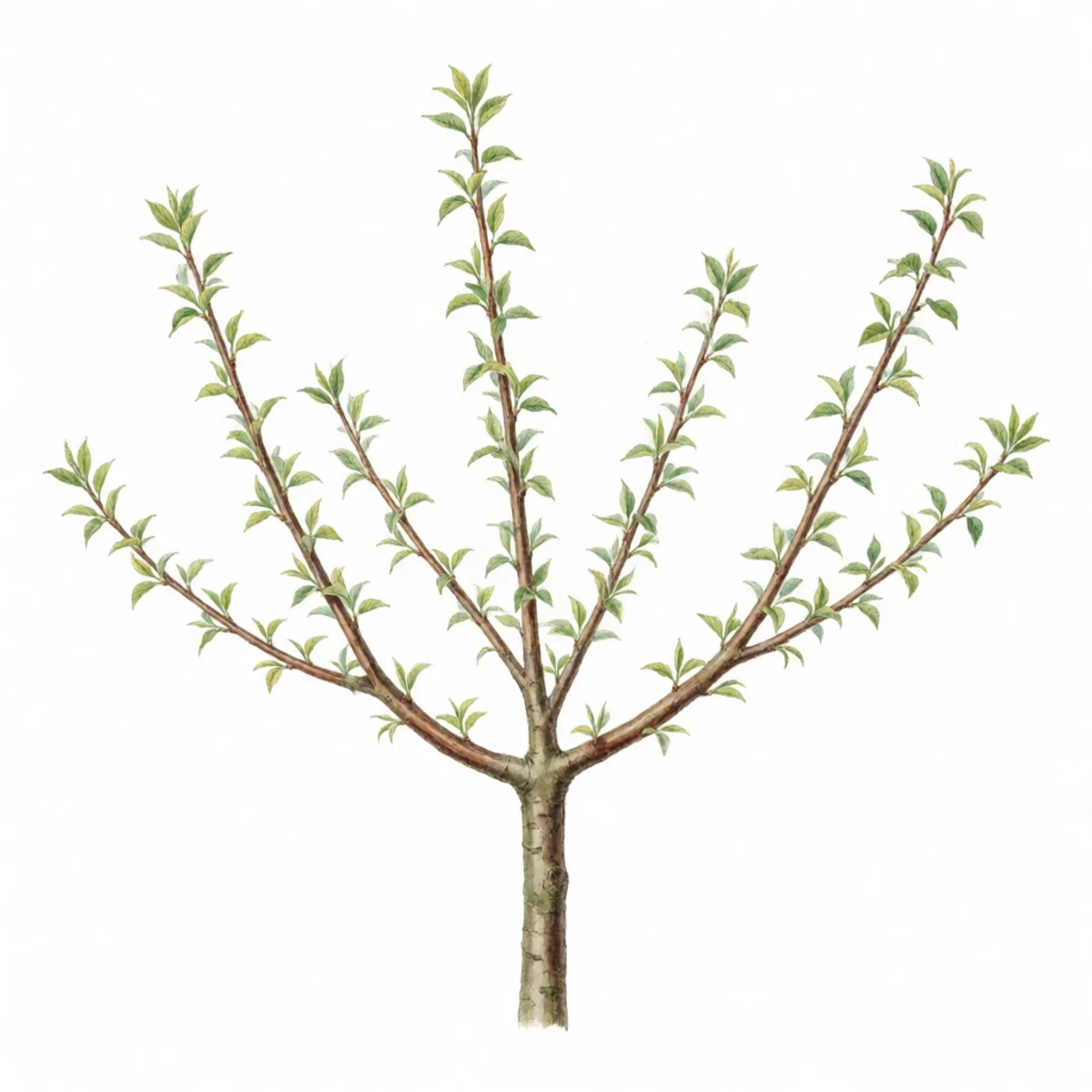
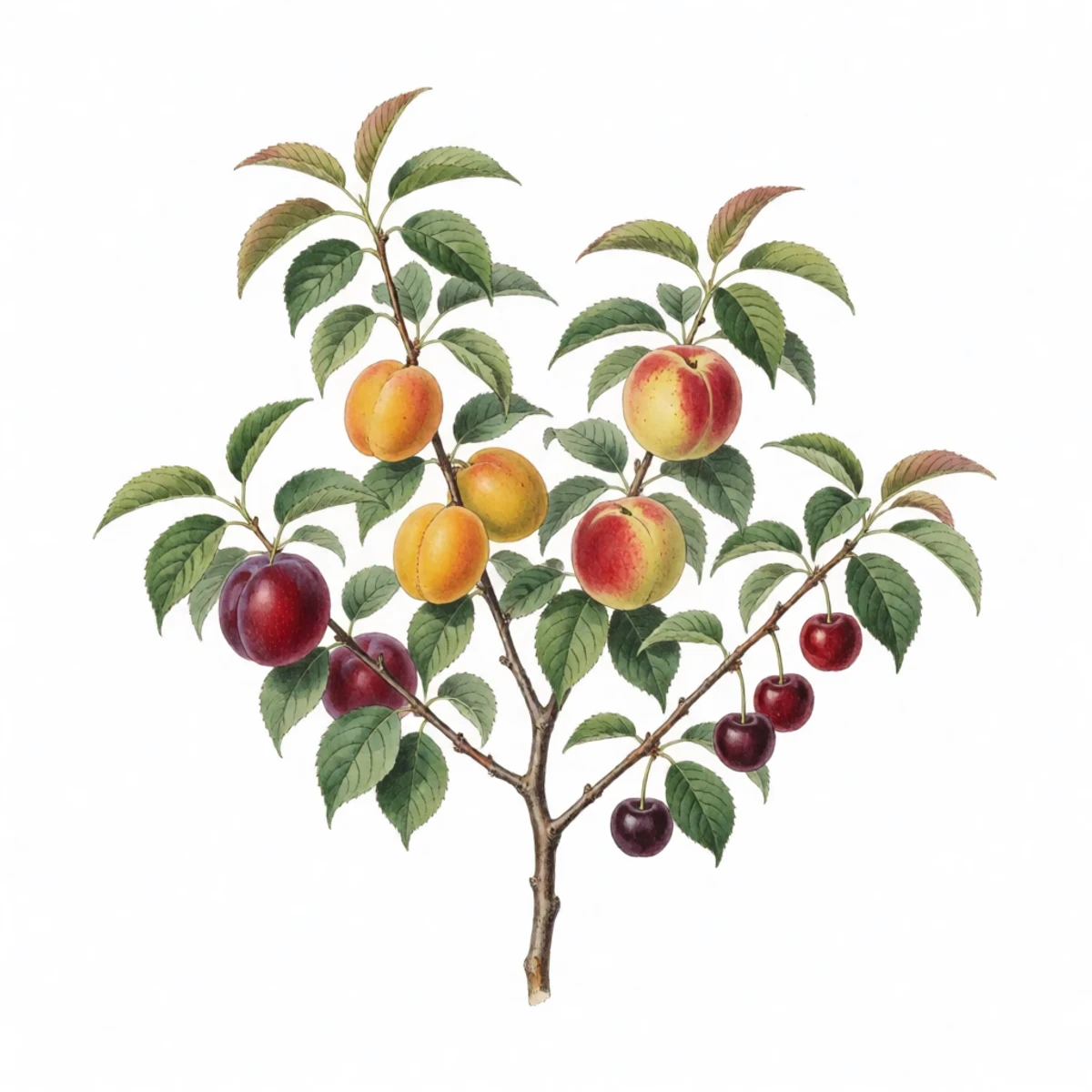
Watercolour plate of a single young fruit tree with four different grafted branches each bearing a different stone fruit - a red plum, a golden apricot, a blushed peach and a dark cherry - small numbered graft unions visible on the limbs
Prunus on one trunk · field plate

A cocktail tree, also called a fruit salad tree or a family tree, is one rootstock carrying several grafted varieties, each on its own limb. It is genuinely useful when you only have room for one tree and want fruit from July through October, or when you need a pollination partner but cannot fit a second tree. It is also the most commonly abandoned project in home orcharding, for one reason: the varieties do not grow at the same rate, and the tree will not balance itself.

  1. Step 1 · Choosing the varieties

    Pick varieties from one genus and match how fast they grow

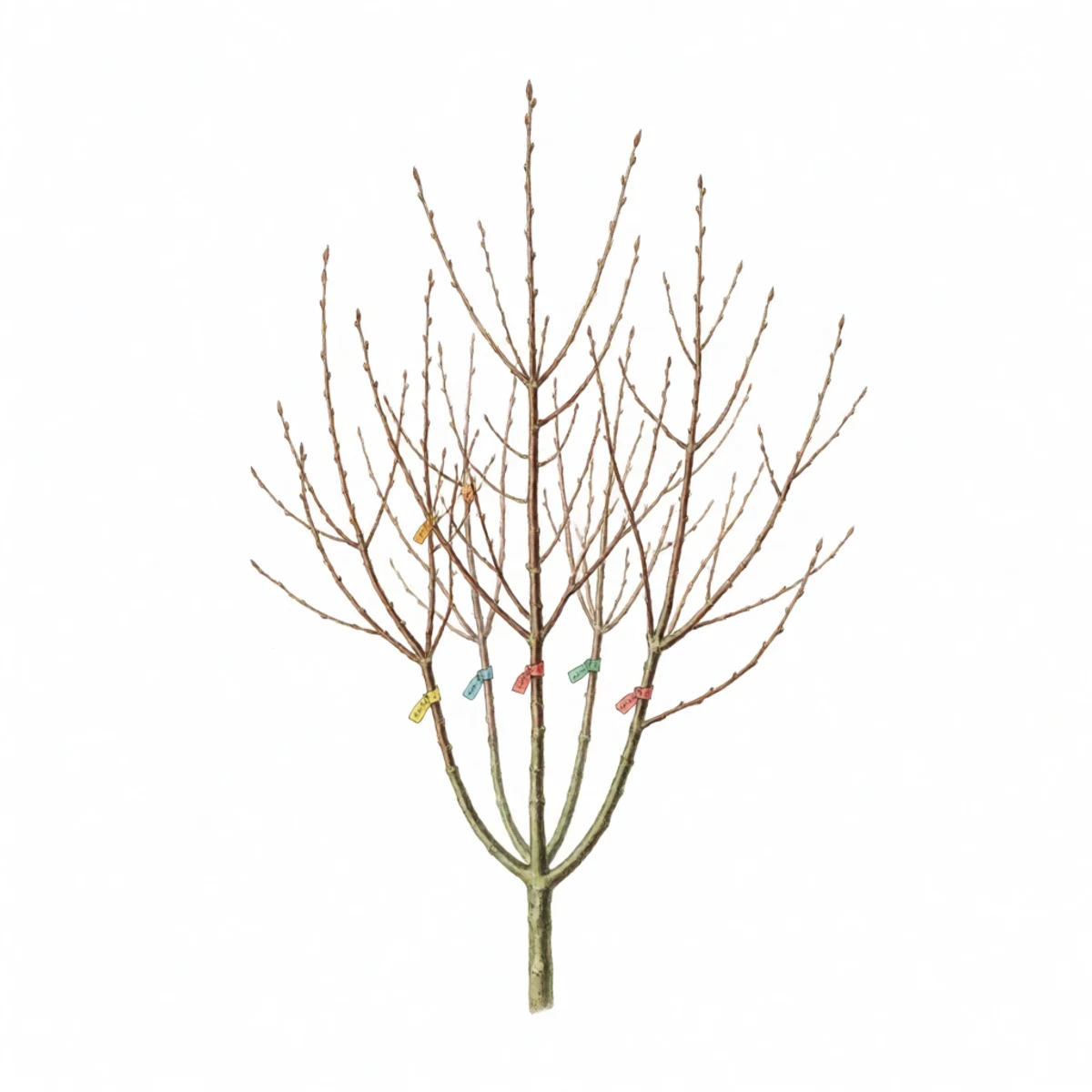
    Watercolour plate of a young bare-branched plum rootstock tree with four evenly spaced scaffold limbs, small coloured labels tied to each limb, dormant winter form
    One genus, similar growth rates

    Everything on the tree has to be from the same genus. Prunus is the usual choice, because plum, apricot, peach, nectarine and almond will all graft onto each other, and cherry will too, though it is more difficult. Malus gives you an apple and crabapple tree, and Pyrus a pear one. What you cannot do is mix genera. Apple and peach on one trunk is a photo on the internet, not a real tree. Then match the growth rates as closely as the varieties allow, because a fast grower next to a slow one is what ends this project.

  2. Step 2 · Shaping the tree

    Build the tree's shape first, then graft it

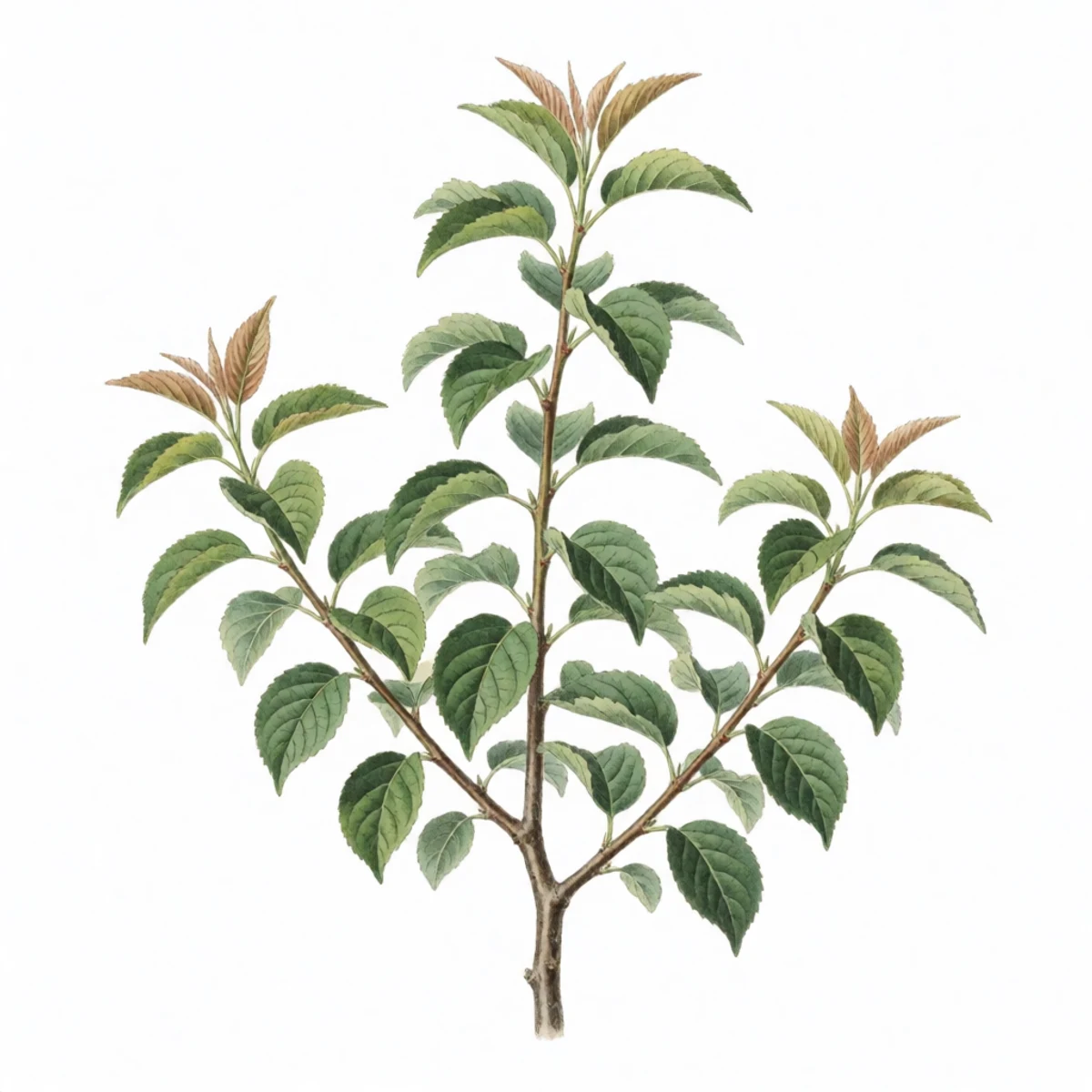
    Watercolour plate of a young dormant fruit tree pruned to four wide-angled scaffold limbs evenly spaced around the trunk and level with one another
    Even heights, even spacing

    Start with a young tree, either bought rootstock or an established tree you are regrafting, and get its shape right before you graft anything. You want three to five main limbs coming off the trunk at wide angles, spaced evenly around the tree and roughly level with one another. Each limb will carry one variety. Limbs at different heights are the first way a cocktail tree goes wrong, because the highest limb gets the most light and outgrows the rest.

  3. Step 3 · Grafting the limbs

    Graft one variety onto each limb in late winter

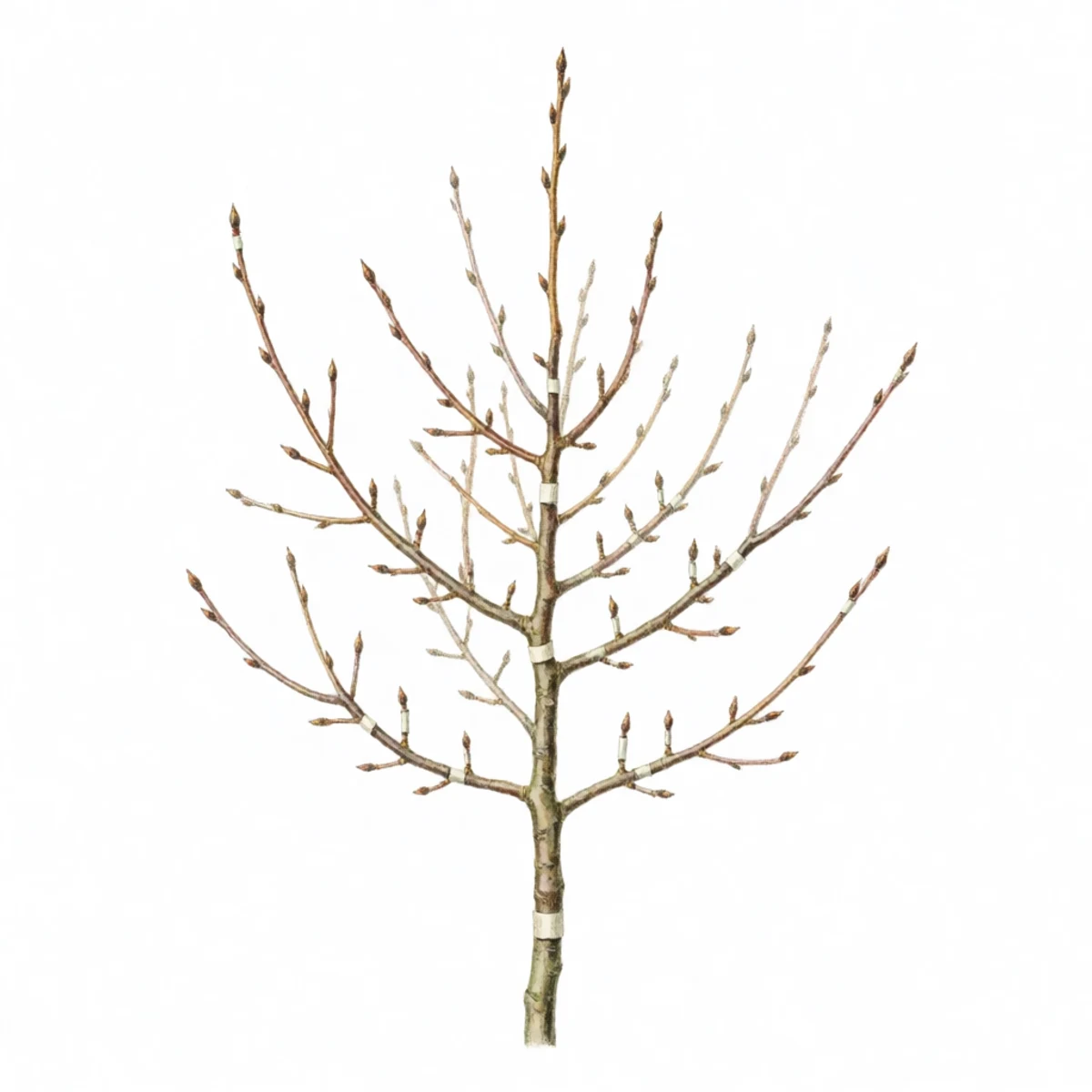
    Watercolour plate of a leafless dormant young fruit tree in winter, each of its side limbs ending in a short grafted scion stick bound at the join with a band of pale grafting tape, bare bark and closed buds, no leaves anywhere on the tree
    Slowest variety high, fastest low

    Whip-and-tongue graft each variety onto its own limb, using dormant scion wood and the same cambium contact rule that every graft depends on. Do them all in one session so they heal on the same schedule. Put the slowest-growing variety on the highest, sunniest limb and the fastest-growing one low down and shaded. Holding back the strongest variety on purpose is the one structural advantage you get, and you only get it once.

  4. Step 4 · Labeling the limbs

    Label every limb permanently, the same day

    Watercolour plate of durable engraved aluminium plant labels wired to the limbs of a young grafted fruit tree, each stamped with a different variety name
    Use metal tags, not marker pen

    This sounds like housekeeping, but it is the difference between a cocktail tree and a tree full of mystery fruit. Once the leaves are out, four Prunus varieties look nearly identical, and if you cannot tell which limb is which, you cannot prune them correctly. Peach fruits on last year's wood and plum fruits on long-lived spurs, so pruning one the way you prune the other removes the crop. Use engraved metal tags wired on loosely rather than marker pen. Ink fades within a season, and tight wire cuts into the limb.

  5. Step 5 · Every winter afterward

    Prune to balance the tree, not to shape it

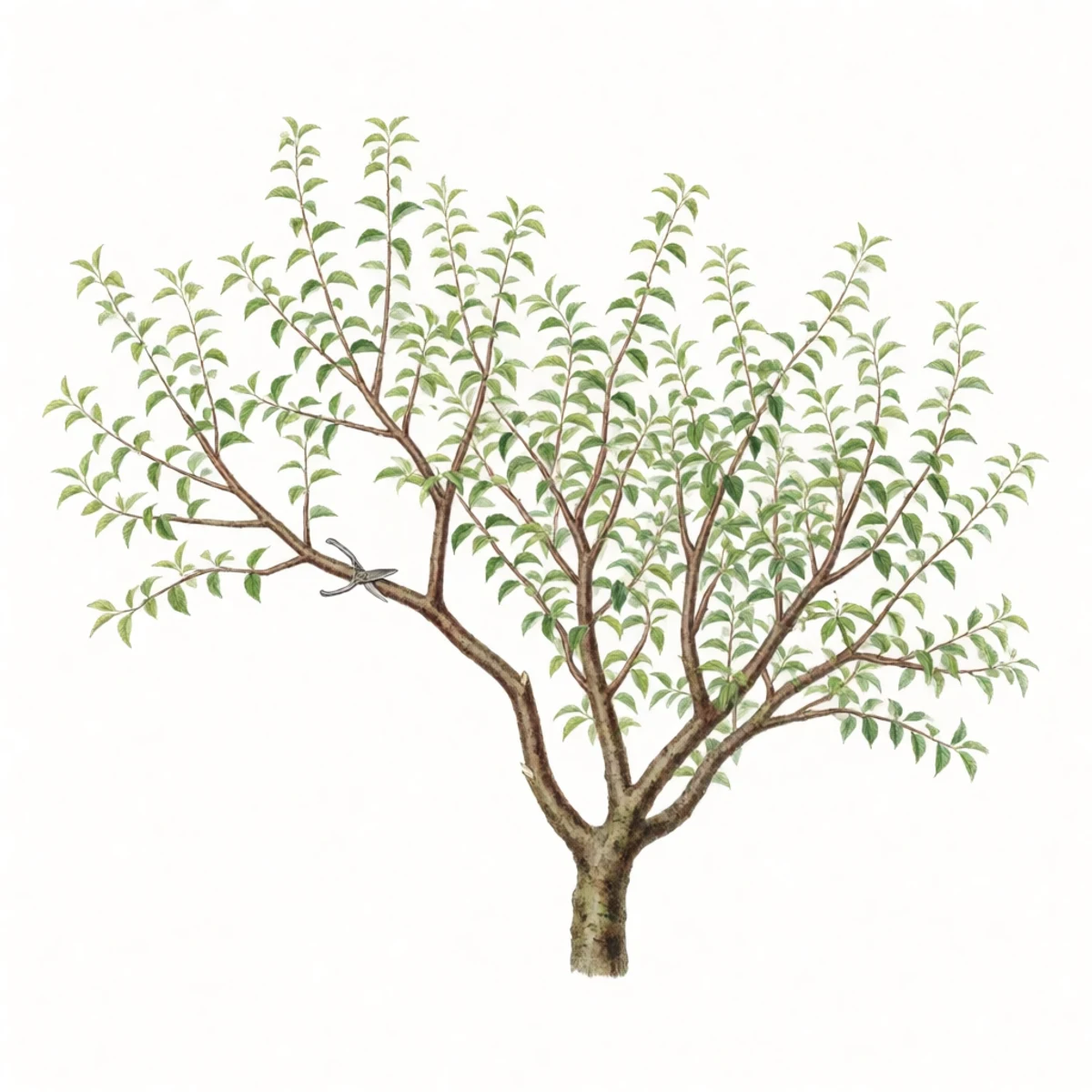
    Watercolour plate of a multi-grafted fruit tree with one branch grown far longer and thicker than the other three, pruning shears cutting that dominant branch back to restore balance
    Cut back the biggest limb, leave the smallest

    This is the step the tree cannot survive without. Each winter, find the limb that has outgrown the others and cut it back the hardest, and leave the smallest limb almost untouched. That is the opposite of normal pruning instinct, and it is the whole job. Left alone for even two seasons, a vigorous peach will shade out an apricot beside it, and the apricot will not recover. Watch for shoots coming from below the graft joins as well. Those are the rootstock growing, and they are not part of what you planted.

Materials needed

As an Amazon Associate, Story Thyme Farms earns from qualifying purchases, at no cost to you. It never changes what we recommend.

Questions we actually get

What fruits can grow on the same tree?
Only relatives. Plum, apricot, peach, nectarine and almond are all Prunus and graft onto each other readily; cherry is Prunus too but less reliable. Apples graft with crabapples, pears with pears and quince. Apple-and-peach or citrus-and-apple trees do not exist, whatever the seed adverts show — the union simply never forms.
Why did one branch take over my cocktail tree?
Because that variety is naturally more vigorous, and nothing stopped it. A cocktail tree is not a stable object: it is four competitors on one root system, and the strongest wins unless you intervene every single winter. Cut the dominant limb hard, leave the weak one alone, and accept that this tree needs pruning every year for life.
Is it better to buy a cocktail tree or make one?
Buying gets you fruit sooner and skips the graft-failure risk. Making one lets you choose the varieties — which matters, because a bought tree's four varieties were chosen for the nursery's convenience, not your climate or your picking season. If you make it, you also know which limb is which, which the label on a bought tree rarely survives long enough to tell you.
Do the different varieties pollinate each other?
Often, and it is one of the best reasons to build one. Two compatible varieties flowering on the same tree can cross-pollinate, which solves the partner problem in a garden with room for one tree. Check the bloom times overlap, though — two varieties that flower three weeks apart pollinate nothing.